How Much Does a Data Entry Virtual Assistant Cost?
What a data entry virtual assistant costs by the hour, by the month and by the deliverable, plus the hidden costs most budgets miss.
On this page
- What Does a Data Entry Virtual Assistant Retainer Cost?
- How Much Does Data Entry Cost per Deliverable?
- Hyperstaff Cost vs. Other Virtual Assistant Agencies
- Hyperstaff Retainer Costs
- Hyperstaff Cost by Deliverable
- Which Pricing Models Do Data Entry VAs Use?
- Agency vs. Freelancer vs. In-House for Data Entry
- How Much Does a Data Entry Virtual Assistant Cost by Country?
- What Shapes Data Entry Virtual Assistant Costs?
- #1 Cost Factor
- #2 Cost Factor
- #3 Cost Factor
- #4 Cost Factor
- How Is AI Changing Data Entry VA Costs?
- The Hidden Costs of a Data Entry Virtual Assistant
- How Much Should You Budget for a Data Entry VA?
- How Do You Calculate Data Entry VA ROI?
- How Should You Compare Data Entry Agency Pricing?
- Red Flags in Agency Pricing
- When to Walk Away
- How Can You Cut Data Entry VA Costs Without Losing Quality?
- Step 1
- Step 2
- Step 3
- Step 4
- Step 5
- Is a Data Entry Virtual Assistant Worth the Investment?
- FAQs
Stop Paying US Rates for Keyed Data
Hyperstaff places pre-vetted data entry specialists from $3 an hour, and a new hire usually starts within 5 business days. Our dedicated data entry virtual assistants come from a network that has placed 70+ virtual assistants with 30+ clients, each person dedicated to one business and backed by a free replacement if the fit isn't right.
What Does a Data Entry Virtual Assistant Retainer Cost?
A data entry virtual assistant retainer costs about $160 to $1,920 a month offshore for 40 to 160 hours, and $1,000 to $7,200 through a US-based agency. The figures below are market averages for dedicated, managed hours.
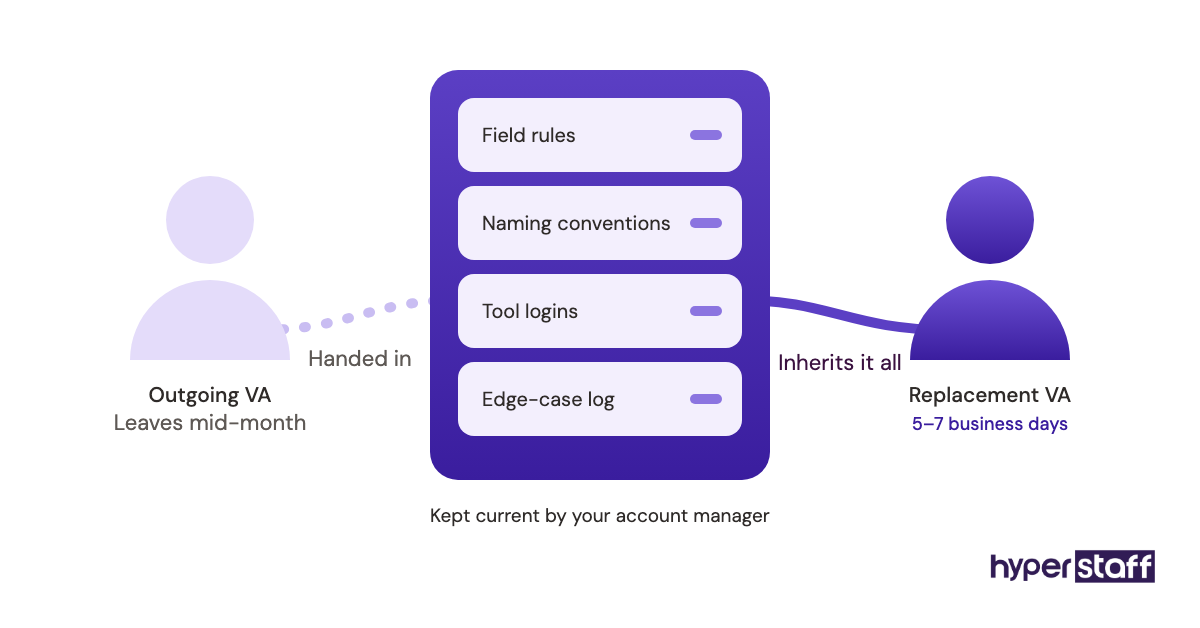
Retainers reserve hours from one person, and for data work that matters because the same assistant learns your field rules, naming conventions and odd edge cases. If you're still defining the role, our guide on what a data entry VA does sets the scope first.
| Hours per month | Offshore freelancer ($4–$8/hr) | Offshore agency ($6–$12/hr) | US-based agency ($25–$45/hr) | Typical fit |
|---|---|---|---|---|
| 20 | $80–$160 | $120–$240 | $500–$900 | Weekly invoice batches |
| 40 | $160–$320 | $240–$480 | $1,000–$1,800 | CRM upkeep |
| 80 | $320–$640 | $480–$960 | $2,000–$3,600 | Daily order entry |
| 160 | $640–$1,280 | $960–$1,920 | $4,000–$7,200 | Full-time catalog work |
The gap between the freelancer and agency columns pays for vetting, management and replacement cover. A freelancer who disappears mid-month leaves you with half-entered records and no one who knows where they stopped.
How Much Does Data Entry Cost per Deliverable?
Data entry costs per deliverable range from about $25 for a batch of 100 invoices to over $3,000 for a 1,000-product catalog build, depending on who does the work. The table shows averages, using offshore rates for freelancers and agencies and loaded US wages for in-house staff.
Turnaround assumes one person working the job alongside normal duties. For the full range of work these numbers apply to, see our list of common data entry VA tasks.
| Deliverable | Freelancer | Agency | In-House | Turnaround |
|---|---|---|---|---|
| 100 invoices posted to QuickBooks or Xero | $25–$50 | $40–$75 | $120–$175 | Same day to 1 day |
| 1,000 PDF rows into a spreadsheet | $40–$80 | $60–$120 | $180–$280 | 1–2 days |
| 1,000 CRM contacts entered | $85–$265 | $140–$400 | $425–$825 | 3–5 days |
| 10,000-row list cleaned and deduplicated | $40–$160 | $65–$240 | $200–$600 | 2–4 days |
| 500 leads researched and verified | $165–$400 | $270–$600 | $830–$1,500 | 1–2 weeks |
| 500 handwritten forms keyed | $165–$265 | $265–$400 | $830–$1,000 | About 1 week |
| 300 monthly bookkeeping transactions | $30–$80 | $50–$120 | $150–$300 | Ongoing, monthly |
| 1,000 survey responses coded | $50–$120 | $80–$180 | $250–$450 | 2–3 days |
| 1,000 product listings built | $415–$1,060 | $600–$1,600 | $2,100–$4,000 | 3–4 weeks |
Hyperstaff Cost vs. Other Virtual Assistant Agencies
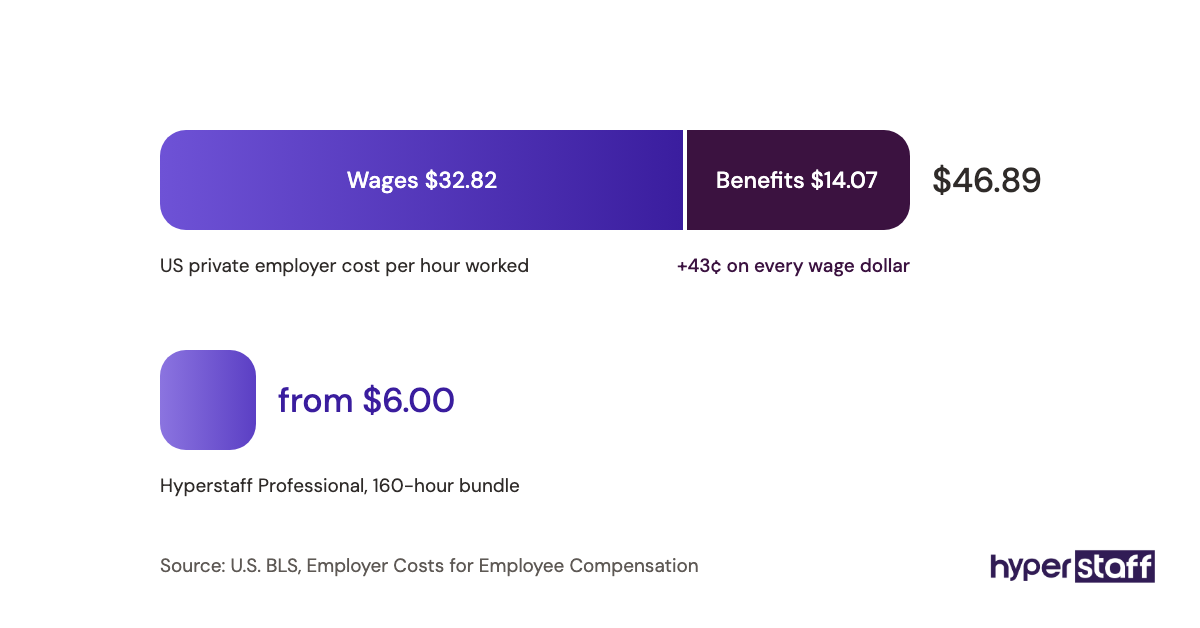
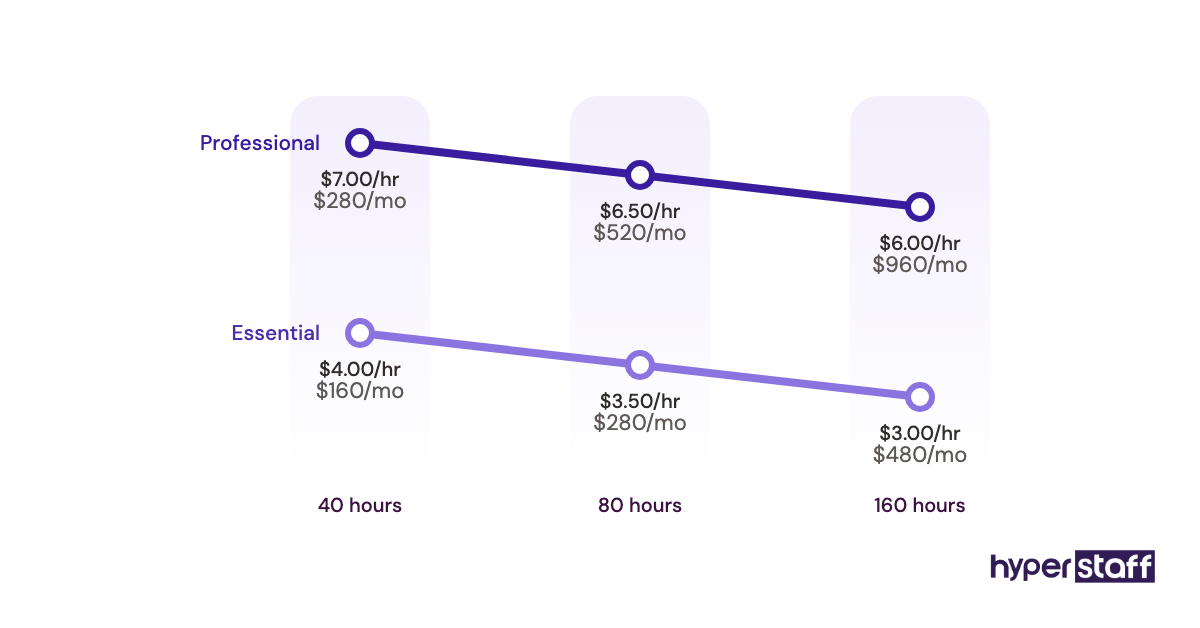
Hyperstaff data entry rates start at $3 an hour for Essential, $6 for Professional and $12 for Expert, sold in monthly bundles of 40, 80 or 160 hours. Typical offshore agencies charge $8 to $12 for comparable work, and US-based agencies sit at $25 to $45.
| Provider | Hourly rate | 160 hours/month | Placement time | Replacement | You Save |
|---|---|---|---|---|---|
| Hyperstaff Essential | From $3 | From $480 | 5 business days | Free, 5–7 days | Baseline |
| Hyperstaff Professional | From $6 | From $960 | 5 business days | Free, 5–7 days | Baseline |
| Offshore VA agency | $8–$12 | $1,280–$1,920 | 1–3 weeks | Often paid | 25–50% |
| US-based VA agency | $25–$45 | $4,000–$7,200 | 1–2 weeks | Varies | 76–87% |
| US in-house clerk (with benefits) | $24–$32 | $3,840–$5,120 | 4–8 weeks | You rehire | 75–81% |
The You Save column compares each row against Hyperstaff Professional, the tier most data entry roles need once records start calling for judgment. Against Essential, the gap gets wider still.
Hyperstaff Retainer Costs
Hyperstaff retainers are flat monthly bundles, so the price of each tier scales directly with the hours you reserve. Here's how Professional compares with the offshore agency average.
| Bundle | Hyperstaff Professional (from) | Offshore agency average |
|---|---|---|
| 40 hours | $240 | $320–$480 |
| 80 hours | $480 | $640–$960 |
| 160 hours | $960 | $1,280–$1,920 |
Paying quarterly takes 10% off, so a 160-hour Professional bundle drops from $2,880 to about $2,592 per quarter. Every client also gets a dedicated account manager at no extra charge.
Hyperstaff Cost by Deliverable
Deliverable pricing at Hyperstaff follows the hours each job takes. At the Professional rate, 100 invoices posted to QuickBooks (about 5 hours) come to roughly $30, and a 1,000-row PDF-to-spreadsheet job (about 8 hours) lands near $48.
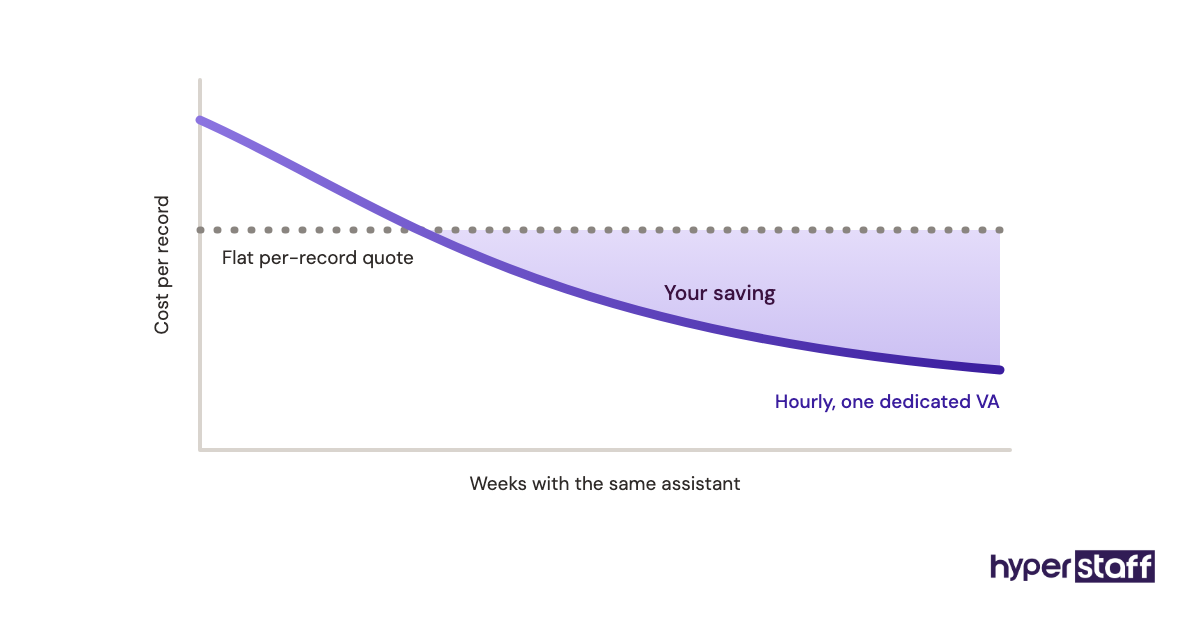
Hourly billing on a dedicated assistant gets cheaper per record as they learn your formats. A per-record quote stays flat however fast the work gets.
Important: Hyperstaff prices shown here are starting averages. Your final rate depends on the tier, hours and complexity of your data work, which we confirm with you on the discovery call.
Which Pricing Models Do Data Entry VAs Use?
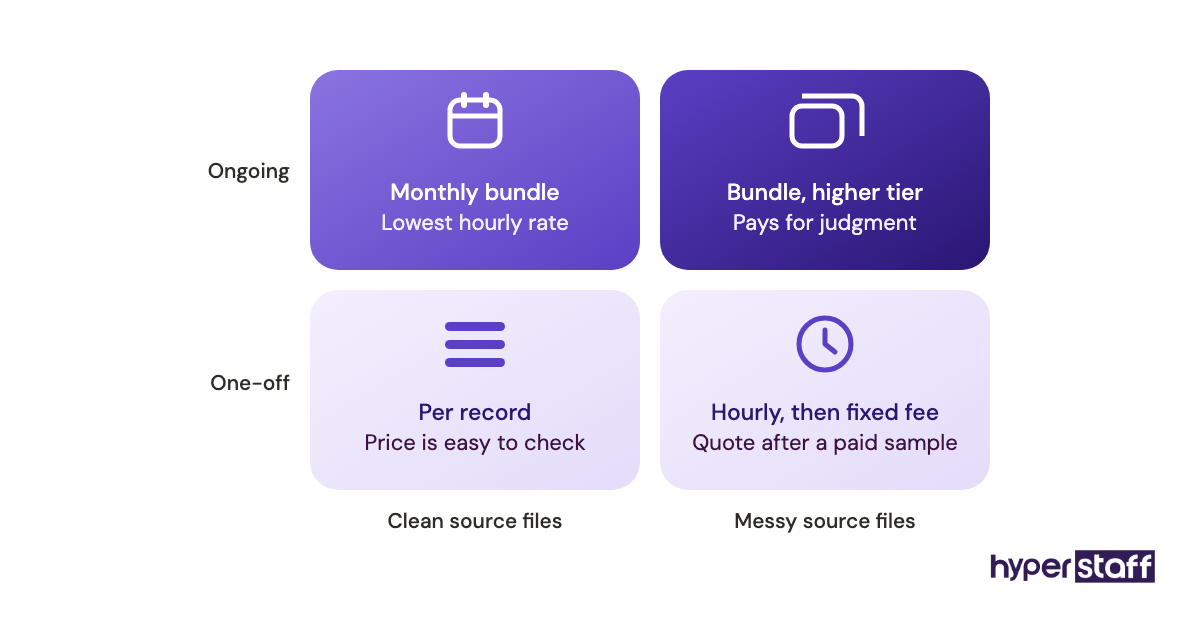
Data entry VAs price their work in five common ways:
- Hourly: simple, and fair for messy or variable work.
- Monthly bundle: reserved hours at a lower effective rate.
- Per record: predictable for clean, repetitive batches.
- Fixed project fee: one quote for a defined cleanup or migration.
- Full-time salary: a monthly wage through an employer of record.
Per-record quotes look safest, but providers price in a buffer for the bad files they expect to find.
Agency vs. Freelancer vs. In-House for Data Entry
Freelancers cost the least per hour and in-house clerks give the most control, yet both leave you to recruit, test and replace the person yourself. A managed agency sits between them on price and carries the recruiting load for you.
For teams adding volume fast, a good agency is usually the best fit, because a replacement arrives already briefed on the work. Our breakdown of a data entry VA vs in-house hire runs the full comparison.
How Much Does a Data Entry Virtual Assistant Cost by Country?
Data entry virtual assistant cost by country runs from $3 an hour in the Philippines and India to $30 or more in the US, UK and Australia. All rates below are in US dollars, so a UK freelancer at $16 to $26 is roughly £12 to £20.
| Region | Freelance rate | Agency rate | Overlap with US hours | Common strength |
|---|---|---|---|---|
| Philippines | $3–$8 | $6–$12 | Night shifts common | High-volume entry |
| India | $3–$7 | $5–$12 | Partial | Finance data, Excel |
| Latin America | $6–$14 | $10–$18 | Full | Live CRM updates |
| Eastern Europe | $8–$18 | $12–$25 | Mornings | Technical datasets |
| United States | $18–$30 | $25–$45 | Full | Regulated records |
| United Kingdom | $16–$26 | $22–$38 | Mornings | UK-format data |
| Australia | $20–$30 | $28–$45 | Evenings | APAC coverage |
| Western Europe | $18–$30 | $25–$40 | Mornings | GDPR-heavy data |
EU and Australian buyers often find the same offshore talent pools cheaper relative to local wages than US buyers do. Time-zone overlap matters less for batch keying than for live order entry, where a six-hour delay means customers wait.
What Shapes Data Entry Virtual Assistant Costs?
Data entry virtual assistant costs depend less on the headline rate than on how many hours each record takes. Four factors move that number more than buyers expect.
#1 Cost Factor: The Condition of Your Source Documents
Source document quality sets the pace before anyone types a field. Typed PDFs and clean exports move 2 to 4 times faster than handwritten forms, faxed scans or phone photos taken at an angle.
The hourly rate stays the same while the hours per thousand records can triple. Quotes that look cheapest per record often assumed clean files nobody checked.
#2 Cost Factor: The Accuracy Standard You Set
At 99% accuracy, a 10,000-row list still carries about 100 bad entries. Pushing toward 99.9% usually means a second-pass check or double-keying, which adds roughly 20% to 40% to the hours.
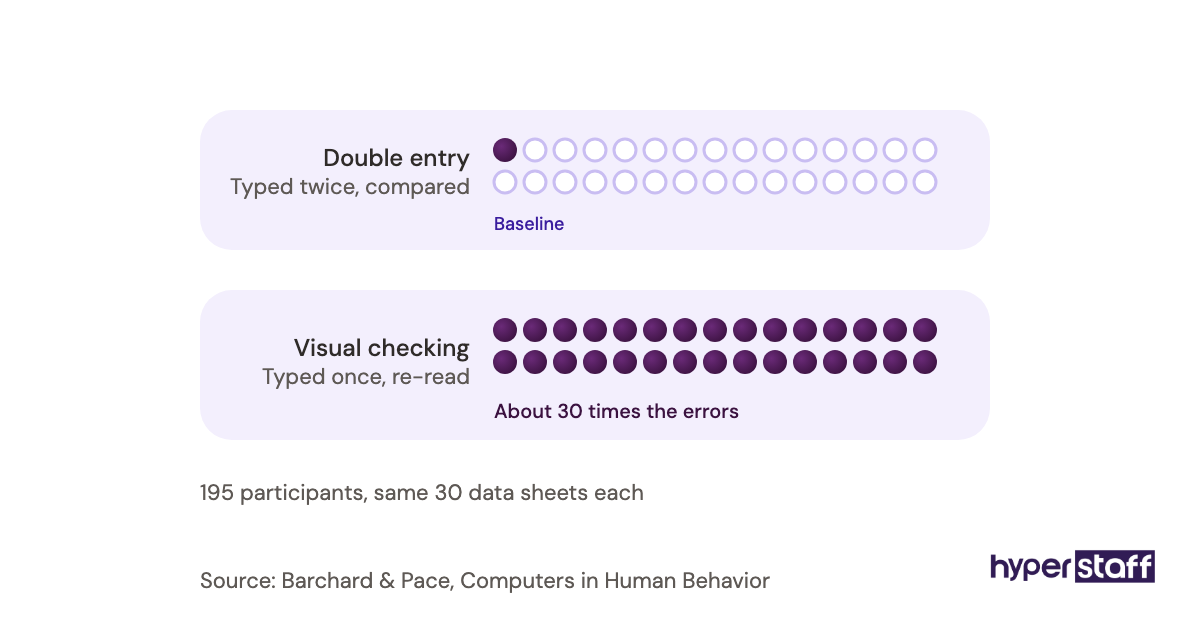
Some data deserves that spend, like billing records, shipping addresses and anything a customer sees. Internal notes fields rarely do.
#3 Cost Factor: Who Pays for Software Seats
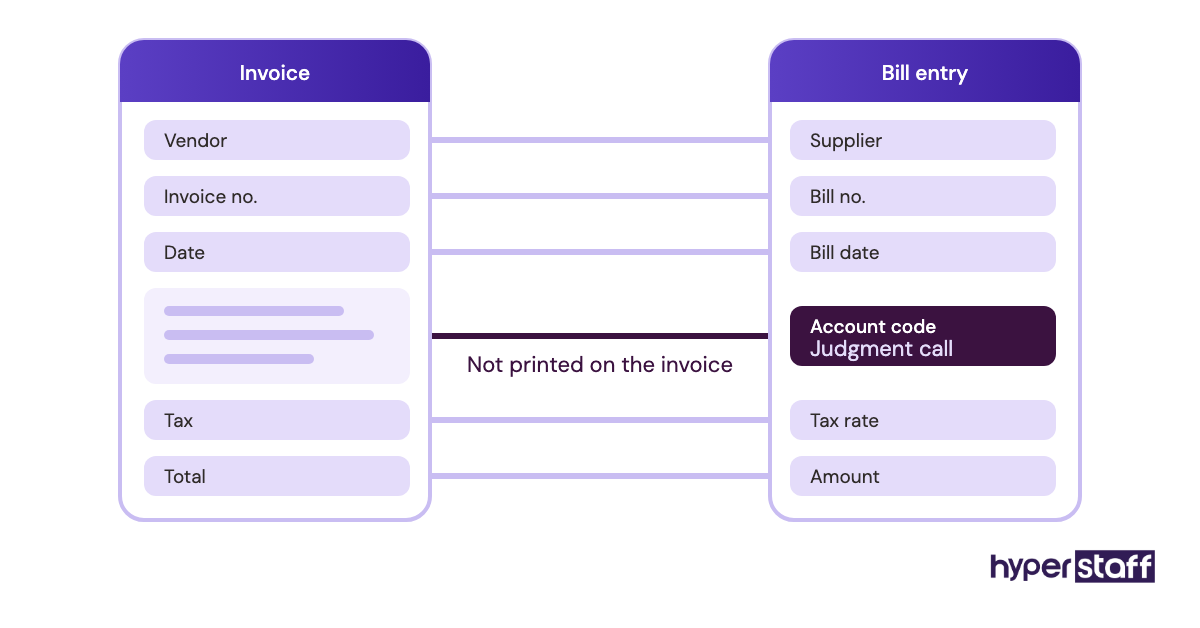
Software seats are the line item most budgets forget. A paid CRM, ERP or accounting seat for your assistant can add $25 to $150+ a month per user, sometimes more than a small hours bundle.
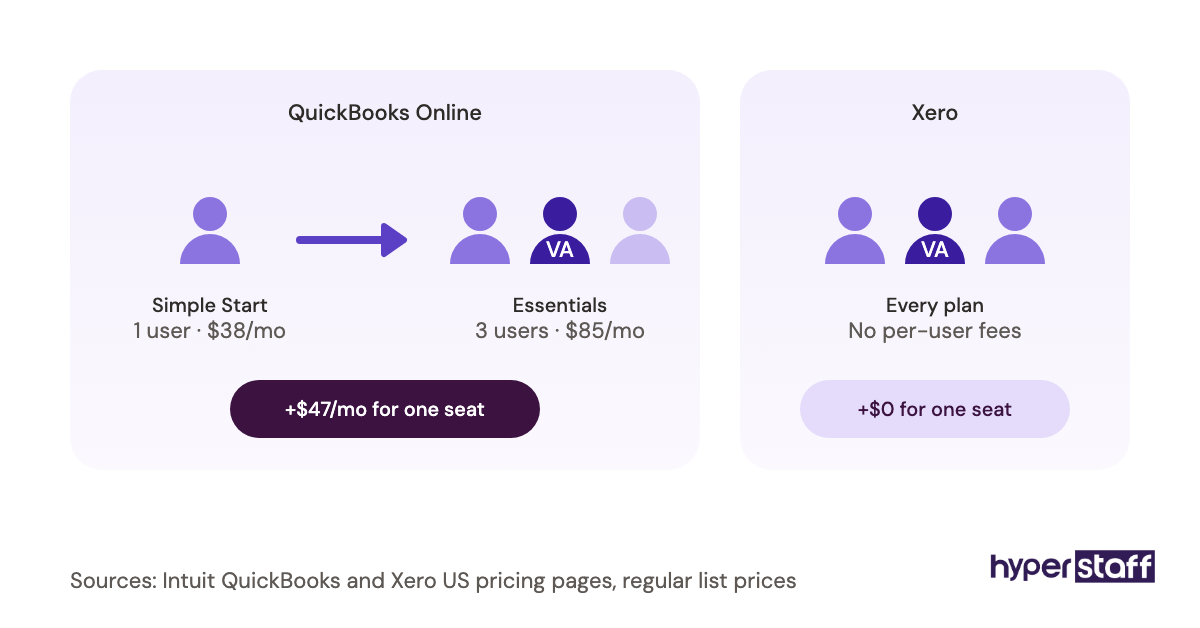
Shared logins dodge the fee but break audit trails and often breach the vendor's terms. Our roundup of tools data entry VAs use flags which apps offer cheap or free limited seats.
#4 Cost Factor: Security and Access Requirements
Security requirements narrow the talent pool and push work toward higher tiers. Health, payroll and payment data can call for VPN-only access, dedicated devices, background checks or a signed business associate agreement.
Each control is reasonable on its own. Together they rule out the cheapest freelancers, and the setup time lands on your side before day one.
How Is AI Changing Data Entry VA Costs?
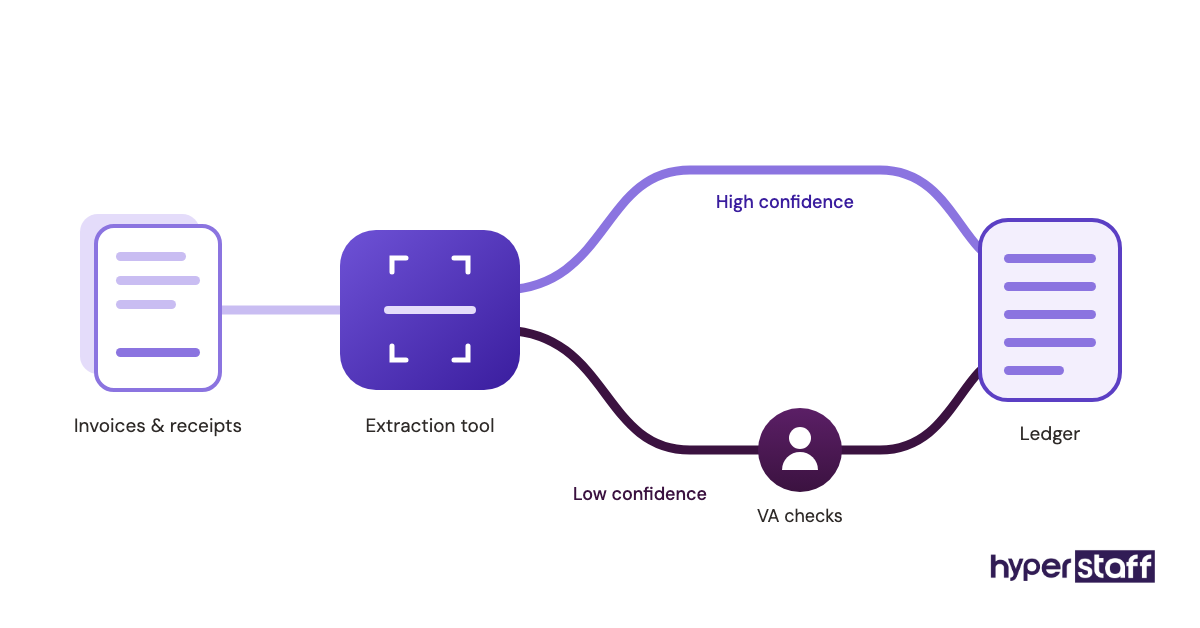
AI is cutting data entry VA hours on structured documents, because OCR and extraction tools now pull fields from invoices, receipts and forms automatically. The assistant's job moves toward reviewing flagged fields and handling the exceptions the software can't read.
Practitioners genuinely split on what that means for buyers. One camp says skip the VA and buy an extraction tool, while the other points out that unreviewed OCR produces errors that look perfectly formatted and go unnoticed for months.
We side with the second camp for anything that touches money or customers. The best-value setup we see is software doing the first pass and a person checking low-confidence fields, which can cut a monthly bundle by a tier.
The Hidden Costs of a Data Entry Virtual Assistant
The sticker rate leaves out these costs:
- Your onboarding time for a data entry VA: 5 to 10 hours in the first two weeks.
- Rework from avoidable data entry VA mistakes.
- Software seats and paid add-ons.
- Replacement gaps of 2 to 6 weeks when a freelancer quits.
- Spot-check reviews, often 1 to 3 hours a week.
- Transfer fees of 2% to 5% on international payments.
How Much Should You Budget for a Data Entry VA?
Budget for a data entry VA by working out hours first: multiply monthly records by minutes per record, divide by 60, then add 15% to 20% for checks and questions. Pick the bundle that covers that total.
Take 1,400 records a month at 3 minutes each. That's 70 hours, roughly 80 hours with a QA buffer, so about $480 a month at the Professional starting rate.
Volumes and accuracy targets belong in writing before you hire. Putting them into your data entry VA job description keeps quotes comparable.
How Do You Calculate Data Entry VA ROI?
Data entry VA ROI equals the value of the hours you get back plus errors avoided, minus total VA cost, divided by that cost. Total cost must include your review time and software seats.
Plug in your own numbers. If 43 hours a month of your time is worth $60 an hour ($2,580), and a 40-hour Professional bundle plus 4 hours of your review costs $480, the return is about 437%.
Most of that return arrives after month two. The first weeks run slower while the assistant learns your fields, so judge ROI on months three to six.
How Should You Compare Data Entry Agency Pricing?
Compare data entry agency pricing on effective cost per finished record, then on what the rate includes. Replacement terms, minimum commitments, notice periods and account management vary more than hourly rates do.
Ask every agency the same five questions in the same order, and write the answers in one sheet. Our guide on hiring a data entry VA walks through the vetting steps after pricing.
Red Flags in Agency Pricing
- A rate quoted before anyone asks about your source files.
- Setup or placement fees with no refund if the hire fails.
- Replacements billed as a new placement.
- Six-month minimums for a role you haven't tested.
- No named person who owns your account.
When to Walk Away
Walk away when an agency can't explain how it tests typing accuracy or won't let you run a paid sample task. A provider that guards its process before signing rarely opens up after.
The same goes for candidates who fumble basic data entry VA interview questions about validation and formatting. A low rate won't cover the cleanup bill later.
How Can You Cut Data Entry VA Costs Without Losing Quality?
Cutting data entry VA costs safely means removing wasted hours, since cutting the rate usually costs you accuracy. These five steps go in order.
Step 1: Clean Up Source Files Before Handoff
Ask vendors and teammates for exports or typed PDFs instead of scans wherever possible. Clean inputs can halve keying time on the same records.
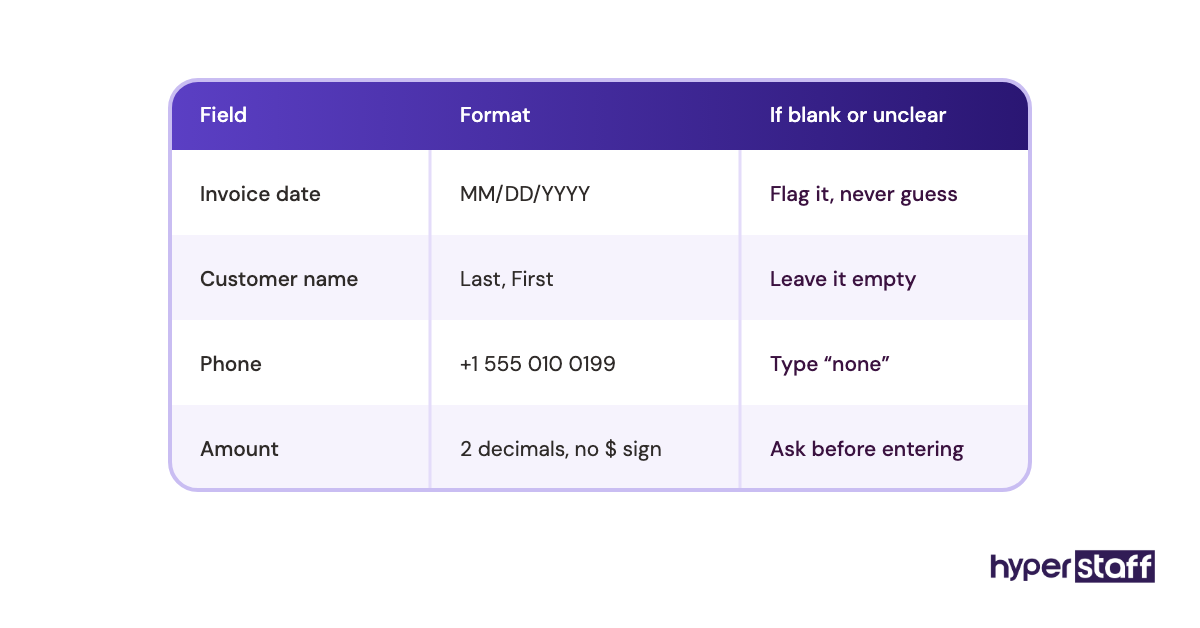
Step 2: Write a One-Page Data Dictionary
List every field, its format and what to do when it's blank or unclear. Most clarifying questions, and the paid minutes they burn, vanish once those rules exist in writing.
Step 3: Match the Tier to the Task
Straight keying from clean sources fits Essential. Records needing judgment, like matching duplicate contacts or reading messy invoices, justify Professional.
Step 4: Let Software Take the First Pass
Run structured documents through an extraction tool and have your assistant review flagged fields only. Hours drop while a person still checks anything uncertain.
Step 5: Switch to Quarterly Billing Once the Fit Is Proven
After two or three steady months, quarterly payment saves 10% on the same hours. Lock it in only once accuracy holds.
Is a Data Entry Virtual Assistant Worth the Investment?
A data entry virtual assistant is worth the investment for most growing teams, and it can be one of the highest-ROI hires a business makes. Offshore rates sit at a fraction of US wages, and the hours returned go to work that earns money.
The return holds only with clear field rules and a review habit. Our full take on whether a data entry VA pays off covers the cases where it doesn't.
Disclaimer: This article is for general information only. Prices, rates and figures are estimates that change over time and vary by provider, region and scope. Hyperstaff makes no guarantee of specific costs or results. Confirm current pricing and terms directly before making hiring decisions.
Common questions
Can I hire a data entry VA part-time to save money?
You can. A 40-hour monthly bundle works out to about 10 hours a week, which suits weekly invoice batches or CRM upkeep. Part-time keeps costs low while you test whether the volume justifies more hours.
Do data entry VAs charge more for rush or weekend work?
Many freelancers add 25% to 50% for rush or weekend jobs. With a dedicated assistant on a monthly bundle, planned surges usually fit inside reserved hours, so give a few days' notice before big batches.
Should I pay for a test task before hiring a data entry VA?
Yes. A paid sample of 50 to 100 real records costs little and shows accuracy, speed and how the person handles unclear fields. Skipping it saves a few dollars and risks weeks of rework.
What's the cheapest way to pay an overseas data entry VA?
Paying through an agency invoice in your own currency is usually simplest, since the agency handles cross-border payroll. Paying freelancers directly through marketplaces or transfer apps often adds 2% to 5% in fees and exchange margins.
Do data entry virtual assistant rates go up over time?
Usually, yes. Freelancers commonly raise rates 5% to 15% after six to twelve months, especially once they know your systems well. Agency rates tend to stay fixed within a tier unless you move the role up a level.
Book a free 15 min call
We place a pre-vetted specialist in 5 business days, fully managed, from $3/hour.