Virtual Assistant Interview Questions: A Copyable Template
A ready-to-use virtual assistant interview template with scoring rules, answer examples and a step-by-step hiring plan.
On this page
- What are good virtual assistant interview questions?
- Key VA interview terms you should know
- The virtual assistant interview template (copy and use)
- How do you adapt the interview template to a specific role?
- How does a virtual assistant interview process work?
- How is a VA interview different from other hiring steps?
- What are the pros and cons of a structured VA interview?
- What do good and bad interview answers look like?
- Creating a VA interview plan, step by step
- Which tools help you run VA interviews?
- 9 proven tips for interviewing a virtual assistant
- Overcoming common VA interview challenges
- How do you measure whether your VA interviews work?
- How long does it take to hire a virtual assistant?
- How much does it cost to hire a virtual assistant?
- Is a structured VA interview worth the effort?
- How do you choose a virtual assistant agency?
- VA interview trends worth watching
- How is AI changing virtual assistant interviews?
- FAQs
💡 Key Takeaways:
1) Strong virtual assistant interview questions test real work: ask candidates to walk through a task, explain a past decision and show how they communicate when something goes wrong.
2) A structured template, with the same questions and a 1 to 5 scoring scale for every candidate, makes comparisons fair and keeps gut feel out of the final call.
3) Pair the interview with a short paid trial task, because a well-rehearsed answer and real output are two different signals.
The right hire pays back from week one
Hyperstaff has placed 70+ pre-vetted virtual assistants with 30+ clients, drawn from talent in the Philippines, Latin America, India, Eastern Europe and the United States. Our dedicated virtual assistant services start from $3/hour, with placement in 5 business days and a free replacement in 5 to 7 business days if the fit is wrong.
What are good virtual assistant interview questions?
Good virtual assistant interview questions make a candidate show how they handle real work: a messy inbox, an upset customer, a missed deadline, a tool they've never opened. Each answer should give you evidence you can score against the role.
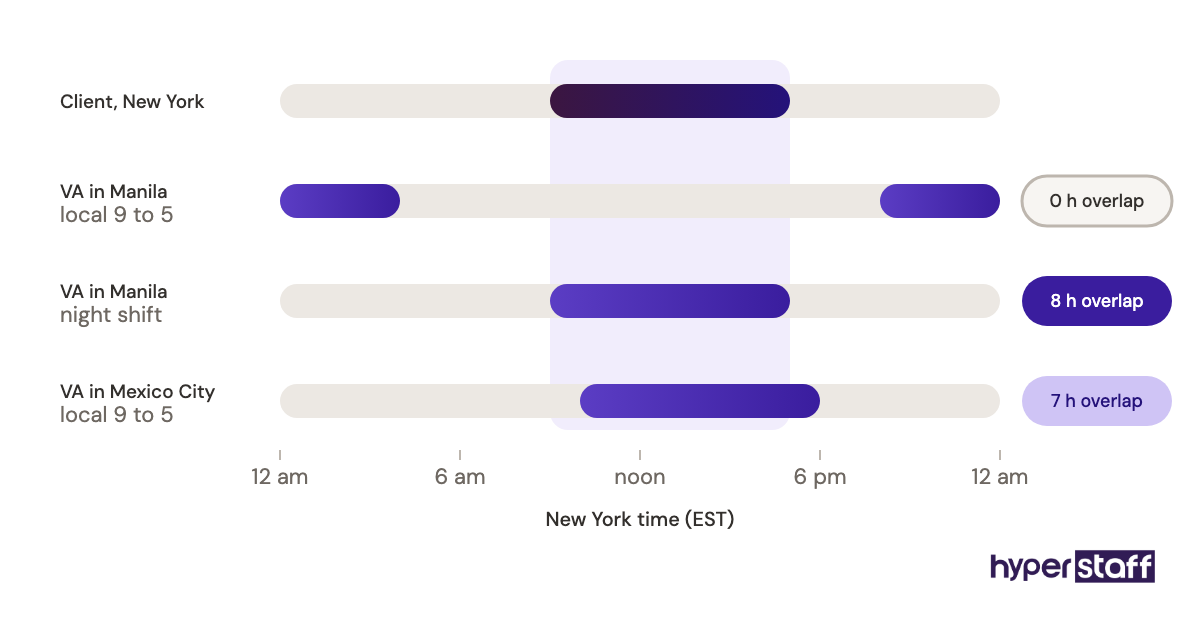
A remote hire also needs questions that a local interview skips. You're testing written communication, time-zone habits, home setup and how someone asks for help when nobody sits next to them.
The role itself is wider than most people assume. Virtual assistants now cover customer support, lead generation, digital marketing, operations and online business management, so the question set has to match the job (our guide on what a virtual assistant does maps the full range).
Key VA interview terms you should know
- Structured interview = every candidate gets the same questions in the same order, scored on one scale.
- Behavioral question = asks what the candidate did in a past situation.
- Situational question = asks what they would do in a scenario taken from your work.
- Scorecard = the sheet where each answer gets a 1 to 5 rating against written criteria.
- Paid trial task = a short, paid sample of real work done before an offer.
- Async interview = recorded video answers the candidate submits on their own time.
- Time-zone overlap = the hours when you and the assistant are both online.
- SOP = standard operating procedure, the written steps for a recurring task.
- Red flag = an answer pattern that predicts trouble, like blaming every past client.
The virtual assistant interview template (copy and use)
The template below runs about 45 minutes and fits most general, admin and specialist virtual assistant roles. Copy it into a doc, keep the order fixed and score every answer from 1 to 5 before the next call starts.
Part 1: Background (5 minutes)
- Walk us through your last two remote roles. What did a normal day look like?
- Which client or manager did you work with longest, and why did it end?
- What hours can you work, and how many of them overlap with [our time zone]?
Part 2: Remote work habits (10 minutes)
- Describe your workspace, internet and backup plan if power or the connection drops.
- How do you track your tasks across a week? Share your screen and show us, if you can.
- When instructions are unclear, what do you do first?
- Tell us about a mistake a client noticed. What happened next?
- How do you prefer to get feedback: written, on a call or in the moment?
Part 3: Role skills (15 minutes, pick the block that matches the role)
Admin and executive support:
- Our founder gets 150 emails a day. How would you sort them in your first week?
- Two senior people want the same meeting slot. What do you do?
Customer support:
- A customer writes in angry about a late refund. Type your first reply in the chat now.
- How do you handle a question you can't answer on the spot?
Lead generation and sales:
- Walk us through how you'd build a list of 100 prospects for [target customer].
- How do you check an email address or phone number before outreach?
Digital marketing:
- Which social or email tools have you scheduled content in? What broke last time?
- A post underperforms. Which numbers do you look at first?
Operations and online business management:
- Tell us about a process you wrote up as an SOP. Who used it after you?
- How would you clean a spreadsheet with 2,000 duplicate rows?
Part 4: Judgment and ownership (10 minutes)
- Tell us about a time you did work nobody asked for. Was it the right call?
- A task will miss its deadline by a day. When and how do you tell us?
- What would you refuse to do for a client?
- What kind of manager have you done your worst work for?
Part 5: Wrap-up (5 minutes)
- What questions do you have about the role or the business?
- Are you working with other clients now? How many hours do they take?
- If we asked your last manager about your weak spot, what would they say?
Scoring rubric
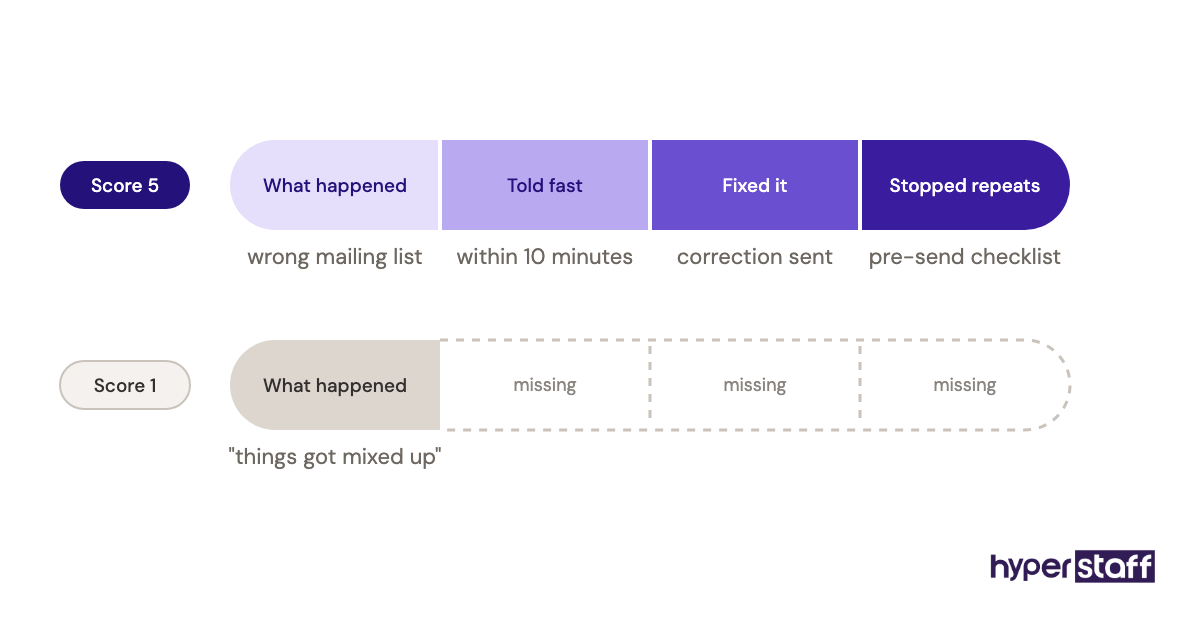
1 = no example, or a vague answer. 3 = a real example with some detail. 5 = a specific example, clear steps and an honest account of what went wrong. Mark a red flag next to any answer that blames others without owning a part.
Pass mark
Average of 3.5 or higher, with no score of 1 in Part 2 or Part 4. Candidates who pass move to a paid trial task.
How do you adapt the interview template to a specific role?
Adapt the virtual assistant interview template by swapping Part 3 for the skill block that matches the job, then rewriting two or three questions with your own tools and numbers. Keep Parts 2 and 4 untouched, since remote habits and ownership matter in every role.
Start from the actual work list. Our checklist of common virtual assistant tasks is a quick way to pull the five or six jobs the hire will do most, and each one deserves at least one question.
| Question type | What it tests | Example prompt | Best for | Weak spot |
|---|---|---|---|---|
| Behavioral | Past habits | "Tell us about a missed deadline" | All roles | Easy to rehearse |
| Situational | Judgment | "Two meetings clash. What now?" | Admin, operations | Ideal answers, untested |
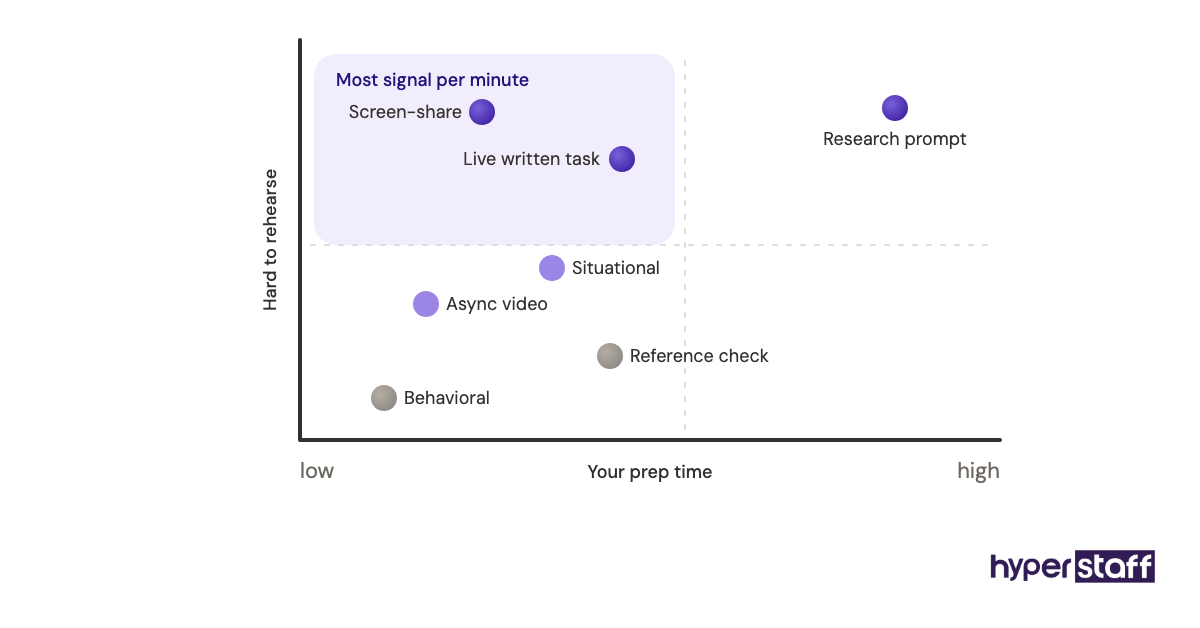
| Live written task | Writing under time | "Reply to this angry email" | Support, admin | Nerves can drag scores |
| Screen-share walkthrough | Tool fluency | "Show us your task tracker" | Operations, marketing | Needs stable internet |
| Async video answer | Spoken English | "Record 2 minutes on your last role" | Client-facing roles | Answers can be scripted |
| Research prompt | Accuracy | "Find 5 prospects matching this profile" | Lead generation | Takes 20+ minutes |
| Reference question | Track record | "Would you rehire them?" | Final stage | Referees stay polite |
Most hiring managers lean on behavioral questions because they're easy to ask. A live written prompt or a screen-share catches what a confident talker can hide, so put at least one in every interview.
How does a virtual assistant interview process work?
A virtual assistant interview process usually runs in four stages: a written application screen, a short call, the structured interview from the template and a paid trial task. Most businesses move from first contact to offer in one to three weeks when each stage keeps moving.
The written screen filters more than people expect. Ask applicants to answer two short questions inside the application, and you'll lose anyone who skims instructions before a single call is booked.
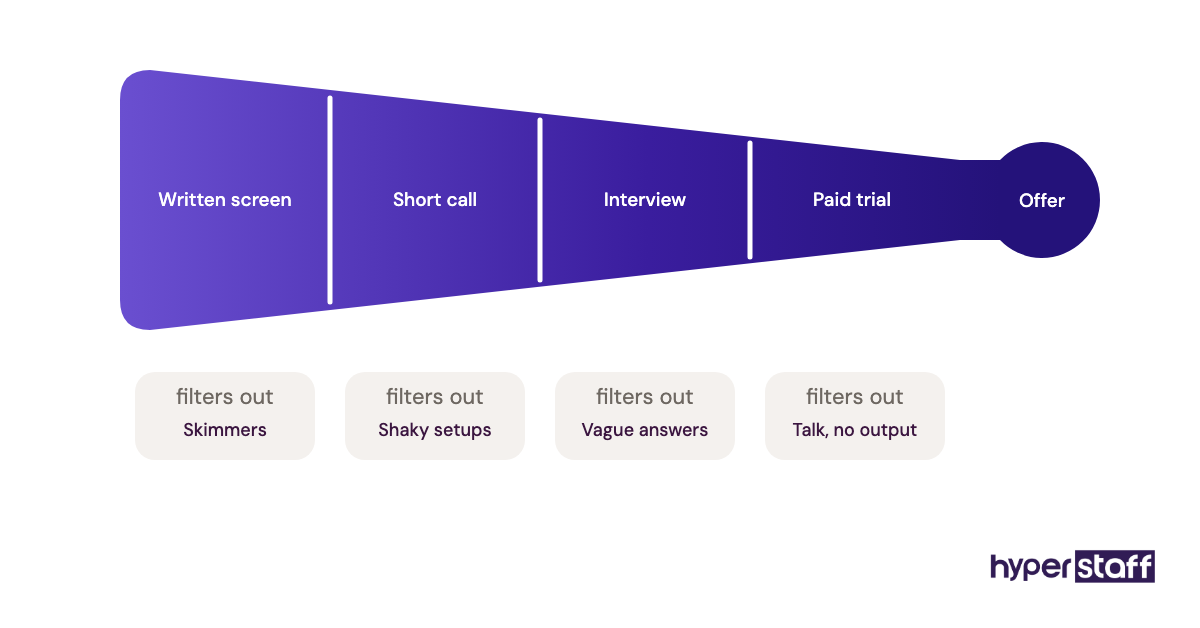
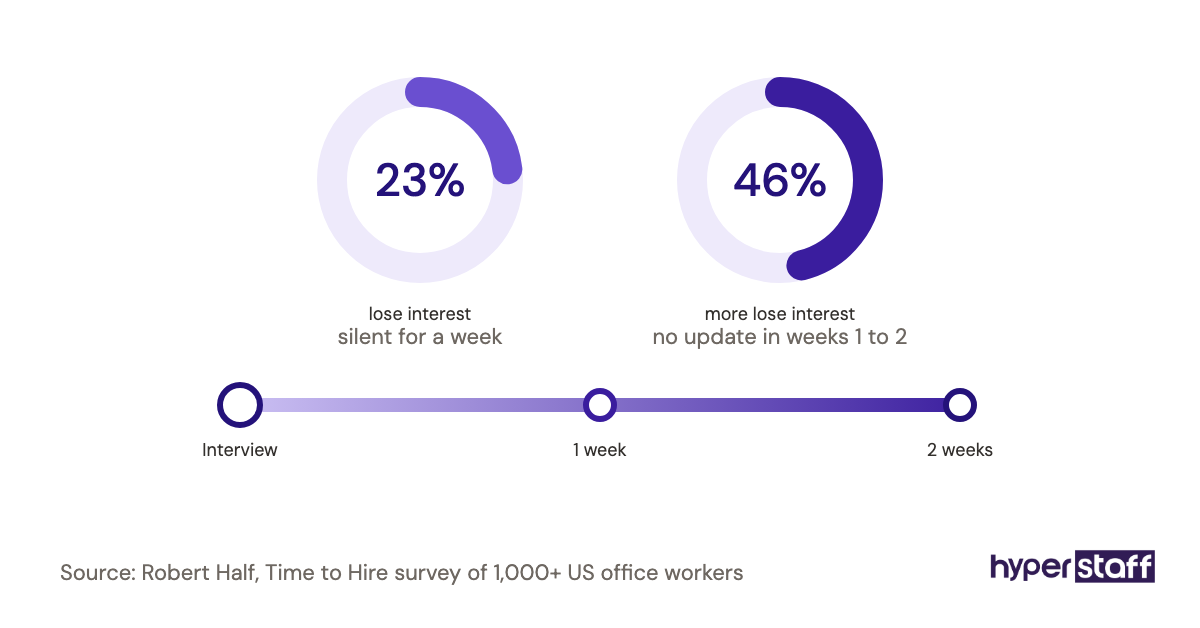
The gaps between stages are where good hires slip away. Strong remote candidates often weigh several offers at once, so a five-day silence after the interview can cost you the person you rated highest.
How is a VA interview different from other hiring steps?
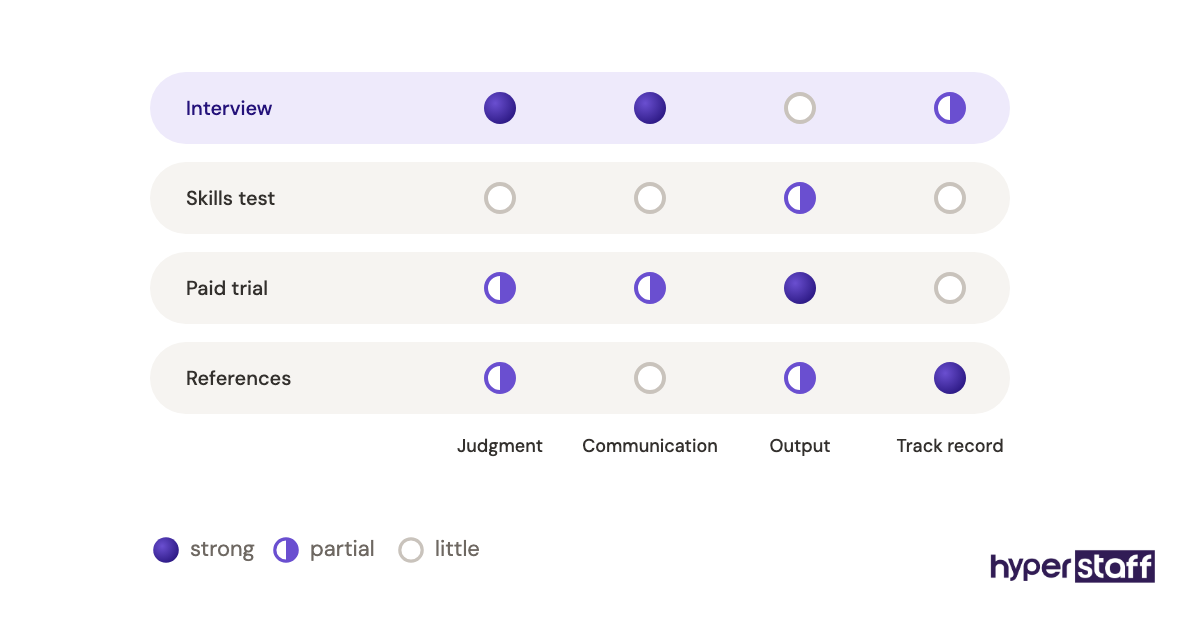
A VA interview tests judgment and communication in conversation, which other hiring steps can't measure alone. The job description sets the bar, the trial task tests output and references confirm the history.
VA interview vs. in-house job interview
An in-house interview leans on presence: how someone carries themselves and fits with the people down the hall. A remote interview has to test the habits that replace that hallway, like written updates, self-scheduling and asking clear questions in a chat thread.
Cost and commitment differ as well. Our comparison of a virtual assistant vs an in-house hire lays the numbers side by side.
VA interview vs. skills test
A skills test proves someone can do a task once, under tidy conditions. The interview tells you what happens on day 40, when the task changes, the tool updates and the instructions are half-written.
Some hiring managers skip the interview and hire on test results. We'd keep both, because a fast worker who never flags a problem is harder to manage than a slower one who does.
VA interview vs. paid trial task
A paid trial task is real work, usually two to five hours, done after the interview. It's the strongest signal you'll get, but it costs both sides time, so the interview decides who earns a trial.
What are the pros and cons of a structured VA interview?
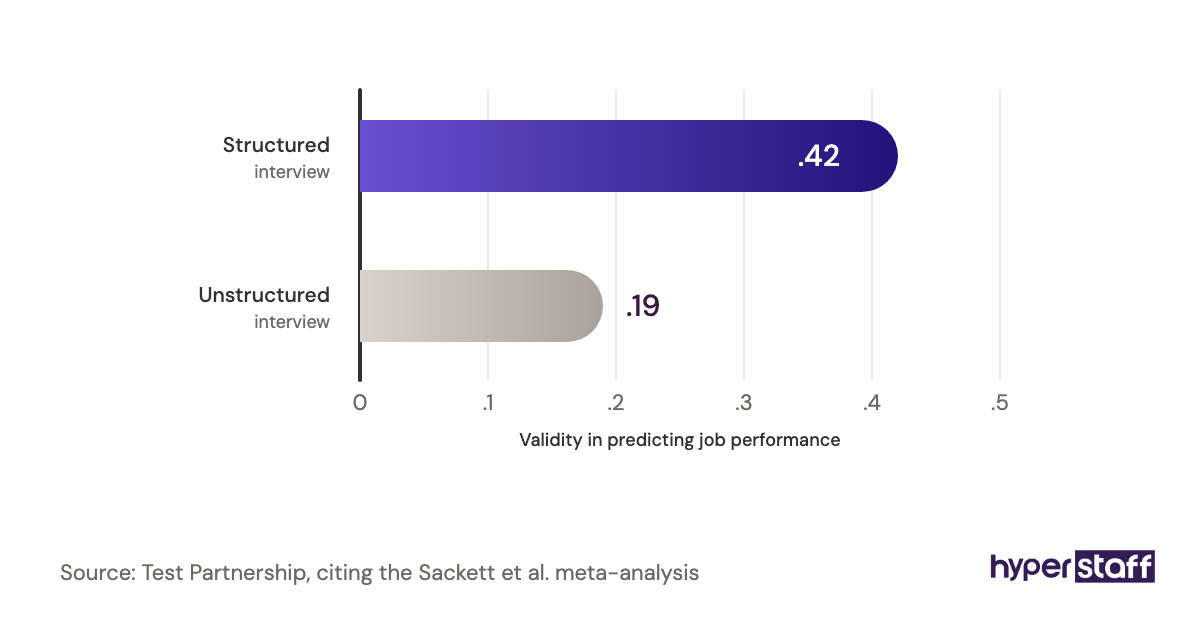
A structured virtual assistant interview gives fairer comparisons and fewer surprise hires, at the cost of some flexibility. For small teams hiring remotely, the benefits win by a wide margin.
The benefits of a structured interview
- Every candidate answers the same questions, so scores compare directly.
- Accent, background and small talk carry less weight in the decision.
- A second interviewer can join and score without a long briefing.
- Weak answers show up as low numbers, instead of a vague bad feeling.
- The scorecard becomes a record you can check against the hire's later work.
The drawbacks of a structured interview
- A stiff script can feel cold to strong candidates.
- Writing good role-specific questions takes an hour or two upfront.
- A fixed flow can miss a promising tangent unless you leave room for follow-ups.
What do good and bad interview answers look like?
Good answers name a real situation, the steps taken and the result, including what went wrong. Bad answers stay general, praise the candidate and skip the details you'd need to check.
Good virtual assistant interview answer examples
"When instructions are unclear, what do you do first?"
"I reread them once, then write back with my best guess and one question, like 'I'll format this as a table unless you'd prefer bullets.' That way the work keeps moving while I wait."
The candidate shows a habit and offers a default. You can manage someone who works like that across a 10-hour time difference.
"Tell us about a mistake a client noticed"
"I sent a newsletter to the full list instead of the test segment. I told the client within 10 minutes, sent a correction and now run a checklist before every send."
Ownership and a process fix, in two sentences. Score it a 5.
"A task will miss its deadline. When do you tell us?"
"As soon as I know, usually the day before. I say what's done, what's left and the new time I can commit to."
Early warning plus a fresh commitment is the pattern you want.
Bad virtual assistant interview answer examples
"I'm a perfectionist who works too hard"
A rehearsed weakness tells you the candidate studied interview guides. Ask for a real example and see if one exists.
"My last client was impossible to work with"
Blaming every past client is the most reliable red flag in the template. Many of the common virtual assistant mistakes trace back to hiring someone who never owns a problem.
"I can do anything you need"
Range sounds useful, yet it gives you nothing to score. Ask which three tasks they'd pick first and which ones they'd want training on.
Creating a VA interview plan, step by step
An interview plan turns the template into a hiring process with dates, owners and a pass mark. Five steps cover it, and the finished plan fits on one page.
Step #1: Write down the work before the questions
List the tasks, tools and weekly hours first. A clear virtual assistant job description doubles as the source for your Part 3 questions.
Step #2: Pick and edit your question set
Take the template, swap in the right skill block and replace every placeholder with your own details. Questions that name your actual tools get sharper answers than generic ones.
Step #3: Set the scoring rules before anyone applies
Decide what a 1, a 3 and a 5 look like for each question, plus the pass mark. Rules written after the first interview tend to bend toward whoever you liked.
Step #4: Book interviews in a tight window
Run all interviews within three or four days so candidates are scored against fresh memory. Leave 10 minutes after each call to score before the next one starts.
Step #5: Close with a paid trial and a fast decision
Give the top one or two candidates a paid task with a clear brief and deadline. Decide within 48 hours of receiving the work, then move into onboarding your virtual assistant while the momentum is there.
Which tools help you run VA interviews?
A remote interview setup needs a scheduler, a video tool, a recording option and a place to keep scores. Most small teams run it on software they already pay for.
- Calendly books calls across time zones without email back-and-forth, and the free plan covers a single interviewer.
- Google Meet or Zoom hosts the live interview. Meet runs in the browser, which matters for candidates on older laptops.
- Loom collects async answers: candidates record a two-minute reply, and spoken English shows up fast.
- Google Forms or Typeform builds the written screen inside the application.
- TestGorilla supplies pre-built skills tests, useful at high applicant volume and overkill for one hire.
- Google Sheets or Notion holds the shared scorecard.
For a single hire, a shared spreadsheet scorecard does the job better than a dedicated hiring platform. Every extra login adds friction for interviewers and candidates alike.
9 proven tips for interviewing a virtual assistant
Small habits around the template decide how much signal you get from each call.
- Test the candidate's connection in the first two minutes, before it matters.
- Ask at least one question that requires typing in the chat, since most VA work is written.
- Follow every strong answer with "What would you do differently now?"
- Let the candidate talk for roughly 70% of the call.
- Ask openly about other current clients, since part-time assistants often have two or three.
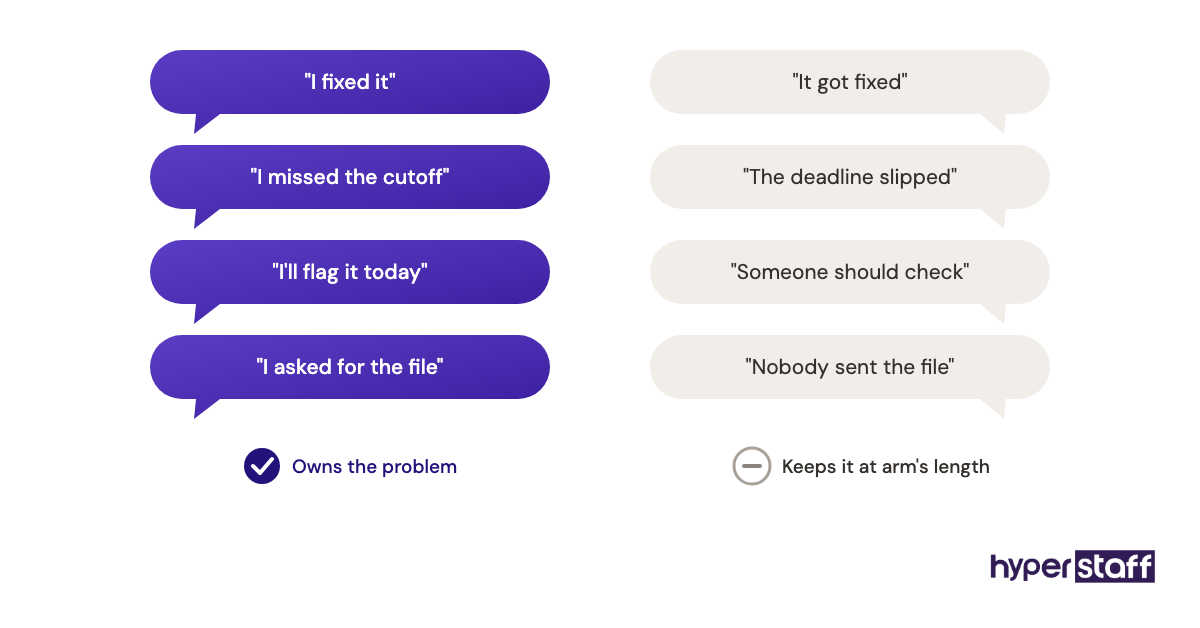
- Listen for "I fixed it" versus "it got fixed." The grammar tells you who owns problems.
- Check references with one pointed question: "Would you hire them again for the same work?"
- Score alone before comparing notes with a co-interviewer.
- Tell every candidate when they'll hear back, then keep that date.
Overcoming common VA interview challenges
The most common problem is a strong interview followed by weak work. A paid trial task closes most of that gap, and the scorecard shows which questions failed to predict the result.
Accent and language cause a second set of misreads. Separate how clearly someone communicates from how native they sound, and weight written answers higher for roles that live in email and chat.
No-shows waste interview slots. Send reminders 24 hours and one hour ahead, and treat a missed first call with no notice as an answer in itself.
How do you measure whether your VA interviews work?
Measure interview success by comparing each hire's performance at 30, 60 and 90 days with their interview scores. When high scorers keep turning into strong assistants, the questions are working.
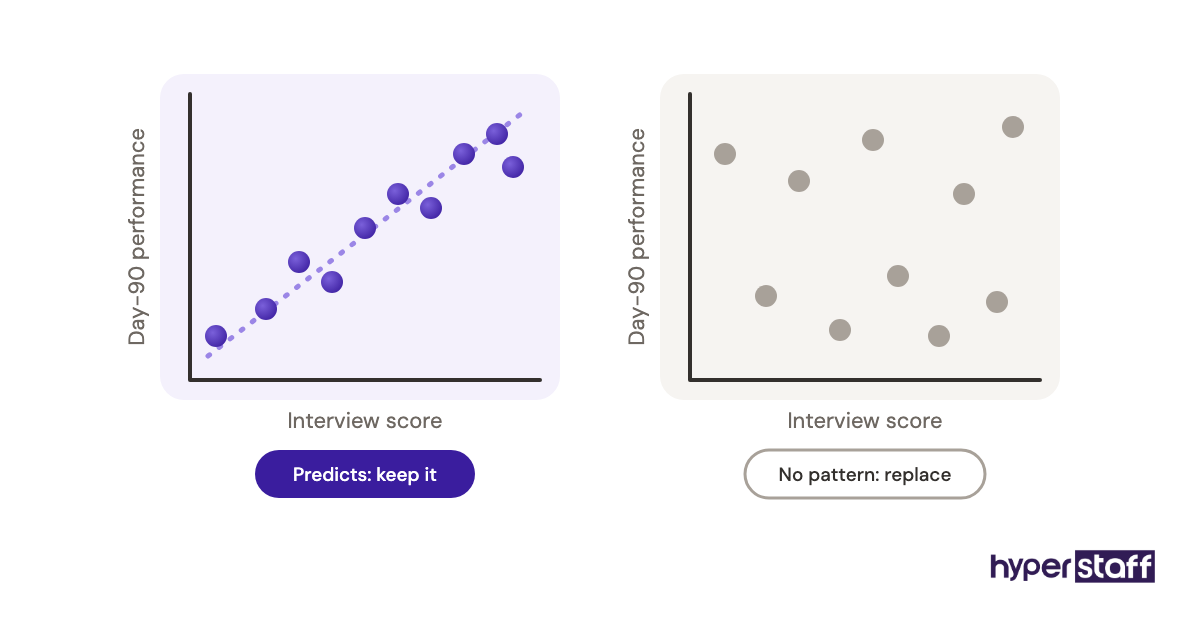
Track a few plain numbers: the share of trial tasks that pass, days from first call to offer and how many hires stay past six months. Replace any question that never separates good candidates from weak ones.
How long does it take to hire a virtual assistant?
Hiring a virtual assistant on your own takes one to four weeks: about a week of applications, a few days of interviews, then two to five days for a paid trial. Screening applicants is usually the slowest part.
The interview keeps paying off after the hire. Assistants hired against clear criteria tend to settle in within two to four weeks, once SOPs and access are ready.
An agency shortens the front end. Hyperstaff places pre-vetted talent in 5 business days and opens with a 30-minute kickoff call, then work starts that day or the next morning.
How much does it cost to hire a virtual assistant?
Hiring a virtual assistant through Hyperstaff costs from $3 to $12+ per hour depending on experience tier, compared with roughly $22 to $50 per hour fully loaded for a US in-house assistant. The interview process itself mostly costs your own time.
| Experience level | Hyperstaff hourly (from) | Hyperstaff, 160 hours/month (from) | Typical US in-house, loaded hourly | Typical US in-house, monthly |
|---|---|---|---|---|
| Essential (0 to 2 years) | $3 | $480 | $22 to $28 | $3,800 to $4,900 |
| Professional (2 to 5 years) | $6 | $960 | $27 to $35 | $4,700 to $6,100 |
| Expert (5+ years) | $12 | $1,920 | $35 to $50 | $6,100 to $8,700 |
Monthly bundles of 40, 80 or 160 hours let you start below full time, and paying quarterly saves 10%. In-house figures add payroll taxes and benefits on top of salary, and they swing widely by city.
Important: Hyperstaff prices above are starting averages, not fixed quotes. Your final rate depends on the role, the skills needed and the hours you book each month.
Is a structured VA interview worth the effort?
Yes, a structured interview is one of the highest-return hours you'll put into hiring, since it's the cheapest point to catch a mismatch. Fixing the wrong hire later costs weeks of your time plus the work that slipped in the meantime.
Here's an example calculation. Say your time is worth $80 an hour and the full process (screen, five interviews, scoring and one trial review) takes 8 hours, which comes to $640.
Now take a mismatched Professional-tier hire at $6/hour for 160 hours, or $960 for the month, plus 15 hours of your time correcting work, worth $1,200. One bad month costs about $2,160, more than three times the cost of interviewing properly.
The wider return on a hire, beyond the interview, is in our breakdown of whether a virtual assistant is worth it.
How do you choose a virtual assistant agency?
Choose a virtual assistant agency by asking how it vets candidates, how fast it places and replaces people and who manages the relationship after the hire. The answers show how much of the interview work the agency takes on for you.
Ask to interview the shortlisted candidate yourself, even when they're pre-vetted, because Parts 3 and 4 of the template still apply. Check whether you get one dedicated person or a rotating pool, since a pool means re-explaining your business each time someone new picks up a task.
Replacement terms matter more than they look at sign-up. Hyperstaff replaces a placement free in 5 to 7 business days and briefs the new person from your Operations Vault, the written record of your SOPs, tools and context.
Every Hyperstaff client also gets a dedicated account manager. Ask any agency you're comparing who your contact will be and how quickly they reply.
VA interview trends worth watching
Remote hiring has moved toward shorter live interviews and more async steps. Recorded answers, written screens and paid trials now carry weight that one long call used to hold.
Skills-based hiring suits virtual assistant roles well, where a portfolio and a trial task say more than a degree. Fewer job posts for remote support roles list formal education as a requirement.
Our prediction is that live interviews will get shorter and harder to fake: more screen-sharing, more live writing and fewer "tell us about yourself" openers. We're less sure how fast hiring platforms will settle on rules for AI use during interviews.
How is AI changing virtual assistant interviews?
AI is changing virtual assistant interviews on both sides of the call. Candidates use chat tools to polish written answers, and employers use them to draft question sets and summarize recordings.
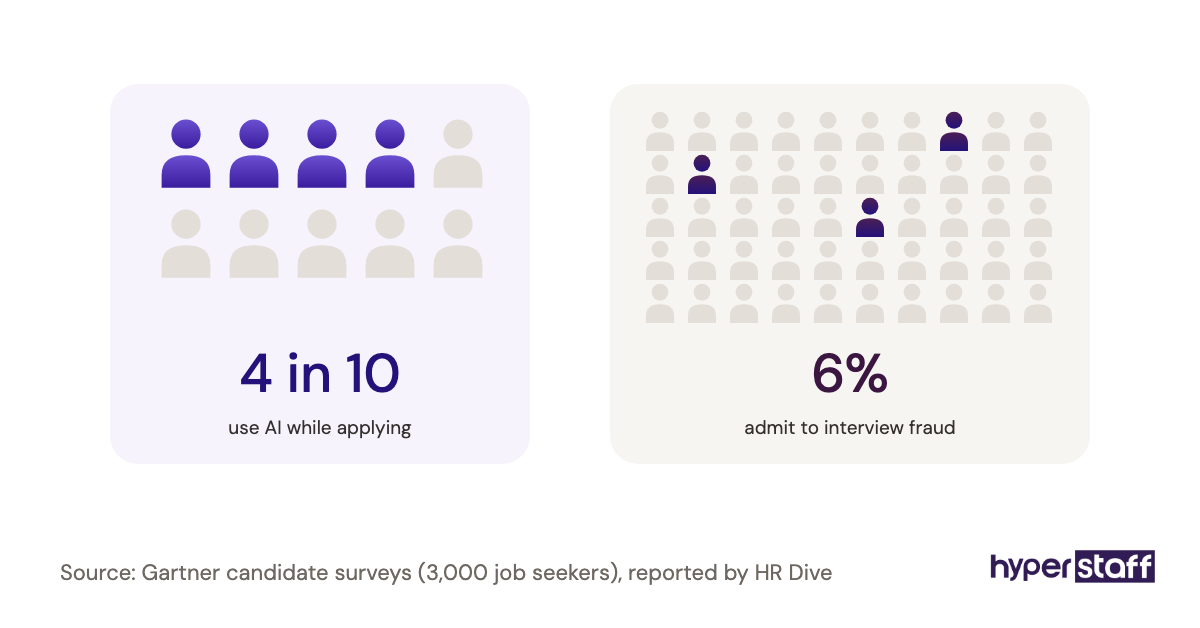
Ask candidates how they use AI at work. A good assistant in most roles uses it daily, so a prompt like "Draft this reply with ChatGPT, then fix what it gets wrong" tests a real job skill.
Practitioners disagree on AI in written screens. Some hiring managers reject any answer that reads as machine-written, while others accept it and move the real test to live, on-camera tasks, which is the approach we'd pick.
Disclaimer: This article is general information and isn't legal, HR or employment advice, and hiring rules differ by country and contract type. Hyperstaff rates and terms can change, so confirm current details with us before you make a hiring decision.
Common questions
What questions should I ask a virtual assistant in an interview?
Ask about remote habits, role skills and ownership. Strong starters are "When instructions are unclear, what do you do first?", "Tell us about a mistake a client noticed" and one question built around the tools the job uses.
How long should a virtual assistant interview be?
About 30 to 45 minutes for the main interview, with a 10-minute screening call before it. Shorter calls leave no room for follow-ups, and longer ones tire both sides.
Should I give a virtual assistant a test task before hiring?
Yes, and pay for it. A two to five hour trial at the role's hourly rate shows real output, and paying keeps experienced candidates in the process.
What are red flags when interviewing a virtual assistant?
Blaming every past client, vague answers with no examples and a shaky connection with no backup plan are the big ones. Missing the first call without notice belongs on the list too.
Can I interview a virtual assistant from an agency?
You can, and you should. Even with pre-vetted talent, a 30-minute call using the role-skills and ownership parts of the template confirms the fit before work starts.
Book a free 15 min call
We place a pre-vetted specialist in 5 business days, fully managed, from $3/hour.