How to Hire a Real Estate Virtual Assistant Who Sticks
How to hire a real estate virtual assistant, from the time log that scopes the role to the paid test, the access setup and the 30-day review.

On this page
- What does it mean to hire a real estate virtual assistant?
- Key terms to know before you hire a real estate VA
- Why does the way you hire a real estate VA matter?
- How does hiring a real estate virtual assistant work?
- Types and forms of real estate VA hiring
- How does hiring a real estate VA differ from related hires?
- The benefits of hiring a real estate virtual assistant
- The drawbacks of hiring a real estate virtual assistant
- Who should hire a real estate virtual assistant?
- How to hire a real estate virtual assistant: examples
- Creating a real estate VA hiring plan, step by step
- What does an effective real estate VA hiring strategy look like?
- Tools and software for hiring a real estate VA
- 10 proven tips for hiring a real estate virtual assistant
- Overcoming common real estate VA hiring challenges
- How to measure real estate VA hiring success
- How long does it take to hire a real estate VA and see results?
- How much does it cost to hire a real estate virtual assistant?
- Is it worth it to hire a real estate virtual assistant?
- How do you choose an agency to hire a real estate VA?
- Real estate VA hiring statistics, trends and future predictions
- Hiring a real estate VA in the age of AI
- FAQs
💡 Key Takeaways:
1) To hire a real estate virtual assistant, log a week of your own tasks first, then write the role around the four or five tasks that eat the most hours and need no license.
2) Screen candidates with a short paid test inside a sample CRM or inbox. A test shows real skill faster than a résumé or a second interview does.
3) Plan two to four weeks of setup before the VA works without daily check-ins, and keep MLS access, pricing advice and contract questions with the licensed agent.
Hire the help that frees you to close more deals
Hyperstaff has matched 70+ virtual assistants with 30+ clients, and our real estate virtual assistant services place a pre-vetted, dedicated specialist in 5 business days, with rates from $3 an hour. You get one person who learns your listings and your voice, a dedicated account manager, and a free replacement in 5 to 7 business days if the fit is wrong.
What does it mean to hire a real estate virtual assistant?
Hiring a real estate virtual assistant means bringing on a remote team member who works inside your CRM, inbox and calendar to run the admin, marketing and follow-up behind your deals. The hire can be part-time or full-time, freelance or placed through an agency.
The role is wider than most agents expect. A good real estate VA can work leads, launch listings, track contract deadlines, post to social and keep the books tidy, and our explainer on what a real estate VA is maps each area.
What the hire can't include is licensed work. In most US states, an unlicensed assistant can't show property, negotiate, or advise a consumer on contract terms, so those tasks stay with you.
Key terms to know before you hire a real estate VA
- Time log = a record of every task you do for a week, with minutes spent, used to scope the VA role.
- Paid test task = a short, paid work sample, such as drafting a lead reply, used to screen candidates.
- Dedicated VA = one person assigned to your business only, as opposed to a shared pool.
- Hour block = a monthly bundle of contracted hours, such as 40, 80 or 160.
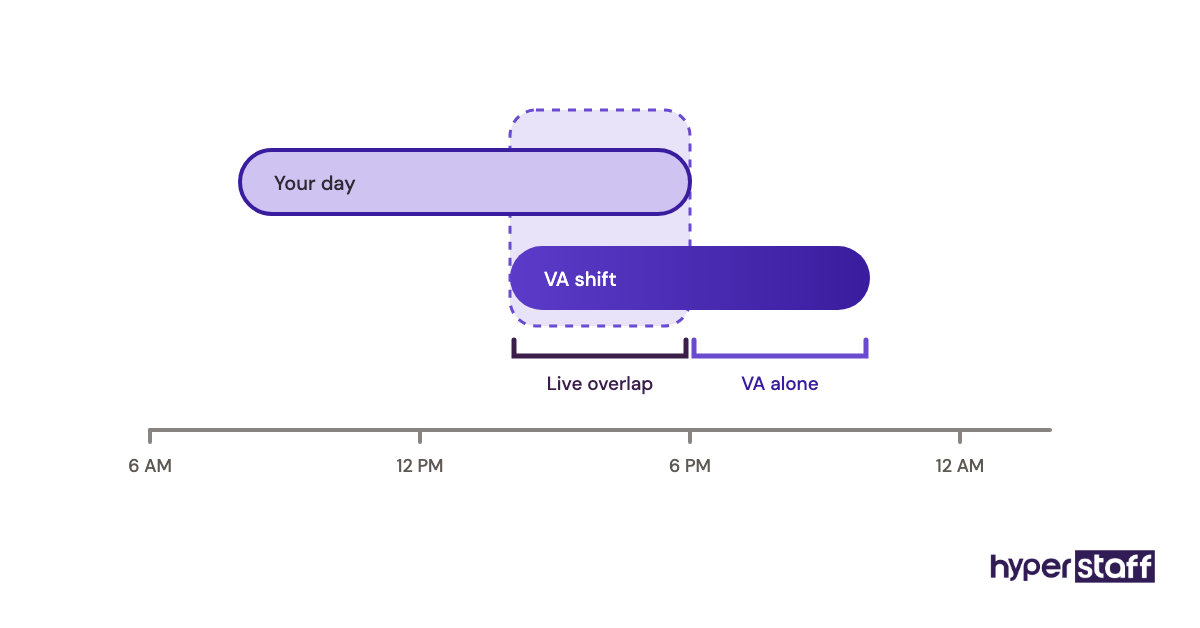
- Time-zone overlap = the hours per day when you and the VA are both working.
- Speed to lead = minutes between a new inquiry and the first reply from a real person.
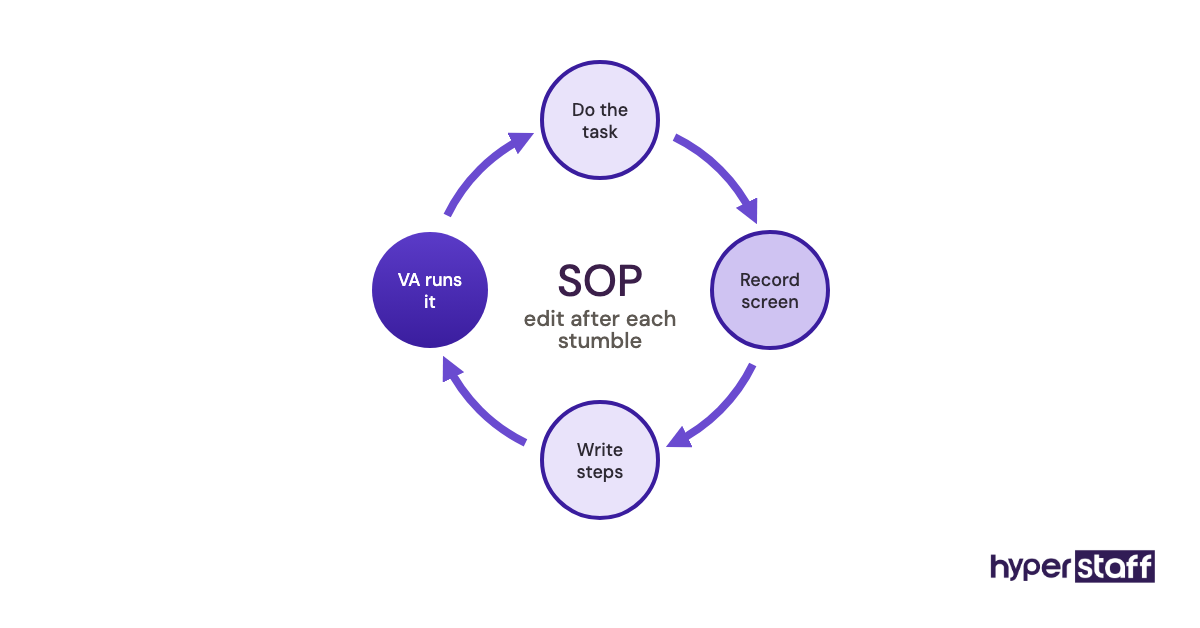
- SOP = a written or recorded how-to the VA follows for a repeating task.
- Assistant access = a separate MLS or CRM login some boards offer for support staff.
- DNC scrub = checking a call list against Do Not Call registries before anyone dials.
- Replacement guarantee = an agency's written promise to swap in a new VA, and how fast.
- Contractor classification = whether the VA is legally an employee or an independent contractor, which changes your tax duties.
Why does the way you hire a real estate VA matter?
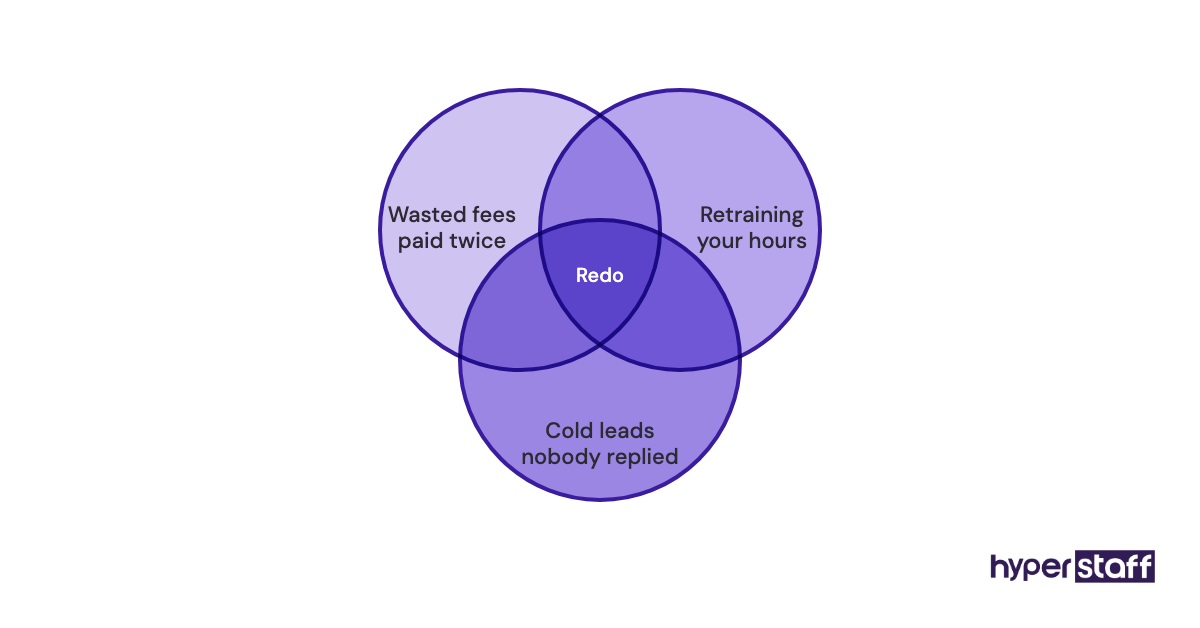
The way you hire a real estate virtual assistant decides whether the role lasts past month two. A rushed hire with a vague task list usually ends with the agent doing the work again, plus the cost of a second search.
The stakes come from how few deals an agent closes. The typical Realtor did 9 transaction sides in a year on a median gross income of $59,200, according to NAR's member profile report, so one lost deal is a big slice of the year.
A bad hire costs you twice: once in wasted fees and again in the leads that went cold while you retrained someone. Across the 70+ placements we've made, the hires that stuck almost always started with a narrow, written role.
How does hiring a real estate virtual assistant work?
Hiring a real estate virtual assistant follows a set order: scope the role, pick a hiring channel, screen with a paid test, set up access, then review at 30 days. Skipping the scoping step is where most hires go wrong.
Through a freelance marketplace, you write the post, sort applications, run interviews and handle payroll yourself. Through an agency, you describe the role and the agency sends vetted candidates, usually within a week.
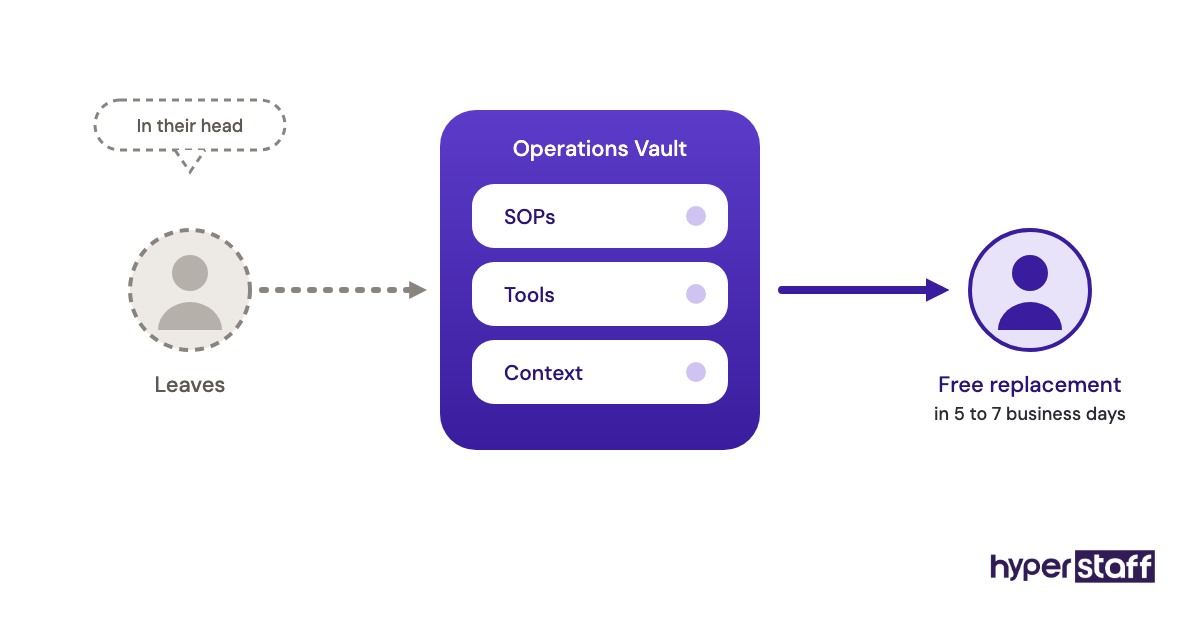
At Hyperstaff, the steps after placement are short. A 30-minute kickoff call sets priorities, work starts that day or the next morning, and your processes go into an Operations Vault we write and keep current.
Real life bends the textbook order. Most agents have no written SOPs, so the first two weeks of a new hire double as documentation time, and the VA's early output looks slower than it will in month two.
Types and forms of real estate VA hiring
Real estate VA hiring channels differ mainly in who vets the candidate, who handles payroll and what happens when the person leaves. The table compares the common routes.
| Hiring channel | Who vets candidates | Typical time to hire | If the VA leaves | Best fit |
|---|---|---|---|---|
| Dedicated VA through an agency | Agency | About 1 week | Agency replaces | Agents who want one long-term person |
| Pooled VA service | Provider | Days | Next person in pool | One-off overflow tasks |
| Freelance marketplace | You | 2 to 4 weeks | You search again | Agents with time to screen |
| Direct overseas hire | You | 3 to 6 weeks | You search again | Teams with HR experience |
| Referral from another agent | The referring agent | Varies | You search again | Agents in a strong local network |
| Part-time US-based VA | You or agency | 2 to 4 weeks | Depends on contract | Agents needing same-hour overlap |
| Brokerage-provided assistant | Brokerage | Depends on brokerage | Brokerage decides | Agents at large brokerages |
How does hiring a real estate VA differ from related hires?
Hiring a real estate VA differs from hiring a transaction coordinator, an inside sales agent or an in-house assistant in scope, pay model and licensing. Each of those roles owns one slice of the deal, where a VA can cover several.
Hiring a real estate VA vs. hiring a transaction coordinator
A transaction coordinator is often paid per file and only works contract to close. An agent closing fewer than about one deal a month rarely keeps a TC busy, so a VA who handles TC tasks alongside lead and listing work makes more sense.
Licensed TCs can do more in some states. Check your state commission's rules before you hire a VA to replace one.
Hiring a real estate VA vs. hiring an inside sales agent
An ISA is hired on phone skill and judged on booked appointments, and many get a share of closed deals. A VA can make calls too, but every list needs a scrub against the National Do Not Call Registry before the first dial.
Team leads genuinely split on this. One camp keeps calling as a full-time job because callers improve with volume, while the other folds it into a VA's day, and for solo agents under roughly 15 deals a year, we side with folding it in.
Hiring a real estate VA vs. hiring an in-house assistant
An in-house assistant can attend signings and greet walk-ins, and a licensed one may answer questions a VA legally can't. The trade-off is price: a US administrative assistant earns a median of $23.23 an hour before benefits, per the BLS occupational outlook.
For the side-by-side numbers on payroll taxes, desk space and turnover, see our breakdown of a real estate VA vs in-house staff.
The benefits of hiring a real estate virtual assistant
Hiring a real estate virtual assistant pays back mostly in hours you can move to licensed, income-producing work.
- Faster lead replies, including evenings when your VA works in a later time zone.
- Lower cost than a local hire, with no desk, equipment or payroll setup.
- Flexible size: start at 40 hours a month and scale to 160.
- A clean CRM, because someone logs every call and note daily.
- Deadline coverage on active files, so inspection and financing dates don't slip.
The drawbacks of hiring a real estate virtual assistant
The drawbacks are real, though most shrink with good setup.
- Licensing limits keep showings, negotiation and advice with you.
- Training time of two to four weeks before the VA works unsupervised.
- Access risk if logins are shared carelessly.
- Delayed replies on urgent requests when your hours barely overlap.
Who should hire a real estate virtual assistant?
Agents closing roughly 8 to 25 deals a year are the clearest fit to hire a real estate virtual assistant. At that volume, follow-up starts slipping, but a full-time office hire is hard to justify.
Teams hire by function instead: a listing coordinator VA for one agent, a lead follow-up VA for the buyer side. Property managers and investors hire for maintenance tickets, owner reports and list cleanup.
Brand-new agents are the honest exception. With two or three closings a year, a 40-hour block aimed at marketing and sphere outreach beats a full admin hire.
How to hire a real estate virtual assistant: examples
The hiring approaches below show up again and again in real estate. Some work, and others look sensible on paper but fail by week three.
Good examples of hiring a real estate VA
Hiring for one problem first
An agent loses evening portal leads, so the job post asks for one thing: reply within ten minutes from 5 p.m. to 10 p.m., log the lead and book a call. The narrow brief makes the paid test obvious and the results easy to measure.
A paid test that mirrors the real job
Each finalist gets a fake lead email, a sample CRM record and 45 minutes. The agent compares the replies side by side, and tone, accuracy and follow-through show up in a way an interview never catches.
Access built before day one
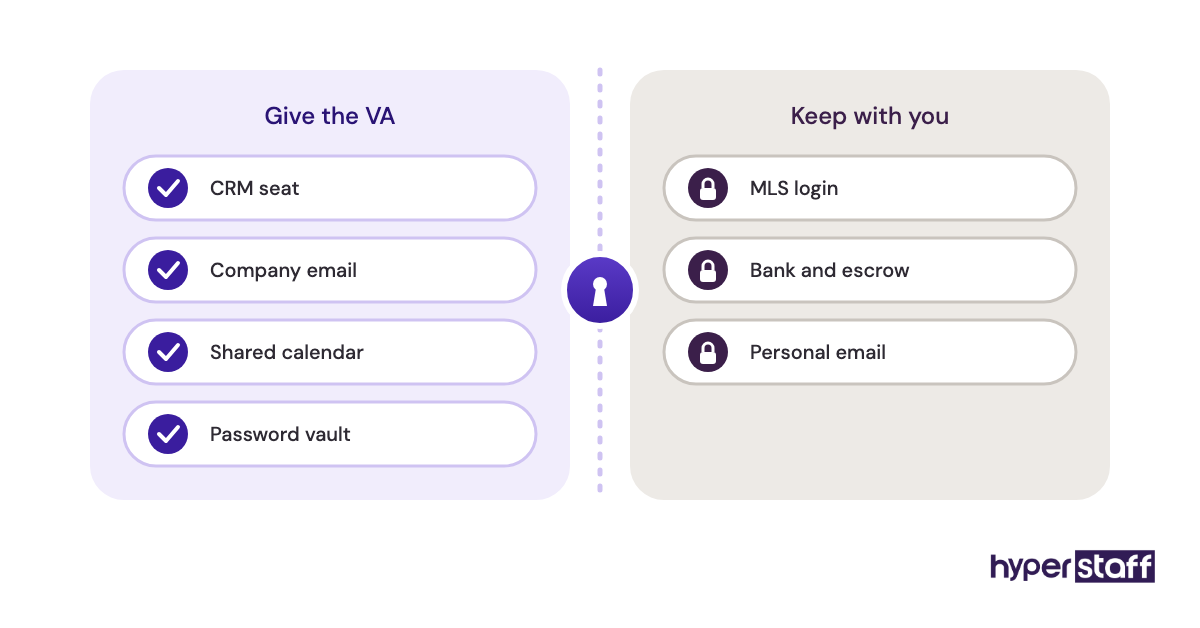
Separate CRM seat, a company email, a password manager vault and a screen recording of each first task all exist before the start date. The VA's first morning is spent working, with no waiting on logins.
Bad examples of hiring a real estate VA
A job post with 30 tasks
"Admin, marketing, TC, calls, bookkeeping, social and anything else" attracts generalists who are average at all of it. Our list of real estate VA mistakes puts this near the top for a reason.
Hiring on price alone
The cheapest applicant often has the weakest written English, and in real estate every text a lead receives carries your name. Pay for the tier the work needs.
Handing over your MLS password
Most MLSs ban credential sharing, and a fine or suspension costs far more than any VA. Ask your board about assistant access first.
Creating a real estate VA hiring plan, step by step
A real estate virtual assistant hiring plan takes about a week to build. Work through the steps in order, since each one feeds the next.
Step #1: Log your time for one week
Write down every task and the minutes it took for five working days. Circle anything that repeats, follows rules and needs no license.
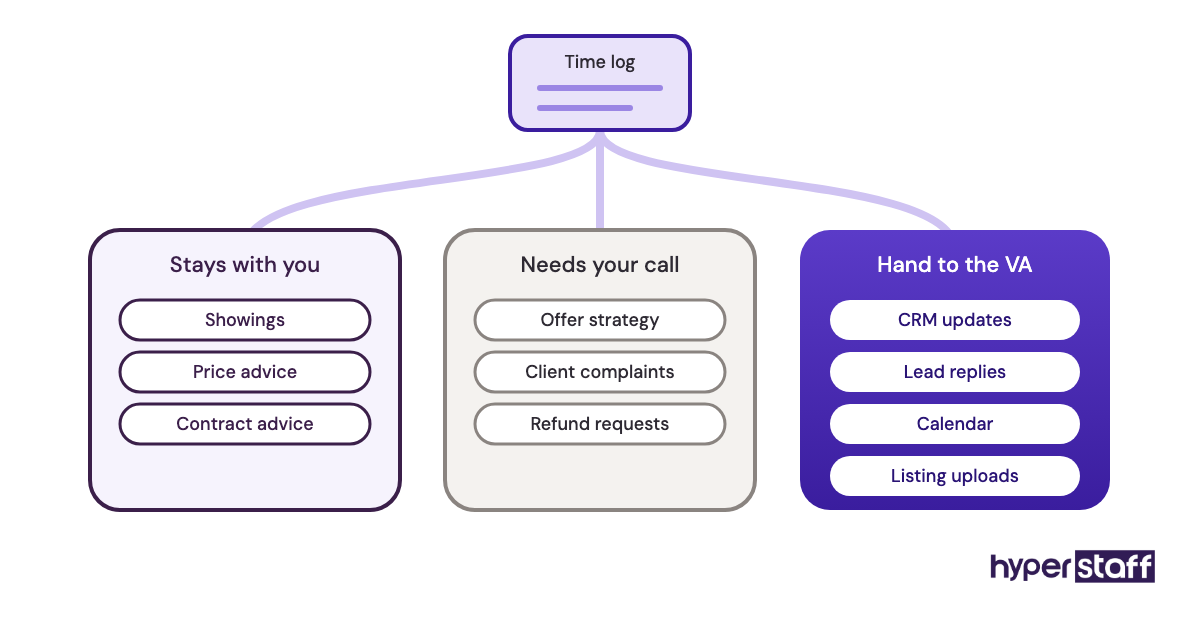
Step #2: Write the role and pick the hours
Group the circled tasks into one role and write it up with this real estate VA job description template. Pick an hour block, 40, 80 or 160, and the time-zone overlap you need.
Step #3: Choose your hiring channel
Pick an agency, a marketplace or a direct hire based on how much screening time you have. If the answer is "almost none," an agency that vets for you is the faster route.
Step #4: Interview and run a paid test
Keep interviews to 30 minutes and use these real estate VA interview questions. Then pay the top two or three candidates for a test that copies a real task.
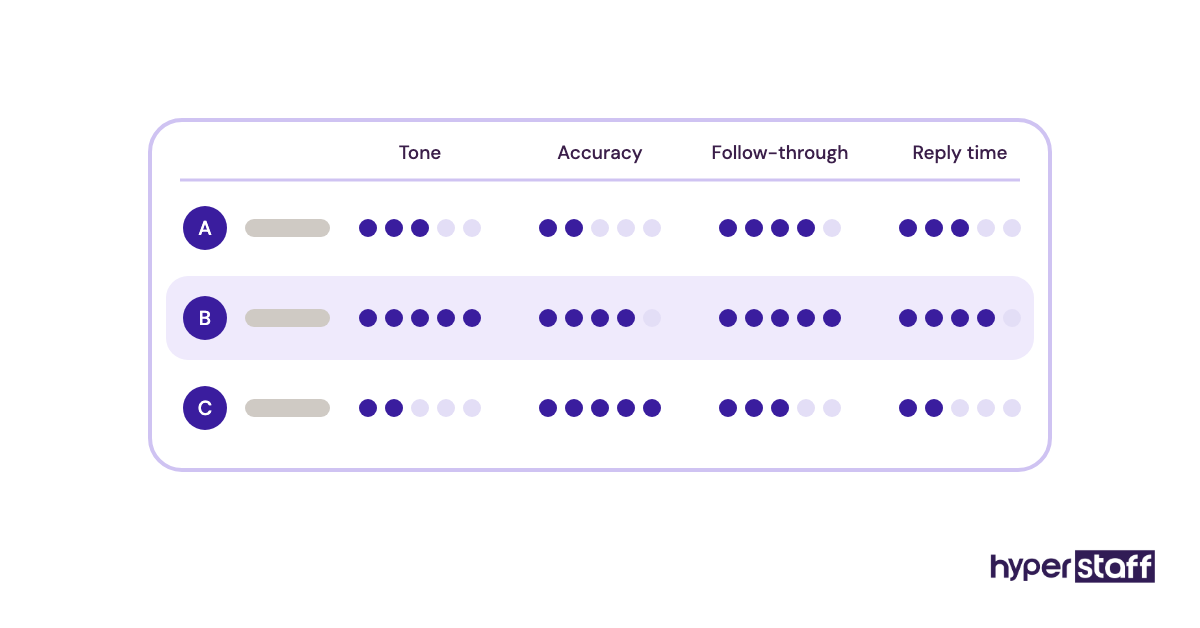
Step #5: Onboard, then review at 30 days
Set up logins and recordings before day one, following our guide to onboarding a real estate VA. At day 30, score the VA against the targets from Step #2 and add one new task area only if the first ones run cleanly.
What does an effective real estate VA hiring strategy look like?
An effective real estate VA hiring strategy runs on a calendar, with a clear end to each phase and a decision at each gate. Here's a realistic timeline for a solo agent hiring through an agency.
| Week | What happens | Your time needed |
|---|---|---|
| Week 0 | Time log, role written, hours chosen | 2 to 3 hours |
| Week 1 | Candidates sent, interviews, paid test | 2 to 4 hours |
| Week 2 | Kickoff call, access set up, first tasks | 5 to 8 hours |
| Weeks 3 to 4 | Daily 15-minute check-ins, SOPs recorded | 2 to 3 hours a week |
| Weeks 5 to 8 | Weekly check-ins, second task area added | 1 hour a week |
Week two is the dead zone. You're spending more time than you save, and many agents panic and cancel here, a week or two before the VA starts paying off.
Tools and software for hiring a real estate VA
The tools for hiring a real estate virtual assistant fall into two groups: what you use to screen candidates and what the VA uses once hired. Get the second group ready before the start date.
For screening, a scheduler such as Calendly handles interview slots, and Loom lets candidates record a short walkthrough of their test answer. Both have free tiers, so check current paid plans on their sites before you upgrade.
For the job itself, a real estate CRM like Follow Up Boss is where most of the VA's day happens, and its published pricing is per user, so budget for one extra seat. Add DocuSign or dotloop for transaction files and Canva for listing graphics.
Our earned opinion: a password manager like 1Password or Bitwarden matters more than any of the above. It lets you cut access in one click when a VA changes, and our real estate VA tools roundup covers the rest.
10 proven tips for hiring a real estate virtual assistant
These are the habits that separate a hire that lasts from one you replace in a quarter.
- Hire for your biggest time sink, even when it isn't the task you dislike most.
- Write the role before you look at a single candidate.
- Pay for every test task, so strong candidates take it seriously.
- Test written English with a lead reply, since most leads arrive by text or email.
- Ask candidates which real estate CRM they've used, then have them show you.
- Require at least two hours a day of overlap with your schedule.
- Give the VA a separate email address and CRM seat from day one.
- Write a list of question types the VA forwards to you without answering.
- Get the replacement terms in writing before you sign anything.
- Book the 30-day review on your calendar the day you hire.
Overcoming common real estate VA hiring challenges
Most real estate VA hiring problems come from a vague role, weak screening or slow setup. A written role and a paid test fix the first two.
Setup delays are the third problem. Agents who wait until day one to create logins lose the first week, so build access the week before.
Turnover hurts most, because your context leaves with the person. Hyperstaff keeps that context in your Operations Vault and sends a free replacement in 5 to 7 business days.
How to measure real estate VA hiring success
Measure a real estate VA hire on numbers you can count each week: lead reply time, appointments booked, listings launched on schedule and missed deadlines on open files. Pick two or three for month one.
The bigger test is your own calendar. If more of your week goes to showings, listing appointments and past-client calls than before the hire, it worked.
How long does it take to hire a real estate VA and see results?
Hiring a real estate virtual assistant takes about one week through an agency and two to six weeks on your own. Hyperstaff places a VA in 5 business days.
Results arrive in layers. Admin relief shows up in two to four weeks, while lead work takes 60 to 90 days to reach closings, because real estate sales cycles are long.
How much does it cost to hire a real estate virtual assistant?
Hiring a real estate virtual assistant costs roughly $3 to $25 an hour, depending on region, experience and hiring channel. Hyperstaff's published rates start at $3 an hour for Essential, $6 for Professional and $12 for Expert, and paying quarterly saves 10%.
Our full real estate VA cost guide covers tool seats, training time and the costs agents tend to miss.
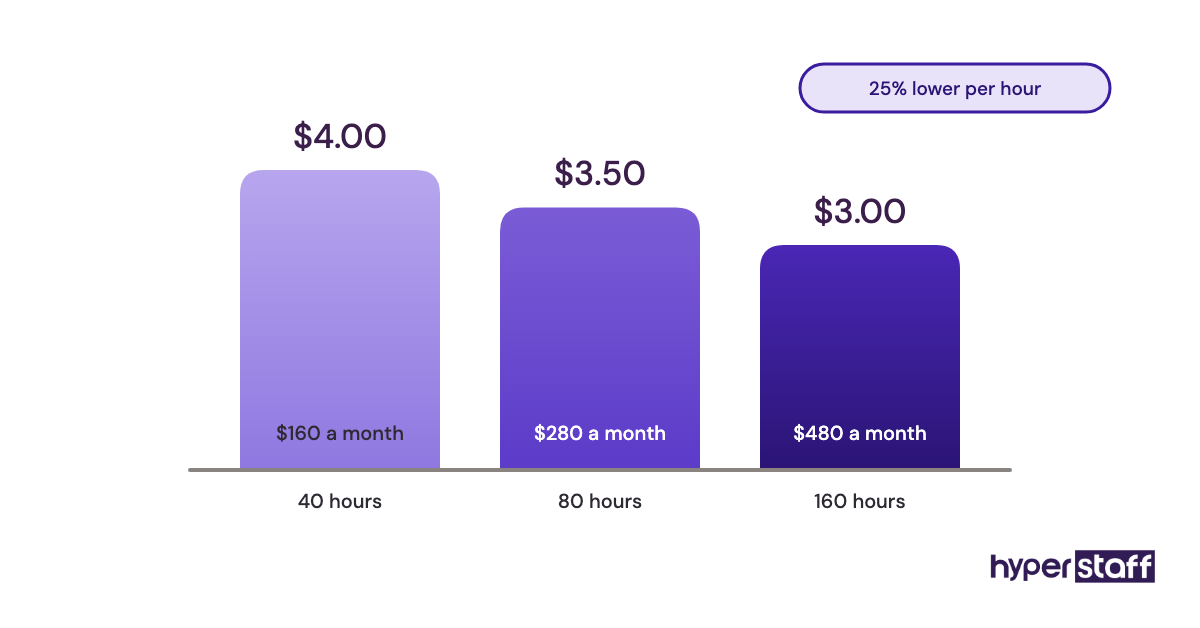
| Option | Hourly rate | 40 hours / month | 80 hours / month | 160 hours / month |
|---|---|---|---|---|
| Hyperstaff Essential (0 to 2 years) | From $3 | From $120 | From $240 | From $480 |
| Hyperstaff Professional (2 to 5 years) | From $6 | From $240 | From $480 | From $960 |
| Hyperstaff Expert (5+ years) | From $12 | From $480 | From $960 | From $1,920 |
| US in-house admin assistant | About $23 + payroll costs | About $930 + extras | About $1,860 + extras | About $3,720 + taxes and benefits |
Important: Hyperstaff prices shown are starting rates and averages, not fixed quotes. Your final cost depends on the tier, hours and region your work needs.
Is it worth it to hire a real estate virtual assistant?
Yes, hiring a real estate virtual assistant is one of the most rewarding moves a producing agent can make, as long as the role is scoped well. One extra closing a year usually covers the VA's full annual cost.
Run the numbers with NAR's medians: $59,200 across 9 sides is about $6,580 per side. A Professional-tier VA at 80 hours a month costs from $480, or $5,760 a year.
So a single extra side pays for the year, with the hours you got back on top. The catch is that the VA must hold tasks that lead to deals, which is why our look at whether a real estate VA is worth it starts with your time log.
How do you choose an agency to hire a real estate VA?
Choose a real estate VA agency on its vetting, its replacement terms and whether you get one dedicated person. Ask how candidates are tested, how fast a replacement arrives and who writes down your processes.
Watch for pool models, where whoever is free picks up your tasks. Real estate runs on knowing your clients and your voice, and a rotating pool relearns both every shift.
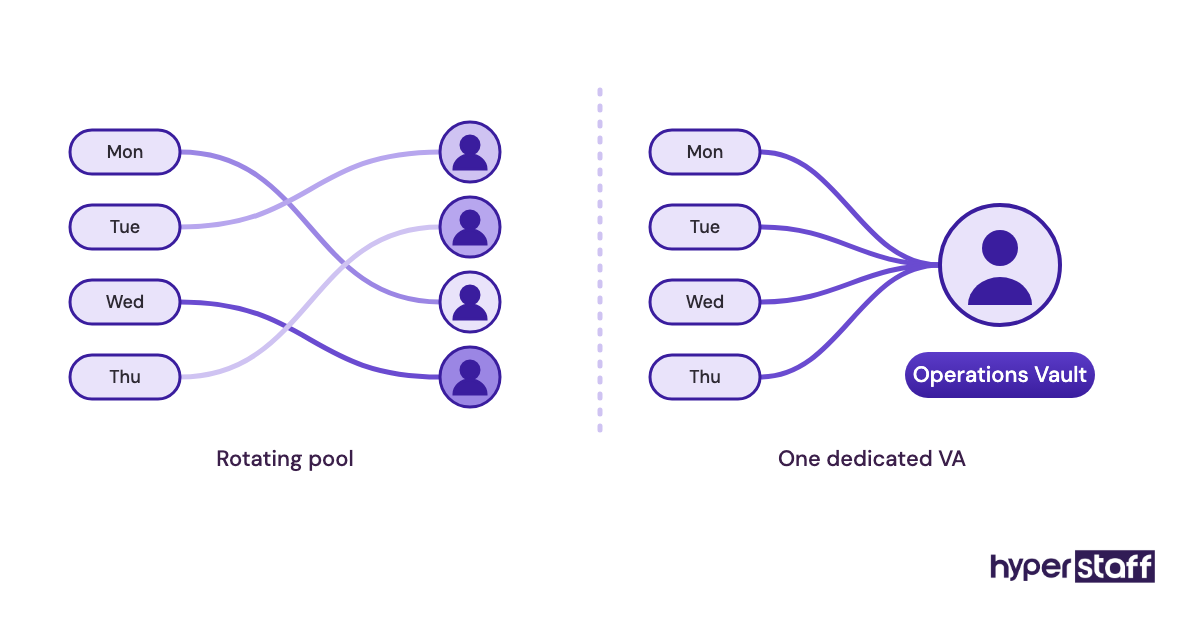
Hyperstaff places one dedicated specialist from pre-vetted talent in the Philippines, Latin America, India, Eastern Europe and the United States. Every client gets a dedicated account manager and a free discovery call before anything is signed.
Real estate VA hiring statistics, trends and future predictions
Real estate is consolidating into teams, and teams hire assistants by role. NAR's latest member profile puts about 21% of Realtors on a team, closing a median of 32 sides.
Agent numbers are also edging down, with NAR membership at 1,439,163 against 1,463,352 a year earlier, per the same NAR report. Fewer agents chasing a similar number of deals puts more value on each lead.
The BLS expects 2% job growth for agents and brokers over the next decade. Our moderate-confidence prediction is that agents will hire VAs into narrower, defined roles, and that VAs who can run a CRM and a contract file unsupervised will command higher rates.
Hiring a real estate VA in the age of AI
AI tools now draft listing remarks, summarize calls and answer simple lead questions, so the VA you hire should know how to check that output. Ask candidates in the interview which AI tools they use and how they catch errors.
Fair housing is where AI drafts go wrong most. The Fair Housing Act covers ad and listing copy no matter who wrote it, so your VA needs to flag wording that describes people instead of the property.
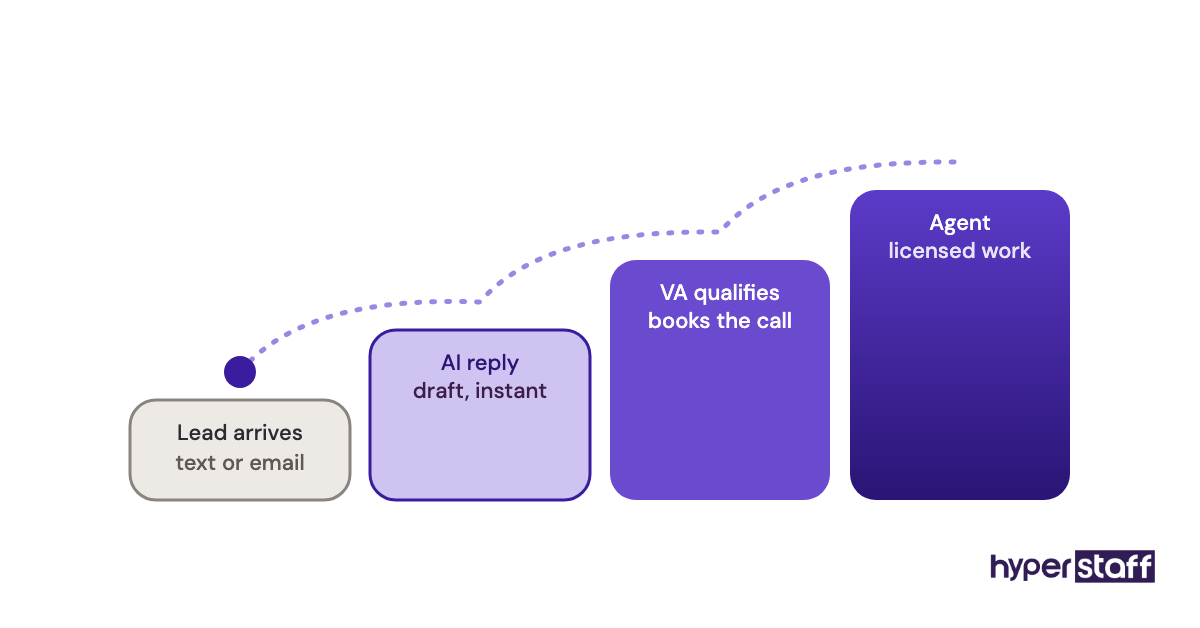
We'd pair the two: AI sends the instant first reply, and the VA qualifies the lead and books the call. A chatbot still can't tell a serious relocating buyer from a curious neighbor, and the license on the deal is yours.
Disclaimer: This article is general information, not legal, tax, employment or licensing advice. Rules on licensing, worker classification and telemarketing vary by location, so confirm them with a qualified professional. Prices and third-party details may change.
Common questions
Where do I find a good real estate virtual assistant?
Agencies, freelance marketplaces and referrals from other agents are the main sources. An agency is fastest if you have little screening time, because it vets and replaces for you.
Should I hire a real estate VA as a contractor or employee?
Most VAs work as independent contractors or through an agency that handles their employment. Classification rules vary by country and state, so check with an accountant before hiring directly.
What experience should a real estate virtual assistant have?
Look for hands-on time in a real estate CRM and strong written English. For transaction or listing work, prior real estate experience at the Professional or Expert level is worth paying for.
Can I hire a real estate VA for just a few hours a week?
Yes. A 40-hour monthly block works out to about 10 hours a week, which suits newer agents or a single task area like lead follow-up.
What tasks should I give a new real estate VA first?
Start with repeat tasks that need no license, such as CRM updates, lead replies and calendar work. Our real estate VA task list helps you pick the first ones.
Book a free 15 min call
We place a pre-vetted specialist in 5 business days, fully managed, from $3/hour.