10 Real Estate Virtual Assistant Mistakes That Cost Agents Deals
Ten setup mistakes that make a real estate virtual assistant lose leads, break rules or slow your closings, and what to do about each.

On this page
- Mistake #1: Why does handing your VA a messy CRM backfire?
- Mistake #2: Is your VA texting leads without a consent check?
- Mistake #3: Letting the VA answer questions only a licensee can
- Mistake #4: How risky is sharing your MLS login with a VA?
- Mistake #5: Why do VA hours that match yours miss leads?
- Mistake #6: Are you putting the cheapest tier on your hardest calls?
- Mistake #7: Keeping every process in your head
- Mistake #8: Who checks the wire instructions your VA forwards?
- Mistake #9: Why does loading every task in week one fail?
- Mistake #10: Measuring a VA by hours logged
- FAQs
💡 Key Takeaways:
1) The costliest real estate virtual assistant mistakes happen during setup. A dirty CRM, shared logins and processes nobody wrote down lose more leads than any skill gap in the assistant.
2) A real estate VA can't do licensed work, and every call or text to a lead still has to clear consent and Do Not Call rules. Compliance belongs in the VA's instructions from the first day.
3) Set the VA's hours around when your leads actually arrive, add tasks in stages over the first month, and judge the role on appointments set and clean files instead of hours logged.
Stop leaking commissions through your VA setup
Hyperstaff has placed 70+ pre-vetted virtual assistants with 30+ clients, and the real estate problems we see most often trace back to the ten setup gaps below. Our dedicated real estate virtual assistant support starts within 5 business days, from $3/hour, with an account manager and a written Operations Vault behind every placement.
Mistake #1: Why does handing your VA a messy CRM backfire?
A real estate virtual assistant works the database you give them, exactly as it is. If your Follow Up Boss or BoldTrail account holds duplicate contacts, past clients tagged as new leads and closed deals still sitting in active stages, the VA will follow up on all of it with full confidence.
Why messy CRMs get handed over
- Cleanup sounds like a good job for the VA
- Tags and stages were never defined
- Several lead sources feed one inbox
- A former team member's contacts got merged in
- Nobody owns the pipeline
What a dirty database really costs
Wasted hours are the obvious cost. The bigger one is a past client getting an "Are you still looking to buy?" text a week after closing with you, which reads as if you've forgotten them.
Duplicates also split a contact's history. One record holds the showing feedback, the other holds the pre-approval note, and the VA calls from the record with neither.
Define the stages before the VA touches it
Spend one session merging the worst duplicates and writing a one-line rule for each pipeline stage, such as "Active means we talked in the last 30 days and they're pre-approved." Then let the VA do the heavy cleanup against those rules, which makes a strong first task because it teaches them your book of business.
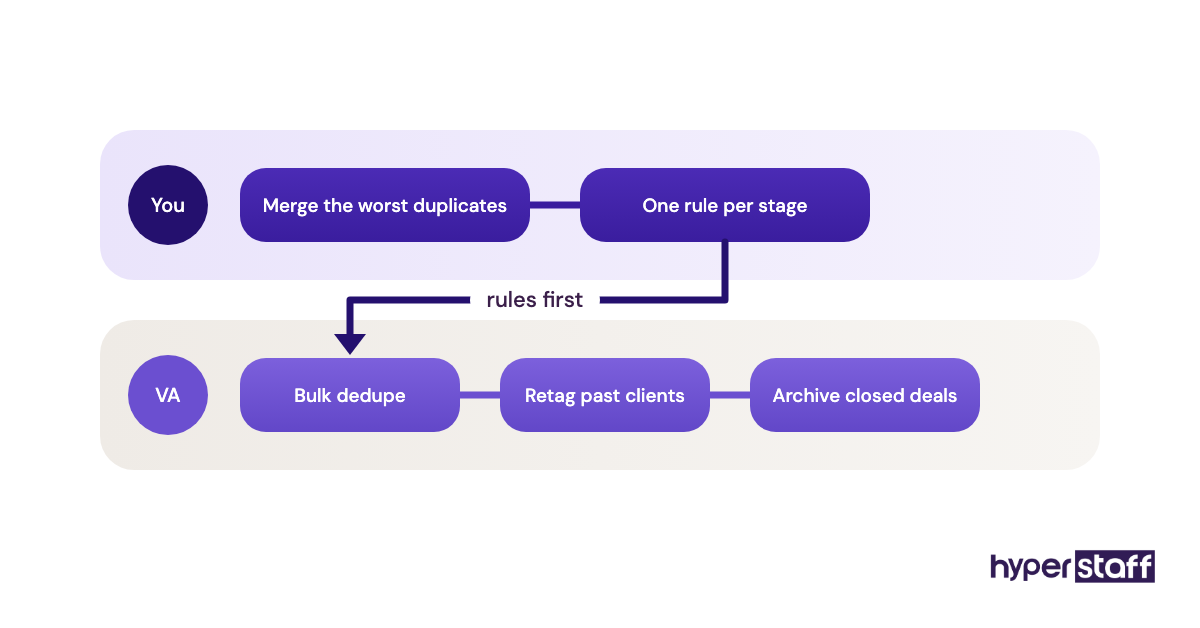
Our list of common real estate VA tasks puts database hygiene near the top for this reason. The order is what matters: rules come from you, and the volume work comes from the VA.
Mistake #2: Is your VA texting leads without a consent check?
Lead follow-up by phone and text is one of the most useful jobs a real estate VA does, and it carries the most legal exposure. The Telephone Consumer Protection Act and the National Do Not Call Registry apply to the call whether you dial it or your assistant does.
Why the consent step gets skipped
- Portal leads feel like blanket permission
- The dialer was configured years ago
- Expired and FSBO lists get worked out of habit
- Nobody briefed the VA on the rules
- "STOP" replies sit unread in a shared inbox
The bill for one bad list
Under 47 U.S.C. § 227, a person can sue for $500 per violating call or text, and a court can raise that to $1,500 when the violation was willful. Multiply that by a campaign to a few hundred numbers and the per-message figure becomes a serious one.
Some states layer stricter calling and texting laws on top of the federal rules, and many brokerages have their own policy as well.
Build the compliance check into the SOP
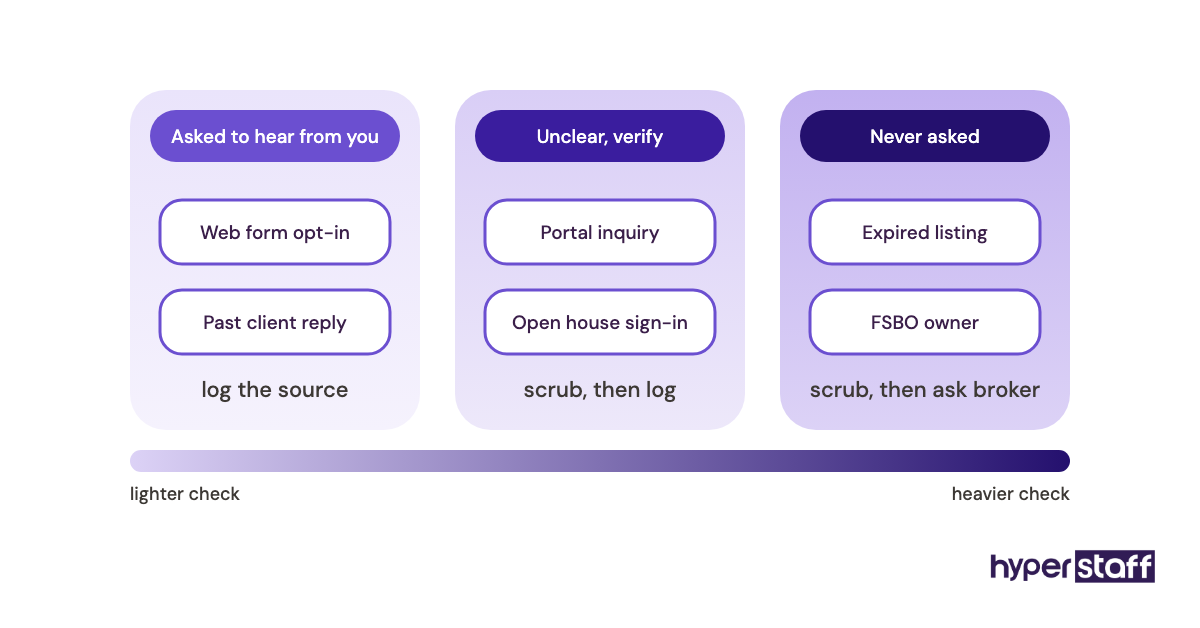
Write the check into the process itself. Before any campaign, the VA scrubs cold numbers against the National Do Not Call Registry and your internal opt-out list, and logs where each lead's consent came from.
Expireds and FSBOs need the most care, since those owners never asked to hear from you. We'd rather see a VA send fewer texts on a clean list than more texts on a list nobody checked.
Mistake #3: Letting the VA answer questions only a licensee can
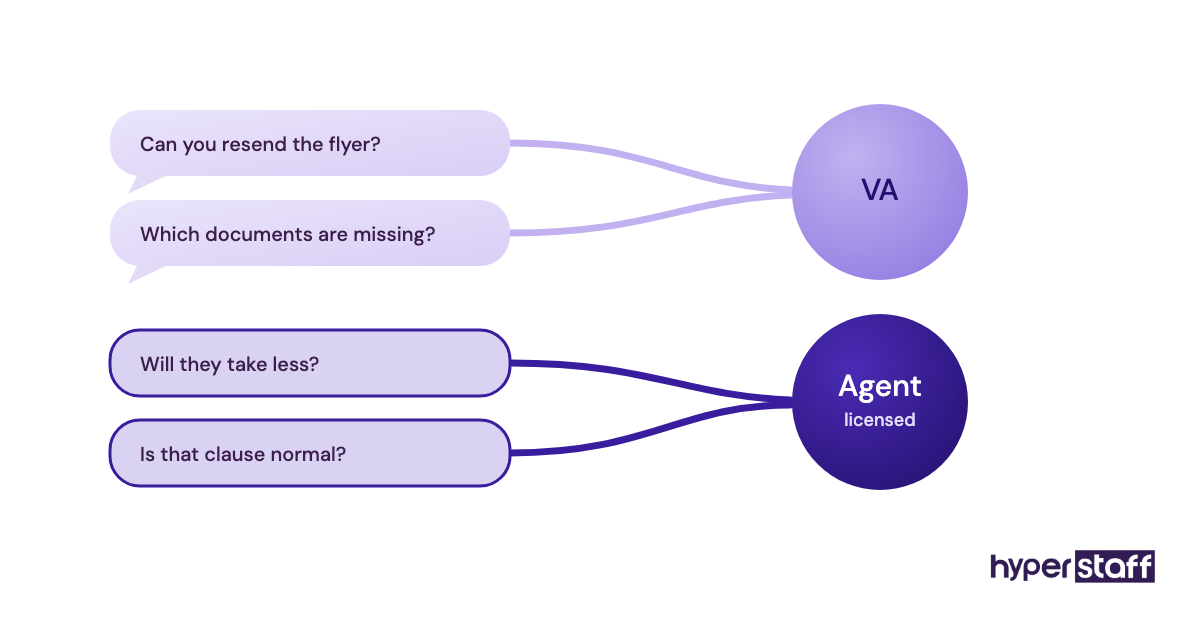
Unlicensed assistants can do a long list of real estate work, but in most states they can't negotiate, interpret contract terms, discuss price with a buyer or give an opinion of value. That line sits in your state's license law, and it applies to a remote VA exactly as it does to an assistant at a desk in your office.
How the line gets crossed
- A buyer texts at 9 p.m. asking if a lower offer will work
- The VA wants to be helpful
- Scripts skip the hard questions
- The agent says "just handle it"
Where it leaves your license
Your license carries the risk, since the assistant has no license to lose. A casual reply about whether a seller would take less can count as negotiating, and any complaint lands on you.
The client is hurt too. They acted on advice from someone who wasn't allowed to give it.
Write the handoff into the role
List licensed activities as handoff triggers in the VA's role, along with a short script such as "Good question, I'll have [agent] call you about that within the hour." A clear real estate VA job description draws this line on paper before anyone is hired.
Read your state commission's rules on unlicensed assistants once. A few states are stricter than you'd expect about cold calling and scheduling showings.
Mistake #4: How risky is sharing your MLS login with a VA?
Sharing your MLS login is usually a rules violation by itself. Most MLSs prohibit credential sharing and offer a separate assistant access level, often for a small fee, so the VA can work listings under their own account.
Why logins end up in a text message
- Assistant access means paperwork
- Pasting a password takes ten seconds
- Two-factor codes go to your phone
- Nobody keeps a list of who has what
What shared passwords put at risk
MLSs audit logins, and fines or suspended access for credential sharing are a real outcome in many markets. Losing MLS access for even a few days stops listing work completely.
The same shortcut with email, the CRM and e-signature tools means one lost phone or one departed assistant leaves client data open.
Give the VA their own keys
Apply for the MLS assistant access, and share every other login through a password manager such as 1Password or Bitwarden so access can be revoked in one click. Our roundup of tools real estate VAs use covers how shared vaults and separate logins fit together.
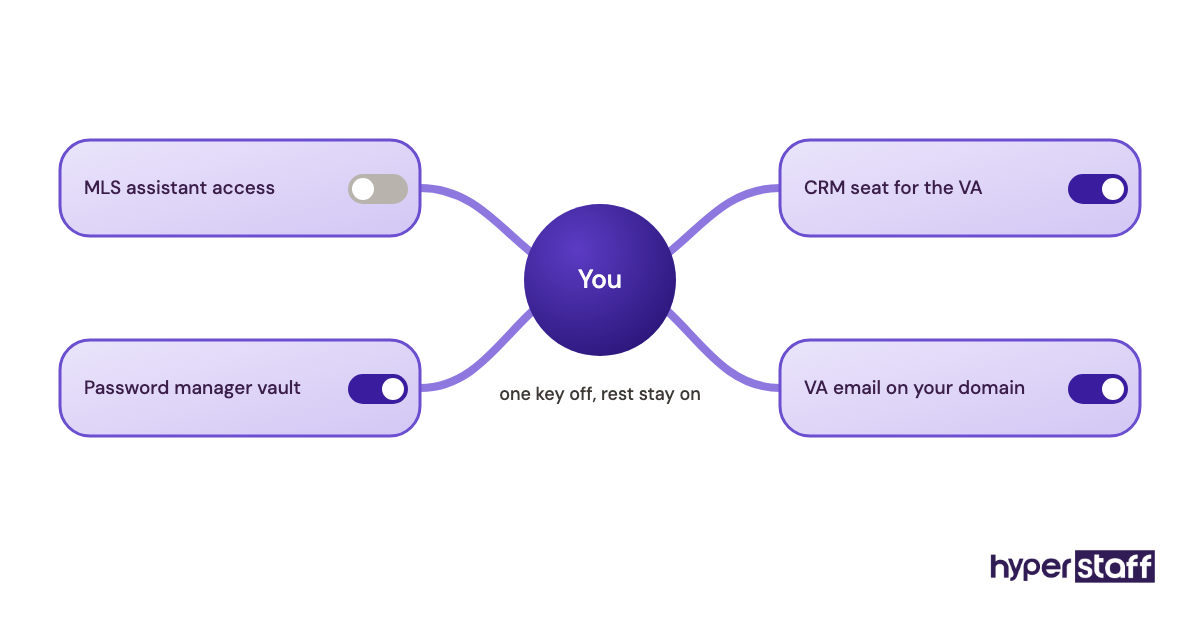
Set the VA up with their own email address on your domain as well. When someone leaves, you switch off one account and skip changing a dozen passwords.
Mistake #5: Why do VA hours that match yours miss leads?
Buyers browse listings in the evening and on weekends, so a VA working your 9-to-5 often misses the window when portal leads arrive. Response speed decides who gets the appointment, and a lead left until morning has frequently already spoken to another agent.
Why the schedule gets set wrong
- The VA's hours copy the agent's
- Time zones get chosen for meeting overlap only
- Weekend coverage feels optional
- Nobody looked at when leads come in
What a slow first reply costs
You lose the appointment, and the appointment is the reason you pay for lead sources at all. Buying Zillow or Realtor.com leads and answering them the next morning is paying for leads someone faster will convert.
Let the timestamps set the shift
Export a month or two of lead timestamps from your CRM and see when they really land. Then move the VA's shift, or split it, so the busiest window gets a live reply.
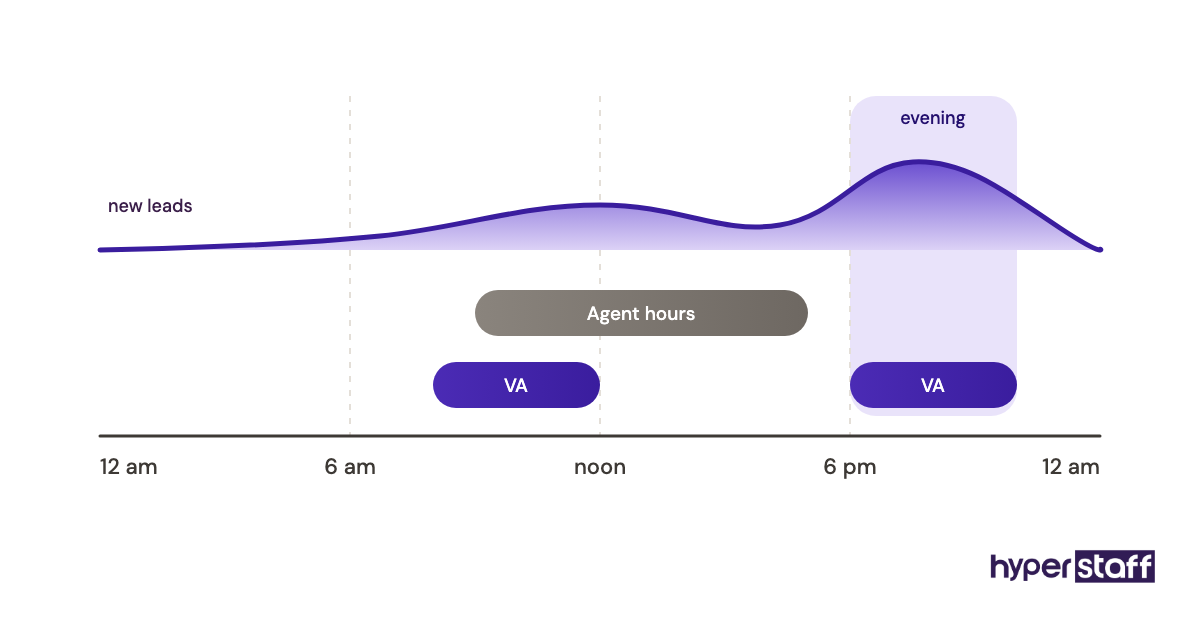
Offshore placement works in your favor here. A VA in the Philippines or India can cover US evenings during their own daytime, a point we weigh up in our VA vs in-house comparison.
Mistake #6: Are you putting the cheapest tier on your hardest calls?
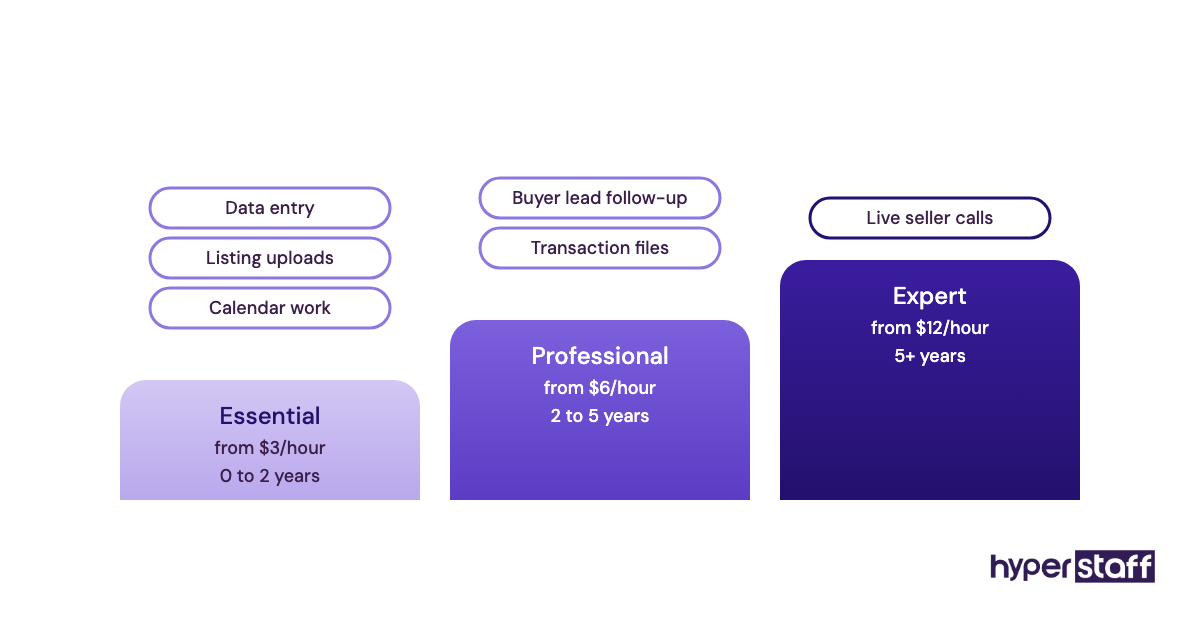
Experience level should follow the task, and the range of work a real estate virtual assistant handles is wide. Data entry, listing uploads and calendar work suit an entry-level assistant, while live ISA calls with sellers need someone who can handle an objection without reading from a script.
Why tiers get mismatched
- One hire is expected to cover everything
- The hourly rate drives the decision
- Phone skills are hard to judge from a resume
- The role grew after the hire
- The hard tasks were never written down
The price of the wrong level
A junior VA on seller calls tends to fold at the first "we're not ready yet." A senior VA on data entry means paying expert rates for copy-and-paste work.
Price the role by its hardest task
Pick the hardest task in the role and hire for that. At Hyperstaff, Essential runs from $3/hour for 0 to 2 years of experience, Professional from $6/hour for 2 to 5 years, and Expert from $12/hour for 5+ years, and our real estate VA cost breakdown shows those rates as monthly totals.
For phone roles, test the skill itself with a short role-play call that includes an objection. Our set of interview questions for real estate VAs has a few of these ready to use.
Mistake #7: Keeping every process in your head
Most agents run on habits nobody has written down, which works until a second person has to do the work. A VA without written process either asks the same questions every week or stops asking and guesses.
Why the SOPs never get written
- Writing feels slower than doing
- Every deal seems like an exception
- "Later" never arrives
- The brokerage switched tools again
What it costs when the VA leaves
Each listing gets set up a little differently, and nobody can say which version is right. When the VA moves on, all of that knowledge goes with them and the next hire starts from zero.
Record it once and let the VA write it up
Record yourself doing a task once with Loom, saying out loud why each step happens, and have the VA turn the video into a written checklist. Your part shrinks to reviewing and correcting, which takes minutes.
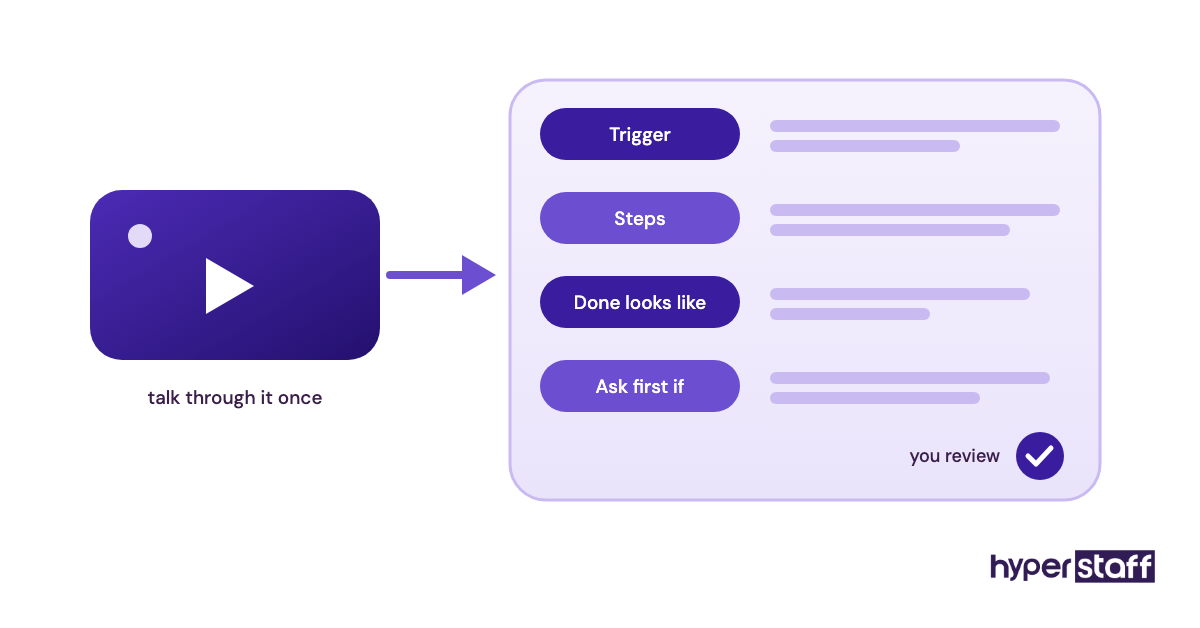
Hyperstaff keeps this in an Operations Vault for every client: your SOPs, tools and context, written down and maintained for you. If a placement ever has to change, the replacement is free within 5 to 7 business days and gets briefed from that Vault.
Mistake #8: Who checks the wire instructions your VA forwards?
Real estate wire fraud usually starts with a spoofed email that appears to come from the title or escrow company. A VA who manages your inbox and sends closing documents sits right in that path, and nobody checks the wire details unless the process tells them to.
Why closings are exposed
- The VA is trained to forward emails fast
- Spoofed domains differ by a single letter
- Closing week is rushed
- Banking details travel by email out of habit
- No callback rule exists
What one forwarded email can cost
A buyer who wires a down payment to a criminal's account may never recover it, and the dispute will name everyone who touched that email chain. The FBI's Internet Crime Complaint Center takes reports on business email compromise, and real estate closings are a frequent target.
Give the VA one hard rule for wire details
The VA never sends, forwards or confirms wire instructions. Any email that mentions wiring, changed bank details or an urgent payment goes straight to you and the title or escrow officer.
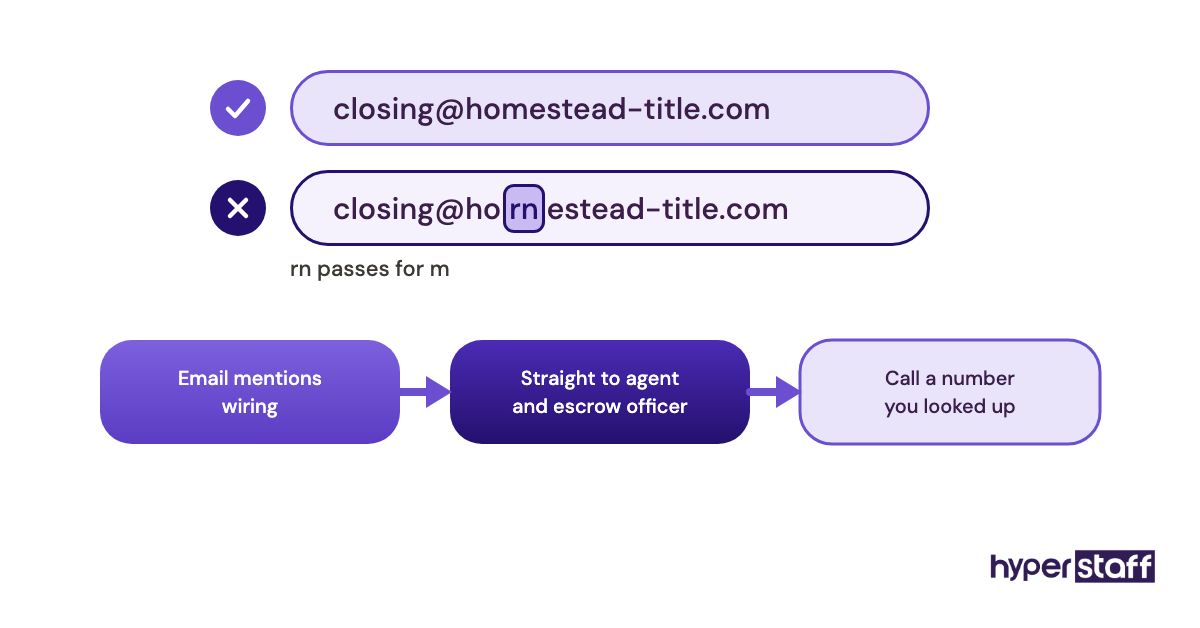
Add a standing line to client emails saying you will never send wire instructions by email, and that they should call the title company at a number they look up themselves.
Mistake #9: Why does loading every task in week one fail?
Handing a new VA your whole task list in the first week feels efficient and usually slows everything down. They learn nothing in depth, make small errors across ten areas at once, and you lose confidence before they've had a fair start.
Why agents overload the first week
- The backlog has built up for months
- Full-time pay seems to demand full output now
- Training gets squeezed into one long call
- The agent wants a quick return
Where the overload shows up
Errors spread across too many areas to coach, so feedback becomes a long list with no single clear fix. Plenty of agents decide a VA "isn't working out" around week three, when the real problem was the order of the work.
Stage the work over the first month
Start with one or two contained, low-risk tasks such as CRM cleanup and listing data entry, then add calendar and inbox work once those run clean. Lead follow-up and transaction coordination come last, after the VA knows your clients and how you talk to them.
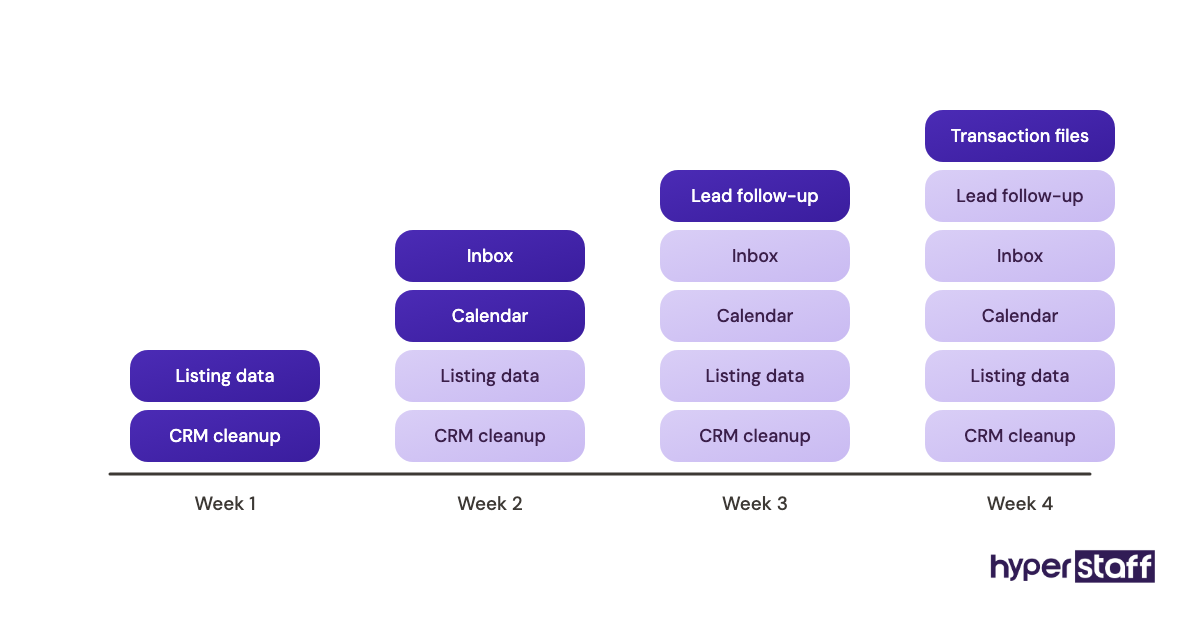
Our plan for onboarding a real estate VA lays that sequence out week by week. With Hyperstaff, a 30-minute kickoff call comes first and work starts that day or the next morning.
Mistake #10: Measuring a VA by hours logged
Hours logged only prove the VA was online. Whether new leads got a reply, files closed out complete and appointments landed on your calendar is a separate question, and it's the one that pays you.
Why hours become the default metric
- Time trackers report hours out of the box
- Outcomes need a little setup to measure
- Hourly billing makes hours look like value
- No targets were agreed at the start
What activity tracking hides
A VA can log a full 160-hour month and still leave half your new leads uncontacted, because the tracker counts time while your pipeline is what earns. You end up judging the hire on a feeling.
Pick outcome numbers before the first invoice
Tie a short set of numbers to the actual tasks: speed to first contact on new leads, appointments set per week, files with every document signed before closing, and records updated in the CRM. Review them every two weeks for the first two months, then monthly.
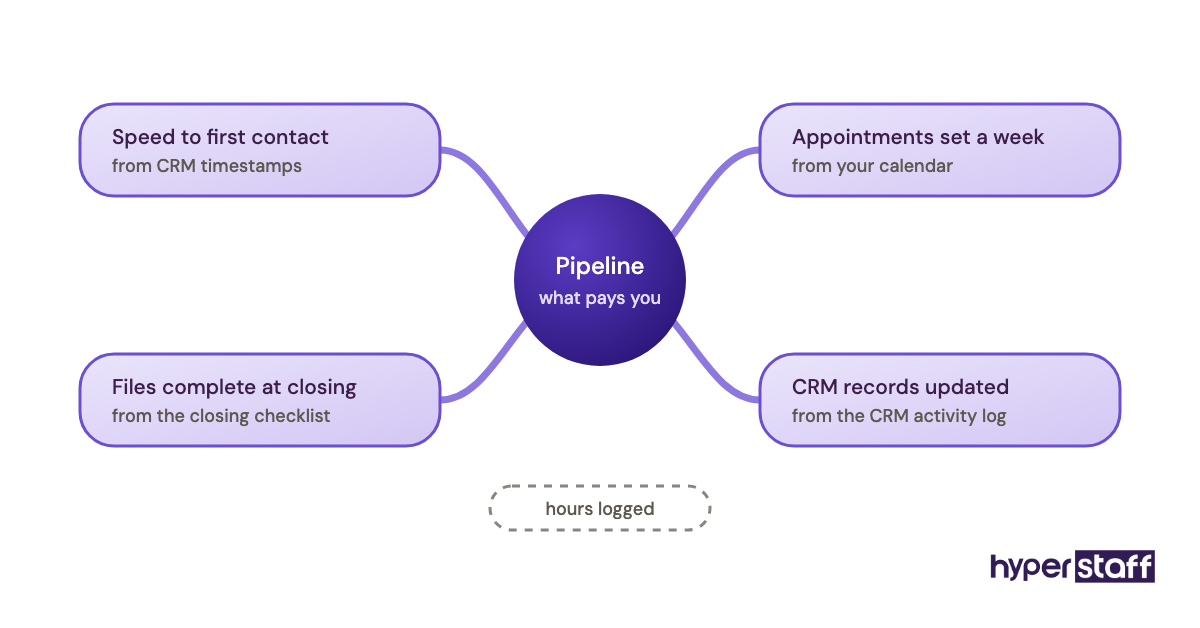
Those same numbers settle the question in our piece on whether a real estate VA pays off. If you haven't started the search yet, our guide on how to hire a real estate VA shows where to set targets before the first interview.
Disclaimer: This article is general information only and is not legal, compliance or financial advice. License, telemarketing and data rules vary by state and change over time, so confirm requirements with your broker, MLS or a qualified attorney before acting.
Common questions
Do I have to tell clients I use a virtual assistant?
It depends on your state and brokerage, but being upfront is the safer habit. Have the VA introduce themselves by name and role, and never let them sign messages as you.
Can my VA post on my social media and run listing ads?
You can let them, with a review step. Most states require your brokerage name on listing ads and fair housing rules apply to the wording, so approve templates before the VA publishes anything.
What if my real estate VA keeps making the same mistake?
Fix the process first, since repeat errors usually point to a missing or unclear SOP. If the fit still isn't right, Hyperstaff replaces the VA free within 5 to 7 business days, briefed from your Operations Vault.
Is hiring a VA a mistake if I only close a few deals a year?
It depends on where your time goes. A 40-hour monthly bundle can cover database work and lead follow-up without the cost of a full-time hire.
Should my VA use my CRM login or their own?
Their own. A separate user lets you set permissions, see who changed what and shut off access the day the engagement ends.
Book a free 15 min call
We place a pre-vetted specialist in 5 business days, fully managed, from $3/hour.