What a Real Estate Virtual Assistant Really Costs
Real estate virtual assistant cost broken down by retainer, deliverable, country and pricing model, with the hidden costs most agents miss.
On this page
- What do real estate virtual assistant retainers cost per month?
- What does a real estate virtual assistant cost per deliverable?
- How does Hyperstaff's cost compare with other real estate VA agencies?
- Real Estate Virtual Assistant Pricing Models
- Agency vs Freelancer vs In-House for Real Estate Support
- How much does a real estate virtual assistant cost by country?
- What drives real estate virtual assistant costs?
- How does AI change real estate virtual assistant cost?
- The Hidden Costs of a Real Estate Virtual Assistant
- How much should you budget for a real estate virtual assistant?
- How do you calculate real estate virtual assistant ROI?
- How should you compare real estate VA agency pricing?
- How can you reduce real estate virtual assistant costs without losing quality?
- Is a real estate virtual assistant worth the investment?
- FAQs
💡 Key Takeaways:
1) A real estate virtual assistant costs about $4 to $15 an hour offshore and $25 to $60 an hour from a US-based provider, so a full-time month runs from under $1,000 to over $9,000.
2) The hourly rate is only part of the price, because ramp-up time, software seats, turnover and rework can add a meaningful share on top of the quoted figure.
3) Matching the experience tier to each task, and paying offshore rates for back-office work only, usually cuts the monthly bill more than haggling over the rate itself.
Every Hour You Hand Off Can Sell Houses
Hyperstaff places pre-vetted assistants from five regions with agents and teams, at rates from $3 an hour, and we've placed 70+ virtual assistants across 30+ clients so far. Our real estate virtual assistant services put a dedicated specialist on your listings, leads and transactions within 5 business days, with an account manager watching quality and free replacement if the fit is wrong.
What do real estate virtual assistant retainers cost per month?
A monthly retainer for a real estate virtual assistant costs about $160 to $2,400 offshore and $1,200 to $9,600 from a US-based agency, depending on hours. The figures below are market averages, built from common hourly ranges multiplied across standard monthly bundles.
| Monthly hours | Offshore freelancer ($4–$12/hr) | Offshore agency ($7–$15/hr) | US-based agency ($30–$60/hr) | Typical scope |
|---|---|---|---|---|
| 20 | $80–$240 | $140–$300 | $600–$1,200 | Inbox, calendar |
| 40 | $160–$480 | $280–$600 | $1,200–$2,400 | Listing input, CRM upkeep |
| 80 | $320–$960 | $560–$1,200 | $2,400–$4,800 | Adds lead follow-up |
| 160 | $640–$1,920 | $1,120–$2,400 | $4,800–$9,600 | Full transaction support |
Real estate virtual assistant rates jump at 160 hours less than you'd expect, since a full-time assistant usually earns a lower hourly rate than a 20-hour one. If you're still deciding what a real estate assistant does day to day, settle that first. Scope sets the hours, and hours set the bill.
What does a real estate virtual assistant cost per deliverable?
Priced per deliverable, real estate VA work ranges from about $15 for an MLS listing entry to $500 for a coordinated transaction file. These are averages; your market and your systems will push them up or down.
| Deliverable | Freelancer | Agency | In-House | Turnaround |
|---|---|---|---|---|
| MLS listing entry | $15–$40 | $20–$50 | $25–$45 | Same day |
| Transaction coordination (per file) | $250–$450 | $300–$500 | $350–$600 | Contract to close |
| Lead follow-up calls (per hour) | $6–$15 | $10–$20 | $30–$40 | Ongoing |
| CMA prep | $20–$50 | $25–$60 | $30–$70 | 2–4 hours |
| Listing presentation deck | $40–$120 | $60–$150 | $70–$140 | 1–2 days |
| Social media month (12–16 posts) | $150–$400 | $250–$600 | $500–$900 | Weekly batches |
| Email newsletter (monthly) | $60–$150 | $100–$250 | $120–$250 | 1–2 days |
| CRM cleanup (per 1,000 contacts) | $80–$200 | $120–$300 | $250–$400 | 3–5 days |
| Showing scheduling (monthly) | $100–$250 | $150–$350 | $300–$500 | Same hour |
| Closing file audit | $30–$80 | $40–$100 | $50–$90 | 1 day |
In-house figures use loaded staff time. The US Bureau of Labor Statistics puts median pay for administrative assistants at $23.23 an hour, and BLS compensation data shows benefits make up about 30% of private-sector employer costs, which lifts the real figure to roughly $33 an hour.
Per-deliverable pricing hides how much small work piles up. The full list of real estate virtual assistant tasks shows why most agents end up on hourly bundles.
How does Hyperstaff's cost compare with other real estate VA agencies?
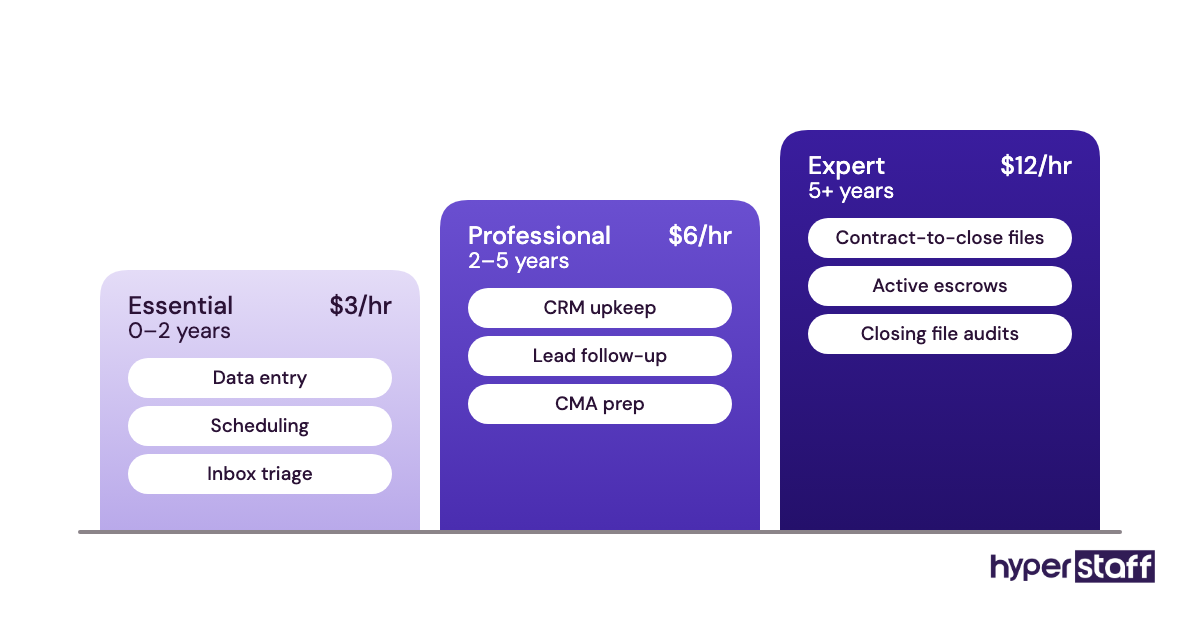
Hyperstaff's published rates start at $3, $6 and $12 an hour across three experience tiers, against roughly $7 to $22 at typical offshore agencies and $30 to $60 at US-based ones. The savings column compares our starting rates with the offshore agency range.
| Plan | Hyperstaff (from) | Typical offshore agency | US-based agency | You Save (vs offshore) |
|---|---|---|---|---|
| Essential, 0–2 yrs (hourly) | $3 | $7–$10 | $30–$40 | 57–70% |
| Professional, 2–5 yrs (hourly) | $6 | $10–$14 | $40–$50 | 40–57% |
| Expert, 5+ yrs (hourly) | $12 | $15–$22 | $50–$60 | 20–45% |
| 80-hour month, Professional | $480 | $800–$1,120 | $3,200–$4,000 | 40–57% |
| 160-hour month, Professional | $960 | $1,600–$2,240 | $6,400–$8,000 | 40–57% |
| Replacement | Free, 5–7 days | Varies | Varies | n/a |
Retainer Costs
Hyperstaff sells hours in monthly bundles of 40, 80 or 160, and quarterly payment takes 10% off. Here's the Professional tier against the typical offshore agency range.
| Monthly bundle | Hyperstaff Professional (from) | Typical offshore agency |
|---|---|---|
| 40 hours | $240 | $400–$560 |
| 80 hours | $480 | $800–$1,120 |
| 160 hours | $960 | $1,600–$2,240 |
Cost by Deliverable
We bill time, so a deliverable costs whatever hours it takes at your tier. An MLS entry that takes 30 to 60 minutes works out to $3 to $6 of Professional-tier time, well under the freelance per-item rates above.
Complex files belong at the Expert tier. A transaction file needing 15 to 25 hours across contract-to-close lands around $180 to $300 at $12 an hour.
Important: Our prices here are starting averages, not fixed quotes. What you pay depends on the tier, the hours and the actual work your real estate business needs covered.
Real Estate Virtual Assistant Pricing Models
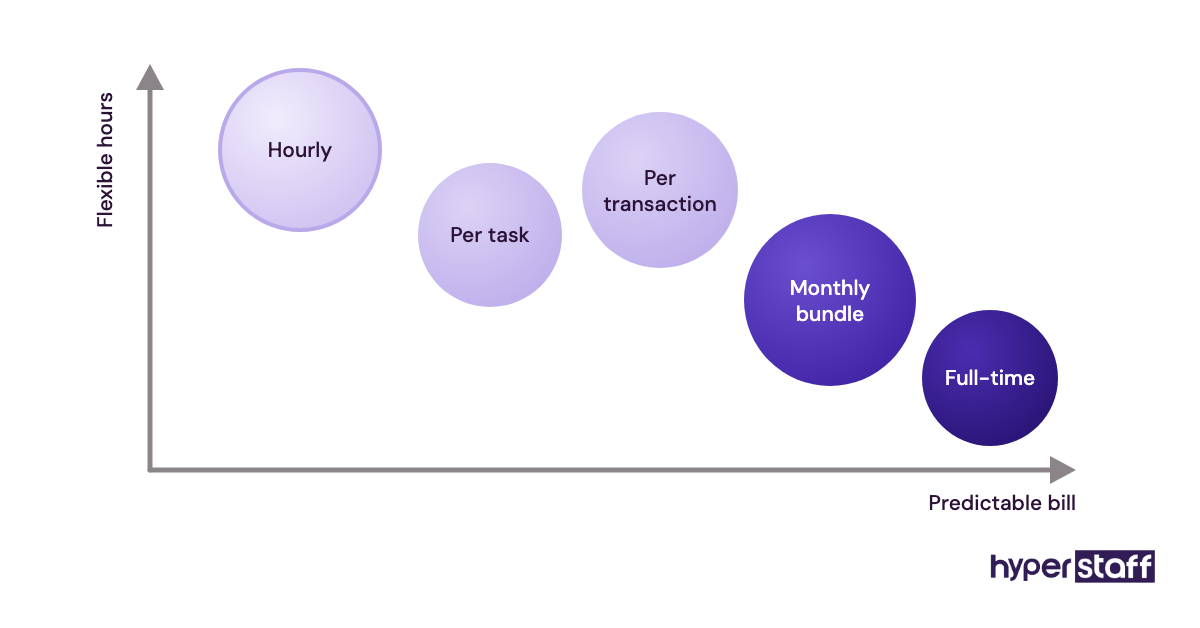
Real estate VAs are priced in five common ways:
- Hourly: pay for tracked time; flexible, harder to forecast.
- Monthly bundle: fixed hours at a set price.
- Full-time dedicated: 160 hours, one person, lowest hourly rate.
- Per transaction: flat fee per closed file, common for coordinators.
- Per task: priced per listing, post or CMA.
Bundles suit most agents, because a dedicated assistant learns your business and the cost stays predictable.
Agency vs Freelancer vs In-House for Real Estate Support
A good agency usually wins for teams that want to scale fast. You get a vetted hire in days, a backup plan if the person leaves, and offshore rates without running payroll abroad.
Freelancers cost less on paper but leave you carrying recruiting and replacement risk. In-house staff give you full control at roughly five times the offshore cost; our breakdown of a virtual assistant versus in-house hire covers that trade in detail.
How much does a real estate virtual assistant cost by country?
A real estate virtual assistant costs least in India and the Philippines, at about $4 to $15 an hour, and most in the US, UK, Western Europe and Australia, at roughly $20 to $50. All figures are in US dollars for consistency.
| Location | Hourly rate | 160-hour month | Known for |
|---|---|---|---|
| United States (in-house, loaded) | $30–$38 | $4,800–$6,100 | Local market knowledge |
| United States (remote VA) | $25–$50 | $4,000–$8,000 | Same time zone |
| United Kingdom | $20–$35 | $3,200–$5,600 | UK conveyancing familiarity |
| Western Europe / Australia | $25–$45 | $4,000–$7,200 | Local compliance |
| Eastern Europe | $10–$25 | $1,600–$4,000 | Marketing, design |
| Latin America | $8–$20 | $1,280–$3,200 | US hours overlap |
| Philippines | $5–$15 | $800–$2,400 | US real estate admin depth |
| India | $4–$12 | $640–$1,920 | Data and back office |
Country matters less than fit. A Latin American assistant often costs more than a Filipino one yet pays for itself on live lead calls during US business hours.
What drives real estate virtual assistant costs?
Four factors move a real estate virtual assistant's price more than location does: phone-facing work, time-zone coverage, access to your systems and deal-volume swings. Some sit on the assistant's side of the bill, some on yours.
#1 Cost Driver: Phone Work and Licensing Limits
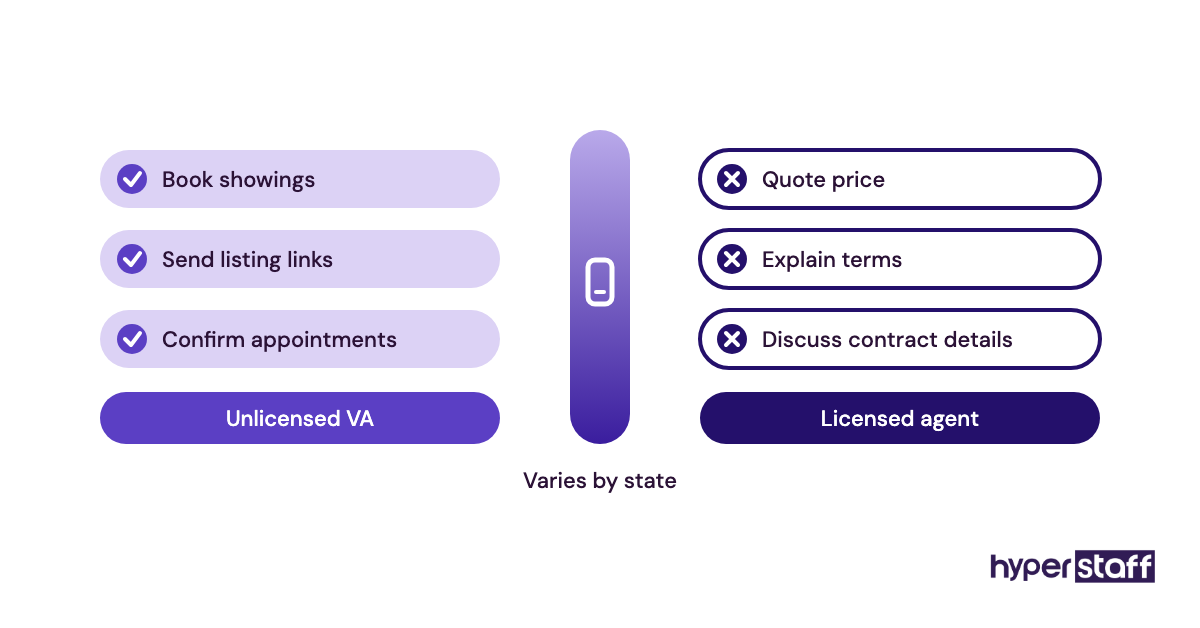
Voice work costs more than back-office work. An assistant who calls leads, books showings and talks to clients needs stronger spoken English and real estate vocabulary, which typically moves them up a tier.
Licensing caps how far that money goes. Most state real estate commissions bar unlicensed assistants from discussing price, terms or contract details with consumers, so an ISA script that drifts into negotiation creates a compliance problem a cheaper rate never covered.
#2 Cost Driver: Time-Zone Coverage for Lead Response
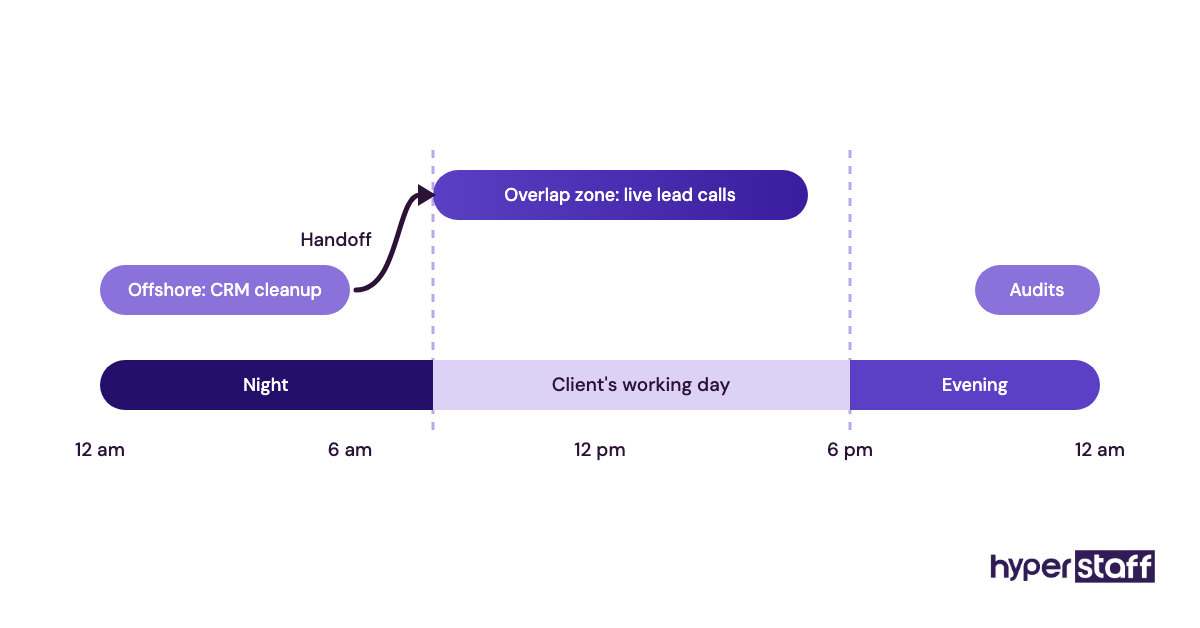
Speed to lead is why many teams hire, and covering US evenings from Asia means night shifts. Philippine labor law requires a night-shift differential, and providers pass that through in the rate.
The practical fix is splitting work. Leave lead response to someone in an overlapping zone, and send CRM cleanup, listing prep and file audits offshore to run overnight.
#3 Cost Driver: Seats in Your CRM and MLS
Your assistant needs logins, and logins cost money. CRM seats, e-signature licenses, transaction platforms and, on some boards, a separate MLS assistant-access fee all land on your side of the ledger.
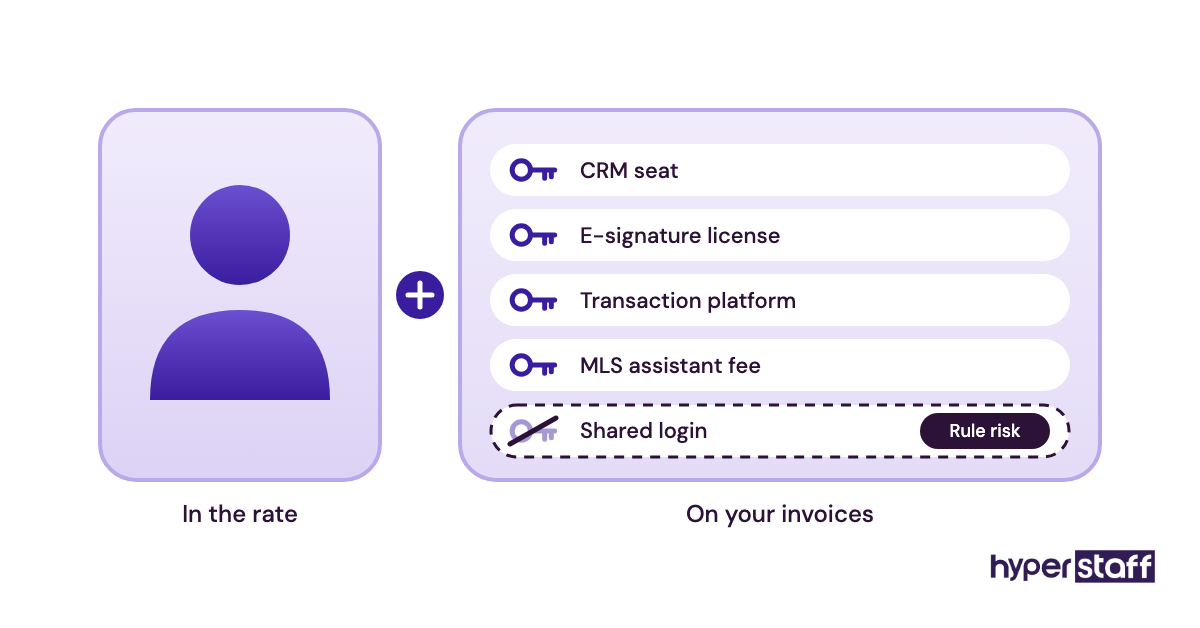
Our guide to real estate virtual assistant tools shows which seats a VA actually needs. Sharing your own login is the cheap shortcut and also the one most likely to break an MLS rule.
#4 Cost Driver: Deal Volume and Seasonality
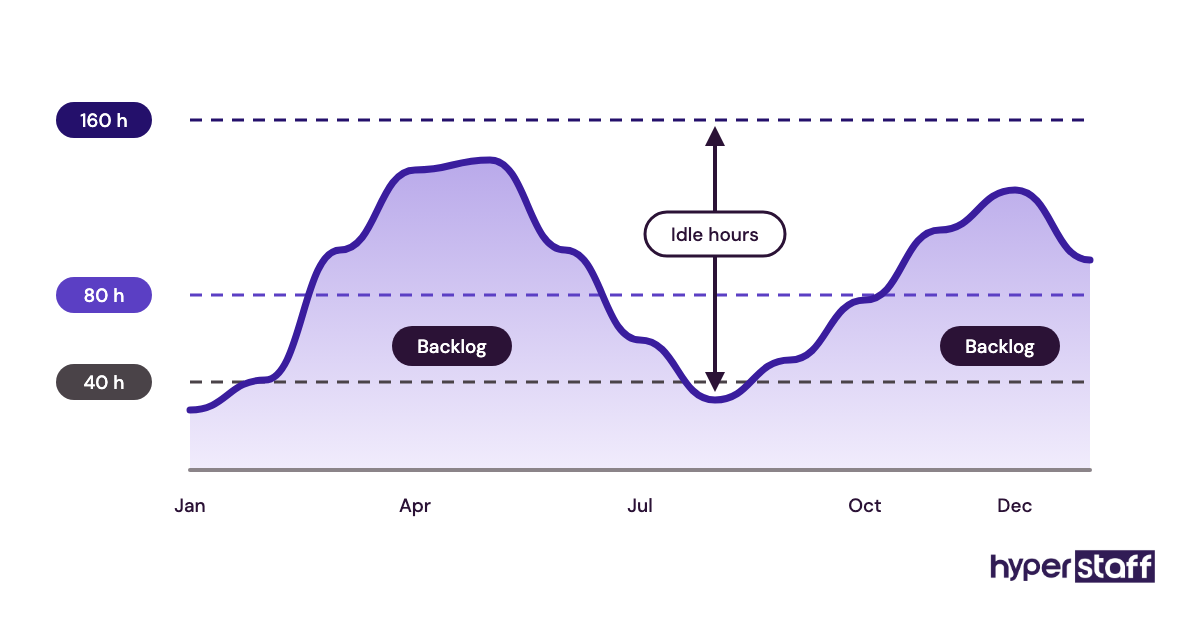
Real estate is lumpy. Spring listings and year-end closings can double an assistant's workload for a few weeks, then drop off a cliff.
Fixed bundles sized for your peak waste money in slow months, and bundles sized for the trough leave files stuck in busy ones. Adjusting hours quarterly usually beats paying for peak capacity all year.
How does AI change real estate virtual assistant cost?
AI cuts the time a real estate virtual assistant spends drafting listing descriptions, emails and social captions, which can trim billed hours on writing-heavy roles. It barely touches transaction coordination, scheduling or live calls, where most hours actually go.
The catch is review time. AI listing copy has a habit of slipping in phrases like "perfect for young families," which raises Fair Housing concerns about familial status, so someone still has to read every line before it hits the MLS.
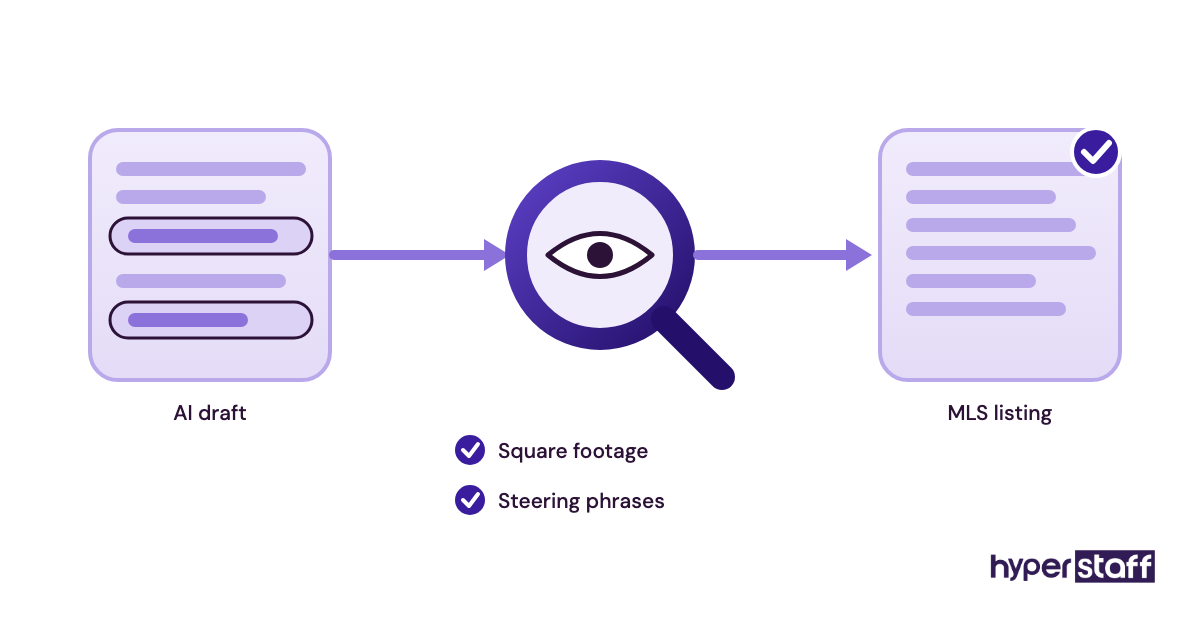
Mainstream AI chat plans run about $20 a month per seat, so the tool is cheap. The value comes from an assistant who knows when its output is wrong.
The Hidden Costs of a Real Estate Virtual Assistant
Most hidden costs show up in the first 90 days:
- Ramp-up: two to four weeks of slower output.
- Your training hours, the biggest one most agents skip. A planned real estate VA onboarding shrinks it.
- Software and MLS seats.
- Turnover: re-hiring and re-training from zero.
- Freelancer payment fees and currency spreads.
- MLS fines from data-entry errors.
How much should you budget for a real estate virtual assistant?
Most solo agents should budget $240 to $1,200 a month for 40 to 80 offshore hours, while teams running full transaction support typically need 160 hours at $960 to $2,400. Add 10% to 15% for software seats.
Size the role from your own week. Track every admin task for two weeks, total the hours, and round down for the first month, since a new assistant won't absorb everything immediately.
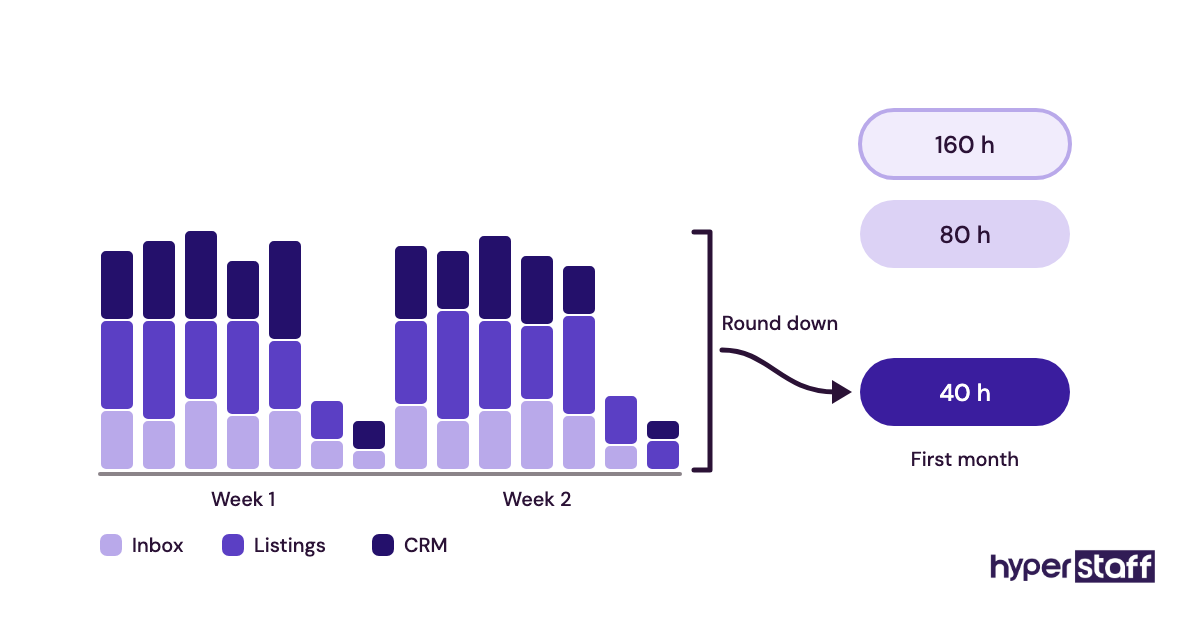
Writing a clear real estate VA job description before you budget forces the scope question early. Agents who skip it tend to buy 160 hours and fill only 90.
How do you calculate real estate virtual assistant ROI?
Real estate virtual assistant ROI equals the value of the hours you get back, plus any extra closings, minus the assistant's monthly cost, divided by that cost. The value of your hour is your annual gross commission income divided by the hours you actually work.
Run the math with your own numbers. At $6 an hour, 80 hours costs $480, so if the freed time produces even one extra closing a year, the commission on it usually covers twelve months of support several times over.
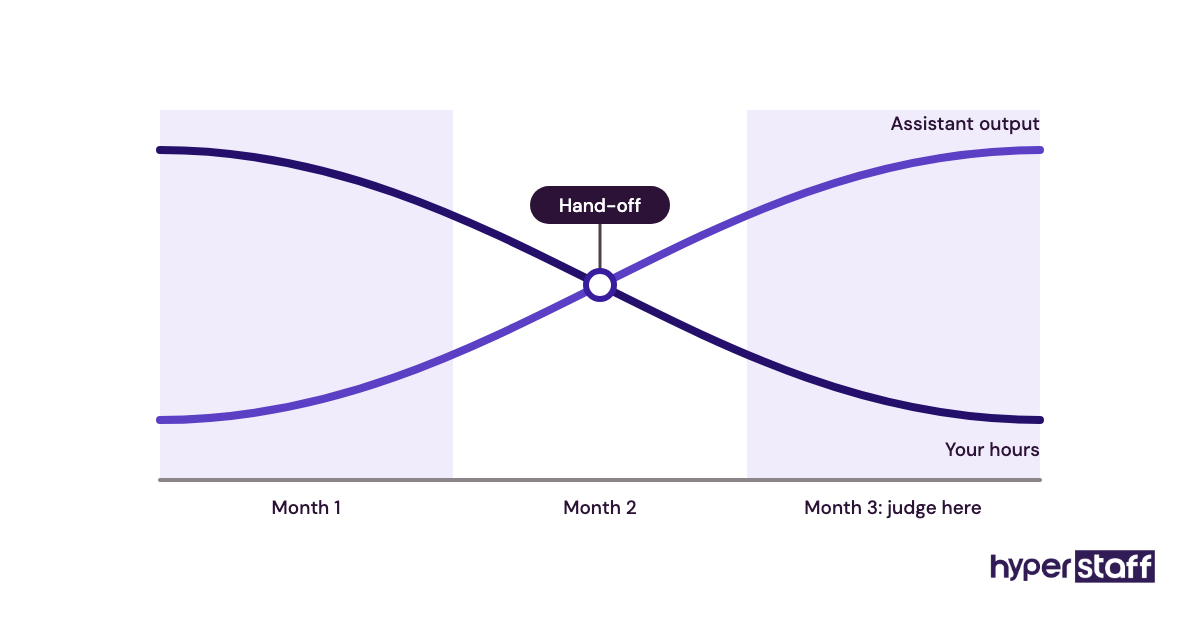
Count only freed time you actually redirect. Hours handed off and then lost to busywork return nothing.
How should you compare real estate VA agency pricing?
Compare real estate VA agencies on the total monthly cost of a working assistant, including replacement terms, minimum contracts and who covers ramp-up. A low hourly rate with weak replacement terms often costs more by month six.
Ask each agency the same questions in the same order. The VA interview questions we publish help you test the candidate, and the agency should answer the commercial ones in writing.
Red Flags in Agency Pricing
- Setup or placement fees that aren't refundable.
- Replacement only after a 90-day minimum.
- No written list of what's in the hourly rate.
- Long contracts with no exit clause.
- "Real estate experience" with no sample work.
Several of these overlap with the common real estate VA hiring mistakes agents make in month one.
When to Walk Away
Walk away when the agency won't let you interview the actual person you'll work with. A rotating pool means your listings get handled by whoever is free, and nobody learns your business.
Also leave if they can't say how fast a replacement arrives. Knowing how to hire a real estate VA yourself gives you a fallback, which makes it easier to turn down a bad deal.
How can you reduce real estate virtual assistant costs without losing quality?
The cheapest savings come from structure, since an assistant with clear processes and the right tier finishes the same work in fewer billed hours.
Step 1: Document Your Processes Before Day One
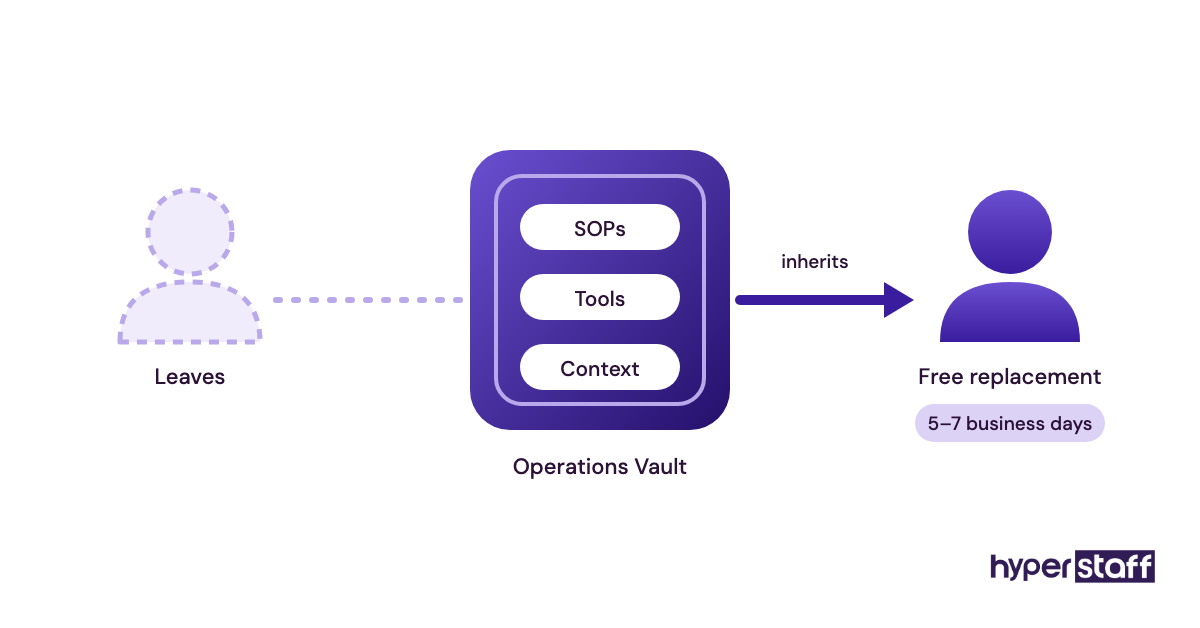
Write down how you enter listings, run a file and follow up a lead. Every undocumented process becomes paid guesswork. Hyperstaff's Operations Vault keeps your SOPs, tools and context written down and maintained, so a replacement starts from your playbook.
Step 2: Match Each Task to a Tier
Data entry and scheduling rarely need five years of experience. Put those at Essential rates and keep Expert hours for contract-to-close files, where mistakes cost real money.
Step 3: Start Small, Then Add Hours
Begin at 40 or 80 hours a month. Add more only once your assistant is running tasks without check-ins, which tells you the extra hours will produce work instead of questions.
Step 4: Batch Work by Deal Stage
Group tasks by stage: new listings Monday, active escrows midweek, CRM updates Friday. Batching cuts the switching time you'd otherwise pay for in a dozen small requests a day.
Step 5: Pay Quarterly Once You're Sure
After the first month proves the fit, switch to quarterly billing. Hyperstaff takes 10% off quarterly payments, which on a 160-hour Professional bundle saves close to $100 a month.
Is a real estate virtual assistant worth the investment?
Yes, for most agents a real estate virtual assistant ranks among the highest-ROI hires available, because offshore rates run a fraction of your own hourly value. One extra closing a year usually covers the cost.
It pays off fastest when you redirect freed hours to listings and prospecting. For a deeper look at whether a real estate VA is worth it at your volume, that guide runs the scenarios.
Disclaimer: This article is for general information only and does not constitute financial, legal, tax or licensing advice. Rates and figures are estimates that vary by market and change over time. Check your state's real estate rules and consult qualified professionals before making hiring decisions.
Common questions
Do real estate virtual assistants charge per transaction?
Some do, mainly transaction coordinators, who often charge $250 to $500 per closed file. General real estate VAs usually bill hourly or by monthly bundle. Per-file pricing suits agents with uneven deal flow.
Can I deduct the cost of a real estate virtual assistant?
In most cases, yes. Payments to an assistant who supports your real estate business are generally a deductible business expense for self-employed agents. Confirm the treatment with your tax advisor.
Is a part-time real estate VA more expensive per hour?
Usually, yes. Small bundles of 20 or 40 hours tend to carry a higher hourly rate than full-time placements, though the monthly total is far lower.
Who pays for my VA's MLS and CRM access?
You do, in almost every arrangement. Software seats, e-signature licenses and any MLS assistant fee belong to your business, so add them to your budget separately from the assistant's rate.
Do real estate assistants expect a bonus per closing?
Not by default, but some teams pay a small closing bonus to reward file accuracy. A fixed bonus per closed file keeps the cost predictable and ties pay to the outcome you care about most.
Book a free 15 min call
We place a pre-vetted specialist in 5 business days, fully managed, from $3/hour.