Real Estate Virtual Assistant Job Description: A Copyable Template
A complete real estate virtual assistant job description you can copy today, with notes on adapting each section to your business.

On this page
- What is a real estate virtual assistant job description?
- Key Real Estate VA Job Description Terms You Should Know
- Why does a real estate VA job description matter?
- How does a real estate virtual assistant job description work in hiring?
- The Real Estate Virtual Assistant Job Description Template
- Types and Forms of Real Estate VA Roles
- How a job description differs from related hiring documents
- The Benefits of a Written Real Estate VA Job Description
- The Drawbacks of a Real Estate VA Job Description
- Who needs a real estate virtual assistant job description?
- Real Estate VA Job Description Examples
- Creating a Real Estate VA Job Description, Step-by-Step
- What does an effective real estate VA job description look like?
- Real Estate VA Tools and Software to List in the Job Description
- 8 Proven Real Estate VA Job Description Tips and Best Practices
- Overcoming Common Real Estate VA Job Description Challenges
- How to Measure Real Estate VA Job Description Success
- How long does a real estate VA job description take to work?
- How much does a real estate virtual assistant cost?
- Is a real estate virtual assistant worth it?
- How do you choose a real estate virtual assistant agency?
- Real Estate VA Statistics, Trends and Future Predictions
- Real Estate Virtual Assistants and AI
- FAQs
💡 Key Takeaways:
1) A real estate virtual assistant job description lists the duties, hours, tools, skills and limits of a remote assistant who supports agents with listings, transactions, leads, marketing and admin.
2) The best job descriptions group duties by workflow, name the exact CRM and transaction software, and spell out which licensed activities the assistant must never perform.
3) Adding three to five measurable 90-day outcomes to the job description makes hiring, onboarding and performance reviews far easier for both sides.
Hire Faster, Close More, Keep the Pipeline Full
A clear job description is the shortcut to a remote hire who frees you for listings and clients, and that's the work behind our real estate virtual assistant services. At Hyperstaff, we've placed 70+ virtual assistants with 30+ clients, drawing on pre-vetted talent across 5 regions, with rates from $3/hour and placement in 5 business days.
What is a real estate virtual assistant job description?
A real estate virtual assistant job description is a written document that defines what a remote assistant does for an agent, team or brokerage. It covers responsibilities, working hours, time zone, required software, skills, reporting lines and the tasks the assistant is not allowed to do.
Think of it as the contract for expectations. It's used three times: to attract candidates, to run interviews and to measure the hire after 90 days. If you're still deciding what the role even is, start with our explainer on what a real estate virtual assistant does.
Key Real Estate VA Job Description Terms You Should Know
- Transaction coordination = managing the steps, deadlines and paperwork between an accepted offer and closing.
- MLS = the Multiple Listing Service, the shared database where listings are entered and updated.
- CRM = customer relationship management software that stores leads, contacts and follow-up tasks.
- Lead nurturing = scheduled calls, texts and emails that move a cold lead toward an appointment.
- ISA = inside sales agent, a role focused on calling and qualifying leads.
- Listing coordination = preparing photos, descriptions, disclosures and syndication for a new listing.
- Unlicensed assistant = an assistant without a real estate license, limited by state rules on what they can say or do.
- SOP = standard operating procedure, a written step-by-step guide for one repeatable task.
- KPI = key performance indicator, a number used to judge whether the role is working.
- Time zone overlap = the hours when the assistant and the agent are both working.
Why does a real estate VA job description matter?
A written job description matters because real estate work is fragmented. One agent's "assistant" means MLS entry and showing schedules; another's means 200 follow-up texts a day. Without a document, candidates guess, and the wrong ones apply.
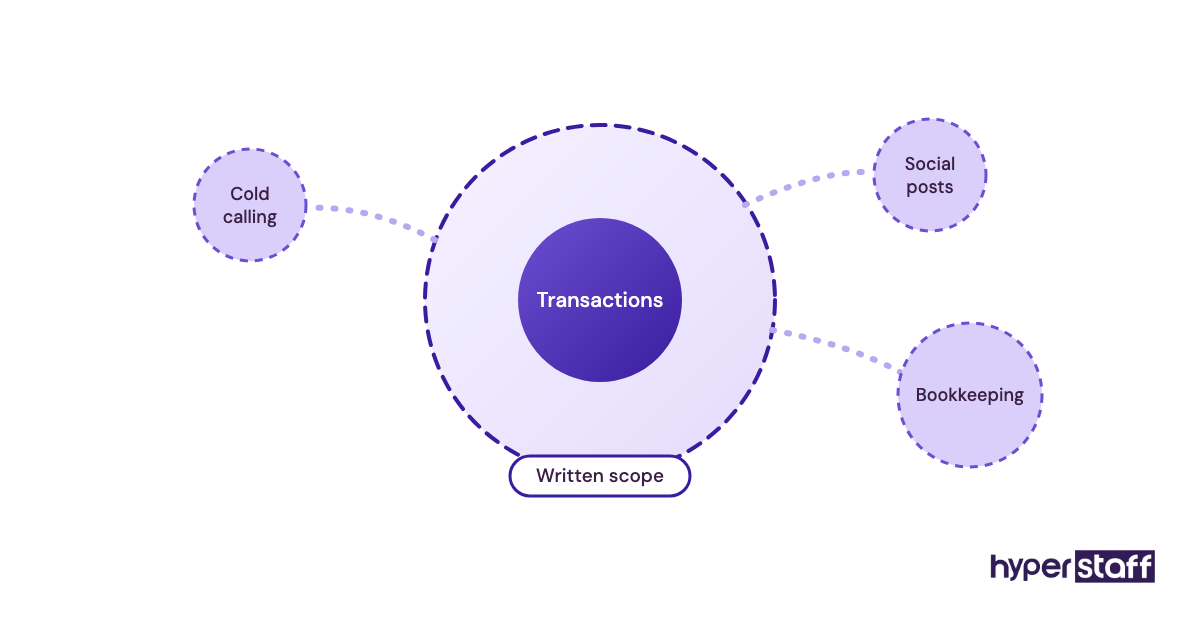
The bigger risk is scope creep. A role that starts as transaction support often absorbs social media, bookkeeping and cold calling within a month, and the hire drowns. A job description gives both sides something to point at when priorities collide.
How does a real estate virtual assistant job description work in hiring?
The job description works as the source file for every later hiring step. Candidates screen themselves against it, you build interview questions from its duties, and your onboarding plan follows its task list in order.
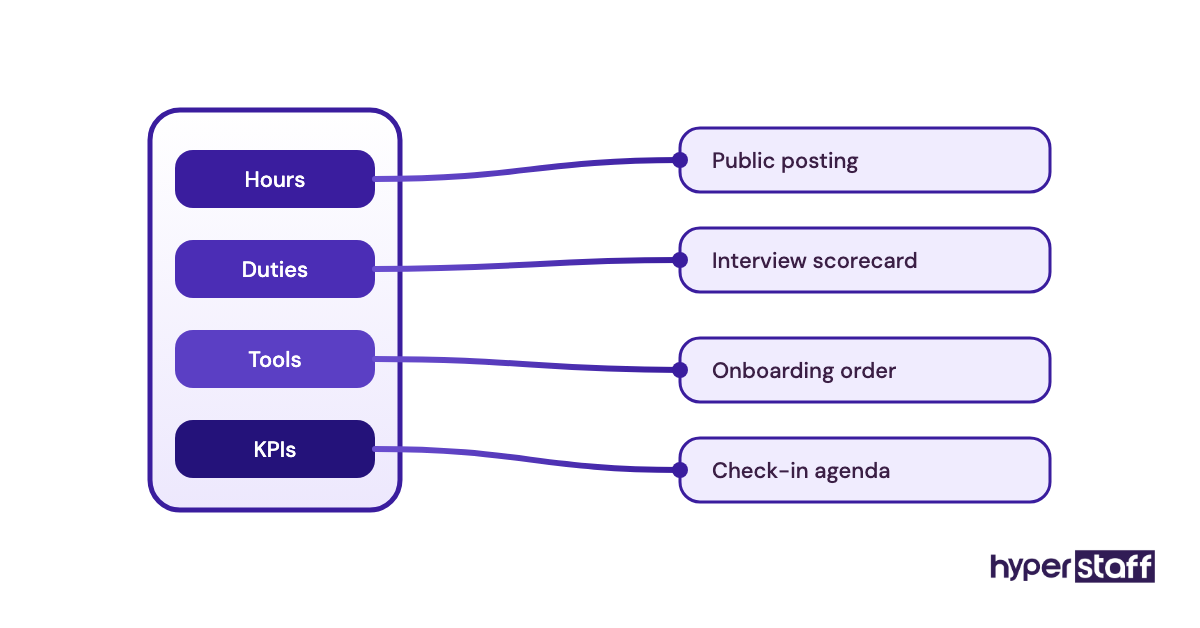
In practice, the document gets reused more than people expect. The duties list becomes your interview scorecard (our real estate VA interview questions map directly onto it). The KPIs section becomes the agenda for your 30, 60 and 90-day check-ins.
The Real Estate Virtual Assistant Job Description Template
Copy the template below, then replace every bracketed item with your own details. Delete any duty you won't hand over in the first 90 days, because an honest short list beats an aspirational long one.
Job title: Real Estate Virtual Assistant ([Full-time / Part-time], Remote)
About us: [Team or brokerage name] is a [residential / commercial / property management] business serving [city or region]. We closed [number] transactions last year and work mainly with [buyers / sellers / investors].
Role summary: You'll support [agent name or team] with listing coordination, transaction paperwork, lead follow-up and daily admin. You'll report to [name, title] and work from our written SOPs.
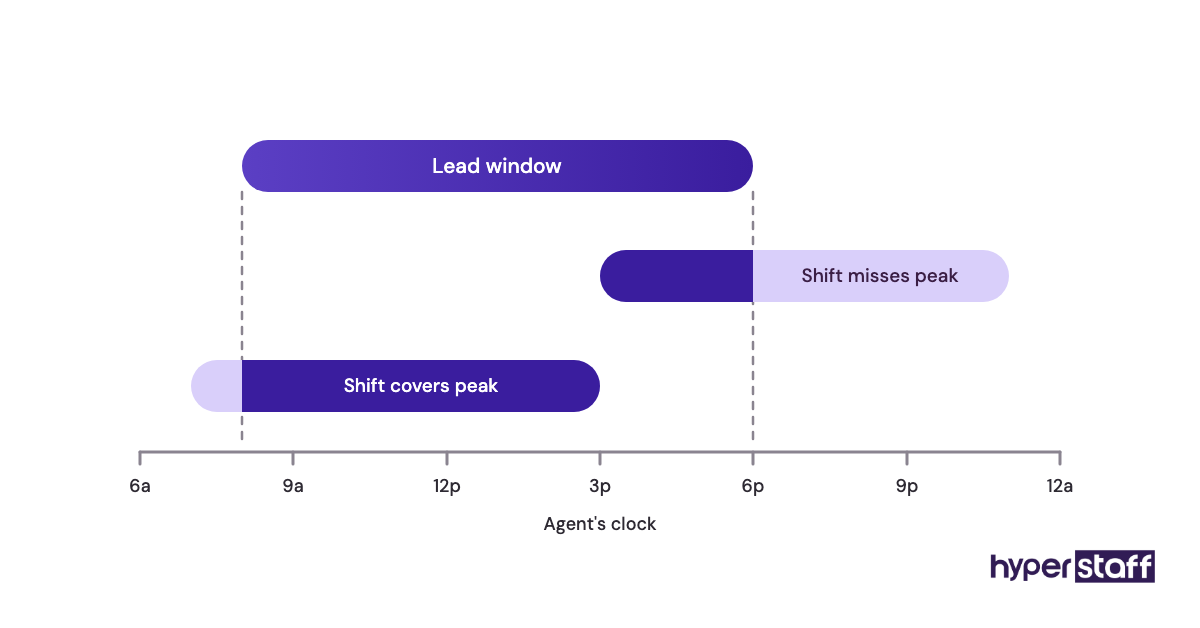
Hours and time zone: [Number] hours per week. You must be online [start time] to [end time] [time zone], Monday to [day].
Listing and transaction support:
- Enter and update listings in the MLS and syndication sites.
- Prepare listing packets, disclosures and seller paperwork for agent review.
- Track contract deadlines (inspection, appraisal, financing, closing) and send reminders.
- Upload and organize documents in [dotloop / SkySlope / other].
- Coordinate with lenders, title companies and inspectors by email.
Lead management and CRM:
- Log new leads in [CRM] within [number] minutes of arrival.
- Run follow-up sequences by text, email and phone using approved scripts.
- Book buyer and seller consultations into the agent's calendar.
- Keep contact records, tags and pipeline stages clean and current.
Marketing:
- Create listing graphics, flyers and social posts in [Canva / other].
- Schedule posts and email newsletters on the agreed calendar.
- Draft listing descriptions for agent approval.
Admin and client care:
- Manage the agent's inbox and calendar, including showing requests.
- Send closing gifts, review requests and anniversary check-ins.
- Update weekly reports on leads, appointments and active deals.
Tools you'll use: [CRM], [transaction software], [MLS], Google Workspace or Microsoft 365, [phone or texting tool], [design tool], [project tool].
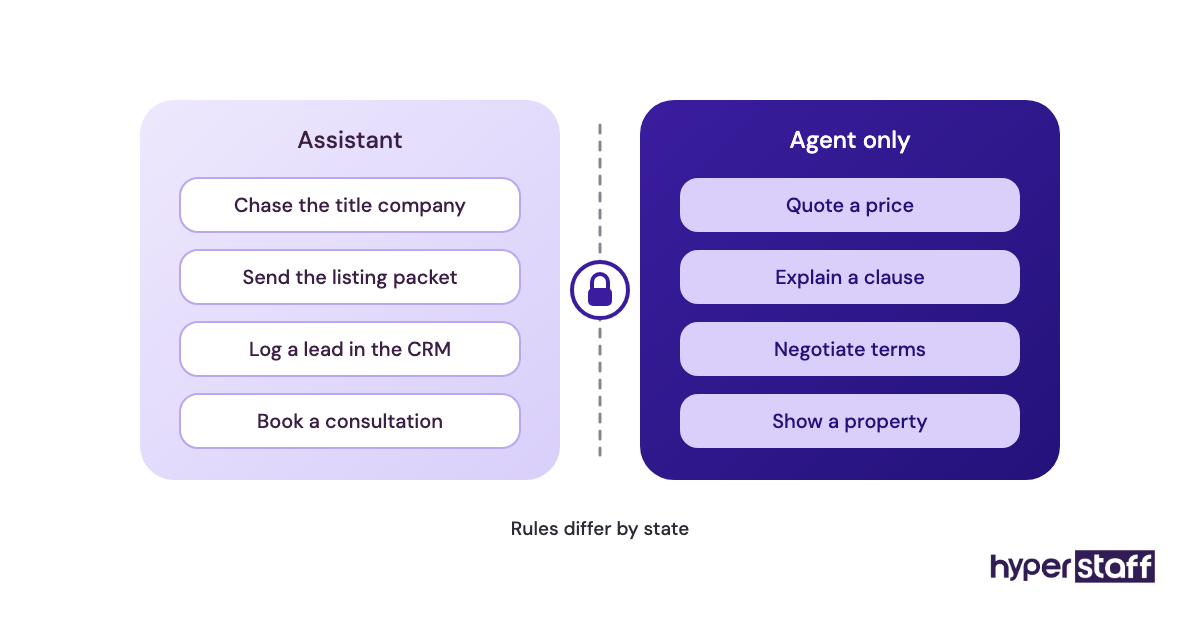
What this role does not do: You will not show property, negotiate terms, give opinions on price or interpret contracts for clients. These tasks require a license in most states, and the agent handles them.
Requirements:
- [Number]+ years of real estate admin, transaction or ISA experience.
- Written English good enough to email clients without edits.
- Experience with at least one real estate CRM.
- Reliable internet and a low-noise workspace for calls.
Nice to have: Familiarity with [state] contracts, MLS data entry experience, basic video editing.
How we'll measure success in 90 days:
- Every new lead contacted within [number] minutes during working hours.
- Zero missed contract deadlines.
- [Number] consultations booked per month.
- Weekly report delivered every [day].
How to apply: Send your resume and a short note on the real estate software you've used. Shortlisted candidates complete a 30-minute paid test task.
The "What this role does not do" block is the part most templates skip. Licensing rules for unlicensed assistants differ by state, so confirm the exact limits with your managing broker before you publish the listing.
Types and Forms of Real Estate VA Roles
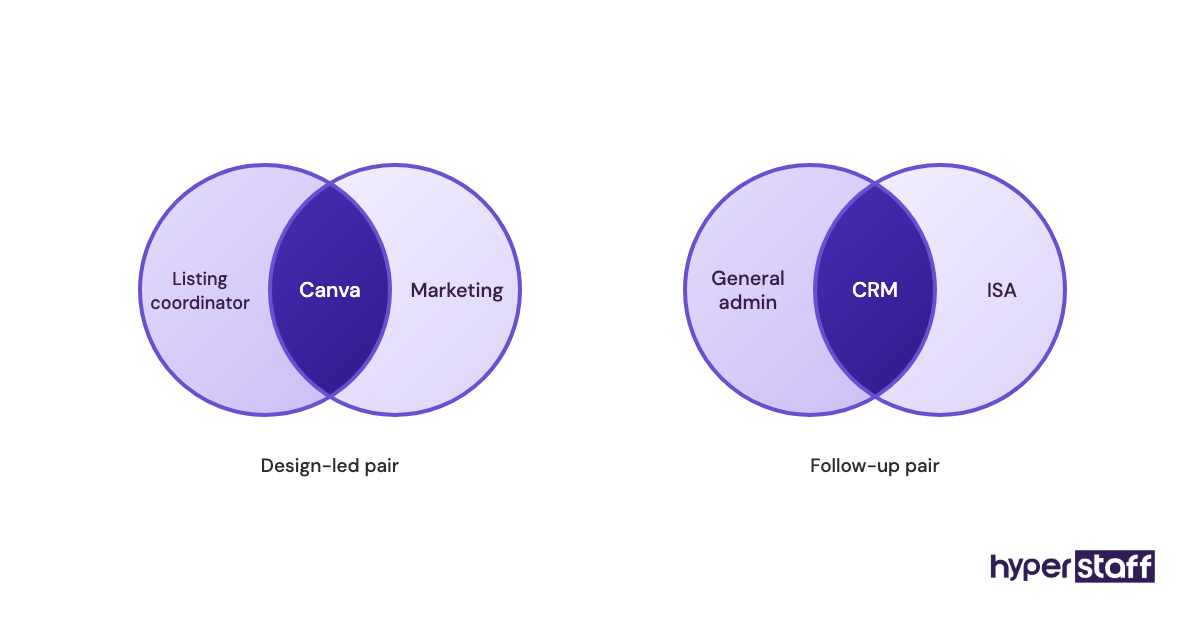
Real estate VA roles split into five common types, and each one needs a different job description emphasis. Pick one primary type for the first hire, then borrow duties from a second type only if hours allow.
| Role type | Main duties | Key tools | Typical hours | Best KPI |
|---|---|---|---|---|
| General admin VA | Inbox, calendar, data entry | Google Workspace, CRM | 40 to 80 per month | Response time |
| Transaction coordinator VA | Deadlines, documents, vendor emails | dotloop, SkySlope | 80 to 160 per month | Missed deadlines |
| Listing coordinator VA | MLS entry, listing packets, syndication | MLS, Canva | 40 to 80 per month | Days to go live |
| ISA / lead follow-up VA | Calls, texts, appointment setting | Follow Up Boss, dialer | 80 to 160 per month | Appointments booked |
| Marketing VA | Graphics, social posts, newsletters | Canva, Meta Business Suite | 40 to 80 per month | Posts shipped on time |
| Property management VA | Tenant messages, maintenance tickets, rent reminders | AppFolio, Buildium | 80 to 160 per month | Ticket close time |
For a full breakdown of duties per role, see our checklist of real estate virtual assistant tasks.
How a job description differs from related hiring documents
A job description sits between three other documents, and mixing them up is how hiring stalls. Each one answers a different question for a different reader.
Job description vs. job posting
The job description is the internal source of truth; the job posting is the public ad written from it. Postings are shorter, lead with pay range and hours, and leave out internal KPIs.
Job description vs. SOP
An SOP explains how one task gets done, click by click. The job description only says the task exists and who owns it, so a 2-page description might sit on top of 30 SOPs.
Job description vs. service agreement
When you hire through an agency, the service agreement covers billing, replacement terms and confidentiality. The job description still matters, since it's what the agency uses to match a candidate.
The Benefits of a Written Real Estate VA Job Description
- Weak candidates screen themselves out before the interview.
- Interviews follow the duties list, so comparisons between candidates are fair.
- Onboarding starts with a clear task order.
- Scope creep has a reference point.
- Performance reviews use numbers agreed on day one.
The Drawbacks of a Real Estate VA Job Description
- It goes stale fast if your tools or team change.
- A long duty list can scare off strong specialists.
- It can't replace SOPs, so you still have to document tasks.
Who needs a real estate virtual assistant job description?
Any agent, team or brokerage hiring remote help needs one, but the stakes differ by size. A solo agent closing a few deals a month needs a short, focused description, usually one role type at 40 to 80 hours.
Teams and brokerages need more structure. When three agents share one assistant, the job description must say whose requests come first, or the loudest agent wins every day.
Real Estate VA Job Description Examples
The difference between a good and a bad job description usually shows up in a single line. These examples are written as sample lines you'd find in a real document.
Good Real Estate VA Job Description Examples
Specific lead response target
"Contact every new Zillow and website lead within 10 minutes between 8 a.m. and 6 p.m. Central." The line names the lead source, the window and the response time, so nobody argues later.
Named software stack
"You'll work daily in Follow Up Boss, dotloop and Google Calendar." Candidates who know those tools stand out at once, and the rest know what they need to learn.
Clear licensing boundary
"You won't discuss price, terms or property condition with clients. Route those questions to the agent." This protects the brokerage and gives the assistant a script for awkward calls.
Bad Real Estate VA Job Description Examples
"Help with whatever comes up"
Catch-all lines attract generalists who expect light admin. The real job turns out to be 150 follow-up calls a week, and the hire leaves.
"Must be a rockstar with social media, bookkeeping and transactions"
Three unrelated skill sets in one line usually means none get done well. Pick the one that moves revenue first.
"Available anytime"
Open-ended availability reads as unpaid overtime to good candidates. It also hides the real question, which is how many hours overlap with your lead window.
Creating a Real Estate VA Job Description, Step-by-Step
Writing the job description takes about two hours if you work in this order. Each step feeds the next one, so skipping ahead tends to produce a duty list with no priorities.
Step #1: Log one week of your own admin
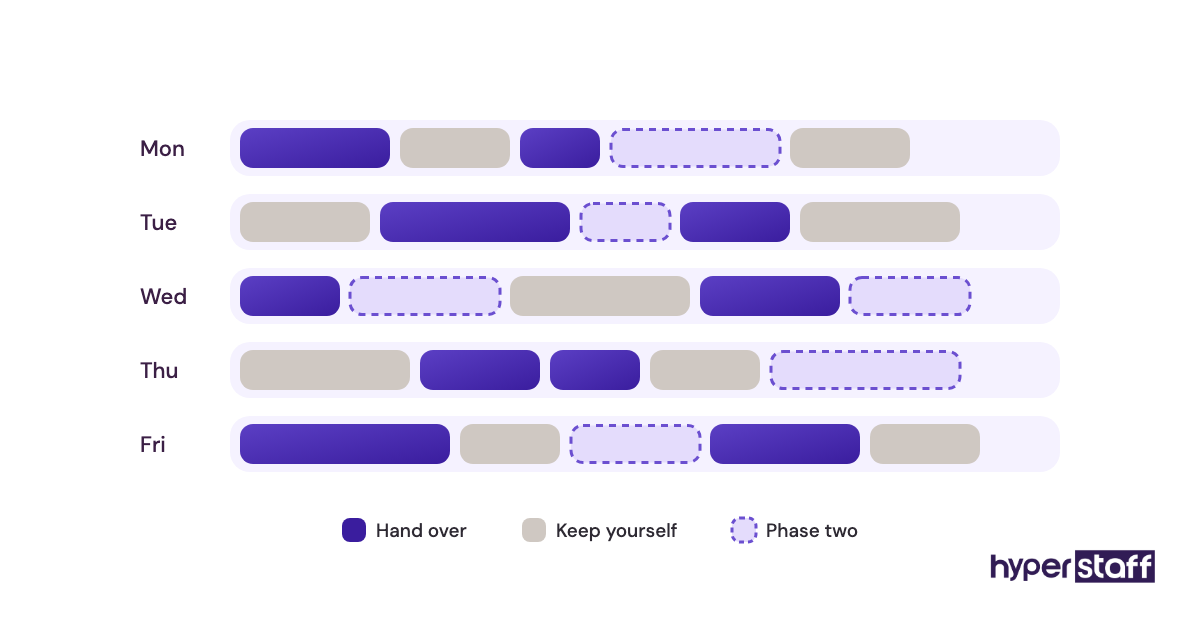
Write down every non-selling task you touch for five working days, with rough minutes. Most agents find their biggest time drain isn't the one they assumed.
Step #2: Pick the primary role type
Group the logged tasks under the role types in the table above. The group with the most hours is your primary role; the rest go on a "phase two" list.
Step #3: Fill in the template
Paste your tasks into the matching sections of the template. Replace every bracket, and cut duties you won't hand over in the first 90 days.
Step #4: Set hours and KPIs
Decide how many hours per month the work actually needs, then write three or four numbers that show it's working. If you can't name a number for a duty, it probably isn't a priority yet.
Step #5: Review with your broker and test with a candidate
Have your managing broker check the licensing section. Then run the test task on one candidate before posting widely, since unclear instructions show up fast. Our guide on hiring a real estate virtual assistant covers the posting and screening stages that come next.
What does an effective real estate VA job description look like?
An effective real estate VA job description fits on two pages, focuses on one primary role type and lists measurable outcomes. It names tools, hours and limits plainly.
The weak ones usually fail on priorities. A list of 40 duties with no order tells the assistant everything is urgent, which means nothing is, and the agent ends up back in the CRM at 9 p.m.
Real Estate VA Tools and Software to List in the Job Description
The tools line in a job description should list the software the assistant will use daily, by name. Below are common choices and what they cost at the time of writing; check each vendor's site, since plans change often.
- Follow Up Boss: a real estate CRM, roughly $58 to $69 per user per month on its entry plan depending on billing.
- dotloop: transaction management and e-signatures, around $26 to $32 per month for an individual agent.
- SkySlope: transaction management common at brokerages, usually priced by quote.
- Canva Pro: listing graphics and social posts, roughly $120 to $180 per year for one person.
- Google Workspace: shared inbox, calendar and documents.
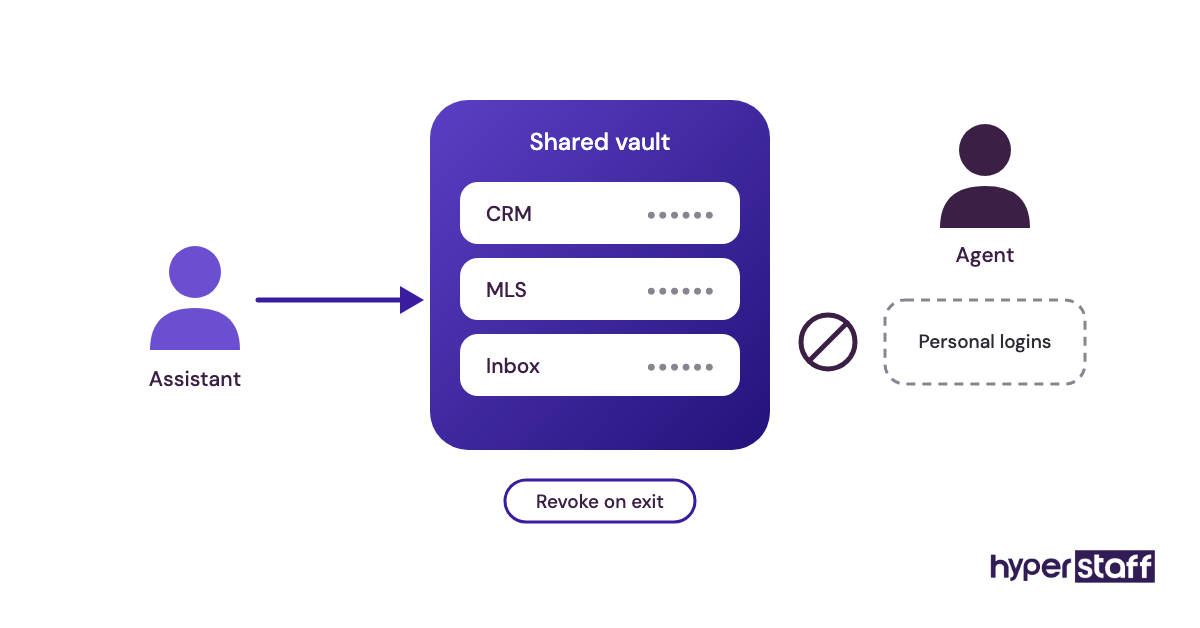
- A shared password manager: so the assistant never needs your personal logins.
One earned opinion: list the password manager in the job description itself. It signals from day one that logins are shared securely, and candidates who balk at it are a flag. Our roundup of real estate virtual assistant tools goes deeper on each option.
8 Proven Real Estate VA Job Description Tips and Best Practices
These tips come from the patterns that separate job descriptions that hire well from ones that get reposted.
- Lead the duties list with the task that earns money, usually lead follow-up or transactions.
- Write hours in your own time zone, with exact start and end times.
- Name every tool rather than writing "CRM experience."
- Include the licensing boundary in plain words.
- Keep the first-90-days list short and honest.
- Add a paid test task that mirrors a real duty.
- Review the document every quarter and delete duties that moved elsewhere.
- Store the final version with your SOPs so the next hire starts from the same file.
Overcoming Common Real Estate VA Job Description Challenges
The most common problem is a job description that tries to cover everything. Fix it by moving secondary duties to a "phase two" list, which also gives the assistant a growth path.
The second is outdated tools. Teams switch CRMs, then forget the job description, and new hires train on the wrong system. Tie the description review to any software change.
Pay expectations are the third. Candidates in different regions read the same hours and duties very differently, so the agency or posting should state a rate range up front. Our post on real estate virtual assistant mistakes covers more of these failure points.
How to Measure Real Estate VA Job Description Success
A job description succeeds when the hire matches it after 90 days. Check whether the KPIs you wrote are being hit and whether the assistant is spending time on the duties listed.
Two numbers tell you most of it: how many qualified applicants the posting drew, and whether the person hired is still in the role at month six. If either is weak, the description was usually too vague or too broad.
How long does a real estate VA job description take to work?
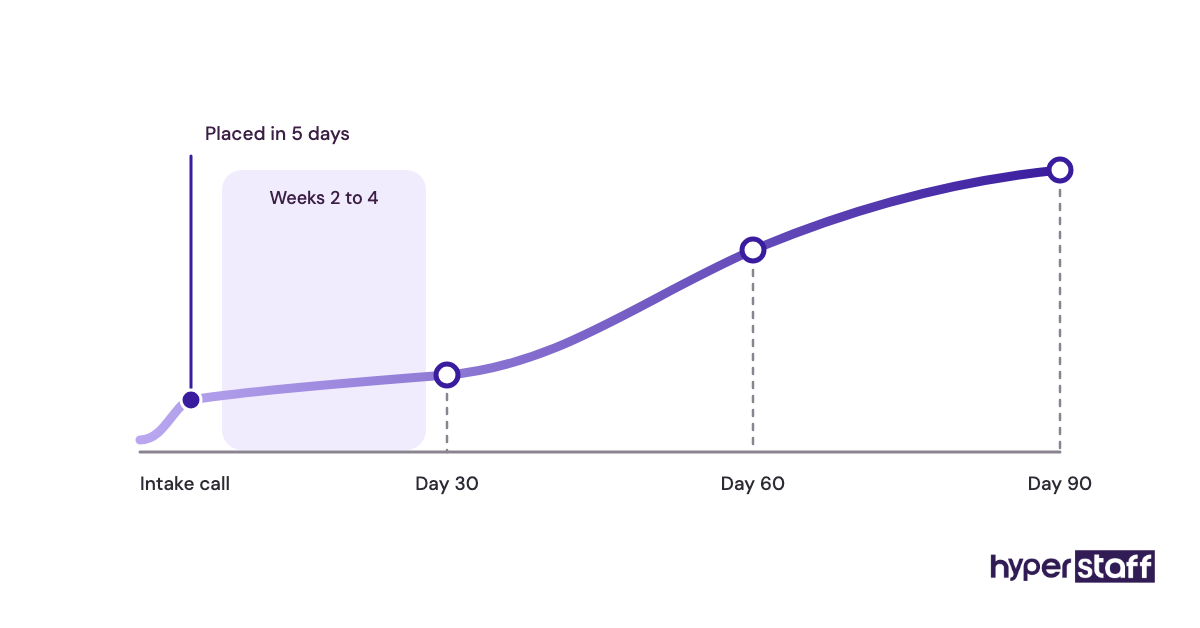
Writing takes an afternoon. The results show over about 90 days: hiring in the first one to three weeks, then a learning curve while the assistant works through your SOPs.
Expect a dead zone in weeks two to four. The assistant knows the tasks but not your judgment calls, so output looks slower than you hoped. A structured plan for onboarding a real estate virtual assistant shortens that stretch.
How much does a real estate virtual assistant cost?
A real estate virtual assistant costs far less than an in-house admin hire. The Bureau of Labor Statistics puts the median pay for secretaries and administrative assistants at $22.82 per hour, before benefits, taxes and equipment.
| Option | Experience | Hourly rate | 80 hours / month | 160 hours / month |
|---|---|---|---|---|
| Hyperstaff Essential | 0 to 2 years | From $3 | From $240 | From $480 |
| Hyperstaff Professional | 2 to 5 years | From $6 | From $480 | From $960 |
| Hyperstaff Expert | 5+ years | From $12 | From $960 | From $1,920 |
| In-house admin (US median wage) | Varies | About $23 plus overhead | About $1,825+ | About $3,650+ |
Paying quarterly with Hyperstaff saves a further 10%. For a full breakdown, read our guide to real estate virtual assistant cost.
Important: Our rates above are starting averages, not fixed quotes. Your final cost depends on the hours, experience tier and type of work your business needs.
Is a real estate virtual assistant worth it?
Yes, a real estate virtual assistant is worth it when the job description hands over real, revenue-linked work, because every hour moved off your plate goes back into listings, showings and client calls that only a licensed agent can do.
Here's a simple calculation using public figures. NAR's latest Member Profile, reported by HousingWire, puts the typical Realtor's median gross income at $59,200 on about 35 hours a week, which works out to roughly $34 per working hour over a 50-week year.
Say the assistant takes over 15 hours of admin a week, about 65 hours a month, on a Professional 80-hour bundle from $480. At $34 an hour, those 65 hours are worth about $2,200 of agent time, so the hire pays off if even a quarter of that time turns into selling work. Our post on whether a real estate VA is worth it runs more scenarios.
The honest catch: the payoff only arrives if the freed hours go to prospecting and clients. If they fill with more admin without anyone noticing, the maths falls apart.
How do you choose a real estate virtual assistant agency?
Choose an agency that matches candidates to your job description, gives you one dedicated assistant and has written replacement terms. Ask how fast they place, what happens if the hire leaves and who keeps your process documentation.
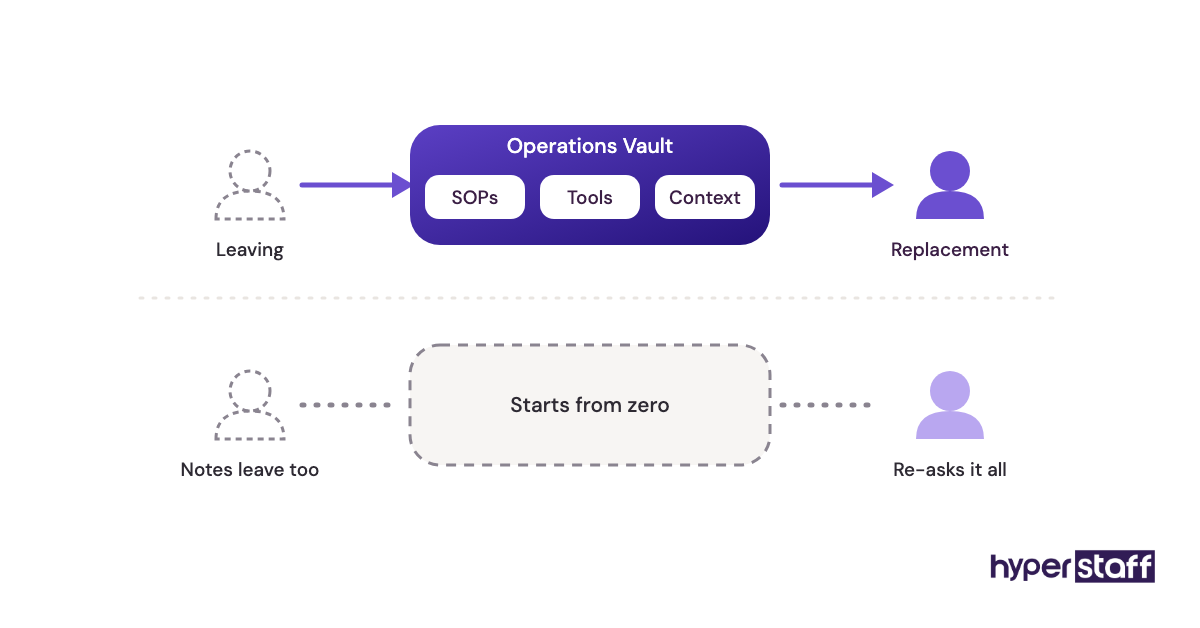
That last point is where practitioners disagree. Some agents prefer to hold every SOP themselves; others want the agency to maintain it. At Hyperstaff, we keep your SOPs, tools and context in an Operations Vault, so a free replacement in 5 to 7 business days starts already briefed, and every client gets a dedicated account manager.
If you're weighing remote help against a local hire, our comparison of real estate virtual assistant vs in-house lays out the trade-offs.
Real Estate VA Statistics, Trends and Future Predictions
The workload numbers explain the demand for real estate virtual assistants. NAR's Member Profile reports that sales agents typically work around 30 hours a week while brokers who sell put in 40 to 45, per the same HousingWire summary.
On the admin side, BLS projects roughly flat employment for administrative assistants over the coming decade, yet still expects about 358,300 openings a year, mostly from replacement. Our prediction, and it's an opinion: job descriptions will get narrower, with teams hiring one specialist per workflow instead of one generalist for everything.
Real Estate Virtual Assistants and AI
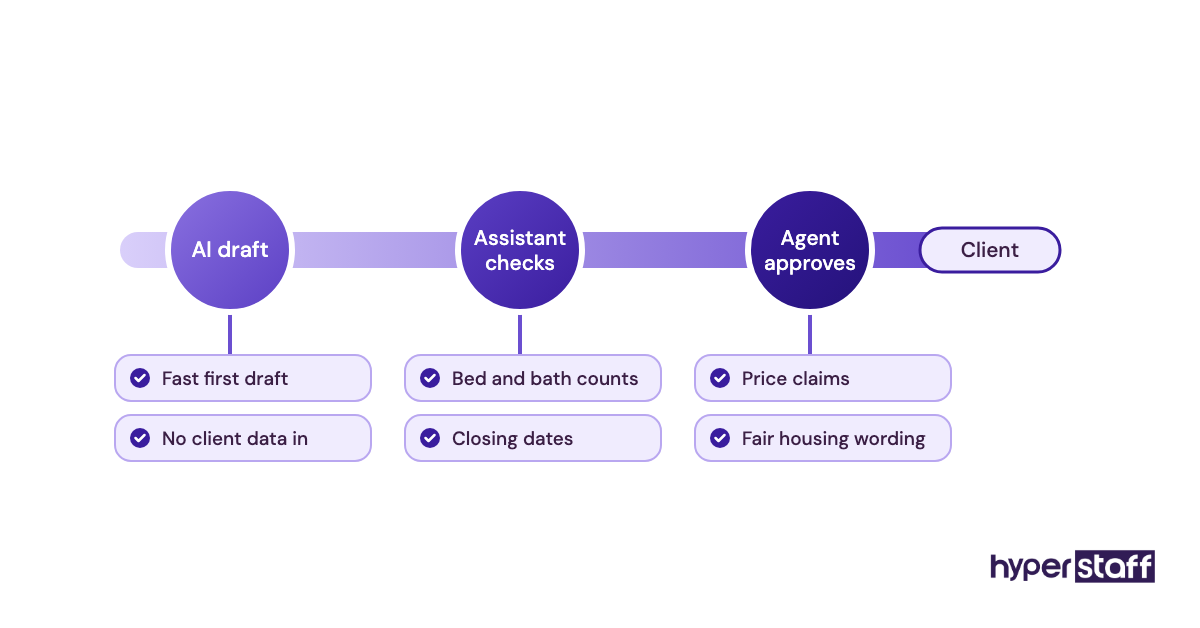
AI tools now draft listing descriptions, summarize contracts and write first-pass follow-up texts. A modern real estate VA job description should say which AI tools the assistant may use and what must be reviewed by a human before it reaches a client.
We're openly uncertain how far this goes. AI drafts fast but makes confident errors on property details and contract dates, so the safest rule today is "AI drafts, assistant checks, agent approves" for anything client-facing.
Disclaimer: This article is for general information only and isn't legal, licensing, tax or employment advice. Real estate licensing rules vary by state, and tool prices change; confirm details with your broker, a qualified advisor and each vendor before acting.
Common questions
What should a real estate virtual assistant job description include?
It should include the role summary, hours and time zone, duties grouped by workflow, named tools, requirements and the licensed tasks the assistant can't do. Add three or four 90-day KPIs so performance is easy to judge.
Can a real estate virtual assistant do cold calling?
Yes, in most cases, as long as they follow scripts, do-not-call rules and your state's limits for unlicensed assistants. Put the calling duties and scripts in the job description so expectations are clear.
Does a real estate VA need a license?
No, most real estate VAs work unlicensed and handle admin, marketing and coordination. A licensed assistant can take on more, but rules vary by state, so check with your broker.
How many hours should I list for a real estate VA?
Start with what your one-week admin log shows. Many solo agents begin at 40 to 80 hours a month, while teams with steady lead flow often need 160.
Should a real estate VA job description list salary?
Yes, a pay range in the posting draws better-matched applicants and saves interview time. If you hire through an agency, the agency sets the rate and you can leave it out of your internal document.
Book a free 15 min call
We place a pre-vetted specialist in 5 business days, fully managed, from $3/hour.