Onboarding a Real Estate Virtual Assistant: The First 30 Days
A practical 30-day plan for onboarding a real estate virtual assistant, from compliant MLS access to handing over leads and transactions.

On this page
- What Does Onboarding a Real Estate Virtual Assistant Involve?
- Key Real Estate VA Onboarding Terms You Should Know
- Why Is Real Estate VA Onboarding So Important?
- How Does Onboarding a Real Estate VA Work?
- Types and Forms of Real Estate VA Onboarding
- How Real Estate VA Onboarding Differs From Related Processes
- The Benefits of Onboarding a Real Estate VA Properly
- The Drawbacks of Real Estate VA Onboarding
- Who Needs a Formal Real Estate VA Onboarding Process?
- Real Estate VA Onboarding Examples
- Creating a Real Estate VA Onboarding Plan, Step-by-Step
- What Does an Effective Real Estate VA Onboarding Strategy Look Like?
- Real Estate VA Onboarding Tools and Software
- Proven Tips for Onboarding a Real Estate Virtual Assistant
- Overcoming Common Real Estate VA Onboarding Challenges
- How to Measure Real Estate VA Onboarding Success
- How Long Does Onboarding a Real Estate VA Take?
- How Much Does Onboarding a Real Estate VA Cost?
- Is Onboarding a Real Estate VA Worth It?
- How to Choose a Real Estate VA Agency That Supports Onboarding
- Real Estate VA Statistics, Trends and Future Predictions
- Real Estate VA Onboarding and AI
- FAQs
💡 Key Takeaways:
1) Onboarding a real estate virtual assistant means setting up compliant access to your CRM, MLS and transaction platform, writing down your listing, lead and closing workflows, and handing tasks over one at a time across the first 30 days.
2) State licensing rules and MLS policies limit what an unlicensed assistant may do, so the onboarding plan has to say which tasks stay with the agent before any login is shared.
3) Most real estate VAs run routine admin alone within two to four weeks, while lead follow-up and transaction coordination take longer because one missed call or deadline can cost a deal.
Faster VA onboarding, more hours for closings
Hyperstaff has placed 70+ pre-vetted virtual assistants with 30+ clients, and our real estate virtual assistant services match you with a specialist in 5 business days. After a 30-minute kickoff call, your assistant starts that day or the next morning, backed by a dedicated account manager and an Operations Vault that keeps your SOPs, tools and context written down, with rates from $3/hour.
What Does Onboarding a Real Estate Virtual Assistant Involve?
Onboarding a real estate virtual assistant is the setup period in which a remote assistant gets access to your CRM, shared inbox and transaction software, learns your scripts and checklists, and takes over listing, lead and admin work in stages. It normally runs from the day before their first login to the end of their first month.
The job reaches well past calendar admin. A real estate VA might follow up on portal leads, build listing packets, book showings, chase lender and title updates, schedule social posts or log every call in the CRM, and our list of real estate virtual assistant tasks shows the full range.
Onboarding is also where the legal edges get settled. Each state sets its own line between licensed and unlicensed activity, and your VA needs to know where that line sits before they speak to a single buyer or seller.
Key Real Estate VA Onboarding Terms You Should Know
- Unlicensed assistant = a support person who may do clerical and marketing work but may not negotiate, show property or give advice on terms.
- MLS assistant account = a separate MLS login for support staff, offered by many MLSs so agents never share their own credentials.
- Speed to lead = the minutes between a new inquiry arriving and the first contact attempt.
- ISA = inside sales agent, the person who calls and texts leads to qualify them and book appointments.
- Action plan = an automated CRM sequence of calls, texts and emails attached to a lead.
- Lead source tag = the CRM label showing where a lead came from, such as a portal, sign call or referral.
- Transaction coordinator (TC) = the person who tracks a contract from acceptance to closing.
- Critical dates calendar = the list of contract deadlines for inspection, appraisal, financing and closing.
- Listing packet = photos, property details, disclosures and marketing copy gathered before a listing goes live.
- DNC scrub = checking phone numbers against the National Do Not Call Registry before a cold call.
- Fair housing guardrails = written rules on wording and lead handling that keep marketing and replies within the Fair Housing Act.
- Wire fraud protocol = a standing rule that the VA never sends, edits or confirms wiring instructions.
- Escalation rule = a written list of decisions the VA makes alone and decisions that come back to the agent.
Why Is Real Estate VA Onboarding So Important?
Real estate VA onboarding matters because the assistant's mistakes land on clients, contract deadlines and your license. A missed inspection deadline or a portal lead left uncalled for two days costs far more than a messy spreadsheet.
Lead response shows the stakes most clearly. In Harvard Business Review's study of online sales leads, firms that tried to reach a lead within an hour were nearly seven times as likely to qualify it as firms that waited even an hour longer.
A VA who hasn't been walked through your lead routing, call scripts and CRM stages can't hit that window, however sharp they are. The speed comes from setup.
Writing the onboarding has a second payoff. It forces your transaction checklist onto paper, and in our experience agents with ten or more years in the business find their first draft skips the steps they now do on autopilot.
How Does Onboarding a Real Estate VA Work?
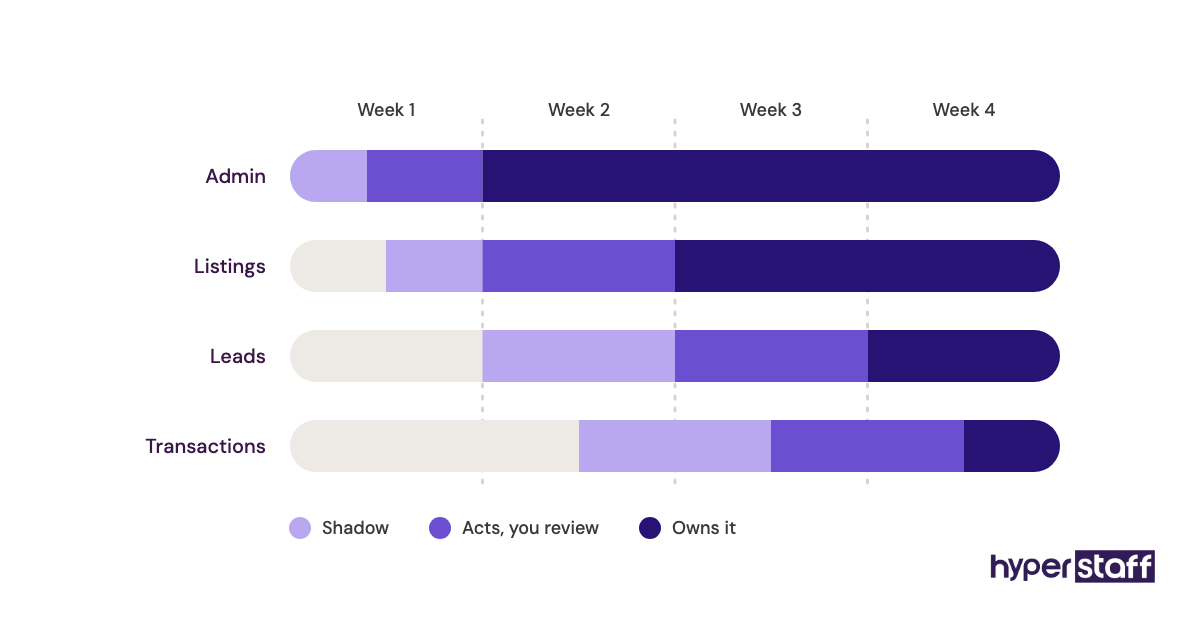
Onboarding a real estate VA works in four stages: compliance and access setup, a kickoff call, a supervised first week on live files and a staged handover across weeks two to four. Lead and contract work always arrives last.
Setup covers the business email, a password manager, CRM permissions, an MLS assistant account where your MLS offers one, and the escalation rules. The kickoff call sets priorities, working hours, response times and the tasks that stay with you.
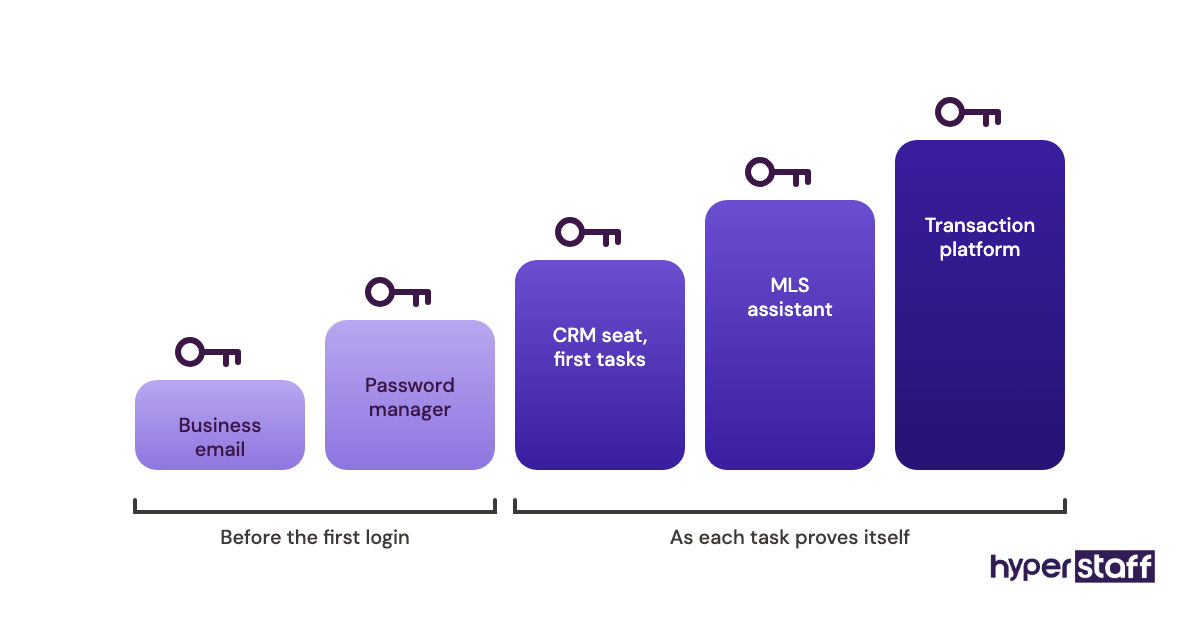
Week one runs on real work with a daily review. From week two the VA picks up one new workflow at a time, usually admin first, then listings, then leads, then transactions.
Types and Forms of Real Estate VA Onboarding
Real estate VA onboarding takes different forms depending on the role the assistant fills. Each role needs its own access, checklist and ramp time, and the table shows what that looks like.
| VA role | First tasks handed over | Main tools to set up | Typical ramp time | Main onboarding risk |
|---|---|---|---|---|
| Admin and inbox VA | Email triage, calendar, CRM data entry | Google Workspace or Outlook, CRM | 1 to 2 weeks | Replying to clients without approved templates |
| Listing coordinator VA | Listing packets, photo booking, MLS input drafts | MLS assistant account, Canva, cloud storage | 2 to 3 weeks | Errors in MLS fields or room counts |
| Lead follow-up or ISA VA | Portal lead calls, texts, appointment booking | CRM, dialer, call scripts | 3 to 5 weeks | Calling numbers on the DNC list |
| Transaction coordinator VA | Critical dates, document chasing, status updates | dotloop or SkySlope, shared calendar | 3 to 6 weeks | A missed contract deadline |
| Marketing and social VA | Just-listed posts, newsletters, video edits | Canva, scheduler, email platform | 2 to 3 weeks | Fair housing wording slips |
| Property management VA | Tenant messages, maintenance tickets, rent reminders | Property management software | 3 to 4 weeks | Approving repairs above the agreed limit |
| Team operations VA | Agent onboarding, lead routing, reporting | CRM admin rights, team chat | 4 to 6 weeks | Too many people giving instructions |
| Replacement handover | Whatever the previous VA owned | Same stack, fresh logins | Days, if documented | No written record of open files |
Many agents start with an admin or listing role and add lead calls once the assistant knows the market. Going straight to an ISA role works too, though it needs a longer ramp and recorded calls you actually review.
How Real Estate VA Onboarding Differs From Related Processes
Onboarding a real estate VA overlaps with hiring, new-agent training and transaction coordinator setup, and each overlap changes what you document. Mixing them up is the fastest route to a VA who knows the software and nothing about your business.
Real Estate VA Onboarding vs. Hiring
Hiring picks the person, and the selection steps sit in our guide on how to hire a real estate virtual assistant. Onboarding starts once the offer is accepted and covers access, context and the order of handover.
The two blur when a trial task doubles as a first assignment. Keep trial work on dummy data, because real client files need the access controls that only arrive with onboarding.
Real Estate VA Onboarding vs. New Agent Training
New agents train to prospect, show homes, write offers and negotiate. An unlicensed VA does none of those, so their onboarding skips the sales craft and goes deep on systems, deadlines and written communication.
Agents who copy their brokerage's new-agent program onto a VA waste the first week on material the assistant will never use.
Real Estate VA Onboarding vs. Transaction Coordinator Setup
A transaction coordinator setup is narrower: one platform, one checklist and the contact list for lenders, title and escrow. A VA who also coordinates transactions needs that setup plus everything else on their plate.
Practitioners split on whether one VA should do both. Our view is that a single assistant can carry admin and coordination for an agent with steady but moderate volume, while a busy team gets fewer slips with a dedicated TC.
The Benefits of Onboarding a Real Estate VA Properly
A structured onboarding gets the assistant to independent work faster and protects your license while they learn. Agents usually notice these gains first:
- New leads get a first touch within minutes, even while you're at a showing.
- Contract deadlines sit on a shared calendar with a named owner.
- Client updates go out on a schedule, from templates you approved.
- Access is revocable in one step, since logins live in a password manager.
- The written checklists onboard the next VA or a replacement in days.
- Your listing launch process looks the same every time.
The Drawbacks of Real Estate VA Onboarding
Onboarding costs agent time up front, and that time often has to come out of a busy season. Plan around these trade-offs:
- Writing checklists and recording calls takes several hours in week one.
- Some MLSs charge a fee for an assistant account.
- Reviewing early lead calls feels slower than making them yourself.
- Checklists go stale when your brokerage changes forms or software.
Who Needs a Formal Real Estate VA Onboarding Process?
Any agent, team or broker giving a VA access to client data or live leads needs a formal onboarding process. The higher your volume, the more a skipped step costs.
Solo agents gain the most per hour spent, since they're the only source of knowledge in the business. Teams face a different problem: the VA hears from several people, so onboarding must name one person who sets priorities.
Investors, property managers and brokerages fit too, each with a different first task list. Investors usually start a VA on lead lists and seller follow-up, while property managers start with tenant messages and maintenance tickets.
Real Estate VA Onboarding Examples
The patterns below show how real estate VA onboarding tends to go right or wrong by role. Good versions start narrow and put rules in writing, and bad ones hand over access before context.
Good Real Estate VA Onboarding Examples
Listing Coordinator VA Starting With One Listing
The VA builds the full listing packet for a single property while the agent checks every field against the MLS rules. Once a second packet comes back with no corrections, the VA owns listing prep and the agent moves to spot checks.
ISA VA With Recorded Call Reviews
The VA studies the agent's scripts and a set of recorded calls, then makes live calls that are recorded with consent and reviewed daily for the first two weeks. Appointment booking rights come after the agent signs off on tone and qualifying questions.
Transaction Coordinator VA Shadowing Two Files
The VA mirrors the agent's critical dates calendar on two open contracts without contacting anyone. On the third file they send the status emails themselves, with the agent copied on each one.
Bad Real Estate VA Onboarding Examples
The Shared MLS Login
The agent hands over their own MLS username and password to save the assistant account fee. Most MLS rules forbid credential sharing, and a breach can bring fines or a suspended account, which is why it ranks among the common real estate virtual assistant mistakes.
The Unscrubbed Calling List
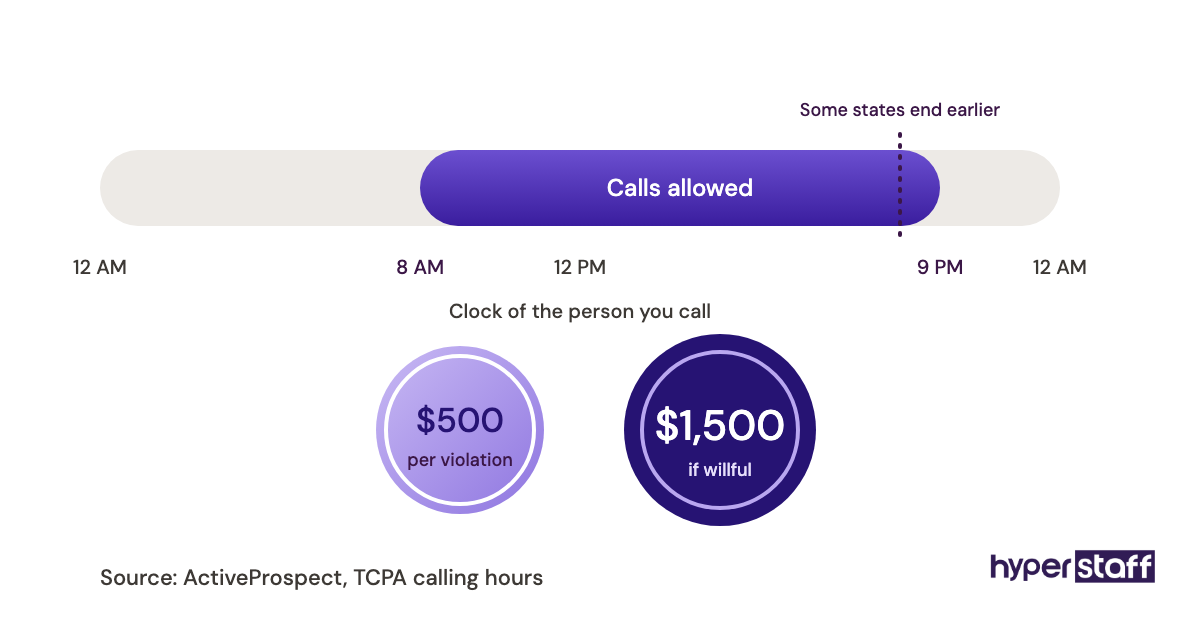
A new ISA starts dialing an expired-listings list on day two with no DNC check and no calling-hours rule. Penalties under the Telephone Consumer Protection Act fall on the agent and brokerage, and the assistant had no way of knowing.
The VA Who Forwards Wiring Instructions
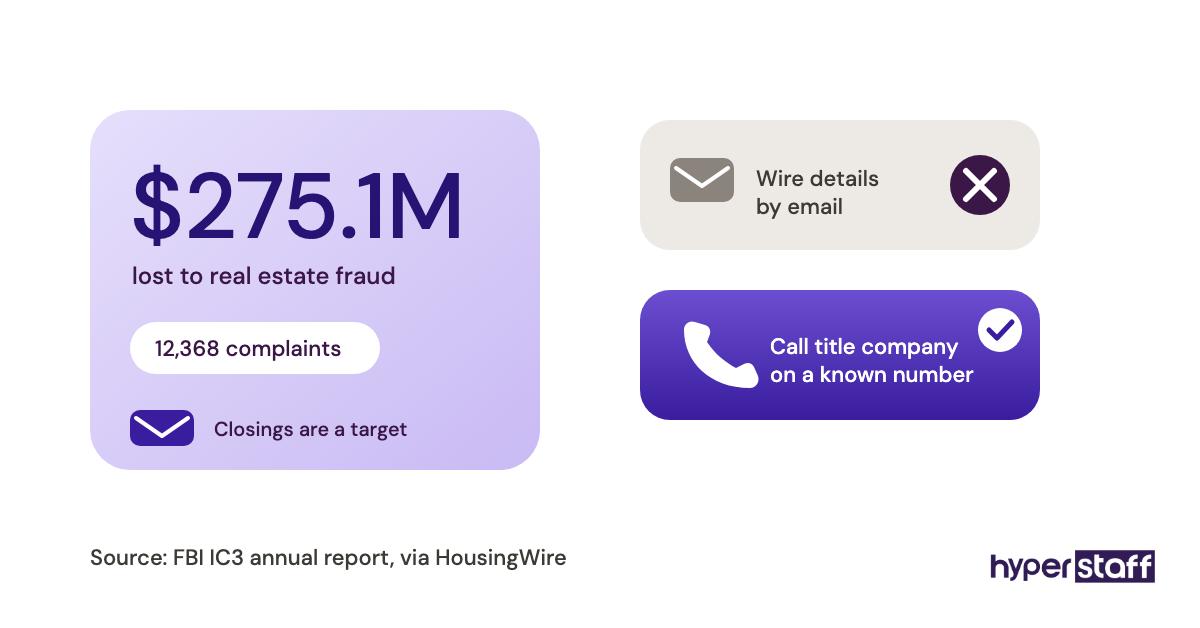
Nobody told the assistant that wiring details only come from the title company by phone. A spoofed email arrives, the VA forwards it to the buyer as routine paperwork, and the money is gone before anyone notices.
Creating a Real Estate VA Onboarding Plan, Step-by-Step
A real estate VA onboarding plan has five steps, and the first three are finished before the assistant logs in. Each one assumes the step before it is done.
Step #1: Decide Which Work Leaves Your Desk First
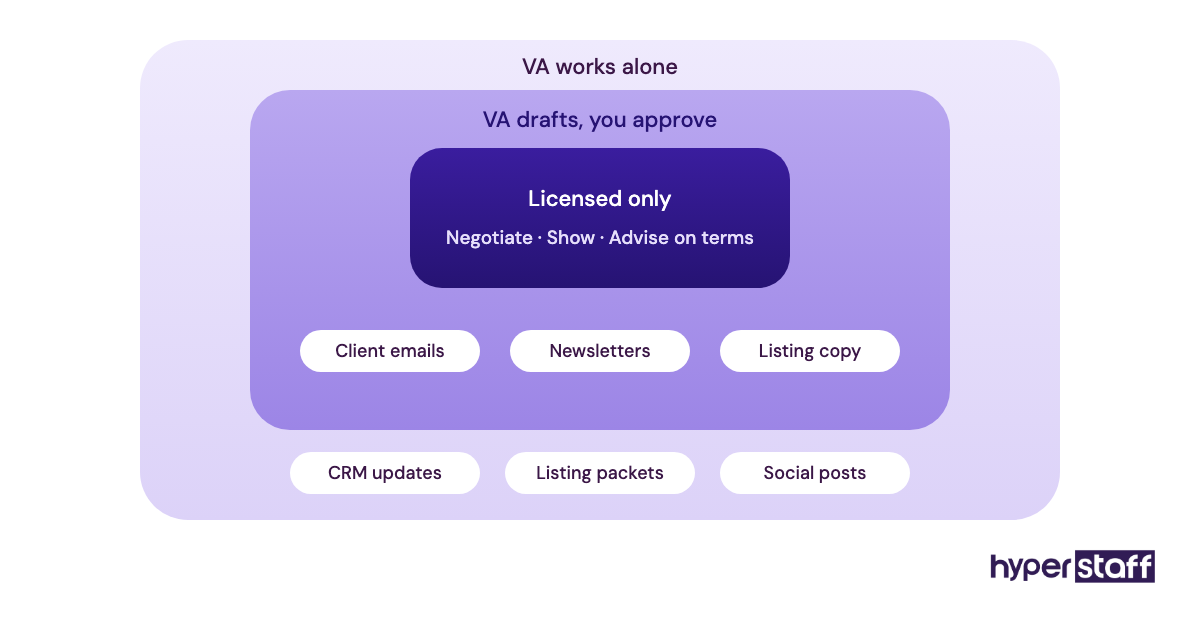
Pick two or three tasks that recur weekly, carry low risk and are easy to check, such as CRM updates or listing packet prep. A written real estate virtual assistant job description makes the choice quicker, because the responsibilities are already ranked.
Write down the tasks that stay with you as well. Negotiation, pricing advice and anything your state reserves for licensees belong on that list.
Step #2: Set Up Access the Compliant Way
Create a business email for the VA, share logins through a team password manager and give CRM rights for the first tasks only. Ask your MLS about an assistant or unlicensed staff account for the VA's own login.
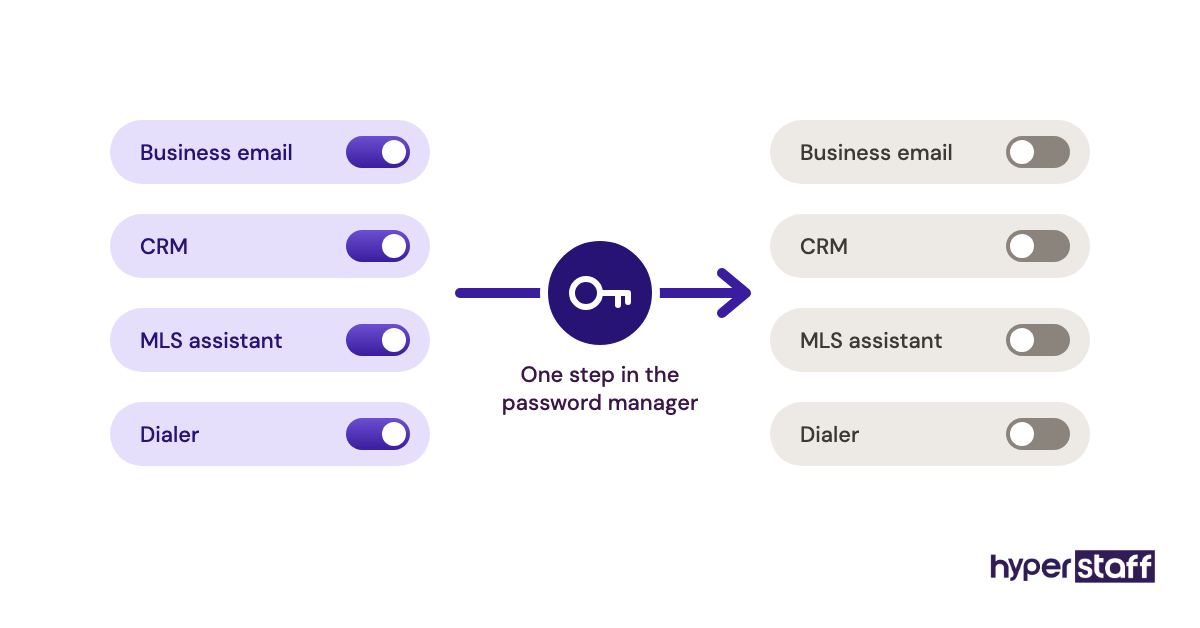
Keep every subscription billed to your business, and turn on two-factor authentication everywhere. If calls are part of the role, set up a business number the VA uses, so client conversations stay with you when the arrangement ends.
Step #3: Write the Checklists and Record Live Work
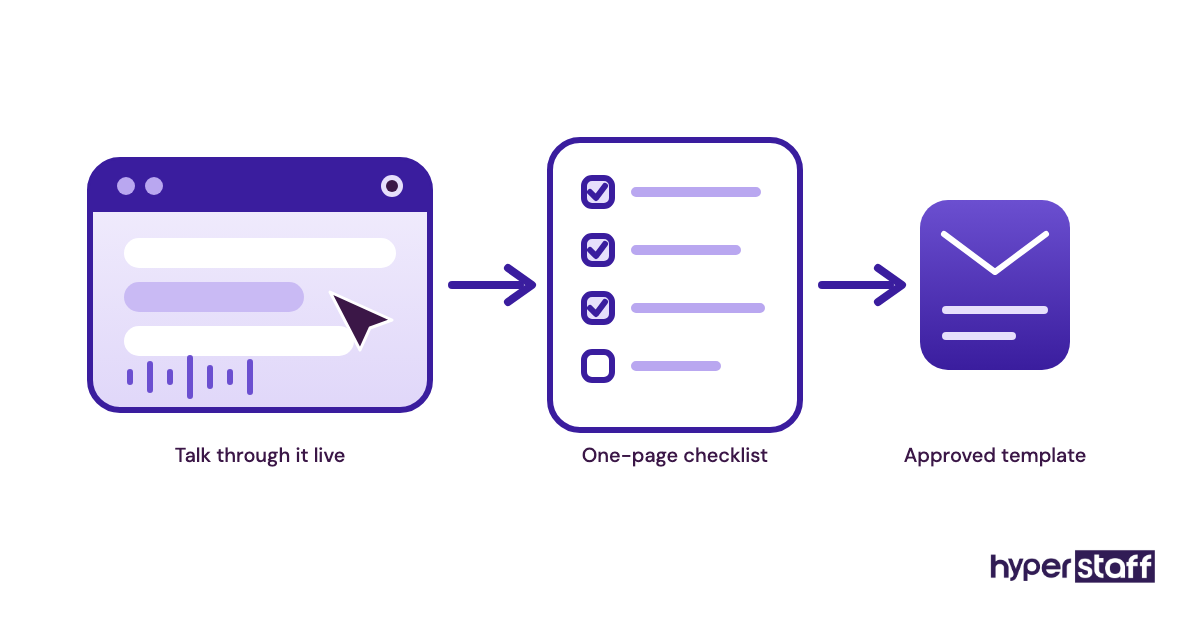
Record your screen the next time you input a listing, work a new lead or open a transaction file, talking through each choice as you go. Turn each recording into a one-page checklist that holds the rules, plus approved email and text templates.
Step #4: Run the Kickoff and a Shadowed First Week
Use the kickoff call to set working hours, response times for new leads and the escalation rules. Then put the VA on real files from day one, with a 15-minute review at the same time every day.
Answer questions by fixing the checklist and sending the link. By Friday the documents should be noticeably better than on Monday.
Step #5: Hand Over Lead and Transaction Work in Stages
Once a task runs cleanly for several days, the VA owns it and you move to spot checks. Lead calls come next, then transaction coordination, each with a shadow period before the VA acts alone.
By day 30, the VA should send a weekly report covering leads contacted, appointments set, listings prepped and open contract dates. Your reviews drop from daily to weekly.
What Does an Effective Real Estate VA Onboarding Strategy Look Like?
An effective real estate VA onboarding strategy hands over work in order of risk, puts every rule in a document and grows access as each task proves itself. It's planned for 30 days and reviewed at a fixed time each week.
Every handed-over task should come with a checklist, a finished example and an escalation rule. Lead work adds a script and a response-time target, and transaction work adds a contact sheet for lenders, title and escrow.
Compliance belongs in the plan from day one. A short written page on Fair Housing Act wording, DNC rules, call recording consent and the wire fraud protocol prevents the mistakes that cost the most.
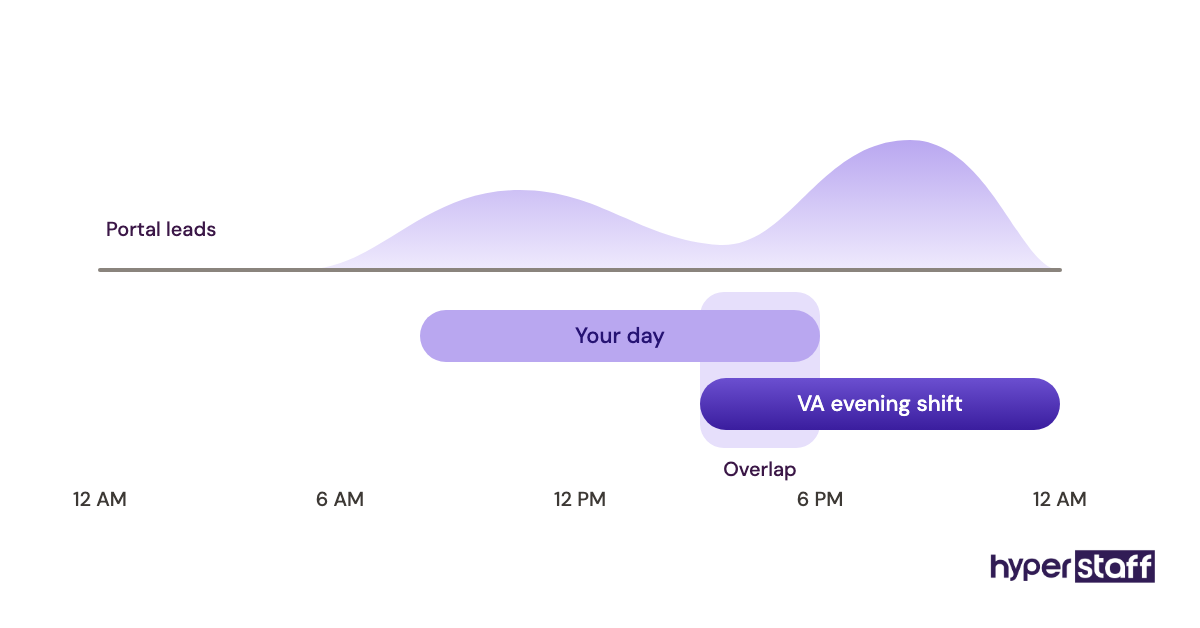
Agents disagree on time zone overlap for lead work. Some want the VA on the same hours as their leads, others prefer an evening shift that covers the after-dinner inquiry rush, and the right call depends on when your portal leads actually arrive.
Real Estate VA Onboarding Tools and Software
The core real estate VA onboarding stack is a CRM with user permissions, a transaction platform, a password manager and a screen recorder. Prices below come from each vendor's pricing page and change often, and our guide to real estate virtual assistant tools covers the wider stack.
| Tool | Onboarding job | Free plan | Paid pricing |
|---|---|---|---|
| Follow Up Boss | Lead routing, action plans, VA user seat | No, free trial | Grow $58 to $69 per user a month; Pro from $416 a month for 10 users |
| dotloop or SkySlope | Transaction files and critical dates | No | Often supplied by the brokerage; team plans are quote-based |
| Bitwarden | Shared logins the VA never sees in plain text | Personal only | $4 to $6 per user a month, billed annually |
| Loom | Recorded walkthroughs of listing and lead tasks | Yes, 25 videos, 5-minute limit | $18 to $24 per user a month |
Follow Up Boss's annual plans are the lower figure in its range, and Pro includes the calling and texting that Grow sells as an add-on. For one agent and one VA, Grow with two seats is usually enough.
Loom's 5-minute cap on the free plan bites quickly, since a full listing input walkthrough runs longer. A month of Business covers the recording sprint in week one.
Proven Tips for Onboarding a Real Estate Virtual Assistant
These ten habits shorten a real estate VA's ramp and keep your license out of trouble:
- Write the list of licensed-only tasks before the VA's first day.
- Request an MLS assistant account for the VA.
- Set a response-time target for new leads, measured in minutes.
- Scrub every calling list against the DNC registry and set calling hours.
- Ban the VA from sending or confirming wiring instructions, in writing.
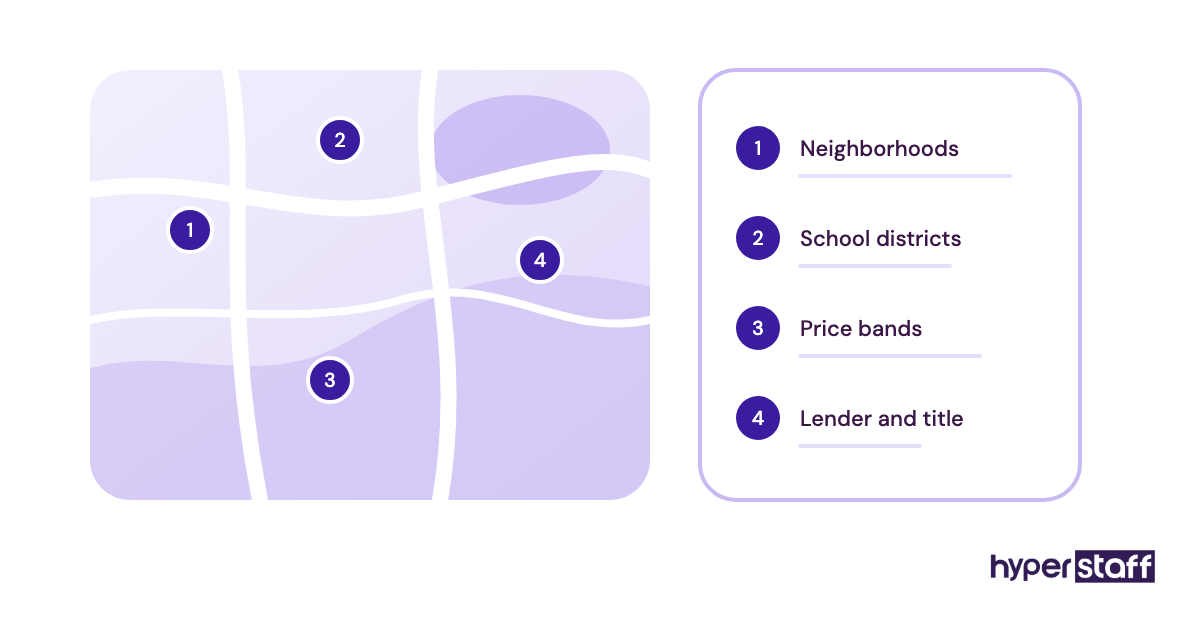
- Give the VA a market sheet with neighborhoods, price bands and preferred vendors.
- Review recorded lead calls daily for the first two weeks.
- Shadow two transaction files before the VA owns critical dates.
- Name one person who sets the VA's priorities on a team.
- Book a 30-day review to choose the next workflow.
Overcoming Common Real Estate VA Onboarding Challenges
The most common real estate VA onboarding challenge is the agent's schedule. Showings and closings eat the review time, so book the daily 15-minute check-in like an appointment and keep it during busy weeks.
Local knowledge comes next. A VA working remotely doesn't know which neighborhoods buyers ask for or which lender is slow, and the market sheet fills that gap faster than months of corrections.
Mixed instructions finish the list on teams. When three agents send the VA tasks, onboarding stalls, so route all requests through one board or one person.
How to Measure Real Estate VA Onboarding Success
Measure real estate VA onboarding success by the tasks the VA owns without review at day 30 and by how fast new leads get a first touch. Both should improve every week of the first month.
Track a short set of numbers: speed to lead, appointments booked, listing packets returned with corrections and contract dates missed, which should stay at zero.
Read the correction count with care. A jump in week two often means the VA has moved to harder work, which is progress.
How Long Does Onboarding a Real Estate VA Take?
Onboarding a real estate VA takes two to four weeks for admin and listing work. Lead calling and transaction coordination usually need four to six weeks before the VA works alone.
The first week goes to access, checklists and shadowing. Week two is when hours start coming back, and by week four most admin and listing prep should sit with the VA.
With Hyperstaff, the VA starts the day of the kickoff call or the next morning, because the Operations Vault already holds your SOPs, tools and context.
How Much Does Onboarding a Real Estate VA Cost?
Onboarding a real estate VA costs a few hours of agent time, some tool seats and the VA's hours during the ramp, which are the biggest cash line. The table compares a full month of Hyperstaff hours with a full-time in-house assistant.
| Cost item (160 hours a month) | Hyperstaff Essential | Hyperstaff Professional | Hyperstaff Expert | Typical in-house assistant (US) |
|---|---|---|---|---|
| Hourly rate | From $3 | From $6 | From $12 | About $23 median wage |
| Monthly hours cost | From $480 | From $960 | From $1,920 | About $3,700 in wages |
| Benefits on top | None | None | None | About 30% of total compensation |
| Estimated monthly total | From $480 | From $960 | From $1,920 | About $5,300 |
| Time to start | 5 business days | 5 business days | 5 business days | Often 4 to 8 weeks |
| Replacement if it doesn't work out | Free, 5 to 7 business days | Free, 5 to 7 business days | Free, 5 to 7 business days | A new hiring round |
| Onboarding tools (CRM seat, recorder, password manager) | About $60 to $100 | About $60 to $100 | About $60 to $100 | About $60 to $100 |
In-house figures use the BLS median pay for administrative assistants of $23.23 an hour, plus the BLS employer cost data showing benefits at roughly 30% of private-industry compensation. Hyperstaff also sells 40 and 80-hour bundles with 10% off for quarterly payment, and the real estate virtual assistant cost breakdown goes line by line.
Important: Hyperstaff prices above are typical averages, not fixed quotes. What you pay depends on the role, experience tier, hours and the work your listings and leads require.
Is Onboarding a Real Estate VA Worth It?
Yes, onboarding a real estate VA properly is one of the best-paying hours an agent can spend, because the setup is done once and the returned time adds up every week the VA works. Done well, it gives you an assistant who keeps leads warm and files moving while you're with clients.
Here's a worked example using NAR figures. The typical Realtor earned $59,200 in gross real estate income across nine transaction sides, so one side is worth roughly $6,500 before expenses.
A Professional-tier VA on an 80-hour monthly bundle costs from $480 a month, or about $5,760 a year. One extra closed side a year, from faster lead follow-up or a referral that didn't slip, covers the full year, and every side after that is profit.
The math depends on the onboarding actually happening. A VA left to guess burns those 80 hours on rework, and our analysis of whether a real estate virtual assistant is worth it covers the cases where it doesn't pay.
How to Choose a Real Estate VA Agency That Supports Onboarding
Choose a real estate VA agency by what happens after the match: who documents your processes, how fast a replacement starts and whether you get a named account manager. Placement is the easy part.
Ask whether candidates have worked in real estate CRMs and transaction platforms, then run a short interview of your own with these real estate VA interview questions. Ask how the agency handles MLS rules and DNC compliance, too.
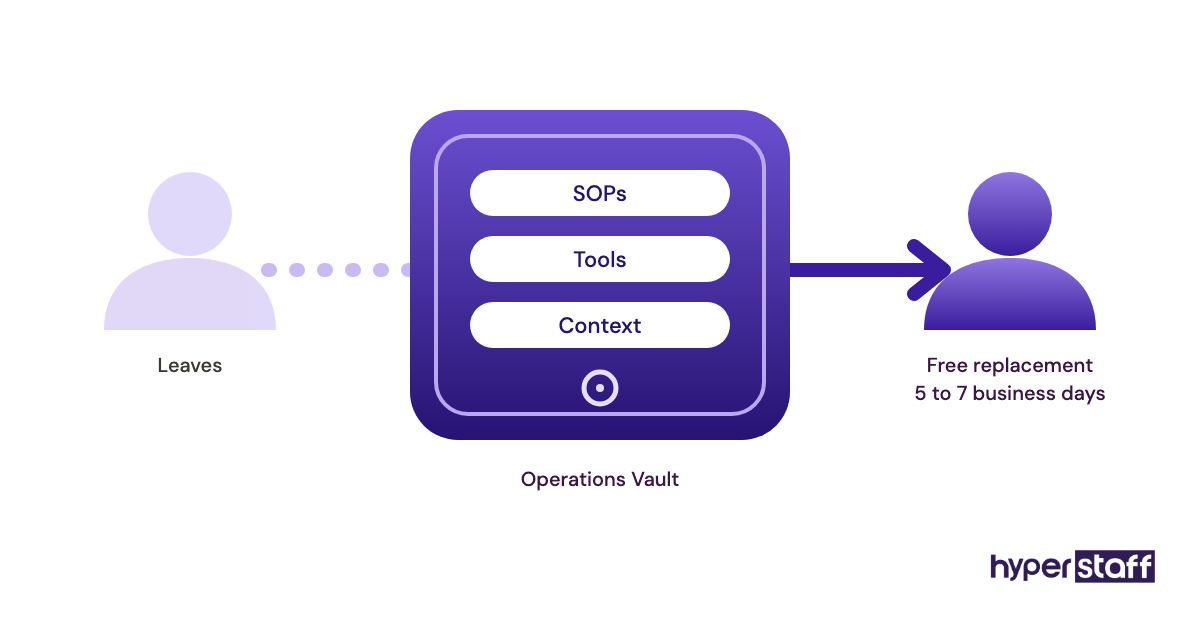
Replacement terms separate agencies most. Hyperstaff replaces a VA free in 5 to 7 business days, briefed from your Operations Vault, so onboarding doesn't restart from your memory.
Agents still deciding between an agency VA and a local hire can read the real estate VA vs in-house comparison. If the role itself is still fuzzy, start with what a real estate virtual assistant is.
Real Estate VA Statistics, Trends and Future Predictions
The typical agent closes about nine deals a year on a 35-hour week, and about one in five works on a team that shares support staff. The figures below come from NAR and the BLS.
The typical Realtor closed nine transaction sides and worked a median of 35 hours a week, according to HousingWire's report on NAR's latest Member Profile. Median business expenses rose to $9,530, and repeat clients made up 28% of business.
NAR reports that 21% of Realtors work on a team, typically of four members, and teams closed a median of 32 sides. A team VA needs a heavier onboarding than a solo agent's, because routing and priorities involve more people.
The BLS projects employment of real estate brokers and sales agents to grow 2% over ten years, slower than average. Our prediction is that slow headcount growth pushes more agents toward remote support, and the agents whose processes are written down will onboard that support in days.
Real Estate VA Onboarding and AI
AI shortens real estate VA onboarding mostly by turning recorded walkthroughs into written checklists and by drafting first versions of listing copy and follow-up texts. Judgment on pricing, client tone and escalation still sits with the agent.
Many CRMs and transaction platforms now include AI features that summarize calls or flag upcoming deadlines. They help a new VA catch up on a file faster, though the critical dates calendar still needs a named owner.
Add an AI line to the compliance page. It should name the tools the VA may use, what client data stays out of them and whether AI note-takers may join calls, since several states require every party's consent to record.
Disclaimer: This article is general information, not legal, licensing or financial advice. Real estate rules vary by state and MLS, and prices and statistics change, so confirm details with your broker, MLS, state regulator or the relevant provider before acting.
Common questions
Can my real estate VA use my MLS login?
No, most MLSs forbid sharing credentials, and violations can bring fines. Ask your MLS about an assistant or unlicensed staff account, which gives the VA their own login with limits you control.
Does a real estate virtual assistant need a license?
It depends on the tasks. Clerical, marketing and scheduling work usually needs no license, while showing homes, discussing terms or negotiating does, and each state draws the line differently, so check with your state real estate commission.
When should a new real estate VA start calling leads?
Usually after two to three weeks, once they know your scripts, CRM stages and market. Start with recorded calls you review daily, and scrub every list against the National Do Not Call Registry first.
What hours should a real estate virtual assistant work?
Match the hours to when your leads and clients are active, which for many agents means evenings and weekends. A few hours of overlap with your own day keeps daily reviews possible during onboarding.
Who pays for my real estate VA's software seats?
You should, under your business account. Keeping CRM, MLS and transaction seats in your name means client data and lead history stay with you if the VA changes.
Book a free 15 min call
We place a pre-vetted specialist in 5 business days, fully managed, from $3/hour.