Real Estate Virtual Assistant vs In-House Assistant: Which One to Hire
A side-by-side look at real estate virtual assistants and in-house assistants, with real costs, the tasks each can cover and a verdict on when to hire which.
On this page
- What's the difference between a real estate virtual assistant and an in-house assistant?
- Key real estate staffing terms you should know
- Why does choosing between a virtual and in-house assistant matter?
- How does each type of assistant work day to day?
- Types of real estate assistant setups
- How a real estate VA compares with related roles
- Pros and cons of a real estate VA compared with in-house staff
- Who should hire a virtual assistant, and who should hire in-house?
- Real estate virtual assistant vs in-house examples
- Choosing between a virtual and in-house assistant, step by step
- What does a good hybrid real estate assistant setup look like?
- Real estate virtual assistant tools and software
- 9 proven tips for a remote or in-house real estate assistant
- Overcoming common real estate VA vs in-house challenges
- How to measure real estate assistant success
- How long does it take for a real estate assistant to pay off?
- How much does a real estate VA cost vs an in-house assistant?
- Is a real estate virtual assistant worth it compared with in-house?
- How to choose a real estate virtual assistant agency
- Real estate assistant statistics, trends and predictions
- How does AI change the real estate VA vs in-house decision?
- FAQs
💡 Key Takeaways:
1) A real estate virtual assistant can take on most screen-based work, including CRM updates, listing prep, transaction files and lead follow-up, for a fraction of what a US in-house assistant costs once benefits are added.
2) An in-house assistant is still the better choice for physical work such as showings, open house setup, signs, lockboxes and a staffed front desk.
3) For most solo agents and small teams, the strongest setup is a dedicated virtual assistant for desk work, with in-house or on-demand help kept only for jobs that need someone on site.
Keep More Commission From Every Closed Deal
Hyperstaff places pre-vetted, dedicated assistants with agents and teams, starting from $3/hour, and has filled 70+ roles for 30+ clients. Our real estate virtual assistant services put someone in place within 5 business days. If the fit is wrong, you get a free replacement, briefed from your Operations Vault so nothing restarts from zero.
What's the difference between a real estate virtual assistant and an in-house assistant?
A real estate virtual assistant works remotely, often from another country, and does your admin, marketing and transaction paperwork through shared software. An in-house assistant works from your office or brokerage, is on your payroll, and can take on physical jobs a remote person can't, like signs, keys and walk-ins.
The two roles overlap more than most agents expect. In our experience, most of an agent assistant's week is spent in a CRM, an inbox, the MLS and a transaction platform, so the choice usually comes down to the small share of work that needs a person in a car.
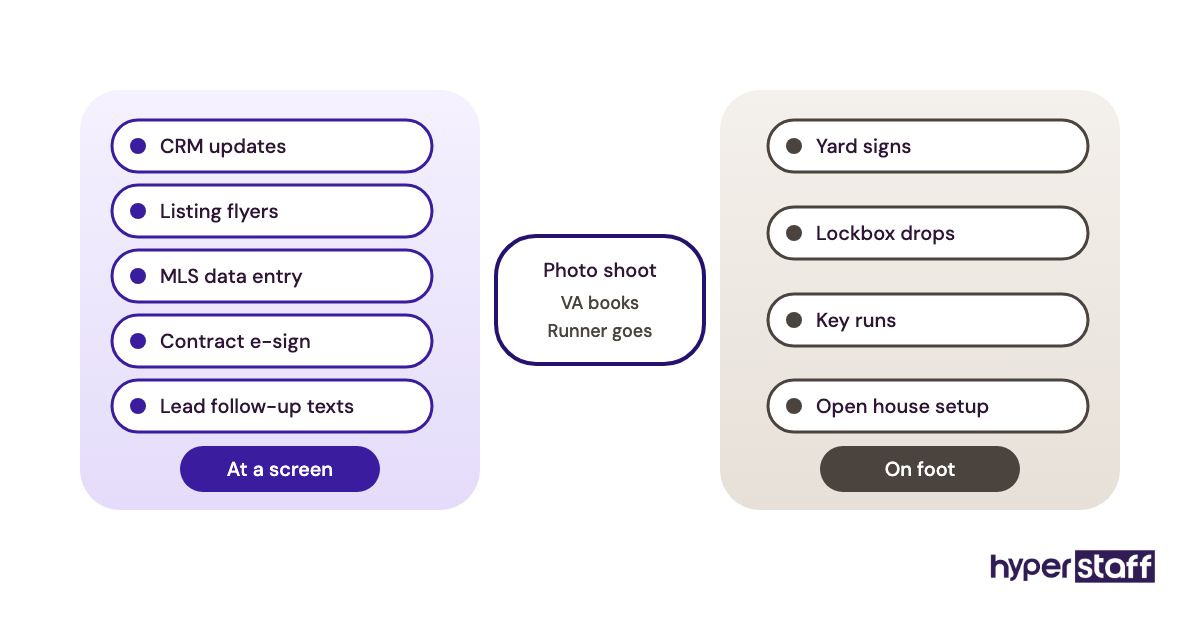
If you're still working out what the role involves, start with what a real estate VA does. The table below compares the two side by side.
| Factor | Real estate virtual assistant | In-house assistant |
|---|---|---|
| Hourly cost | From $3 to $12+/hour (Hyperstaff tiers) | US median about $22.86/hour before benefits |
| Time to hire | 5 business days through Hyperstaff | Often 3 to 6 weeks of posting and interviews |
| Showings, signs, lockboxes | No | Yes |
| Evening and weekend coverage | Possible through time zones | Usually means overtime |
| Payroll tax and benefits | Agency's responsibility | Yours |
| Desk and equipment | None needed | Desk, computer, software seats |
| If it doesn't work out | Free replacement in 5 to 7 business days | Start hiring again |
| Licensed activities | Unlicensed tasks only | Can hold a state license |
The in-house hourly figure is the BLS median annual wage of $47,540 for general secretaries and administrative assistants, divided by 2,080 working hours. Hiring timelines for in-house staff vary a lot by market, so take that row as a typical range rather than a rule.
Key real estate staffing terms you should know
- Real estate virtual assistant (VA) = a remote assistant who supports agents with admin, marketing, leads and paperwork
- In-house assistant = an employee who works from your office and is on your payroll
- Licensed assistant = an assistant who holds a real estate license and can take on regulated tasks under the state's rules
- Unlicensed assistant = an assistant limited to clerical and marketing work that state rules allow
- Transaction coordinator (TC) = the person who tracks a deal from signed contract to closing
- Inside sales agent (ISA) = a caller who qualifies leads and books appointments
- Listing coordinator = the person who prepares listing paperwork, photos, descriptions and MLS input
- Fully loaded cost = wages plus benefits, payroll taxes, equipment and office space
- Dedicated VA = one assistant assigned only to your business
- Pooled VA = a rotating team shared across many clients
- SOP = a standard operating procedure, the written steps for a recurring task
- Hybrid team = a remote assistant for desk work plus local help for physical work
Why does choosing between a virtual and in-house assistant matter?
The choice sets your fixed overhead for years. An in-house hire adds salary, benefits and a desk whether you close four deals this quarter or fourteen, while a virtual assistant on a 40, 80 or 160-hour bundle can scale up or down with the market.
For a solo agent, the risk is mostly about cash flow. Commission income is lumpy, and payroll every two weeks isn't.
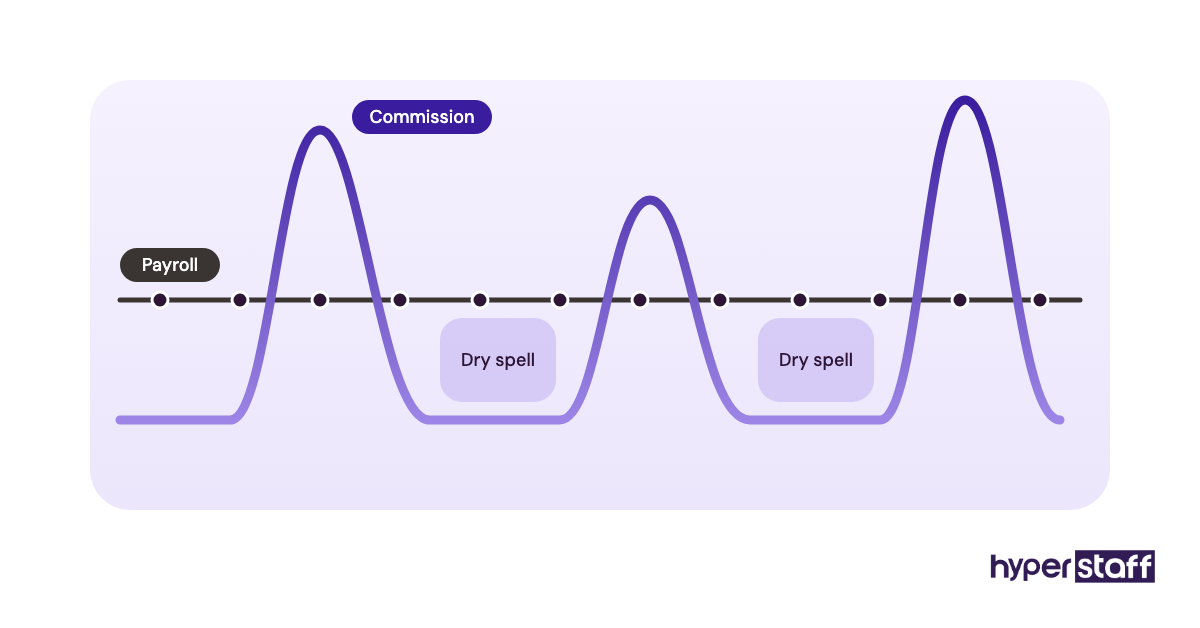
Team leads and broker-owners see it differently. They care more about coverage and control: who answers the office line, who preps listings for six agents, and what happens when that one person takes two weeks off.
How does each type of assistant work day to day?
A virtual assistant logs into the same systems you use, including your CRM, email, calendar, transaction platform and design tools, and works through a task list you both see. Communication runs through chat, short screen recordings and a standing call, usually 15 minutes a day at first.
An in-house assistant uses the same software but can also walk over to your desk. Agents underrate how much that hallway access costs: interruptions feel free, but they break the assistant's focus several times an hour.
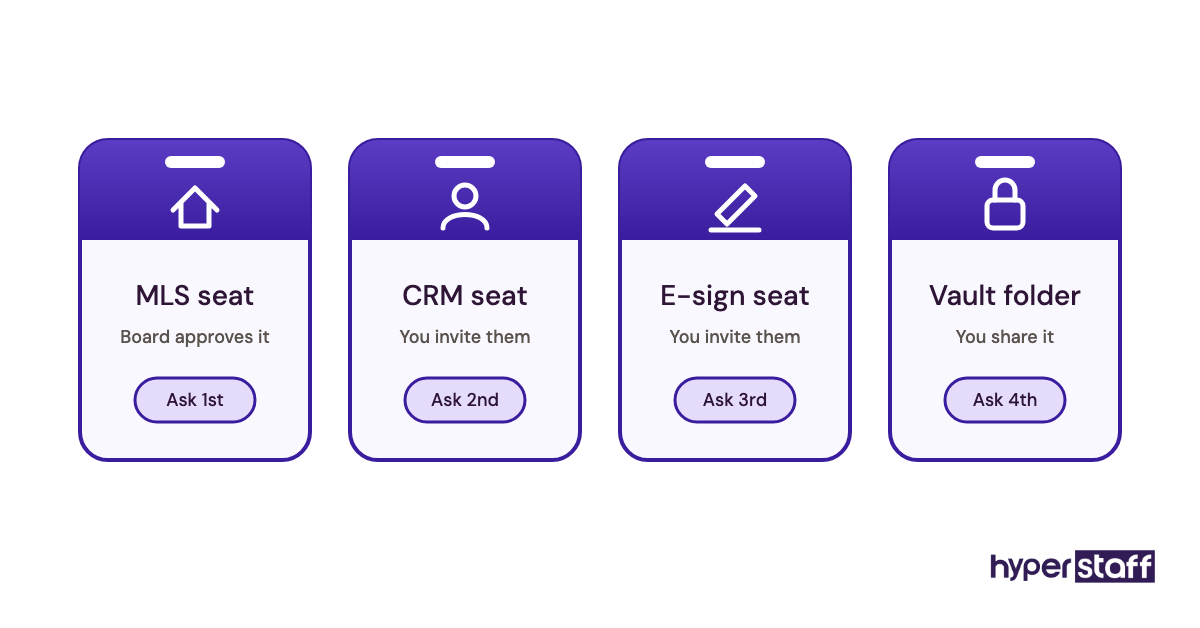
The first week looks different for each. With Hyperstaff, a 30-minute kickoff call comes first and work starts that day or the next morning, while access to your MLS, CRM and e-sign tools often takes longer than the hire itself.
Most of what a remote assistant can take on is screen work, and our list of real estate VA tasks breaks it down by category.
Types of real estate assistant setups
You can hire an assistant in at least eight ways, and they differ more in coverage and control than in the tasks themselves. Here's how they compare.
| Setup | Best fit | Typical hours | Physical tasks | Cost level |
|---|---|---|---|---|
| Full-time in-house admin | Brokerages, large teams | 40/week | Yes | Highest |
| Part-time in-house admin | Busy solo agents with an office | 15 to 25/week | Yes | Medium |
| Licensed in-house assistant | Teams needing showing support | Full or part-time | Yes, including some licensed work | Highest |
| Dedicated full-time VA | Teams with steady volume | 160/month | No | Low |
| Dedicated part-time VA | Solo agents, new teams | 40 or 80/month | No | Lowest |
| Freelance marketplace VA | One-off projects | Varies | No | Low to medium |
| Pooled VA service | Very light, simple admin | Pay per task | No | Low |
| Hybrid (VA + local runner) | Most growing agents | Mixed | Yes, on demand | Low to medium |
How a real estate VA compares with related roles
Agents often mix up a general assistant with specialist roles that come up in the same hiring conversations. Each one solves a narrower problem.
Real estate VA vs. transaction coordinator
A transaction coordinator handles a single stage, contract to close, and is often paid per file. A VA can do TC work as part of a wider role, which suits agents closing a few deals a month who can't justify a dedicated TC.
Real estate VA vs. inside sales agent
An ISA's whole job is the phone: calling leads, qualifying them and booking appointments. Practitioners disagree on whether offshore callers convert as well as US-based ones, and our view is that remote assistants do best on speed-to-lead texts, email follow-up and appointment confirmations, with live cold calling better suited to a dedicated ISA.
Real estate VA vs. a freelance marketplace hire
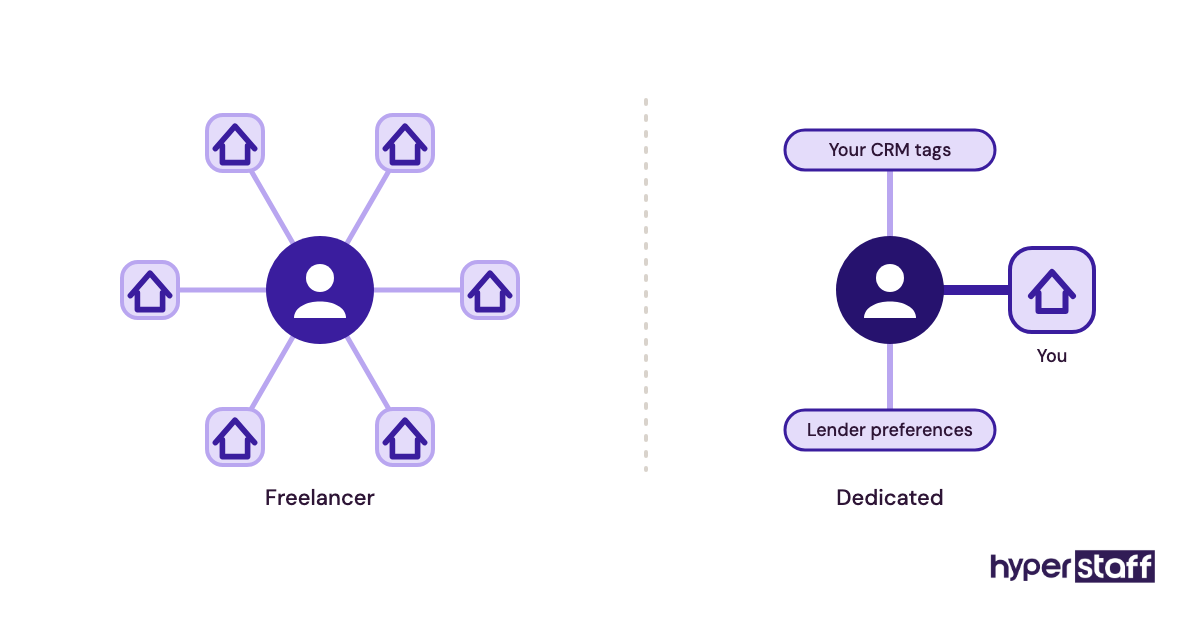
Marketplace freelancers are fine for a one-off listing video or a batch of social graphics. For ongoing work they tend to fail on continuity, because a freelancer juggling 6 or 7 clients won't learn your CRM tags or your lender's preferences the way a dedicated assistant does.
Pros and cons of a real estate VA compared with in-house staff
A virtual assistant wins on cost, speed to hire and flexibility, while an in-house hire wins on physical presence and face time. The lists below are honest about both.
The benefits of a real estate virtual assistant
- Full-time hours for less than a part-time US wage
- No payroll tax, benefits, desk or equipment on your side
- Hours can move between 40, 80 and 160 a month as volume changes
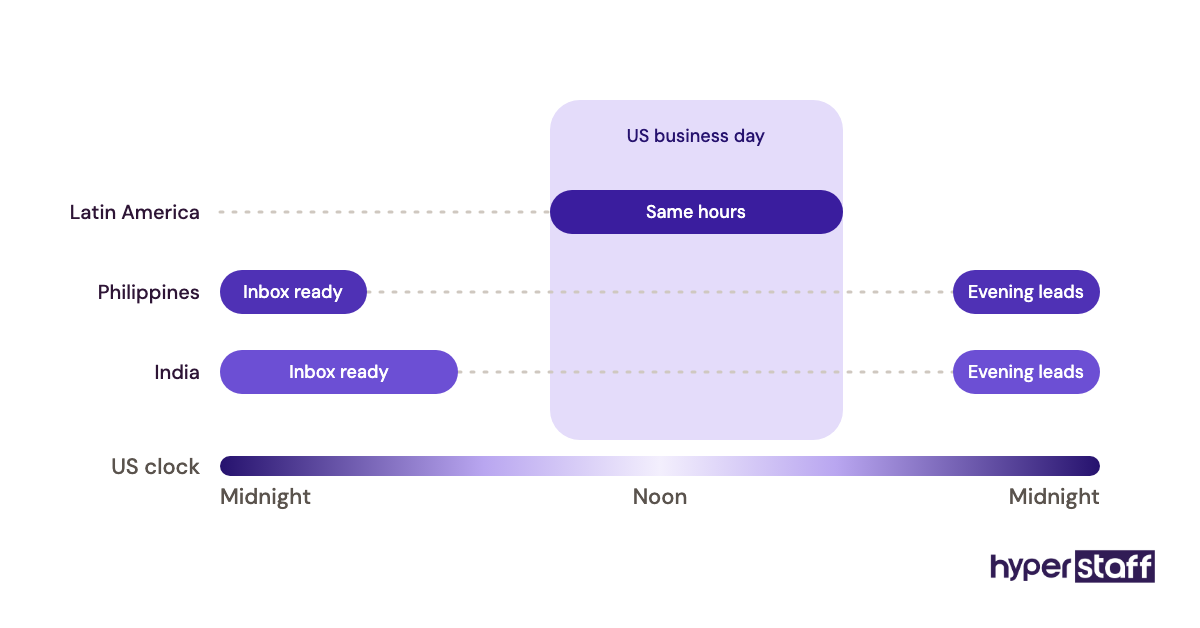
- Time zones can cover evening lead response without overtime
- A free replacement if the fit is wrong
The drawbacks of a real estate virtual assistant
- No showings, signs, lockboxes or key runs
- Clients who walk into your office won't meet them
- Setting up access to the MLS and e-sign tools takes planning
- Undocumented processes surface fast, and someone has to write them down
Who should hire a virtual assistant, and who should hire in-house?
Solo agents and small teams whose bottleneck is desk work should hire a virtual assistant first. That covers stale CRM records, slow listing launches and contract deadlines tracked on sticky notes.
An in-house assistant makes sense when someone needs to be physically present most days. Good examples are a brokerage with a front desk, a team running several open houses every weekend, or an agent in a state where a licensed assistant can show property and earn their pay doing it.
Our verdict: if you can't name at least 15 hours a week of hands-on work, an in-house hire is paying office wages for screen work. Start remote, track what's still landing on you, and add local help only for what's left.
Real estate virtual assistant vs in-house examples
The patterns below show where each model tends to succeed or struggle. They describe common setups, not specific clients.
Good examples of using a real estate VA
Listing launch prep
The VA gathers seller details, drafts the description, orders the photo schedule, builds the flyer in Canva and enters the MLS data for your review. You approve and sign, and everything else happens without you.
Evening lead response
Portal leads that arrive at 9 p.m. get a personal text within minutes from an assistant whose workday is just starting. An in-house hire would need overtime to match that.
Contract-to-close tracking
The assistant keeps a deadline sheet for inspections, appraisals and financing contingencies, then sends reminders to the lender, title and the other agent. Missed dates become rare because one person owns the calendar.
Bad examples of using a real estate VA
Hiring a VA to staff open houses
A remote assistant can't set up signs or greet visitors. Hand that job to a local runner or a licensed team member.
Sharing the agent's personal MLS login
Most boards forbid it, and a flagged account can freeze your access in the middle of a listing week. Get the assistant their own seat.
No written process, then blaming the hire
Agents who keep every step in their heads often replace two or three assistants before seeing the pattern. We walk through more traps like this in our guide to common real estate VA mistakes.
Choosing between a virtual and in-house assistant, step by step
The decision gets easy once you've sorted your tasks and costed both options honestly. Work through these five steps in order.
Step #1: Sort your tasks into screen work and hands-on work
Track everything you do for two weeks and tag each task as either "screen" or "physical." Turn the screen list into a written real estate VA job description before you talk to anyone.
Step #2: Compare fully loaded costs
Add benefits, payroll taxes, equipment and software seats to any in-house salary. The BLS employer cost survey puts benefits at 30.0% of total compensation for private industry workers.
Step #3: Pick the region by time zone
Latin America overlaps closely with US business hours, which suits live calls and same-day contract work. The Philippines and India suit overnight lead response and morning-ready inboxes.
Step #4: Interview for real estate specifics
Ask candidates to walk you through an MLS input or a contract timeline, and skip generic admin questions. Our guide on how to hire a real estate VA covers sourcing, and this set of interview questions to ask gets you past rehearsed answers.
Step #5: Onboard with access ready and a 30-day review
Request logins before day one, then hand over tasks one category at a time. A structured plan for onboarding your real estate VA prevents the stall that usually hits in week two.
What does a good hybrid real estate assistant setup look like?
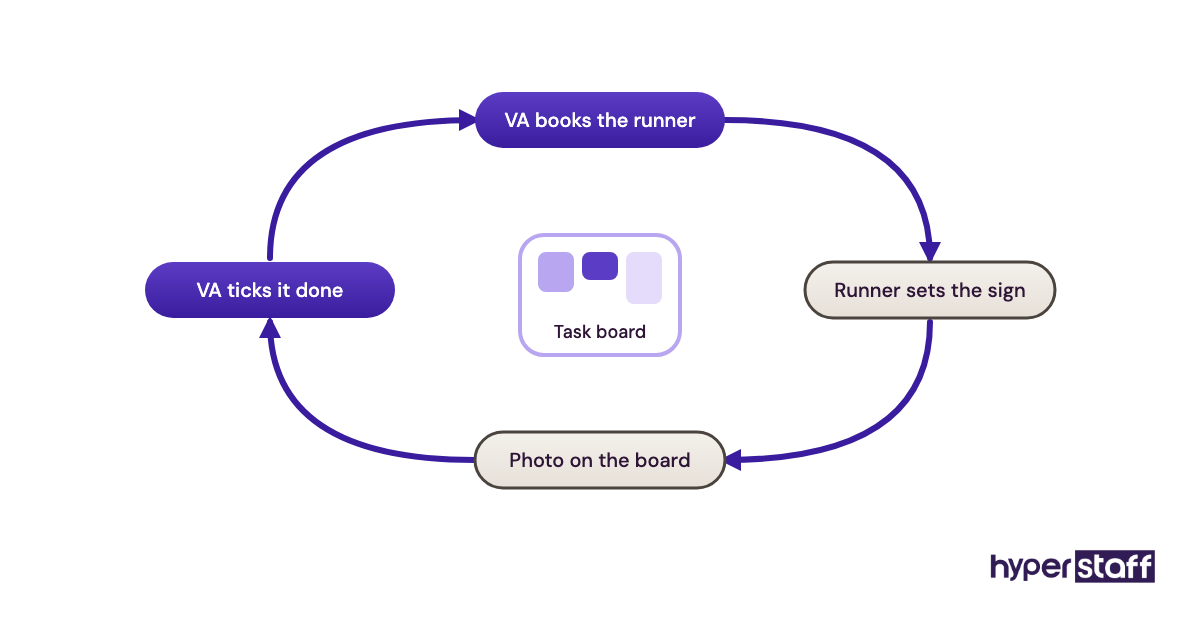
A working hybrid model gives the remote assistant about 80 to 90 percent of support hours and keeps local help on call for physical jobs. The remote person runs the calendar and books the local runner, so you never coordinate both.
The handoff point matters most. Sign installs, lockbox drops and open house setup should go into the same task board as everything else, assigned to the runner, with the VA confirming each one is done.
Some team leads prefer the reverse, with an in-house operations manager directing one or two VAs. That works well above roughly 40 to 50 closings a year, when someone local needs to own the whole system.
Real estate virtual assistant tools and software
Both types of assistant use the same core software. The difference is that a remote hire depends on it completely, so gaps in your setup show up sooner.
- Follow Up Boss (CRM): Grow costs $58 to $69 per user a month depending on billing, and Pro runs $416 to $499 a month for up to 10 users, per its pricing page.
- dotloop (transactions and e-sign): the individual Premium plan sits at roughly $26 to $32 a month depending on billing, and team plans are quoted.
- Canva (listing graphics): Pro costs roughly $120 to $150 a year for one person, depending on billing and promotions.
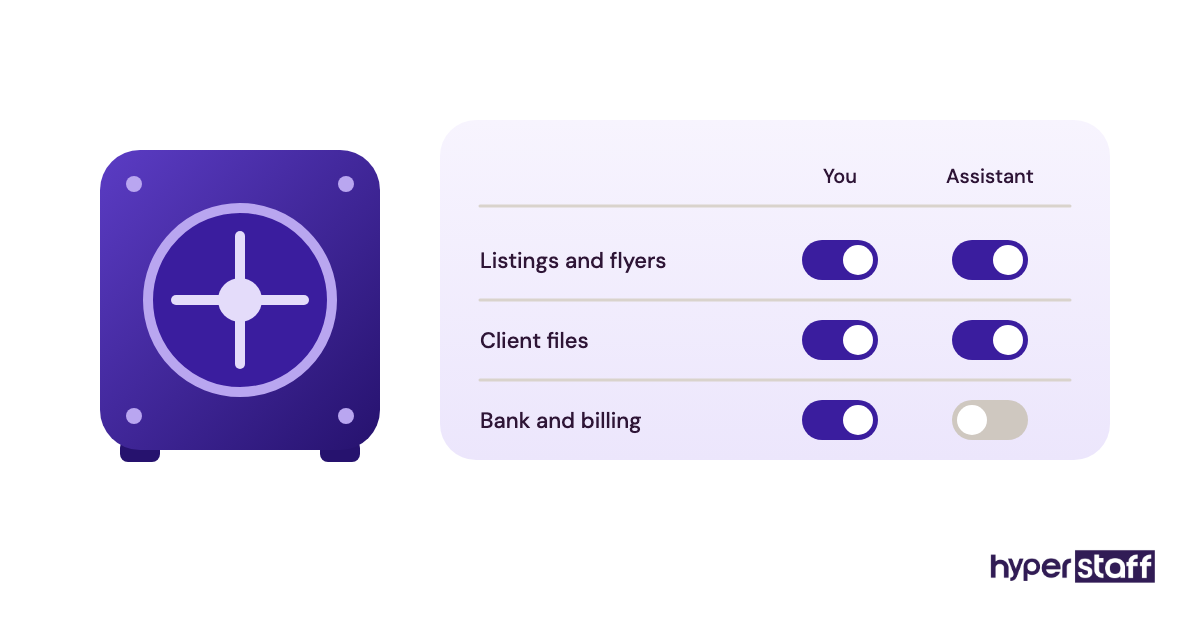
- A password manager (1Password, Bitwarden or similar): the safe way to share logins without pasting them into chat.
- Loom (screen recording): the fastest way to turn "watch how I do it" into a reusable SOP.
For a longer list grouped by task, see our roundup of real estate VA tools.
9 proven tips for a remote or in-house real estate assistant
These apply whichever model you choose, though a remote hire will punish you faster for skipping them.
- Write down the three tasks you hate most and hand those over first.
- Give the assistant their own logins, never yours.
- Record a Loom the first time you do any task, and let the assistant turn it into an SOP.
- Use one task board and drop the side requests sent by text.
- Set a 15-minute daily check-in for the first month, then cut back to three a week.
- Agree on response times for leads, and treat speed-to-lead as its own metric.
- Keep anything that needs a license with licensed people.
- Review the work weekly for the first 30 days, then spot-check.
- Add hours only after current hours are fully used for two straight weeks.
Overcoming common real estate VA vs in-house challenges
The most common challenge is access delay. MLS seats, CRM permissions and brokerage approvals can take a week or more, so the assistant sits half idle while you assume they're slow.
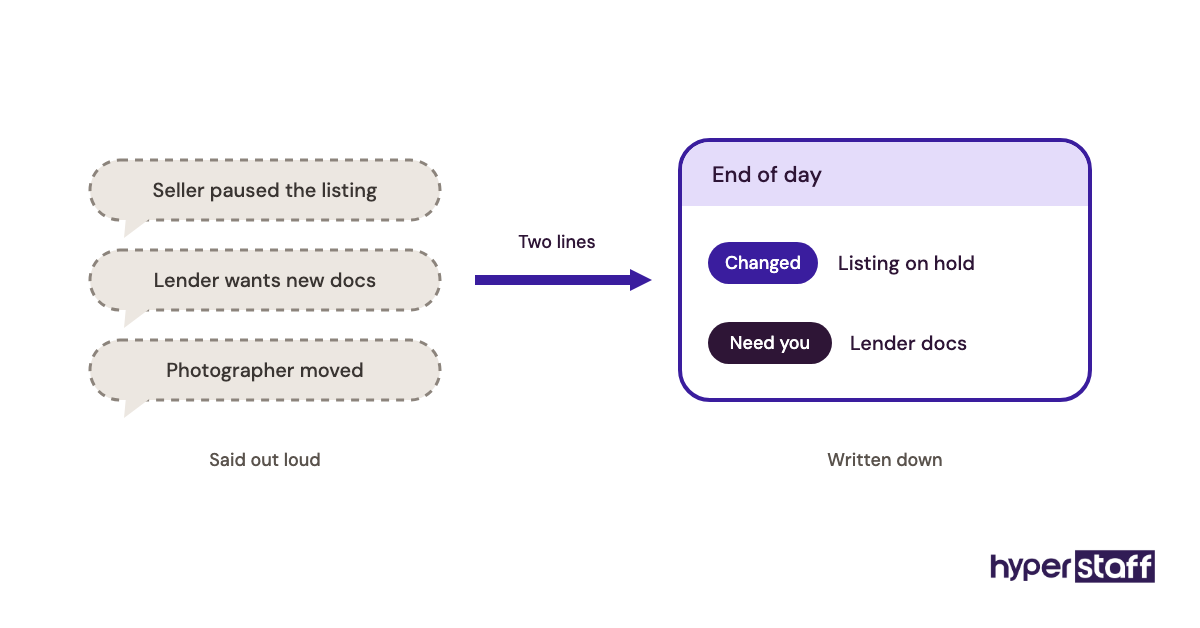
Communication gaps come next. Remote hires can't overhear what changed, so a two-line end-of-day note from you does more than a long weekly meeting.
In-house staff have the opposite problem: too much access to you. Batch your requests and protect their focus blocks the same way you would for a remote hire.
How to measure real estate assistant success
Measure an assistant by hours returned to you and by the speed of the work they own. Track lead response time, days from signed listing agreement to live listing, and missed contract deadlines.
Compare the numbers at 30, 60 and 90 days against your own baseline from before the hire. Count your hours on sales activity each week too, since that's the number that pays for the assistant.
How long does it take for a real estate assistant to pay off?
Most agents see daily admin relief within the first two weeks and a clear return in 60 to 90 days. The lag comes from access setup and from writing processes down for the first time.
Weeks one and two are about logins and simple tasks. By weeks three to six, the assistant runs whole workflows, and the payoff in closings shows up a month or two later, because pipeline work takes that long to turn into contracts.
How much does a real estate VA cost vs an in-house assistant?
A full-time in-house assistant costs about $5,200 a month once benefits are added, against $480 to $1,920 a month for a full-time Hyperstaff assistant across our three tiers. The table compares the same hours.
| Monthly hours | In-house, wage only | In-house, with benefits | Hyperstaff Essential (from $3/hr) | Hyperstaff Professional (from $6/hr) | Hyperstaff Expert (from $12/hr) |
|---|---|---|---|---|---|
| 40 | $914 | $1,306 | $120 | $240 | $480 |
| 80 | $1,829 | $2,612 | $240 | $480 | $960 |
| 160 | $3,658 | $5,224 | $480 | $960 | $1,920 |
| Annual at 160/month | $43,896 | $62,688 | $5,760 | $11,520 | $23,040 |
In-house figures use the BLS median wage of $22.86 an hour, grossed up so that benefits make up 30% of total compensation. Hyperstaff clients who pay quarterly save a further 10%, and our full real estate VA cost guide covers the line items in more detail.
Important: Hyperstaff prices shown are averages based on our starting rates. Your actual cost depends on the experience tier, hours and type of work your business needs.
Is a real estate virtual assistant worth it compared with in-house?
Yes, for most agents, a well-run virtual assistant is one of the highest-return hires available, because it buys back full-time hours at a fraction of in-house cost. The return depends on you handing over real work and putting the freed time into selling.
Here's a simple example. A full-time in-house assistant at the median wage plus benefits costs about $5,224 a month, while a Professional-tier Hyperstaff assistant for the same 160 hours costs from $960, or $864 when paid quarterly.
That leaves about $4,360 a month, or roughly $52,000 a year, available for other uses. If the freed hours produce even one extra closing a year, the gap widens, though if those hours go to more admin, the savings are all you get.
For a deeper look at the break-even maths, read whether a real estate VA pays off.
How to choose a real estate virtual assistant agency
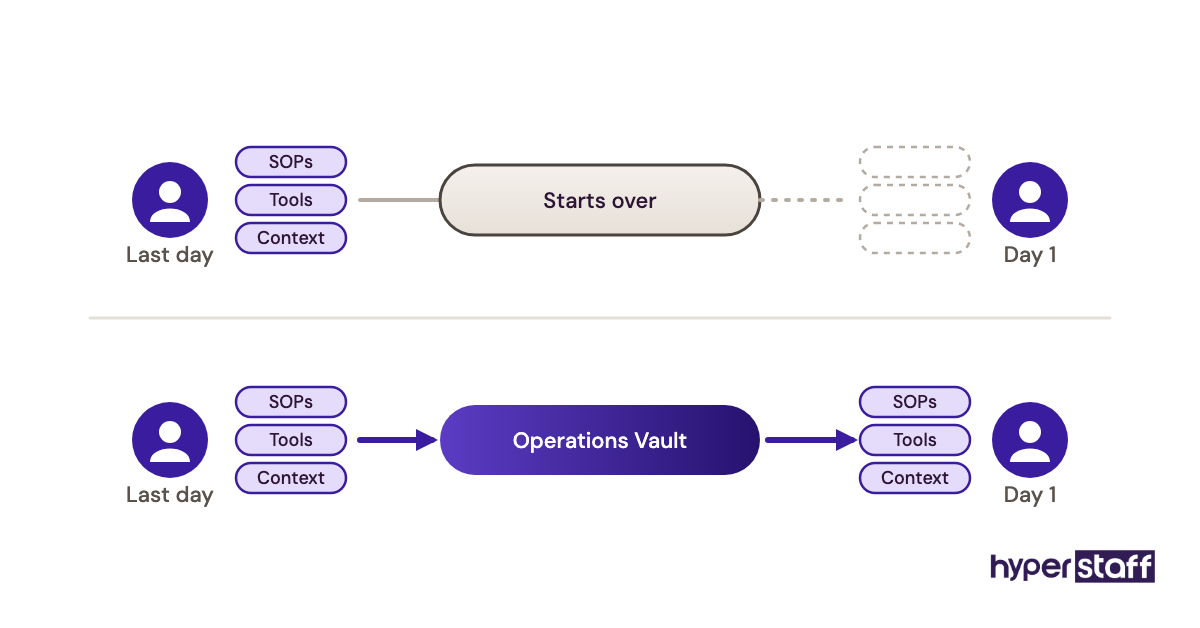
Choose an agency that assigns one dedicated assistant, publishes its replacement terms and owns the documentation of your processes. A rotating pool resets every time the person changes.
Ask how fast they place, what a replacement costs and how the new person gets up to speed. At Hyperstaff, placement takes 5 business days, replacement is free within 5 to 7 business days, and every client gets a dedicated account manager plus an Operations Vault holding their SOPs, tools and context.
Check regions as well. We place pre-vetted talent from the Philippines, Latin America, India, Eastern Europe and the United States, which lets you pick by time zone rather than taking whoever is on the bench.
Real estate assistant statistics, trends and predictions
The BLS Occupational Outlook Handbook lists a median annual wage of $48,310 for all secretaries and administrative assistants. Benefits add 30.0% on top of that wage share for private employers, according to the latest BLS compensation release.
The clearest trend we see is agents splitting the role in two. Desk work goes remote, and physical work goes to licensed team members or per-task runners.
We're less sure where ISA work lands. Text-first lead follow-up favours remote assistants, but the debate over offshore live calling is still open among team leads, and the answer may differ by market.
How does AI change the real estate VA vs in-house decision?
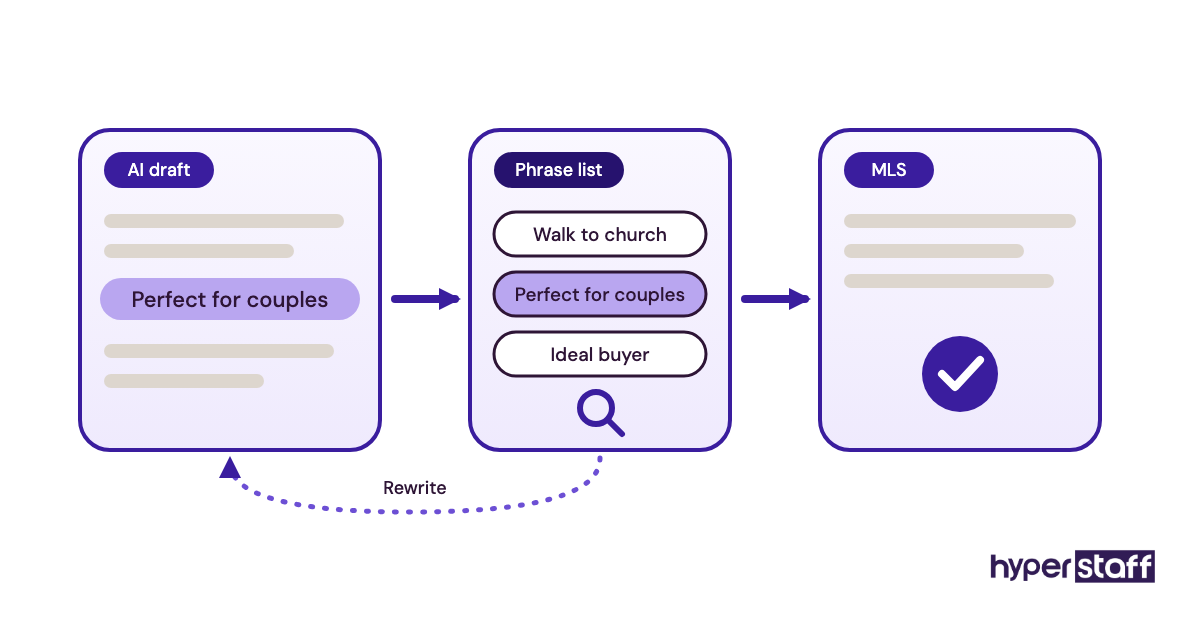
AI tools now draft listing descriptions, summarize calls and sort inboxes, which shrinks the hours of pure typing an assistant does in either model. The work that remains is judgment and follow-through, and the person running the tools still matters.
A virtual assistant who knows your CRM can run those tools across every lead and listing. An in-house hire can do the same, so AI narrows the skill gap between the two and leaves cost and physical presence as the main differences.
Disclaimer: This article is for general information only and isn't legal, tax, licensing or financial advice. Pricing, wage data and third-party tool costs can change, and licensing rules vary by state. Check current details with the relevant providers, your state regulator and qualified advisers before making hiring decisions.
Common questions
Can a real estate virtual assistant fully replace an in-house assistant?
For most desk work, yes. A VA can't do showings, sign installs, key runs or front-desk greetings, so agents who need those either keep local help or use a hybrid setup.
Does a real estate virtual assistant need a license?
Not for admin, marketing or transaction paperwork. Tasks like negotiating, discussing terms with the public or showing property usually need a license, and each state's real estate commission sets the exact list.
What hours does an overseas real estate VA work?
Most work your business hours or an agreed overlap. Latin American assistants match US hours closely, while Philippine and Indian assistants can cover US evenings and overnight leads.
Is it safe to give a real estate VA access to client data?
It is when access is set up properly. Use individual logins, a password manager and role-based CRM permissions, and remove access the day the engagement ends, the same as you would for in-house staff.
Should a new agent hire a virtual or in-house assistant first?
Most new agents should start with a part-time virtual assistant. A 40 or 80-hour monthly bundle costs far less than payroll and shows you which tasks are worth delegating before you commit to a salary.
Book a free 15 min call
We place a pre-vetted specialist in 5 business days, fully managed, from $3/hour.