Shopify Virtual Assistant Interview Questions: A Copy-Ready Template
A complete, copy-ready set of Shopify virtual assistant interview questions with a scoring scale, a practical task and notes on adapting it to your store.
On this page
- What Are Shopify Virtual Assistant Interview Questions?
- Key Shopify VA Interview Terms You Should Know
- Why Do Shopify VA Interview Questions Matter So Much?
- How Does a Shopify VA Interview Process Work?
- Types of Shopify Virtual Assistant Interview Questions
- The Copy-Ready Shopify VA Interview Question Template
- How Is a Shopify VA Interview Different From Other Hiring Interviews?
- What Are the Benefits of Structured Shopify VA Interview Questions?
- Where Structured Shopify VA Interviews Fall Short
- Who Needs a Shopify VA Interview Template?
- What Do Good and Bad Shopify VA Interview Answers Sound Like?
- Creating a Shopify VA Interview Plan, Step-by-Step
- What Does an Effective Shopify VA Interview Strategy Look Like?
- Which Tools Do You Need for a Shopify VA Interview?
- 10 Proven Tips for Better Shopify VA Interviews
- What Are Common Shopify VA Interview Challenges?
- How Do You Measure Shopify VA Interview Success?
- How Long Does a Shopify VA Interview Process Take?
- How Much Does Hiring a Shopify VA Cost?
- Is a Structured Shopify VA Interview Worth It?
- How Do You Choose a Shopify VA Agency?
- Where Is Shopify VA Hiring Heading?
- How Is AI Changing Shopify VA Interview Questions?
- FAQs
💡 Key Takeaways:
1) Shopify virtual assistant interview questions work best when they test real admin actions, such as bulk-editing products, processing a partial refund and reading an order timeline, instead of asking candidates to describe their experience.
2) A strong Shopify VA interview combines a short written screen, a scored question set and a timed task in a development store, so you judge work samples before you judge confidence.
3) Scoring every answer on the same scale keeps the decision fair, and unscored interviews tend to reward the candidate who talks most smoothly.
Hire the Right Shopify VA, Protect Your Margin
Hyperstaff pre-vets Shopify talent in 5 regions before you ever see a profile, and we've placed 70+ virtual assistants with 30+ clients. Our dedicated Shopify virtual assistant services match you with a specialist in 5 business days, with rates from $3/hour and a free discovery call to start.
What Are Shopify Virtual Assistant Interview Questions?
Shopify virtual assistant interview questions are the prompts, scenarios and practical tests you use to check whether a remote candidate can run your store's admin work. Good ones cover product and catalog management, order processing, customer support and the apps your store already depends on.
The job is wider than most job ads suggest, and the questions need to match that width. If you're still mapping the role, start with what a Shopify virtual assistant does, then come back and build the interview around those duties.
Key Shopify VA Interview Terms You Should Know
- Staff account = a Shopify admin login with permissions you set per person.
- Collaborator account = access requested by a Shopify Partner, limited to the sections you approve, and it doesn't use a staff seat.
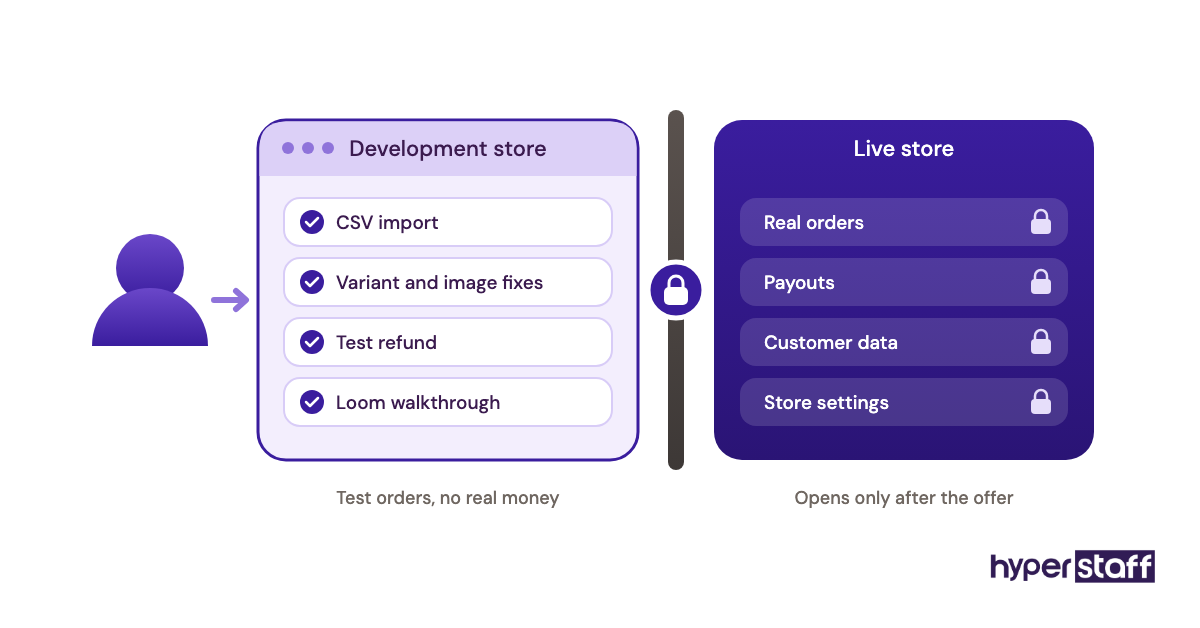
- Development store = a free test store created in a Shopify Partner account, used for practical tasks without touching live orders.
- Product CSV = the spreadsheet format Shopify uses to import or bulk-update products, variants and prices.
- Metafields = custom fields that hold extra product or order data, such as care instructions or size charts.
- Order timeline = the activity log on each order showing payments, edits, fulfillments and notes.
- Chargeback = a payment dispute a customer opens with their card issuer, which the store answers with evidence.
- Shopify Flow = Shopify's automation app for rules like tagging high-risk orders.
- Scorecard = a fixed grid for rating each answer on the same scale.
- Paid trial task = a short, compensated work sample completed before an offer.
Why Do Shopify VA Interview Questions Matter So Much?
Shopify VA interview questions matter because a store admin seat is a high-trust seat. A virtual assistant with order and refund permissions can send money back, change prices across hundreds of products and email customers in your brand's name.
Most weak hires trace back to interviews that tested conversation over competence. A candidate who has edited products in one small store can describe Shopify fluently and still freeze when asked to bulk-update 400 variants through a CSV.
The fix is cheap. Ask questions that force a specific answer, then verify a few of them with a live task.
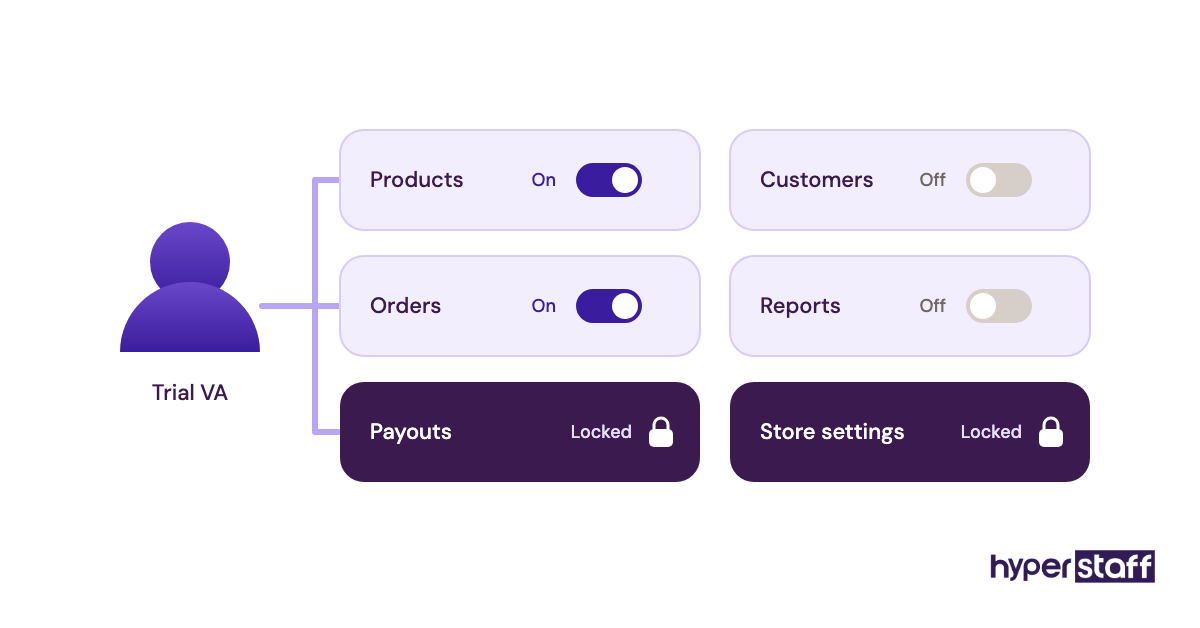
Worth knowing: Shopify lets you set permissions per staff account, so a candidate on a trial task can work in products and orders without seeing payouts or store settings. Set those permissions up before the task day, since a wrong toggle is hard to spot once someone is already working.
How Does a Shopify VA Interview Process Work?
A Shopify VA interview usually runs in four stages: a written screen, a structured call, a practical task and a reference or trial check. Each stage removes a different kind of weak candidate, so skipping one tends to push risk into week one of the job.
Before any of it, write the job description first. The interview can only test duties you've defined, and a vague ad attracts candidates who are vague about the same things.
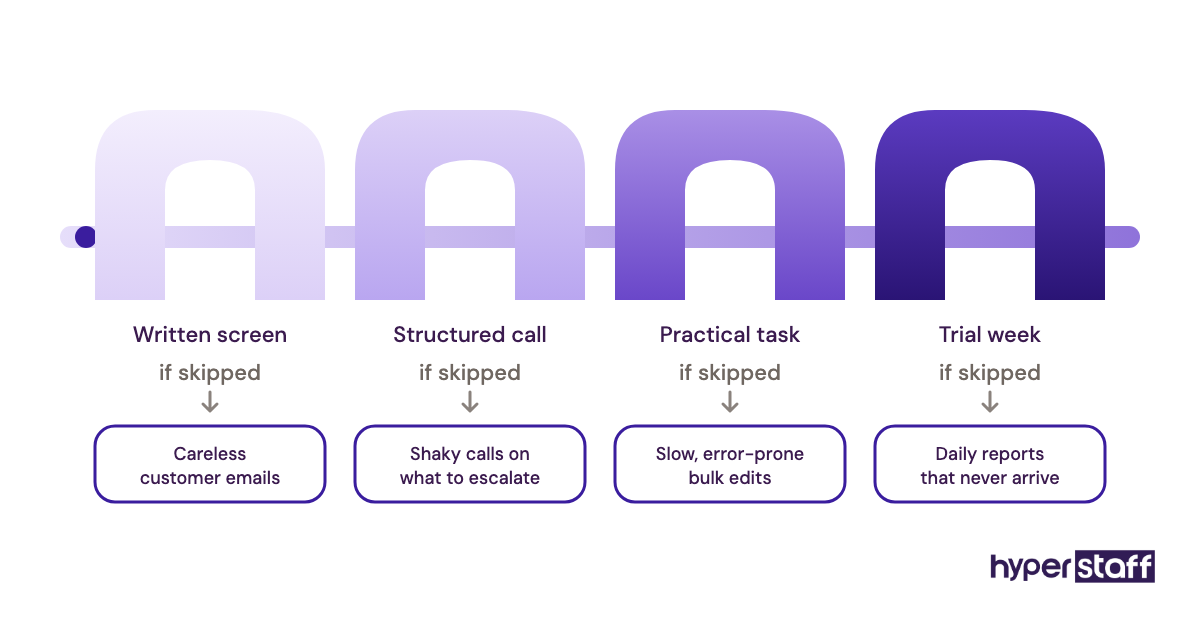
| Stage | Typical time | What it filters out |
|---|---|---|
| Written screen | 10 to 15 minutes | Weak written English, no Shopify exposure |
| Structured call | 30 to 45 minutes | Vague experience, poor judgment |
| Practical task | 45 to 90 minutes | People who can talk but can't execute |
| References or trial week | 1 to 5 days | Reliability and reporting gaps |
Types of Shopify Virtual Assistant Interview Questions
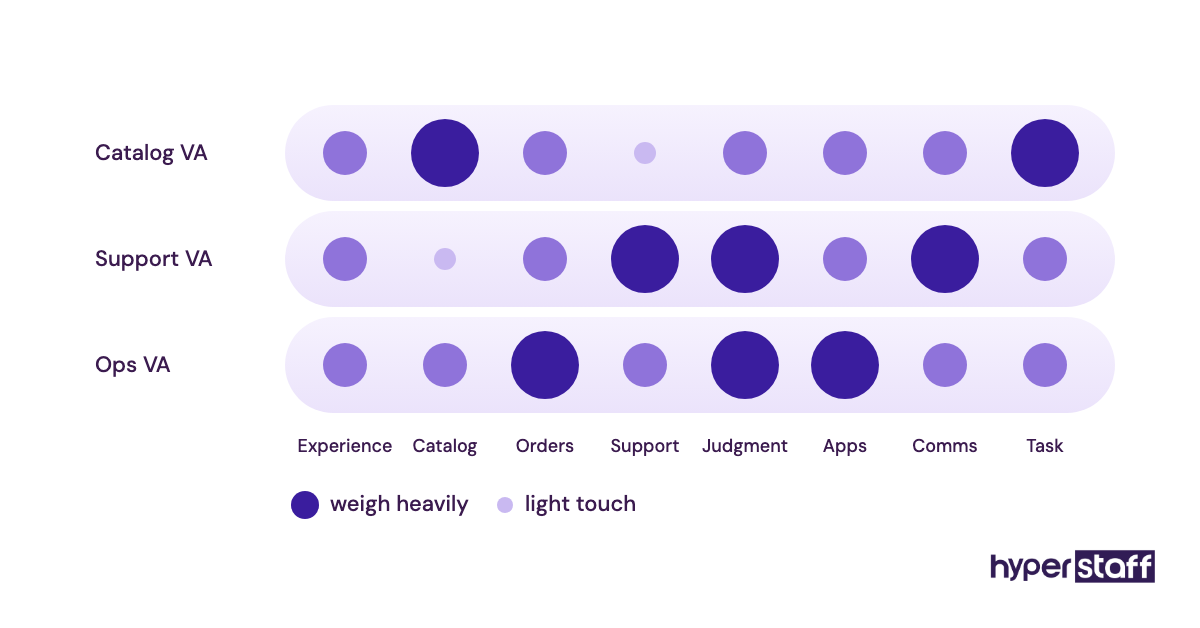
Shopify VA interview questions fall into eight types, and a balanced interview pulls from most of them. The weak-answer column is the part worth printing for the call.
| Question type | What it tests | Example prompt | Weak-answer signal |
|---|---|---|---|
| Experience | Real store exposure | "Which Shopify apps did you use daily, and for what?" | Lists apps with no task attached |
| Product and catalog | Accuracy at volume | "How would you change prices on 300 variants at once?" | Plans to edit each product by hand |
| Orders and fulfillment | Process knowledge | "Walk me through a partial refund on a two-item order." | Unsure where refunds live |
| Customer support | Tone and policy judgment | "Reply to a customer whose parcel shows delivered but never arrived." | Promises a refund before checking policy |
| Situational judgment | Escalation sense | "A discount code is on a coupon site. What do you do?" | Fixes it alone and tells nobody |
| Tools and apps | Stack fit | "How have you used Klaviyo or Gorgias with Shopify?" | Can't say what syncs between them |
| Communication | Remote work habits | "How do you report a day's work?" | No routine, waits to be asked |
| Practical task | Execution | "Import these 20 products from a CSV." | Broken variants, missing images |
The Copy-Ready Shopify VA Interview Question Template
The template below is a complete Shopify virtual assistant interview set you can paste into a doc and use today. It has five question parts, a scoring scale and a practical task, sized for a 45-minute call plus a separate test.
Use all of it for a generalist hire. For a narrow role, cut the parts that don't apply.
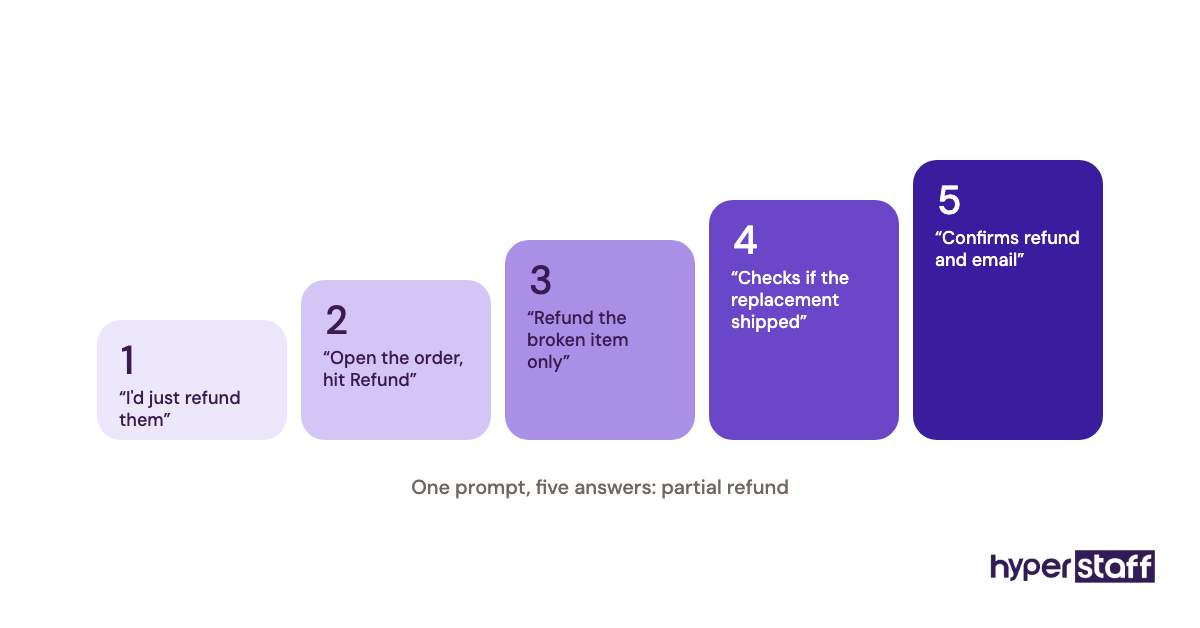
Scoring scale (use for every question): 1 = no relevant answer, 2 = general answer with no specifics, 3 = correct process, 4 = correct process plus an edge case, 5 = correct process, an edge case and a check they run afterward.
Part 1: Background and Shopify exposure (8 minutes)
- Which Shopify stores have you worked in, and what did you own in each one?
- Which sections of the Shopify admin did you open most often in your last role?
- Which apps did those stores run, and which ones did you configure yourself?
- How many orders a day did your busiest store process, and what was your part in them?
Part 2: Product and catalog management (10 minutes)
- How would you update prices on 300 variants in one afternoon?
- A product CSV import finishes, but some variants show the wrong images. What do you check first?
- How do you set up a product with size and color options, and where does inventory sit for each variant?
- What would you use metafields or automated collections for in a store like ours?
- How do you check SEO titles and image alt text before a product goes live?
Part 3: Orders, refunds and fulfillment (10 minutes)
- Walk me through a partial refund on a two-item order where one item arrived broken.
- What do you look for in an order timeline before answering a "where is my order" email?
- An order is flagged as high risk. What do you do before it ships?
- A customer opened a chargeback. What evidence would you gather for us?
- How would you handle a backorder when the supplier gives you a new date?
Part 4: Customer support and judgment (10 minutes)
- Write a two-sentence reply to a customer whose tracking says delivered but who never got the parcel.
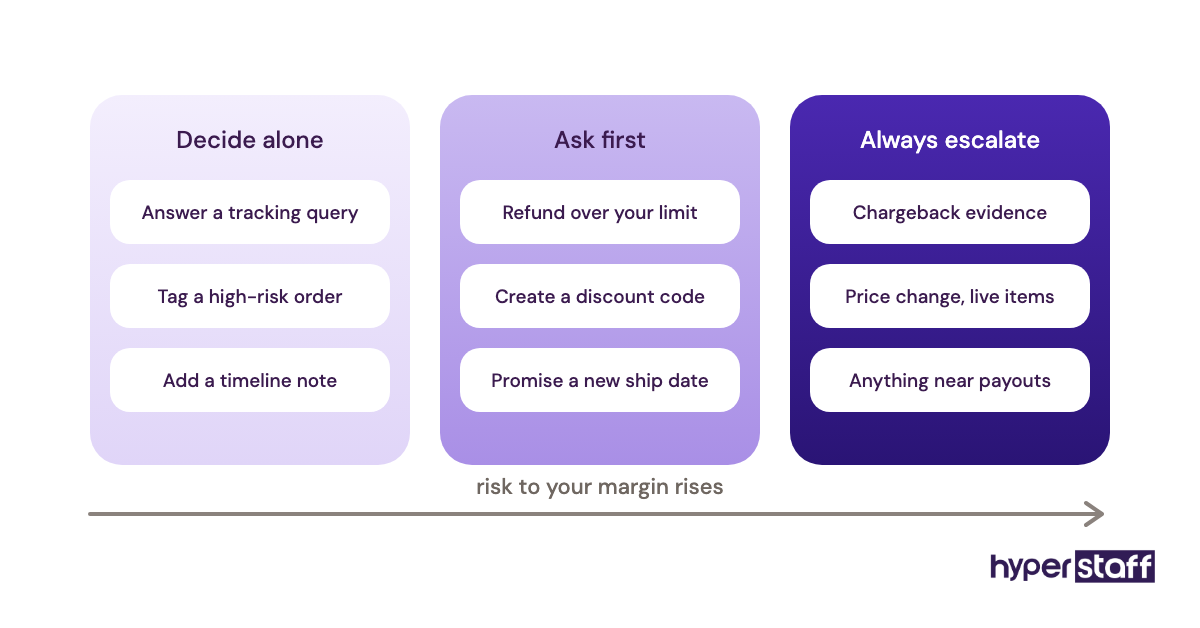
- Which decisions would you make alone, and which would you bring to us first?
- A discount code is circulating on a coupon site. What do you do in the first hour?
- Tell me about a mistake you made in a store and how you found it.
Part 5: Remote work and communication (7 minutes)
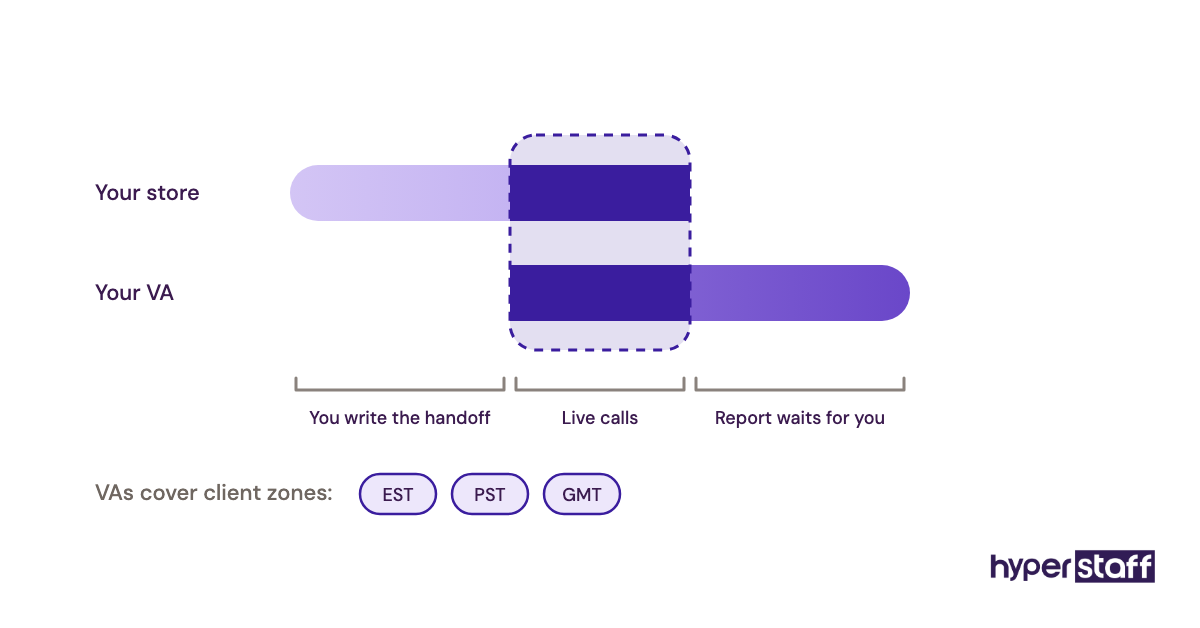
- Which hours can you overlap with our time zone, and how do you handle urgent messages outside them?
- How do you report what you finished each day?
- Where do you keep notes on a store's processes so someone else could follow them?
Practical task (45 to 90 minutes, in a development store): Import the attached 20-product CSV, fix any variant or image errors, create one automated collection, process a partial refund on a test order and record a five-minute Loom explaining what you did and anything that looked wrong.
Red flags to note: no specific store examples, bulk changes planned one product at a time, refunds promised before a policy check, no questions asked back about your store.
How to Adapt the Template to Your Store
Adapting the template starts with your task list. Take the list of Shopify VA tasks you expect in month one and delete any question that doesn't map to one of them.
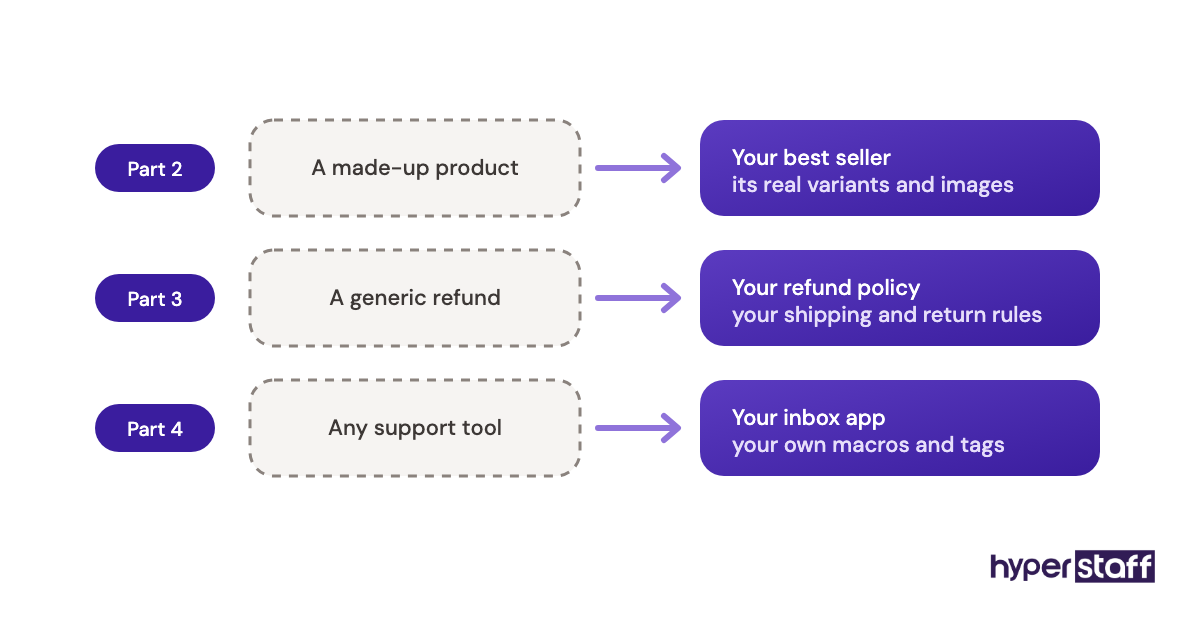
Next, swap the generic scenarios for your own. Use a real product from your catalog in Part 2, your actual refund policy in Part 3 and your support inbox app in Part 4, because store-specific scenarios are much harder to answer from a memorized script.
Weight the scoring to match the role. A support-heavy VA should earn most points in Part 4, and a catalog VA should be judged mostly on Part 2 and the CSV task.
Keep the question order fixed across candidates. Changing it mid-search makes scores hard to compare.
How Is a Shopify VA Interview Different From Other Hiring Interviews?
A Shopify VA interview tests admin execution inside one platform, which sets it apart from broader assistant interviews and from technical ones. Some overlap exists, though the questions that decide the hire are different.
Shopify VA Interview vs. General Virtual Assistant Interview
A general VA interview leans on inbox, calendar and communication skills. A Shopify interview keeps those and adds platform tests: CSV imports, refund flows and app knowledge a general assistant may never have touched.
Shopify VA Interview vs. Shopify Developer Interview
Developer interviews test Liquid, theme code and API work. Most Shopify VA roles need none of that, and a round of Liquid questions can scare off strong operations candidates who'd run your store well.
One light theme question is plenty, such as editing a section in the theme editor.
Shopify VA Interview vs. In-House Ecommerce Interview
In-house ecommerce interviews often focus on strategy, team fit and commute or schedule logistics. A remote VA interview puts more weight on written communication, time-zone overlap and self-reporting, and our comparison of a Shopify VA versus in-house hire covers the cost side of that choice.
What Are the Benefits of Structured Shopify VA Interview Questions?
Structured questions turn a hiring call into a comparison you can trust.
- Faster shortlists: a fixed set keeps calls to 45 minutes and makes weak fits obvious early.
- Fair comparisons: every candidate is scored on the same scale.
- Fewer trust risks: refund and permission questions surface careless habits before access is granted.
- Better onboarding: low-scoring answers show exactly what to train in week one.
- A reusable process: the same template works for your next hire or a replacement.
Where Structured Shopify VA Interviews Fall Short
- Setup time: building a development store and task takes an hour or two the first time.
- Rehearsed answers: common questions get coached, so the practical task has to carry more weight.
- Narrow signal: a scripted call can miss curiosity and initiative.
- Drop-off from long tests: unpaid tasks over an hour tend to lose experienced candidates.
Who Needs a Shopify VA Interview Template?
Store owners hiring their first Shopify virtual assistant need it most, since they usually have no hiring process yet. Growing stores adding a second or third VA need it for consistency, so each hire clears the same bar.
Larger brands use it differently. An operations lead running several stores can test candidates against each store's apps and policies with one shared scorecard.
What Do Good and Bad Shopify VA Interview Answers Sound Like?
Good Shopify VA answers name a tool, a step order and a check. The examples below are illustrative patterns to help you score faster, written in the voice a candidate might use.
Good Shopify VA Interview Answers
Good Answer: Bulk Price Updates
"I'd export the products as a CSV, change the price column, then import a small batch first to check the variants mapped correctly. For a few hundred items, I'd also look at the bulk editor or an app like Matrixify if the store has it."
The answer scores a 5 because the candidate tests before committing to the full import.
Good Answer: Partial Refund
"I'd open the order, choose refund, select only the broken item and check whether shipping gets refunded under your policy. Then I'd add a note to the timeline and email the customer with the amount."
It names the policy check and leaves a record, two habits that prevent repeat tickets.
Good Answer: Escalation Limits
"I'd handle routine refunds under a limit you set and bring you anything over it, any chargeback and any price or discount change that affects margin." Clear limits like these matter more than speed in the first month.
Bad Shopify VA Interview Answers
Bad Answer: "I Know Shopify Very Well"
Confidence with no store, app or task named scores a 1. Ask about the last product they created, and the gap usually shows within a minute.
Bad Answer: Editing Each Product by Hand
Planning to update 300 variants one at a time shows no bulk-tool exposure. It also predicts slow work and typos in prices.
Bad Answer: Refunding Without Checking
"I'd just refund them to keep them happy" sounds customer-friendly and costs money. A good VA checks the policy, the order history and whether a replacement already went out.
Keep in mind: One weak answer is rarely a reason to reject someone on its own. A pattern across three or four answers, especially in Parts 2 and 3, tells you far more.
Creating a Shopify VA Interview Plan, Step-by-Step
A Shopify VA interview plan takes about a week from first screen to offer when nothing stalls. The five steps below match the template, and the full Shopify VA hiring process covers sourcing and contracts around them.
Step #1: Define the Role and Pick Template Sections
List the tasks for month one and keep only the matching template parts. A support-only VA doesn't need the CSV task.
Step #2: Screen in Writing Before Any Call
Send three short written questions with the application. Written answers show English, attention to detail and whether the person reads instructions, and a good share of applicants drop out here.
Step #3: Run the Structured Call
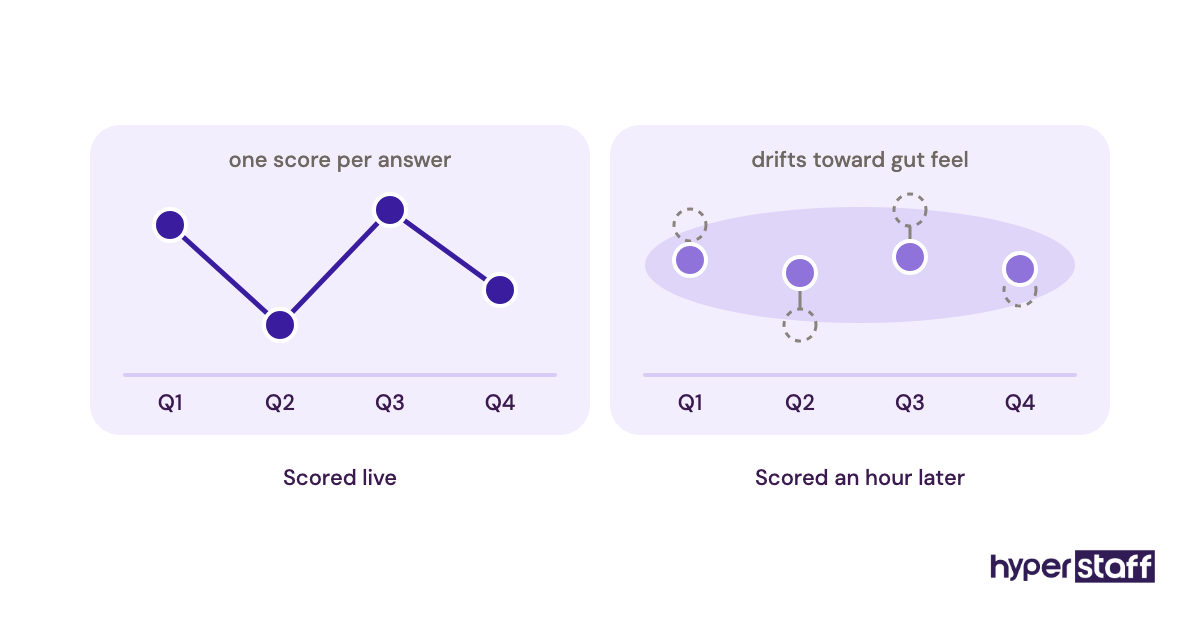
Ask the questions in order and score each one live during the call. Notes written an hour later drift toward your overall impression of the person.
Tip: Ask candidates to share their screen and open any Shopify admin they can access, even a free trial store. Watching someone find the refund button tells you more than ten minutes of talk about refunds.
Step #4: Set a Timed Practical Task
Give the task in a development store, with access limited to products and orders. Practitioners split on payment: some keep a short unpaid task to manage volume, others pay for every test to attract stronger people.
We lean toward paying for anything longer than an hour. Experienced candidates tend to skip long unpaid work, and they're the ones you want.
Step #5: Check References and Start With a Trial Week
Ask past clients one pointed question: what did this person do without being asked? Then start with a trial week, limited permissions and a daily report so problems show early.
What Does an Effective Shopify VA Interview Strategy Look Like?
An effective Shopify VA interview strategy tests work before it tests personality. Practical evidence comes first, judgment questions second and communication fit last.
Order matters because charm is sticky. Once a candidate wins you over on a call, it's hard to score their CSV task honestly, so some hiring managers run the task before the call.
Keep the bar fixed for the whole search. Lowering it after a slow week is how stores end up replacing a VA in month two.
Which Tools Do You Need for a Shopify VA Interview?
The tools for a Shopify VA interview are mostly ones you already have, plus a free test store. This setup covers every stage of the template:
- Shopify Partner development store: a free test store for practical tasks, with test orders you can refund without touching real money.
- Google Meet or Zoom: for the structured call and screen sharing.
- Loom: candidates record a short walkthrough of their finished task.
- Google Forms or Typeform: for the written screen, so answers land in one sheet.
- Google Sheets or Notion: to hold the scorecard and compare candidates side by side.
If you cut everything else, keep Loom. A five-minute recording shows how someone explains work asynchronously, which is most of what a remote store admin does all day.
For the apps a hire will run after day one, see the tools a Shopify VA uses on the job.
10 Proven Tips for Better Shopify VA Interviews
Each tip below targets a step where Shopify VA interviews often go wrong.
- Ask for a named store and a named task in every experience answer.
- Put bulk-editing questions early, since they separate experienced candidates fastest.
- Use your own refund policy in the refund scenario.
- Grant task access through limited permissions and remove it the same day.
- Score live during the call.
- Ask about one mistake they made and listen for how they caught it.
- Test written replies, because most store support happens in writing.
- Confirm time-zone overlap in actual hours, such as 9 a.m. to 1 p.m. Eastern.
- Pay for any task longer than an hour.
- Interview at least three candidates before deciding, even when the first one impresses you.
What Are Common Shopify VA Interview Challenges?
Coached answers are the most common challenge. Popular Shopify VA interview questions circulate online, so a smooth answer to a famous question proves little, and a store-specific follow-up closes that gap.
Scheduling across time zones comes second. Offer two call slots inside your overlap window and run the practical task asynchronously.
Gut-feel hiring after a long, tiring search is the third. Our guide to common Shopify VA hiring mistakes covers that one and the other errors that tend to cost stores most.
How Do You Measure Shopify VA Interview Success?
Shopify VA interview success shows up in the first 30 to 90 days of the hire. Track task accuracy, such as error-free product uploads and correct refunds, plus response times on support tickets against the targets you set.
After month one, compare scorecard results with on-the-job performance. If high scorers struggle with orders, your Part 3 questions are too easy, and scores that predict nothing need rewriting.
A plain test works too: would you hire the same person again?
How Long Does a Shopify VA Interview Process Take?
A self-run Shopify VA interview process takes about 5 to 10 business days. Screening and calls fill the first week, and the practical task adds 1 to 3 days while candidates fit it around current work.
The dead zone comes after the offer, when notice periods and access setup delay day one. Plan onboarding a Shopify VA during that wait.
Through Hyperstaff, placement takes 5 business days, followed by a 30-minute kickoff call and work starting that day or the next morning.
How Much Does Hiring a Shopify VA Cost?
Hiring a Shopify VA through Hyperstaff costs from $3 to $12 per hour and up, depending on experience tier. A typical in-house US ecommerce assistant runs roughly $20 to $30 per hour before benefits and payroll taxes.
| Experience level | Hyperstaff rate | Hyperstaff, 160-hour month | Typical in-house US hire, monthly salary |
|---|---|---|---|
| Essential (0 to 2 years) | From $3/hour | From $480 | Roughly $3,000 to $3,800 |
| Professional (2 to 5 years) | From $6/hour | From $960 | Roughly $3,800 to $4,800 |
| Expert (5+ years) | From $12/hour | From $1,920 | Roughly $4,800 to $6,000+ |
Monthly bundles come in 40, 80 or 160 hours, and paying quarterly saves 10%. For freelancer and other pricing models, see our full Shopify VA cost breakdown.
Important: Hyperstaff rates shown are starting averages. Your final cost depends on the tier, hours and type of Shopify work your store needs.
Is a Structured Shopify VA Interview Worth It?
Yes, a structured Shopify VA interview is worth it, and it's one of the highest-return blocks of time a store owner can spend. A few hours of preparation decides who handles your refunds, products and customers for the next year.
Here's an example calculation. Say you spend 15 hours a week on catalog and order admin and value your time at $40 an hour, which comes to about $2,600 a month.
A Professional-tier VA at 80 hours a month costs from $480. A bad hire costs that $480 plus the hours you spend fixing errors and restarting the search, so the 4 to 6 hours a structured interview takes pays back quickly.
The wider question of whether a Shopify VA pays off depends on your order volume as much as on the hire.
How Do You Choose a Shopify VA Agency?
Choose a Shopify VA agency by asking how it vets Shopify skills, how fast it replaces a poor fit and who manages the relationship. An agency that checks only English and general admin skills hands the platform testing back to you.
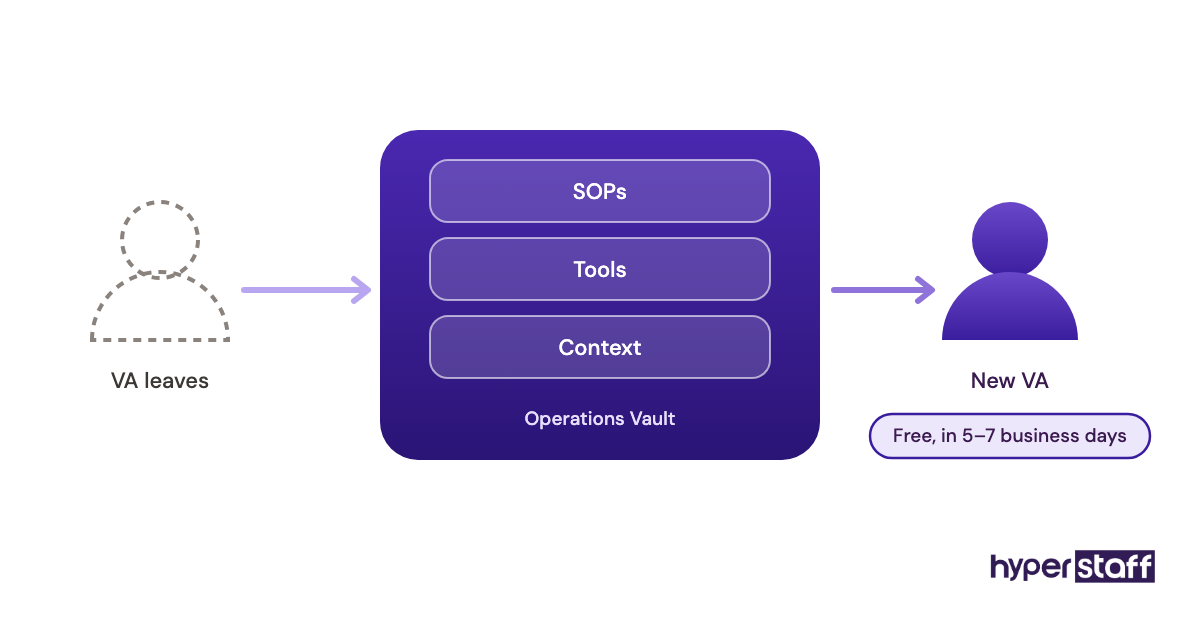
Ask what happens to your processes if the VA leaves. Hyperstaff keeps your SOPs, tools and context in an Operations Vault, so a free replacement in 5 to 7 business days gets briefed from it.
Check that you get a dedicated account manager and one specialist who learns your store. Every Hyperstaff client gets both, and it starts with a free discovery call.
Where Is Shopify VA Hiring Heading?
Shopify VA hiring is moving toward practical testing as more candidates list Shopify on their profiles. The skill label alone carries less weight than it used to, so work samples now do most of the filtering.
Roles are widening too. Many stores expect one VA to handle catalog work, support tickets and some email marketing in apps like Klaviyo, which pushes interviews to cover more ground in the same 45 minutes.
Our prediction, held loosely: recorded and written tests will keep replacing live calls in early rounds. They're easier to compare across time zones.
How Is AI Changing Shopify VA Interview Questions?
AI is changing Shopify VA interviews in two directions: candidates use it to polish answers, and stores now need to test how candidates use AI at work. Shopify's own tools, including Shopify Magic for product descriptions and the Sidekick assistant, already sit inside many admin routines.
Add one question to Part 2: how would you use AI to write 50 product descriptions, and how would you check them? Good answers mention brand voice, fact checks on materials and sizing, and a human read before publishing.
The screen-share task is the counter to AI-coached answers. AI can draft a reply about chargebacks, but it can't click through your refund flow for someone on a live call.
Heads up: Watch for written screen answers that read polished but ignore a detail in your instructions. Asking the candidate to explain one answer in their own words on the call usually sorts it out.
Disclaimer : This article is for general information only and isn't legal, employment or financial advice. Rates, platform features and hiring rules change, so check current terms and local laws before you hire.
Common questions
How many interview questions should I ask a Shopify VA?
Ask 15 to 25 questions in a 45-minute call. More than that leaves no room for follow-ups, which is where weak answers surface.
What questions should a Shopify VA ask me in the interview?
Strong candidates ask about your order volume, apps, refund policy and who approves decisions. A candidate with no questions about your store is a mild red flag for a long-term role.
Can I interview a Shopify VA without giving them store access?
You can. Use a free Shopify Partner development store for the practical task, and grant live-store access only after the offer, with limited staff permissions.
What are good Shopify VA interview questions for customer service?
Ask for written replies to real scenarios: a late parcel, a damaged item and a return request outside your window. Score tone, policy accuracy and whether they escalate the right cases.
How do I interview a Shopify VA from another country?
Hold the video call at an overlap hour, test written English in the screen and confirm working hours in writing. Also ask how they handle power or internet outages, since a backup plan matters in remote roles.
Book a free 15 min call
We place a pre-vetted specialist in 5 business days, fully managed, from $3/hour.