How Much Does an Amazon Virtual Assistant Cost?
What an Amazon virtual assistant costs per hour, per month and per deliverable, and how to budget for one.
On this page
- Amazon Virtual Assistant Retainer Costs
- Amazon Virtual Assistant Cost by Deliverable
- Hyperstaff Cost vs. Other Amazon VA Agencies
- Amazon Virtual Assistant Pricing Models
- Agency vs. Freelancer vs. In-House for Amazon Support
- How Much Does an Amazon Virtual Assistant Cost by Country?
- What Drives Amazon Virtual Assistant Costs?
- Amazon Virtual Assistant Cost and AI
- The Hidden Costs of Hiring an Amazon Virtual Assistant
- How Much Should You Budget for an Amazon Virtual Assistant?
- Calculating Amazon Virtual Assistant ROI
- How to Compare Amazon Virtual Assistant Agency Pricing
- How to Reduce Amazon Virtual Assistant Costs Without Sacrificing Quality
- Is an Amazon Virtual Assistant Worth the Investment?
- FAQs
💡 Key Takeaways:
1) An Amazon virtual assistant costs about $3 to $25 an hour offshore and $25 to $75 an hour in the US, UK, EU or Australia. The rate depends on skill level, region and how much of Seller Central the assistant controls.
2) Monthly retainers for 40 to 160 hours usually run from about $240 to $4,000 offshore. PPC and account health specialists sit at the top of that range.
3) The sticker rate is only part of the bill. Software seats, onboarding hours, rework on flat files and turnover often add 15% to 30% to what you first budgeted.
Cheaper Amazon Operations, More Margin Per Sale
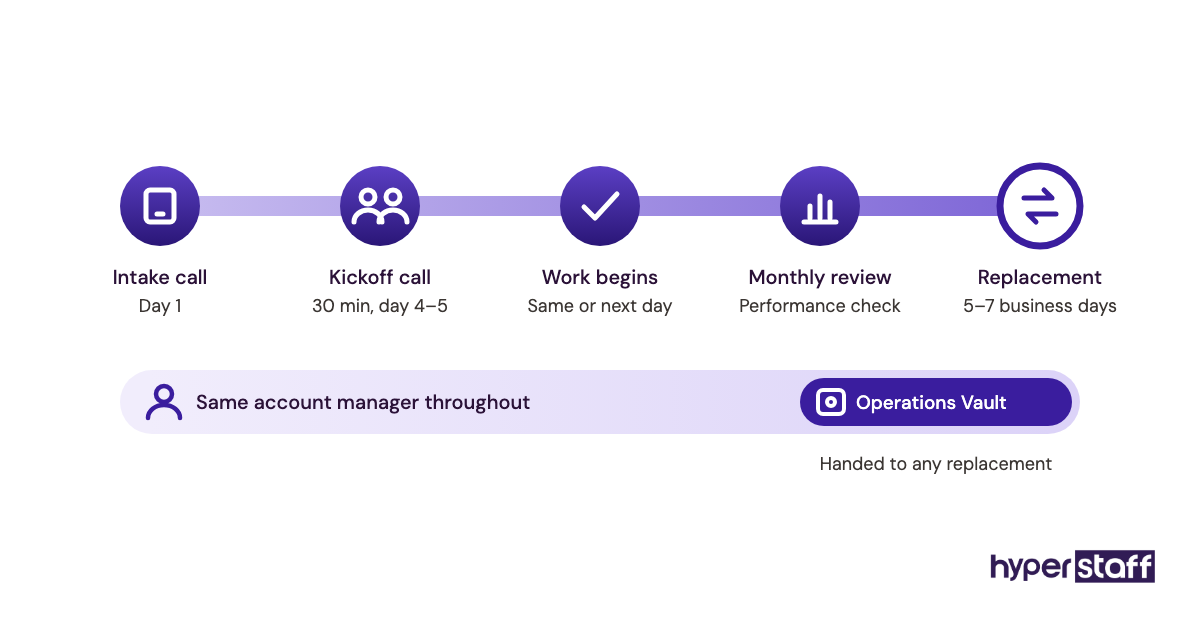
Hyperstaff places pre-vetted Amazon specialists from $3/hour, and we've placed 70+ virtual assistants with 30+ clients. Our dedicated Amazon virtual assistant services put one person on your account within 5 business days, and that person stays, learns your catalog and gets faster every month. A dedicated account manager sits behind every placement.
Amazon Virtual Assistant Retainer Costs
An Amazon virtual assistant retainer costs about $240 a month for a part-time offshore assistant and up to $4,000 for a senior full-time specialist. US-based help for the same hours runs about $1,000 to $12,000, and every figure below is a market average.
| Retainer | Hours/Month | Offshore Rate | Offshore Monthly | US-Based Monthly | Typical Scope |
|---|---|---|---|---|---|
| Starter | 40 | $6–12/hr | $240–480 | $1,000–1,800 | Listings, buyer messages |
| Half-time | 80 | $6–12/hr | $480–960 | $2,000–3,600 | Catalog, support, reports |
| Full-time generalist | 160 | $5–10/hr | $800–1,600 | $4,000–7,200 | Daily account operations |
| PPC specialist | 160 | $10–18/hr | $1,600–2,880 | $5,600–9,600 | Bids, search terms, campaigns |
| Senior account manager | 160 | $15–25/hr | $2,400–4,000 | $7,200–12,000 | Launches, account health |
Full-time hourly rates tend to drop a little because the assistant has one stable job. Part-time work gets priced higher since the person is juggling other accounts around yours.
The jump to PPC is the one worth noticing. A generalist who uploads listings and a specialist who manages ad spend do different jobs, and pricing them as one role is how sellers end up overpaying for admin or underpaying for ads.
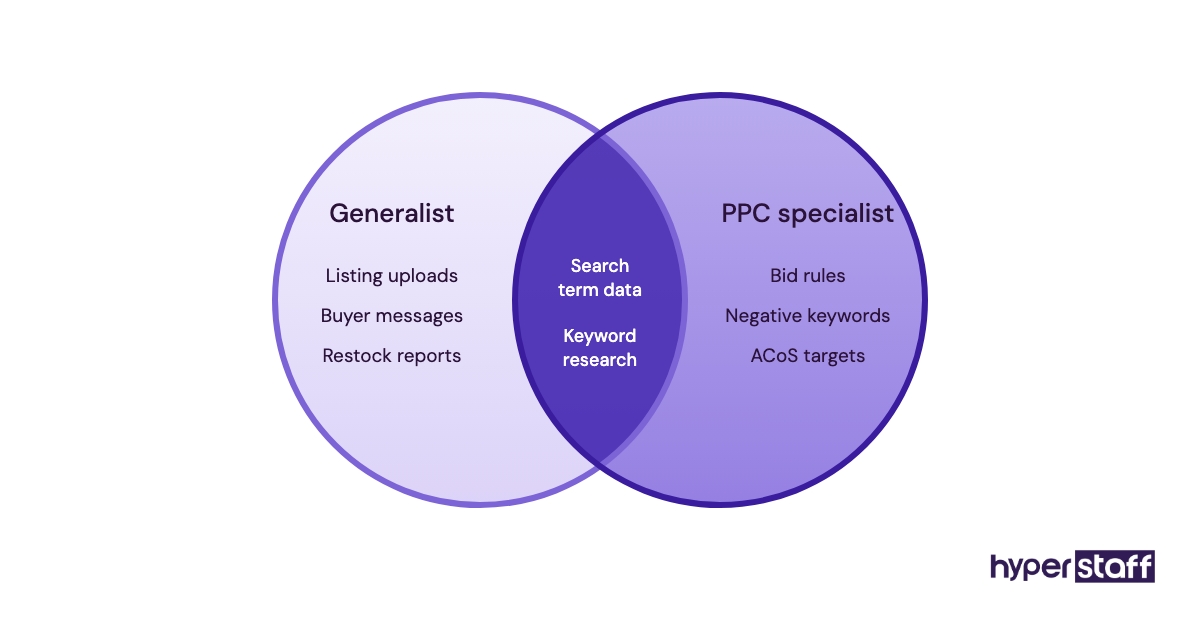
If you're still sorting out what an Amazon virtual assistant does, settle that first. Scope drives every number in this table.
Amazon Virtual Assistant Cost by Deliverable
Priced per deliverable, Amazon VA work ranges from about $20 for a single support case to $1,500 a month for managed PPC. The table shows averages across freelancers, agencies and in-house staff, where in-house means the share of a US salary that the task uses up.
| Deliverable | Freelancer | Agency | In-House | Turnaround |
|---|---|---|---|---|
| New listing (title, bullets, backend keywords) | $30–80 | $75–200 | $40–90 | 1–2 days |
| Listing optimization rewrite | $25–75 | $100–250 | $35–80 | 1–3 days |
| A+ Content copy and module brief | $50–150 | $150–400 | $60–150 | 3–5 days |
| Bulk flat-file upload (50 SKUs) | $100–300 | $300–800 | $150–350 | 2–4 days |
| Keyword research report | $40–120 | $150–350 | $60–140 | 1–2 days |
| PPC campaign build (one product) | $75–200 | $200–500 | $90–200 | 2–3 days |
| Ongoing PPC management (monthly) | $200–600 | $500–1,500 | $400–900 | Weekly cycles |
| Buyer messages (about 300/month) | $150–400 | $400–900 | $300–600 | Within 24 hours |
| Seller Support case or appeal | $20–60 | $75–250 | $30–70 | 1–5 days |
| Inventory and restock planning (monthly) | $80–200 | $200–500 | $120–250 | Weekly |
| FBA reimbursement audit | $100–250 | 15–25% of recovery | $150–300 | 1–2 weeks |
| Competitor price and listing tracking (monthly) | $60–150 | $150–400 | $80–200 | Weekly |
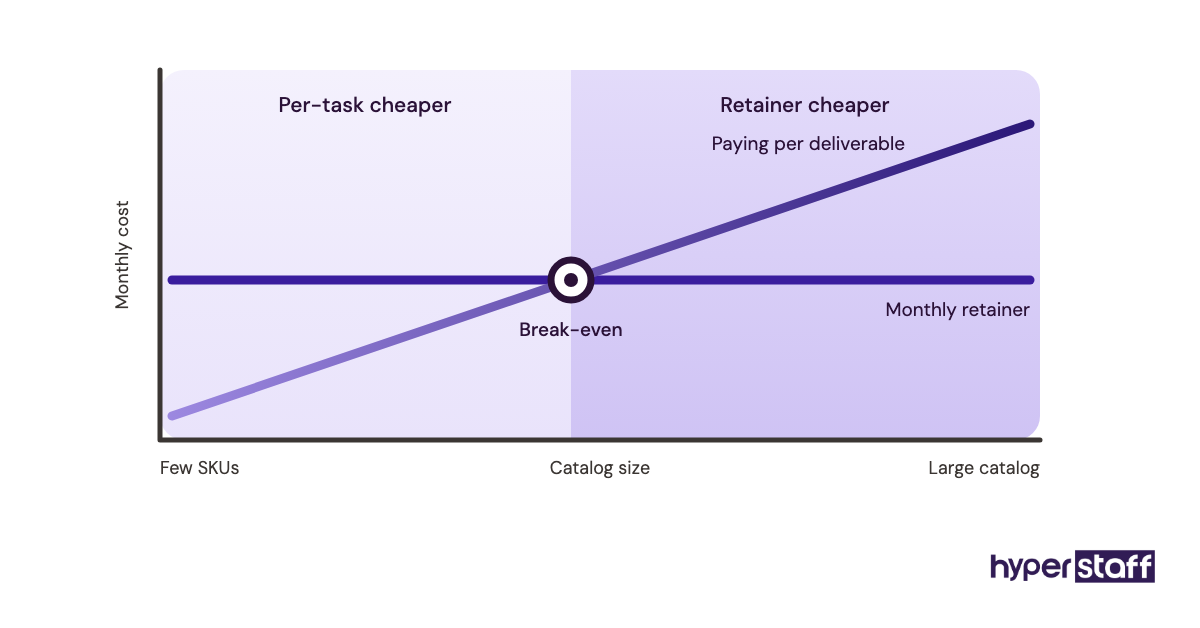
Per-deliverable pricing looks cheap until a catalog grows. A seller with 40 SKUs who pays per rewrite, per case and per report often spends more than a fixed monthly retainer would cost, and gets no one who knows the account.
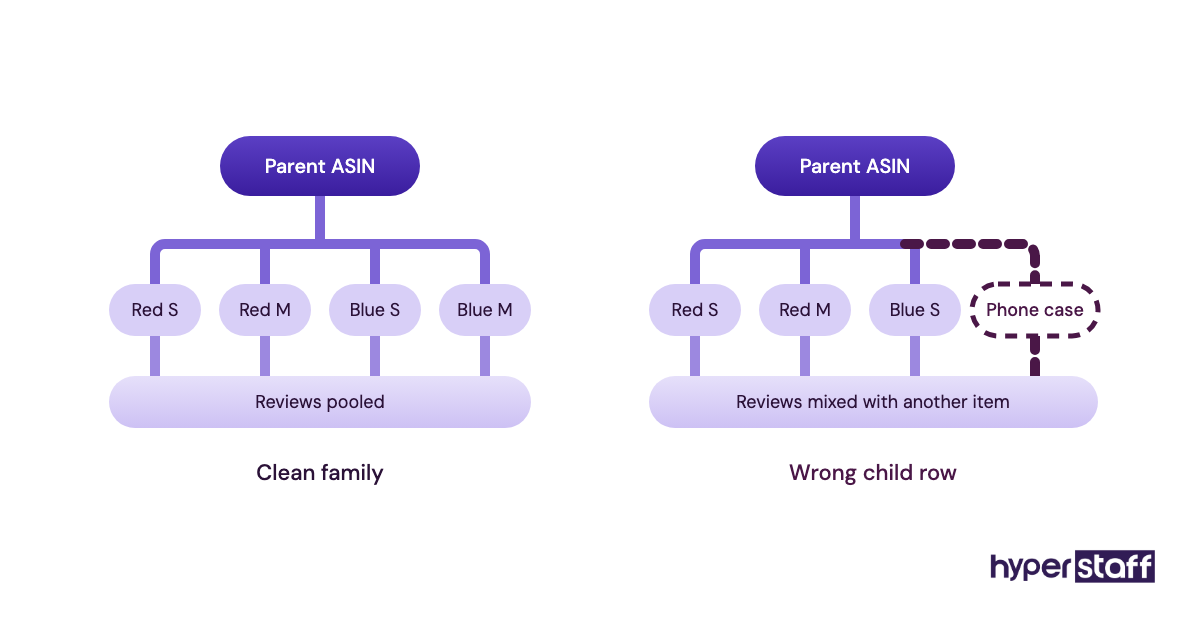
Flat-file uploads are the line item that surprises people. A single wrong parent-child relationship can merge reviews onto the wrong product or break a variation family, so turnaround on that row includes checking the result inside Seller Central.
Our breakdown of everyday Amazon VA tasks shows which of these deliverables repeat weekly and which happen once.
Hyperstaff Cost vs. Other Amazon VA Agencies
Hyperstaff's published rates start at $3/hour for Essential, $6/hour for Professional and $12/hour for Expert talent. Typical offshore agencies quote Amazon assistants at about $7 to $25 an hour, and US-based agencies at $35 to $75.
| Tier | Experience | Hyperstaff (from) | Typical Offshore Agency | US-Based Agency | You Save vs. Offshore Agency |
|---|---|---|---|---|---|
| Essential | 0–2 years | $3/hr | $7–10/hr | $35–45/hr | 57–70% |
| Professional | 2–5 years | $6/hr | $10–15/hr | $45–60/hr | 40–60% |
| Expert | 5+ years | $12/hr | $15–25/hr | $60–75/hr | 20–52% |
The "You Save" column is simple arithmetic on starting rates against the typical offshore range. Against US-based agencies, the gap is far wider at every tier.
Retainer Costs
Monthly retainer costs at Hyperstaff follow the hour bundle you pick: 40, 80 or 160 hours.
| Monthly Bundle | Hyperstaff (Essential to Expert, from) | Typical Offshore Agency |
|---|---|---|
| 40 hours | $120–480 | $280–1,000 |
| 80 hours | $240–960 | $560–2,000 |
| 160 hours | $480–1,920 | $1,120–4,000 |
Paying quarterly takes 10% off those figures.
Cost by Deliverable
Hyperstaff bills hours, so a deliverable's cost is the hours it takes multiplied by the tier rate. The estimates below assume a Professional assistant at $6/hour.
| Deliverable | Hyperstaff (est.) | Typical Agency |
|---|---|---|
| New listing (2–4 hrs) | $12–24 | $75–200 |
| Bulk flat-file upload, 50 SKUs (10–20 hrs) | $60–120 | $300–800 |
| Monthly buyer messages, about 300 (20–30 hrs) | $120–180 | $400–900 |
Important: Our prices above are averages based on starting rates. Your actual cost depends on the tier you need, the hours your account takes and the scope of work we agree on together.
Amazon Virtual Assistant Pricing Models
- Hourly: pay per tracked hour, from about $3 offshore to $75 in the US.
- Monthly bundle: a fixed block of hours at a set rate.
- Per deliverable: a price per listing, A+ set or case.
- Percentage of ad spend: PPC managers take roughly 5% to 15% of monthly spend, usually with a floor.
- Hybrid: a flat fee plus a smaller ad-spend percentage.
PPC practitioners still disagree on the percentage model. Supporters say it ties pay to growth, while critics point out it rewards spending more, whatever happens to ACoS.
Agency vs. Freelancer vs. In-House for Amazon Support
Freelancers cost the least per hour, and in-house staff give the most control at the highest price. A good agency sits between them: offshore rates, vetting done before you meet anyone and a replacement if the fit breaks.
For teams that want to scale fast, the agency route usually wins because the hiring risk moves off your desk. Our full Amazon VA vs. in-house comparison covers payroll, benefits and management time line by line.
How Much Does an Amazon Virtual Assistant Cost by Country?
An Amazon virtual assistant costs roughly $3 to $10 an hour in India and the Philippines, $8 to $20 in Latin America and Eastern Europe, and $20 to $45 in the US, UK, EU and Australia. Monthly figures assume 160 hours, in US dollars.
| Country/Region | Hourly Rate | Full-Time Monthly | US Time-Zone Overlap | Common Strength |
|---|---|---|---|---|
| United States | $25–45 | $4,000–7,200 | Full | PPC, brand strategy |
| United Kingdom | $22–40 | $3,500–6,400 | Partial | UK and EU marketplaces |
| Western EU | $20–40 | $3,200–6,400 | Partial | Local-language listings |
| Australia | $25–45 | $4,000–7,200 | Low | Amazon.com.au |
| Eastern Europe | $10–20 | $1,600–3,200 | Partial | Analytics, reporting |
| Latin America | $8–18 | $1,280–2,880 | Strong | Live support hours |
| Philippines | $4–10 | $640–1,600 | Shift-based | Catalog, buyer messages |
| India | $3–9 | $480–1,440 | Shift-based | Flat files, data work |
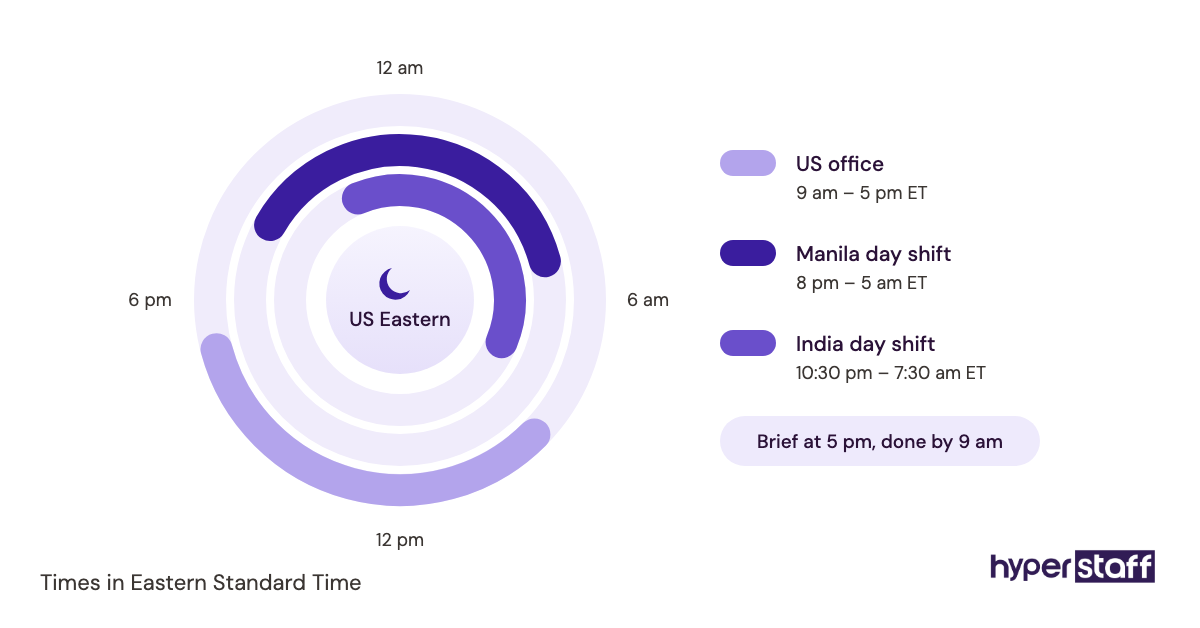
Time-zone overlap matters less for Amazon work than people expect. Most catalog and inventory tasks run overnight without anyone noticing, so the overlap only earns its premium if you want live chat with your assistant or real-time ad changes during US prime hours.
Marketplace language is the exception. A German listing written by a non-native speaker reads badly to German shoppers, so anyone selling on Amazon.de or Amazon.fr should budget for EU-based help or native review on those listings.
What Drives Amazon Virtual Assistant Costs?
Four factors move Amazon VA pricing more than job titles do. Experience and region matter, but the drivers below explain why two sellers hiring the "same" assistant can see a 3x price gap.
#1 Cost Driver: Marketplace Count
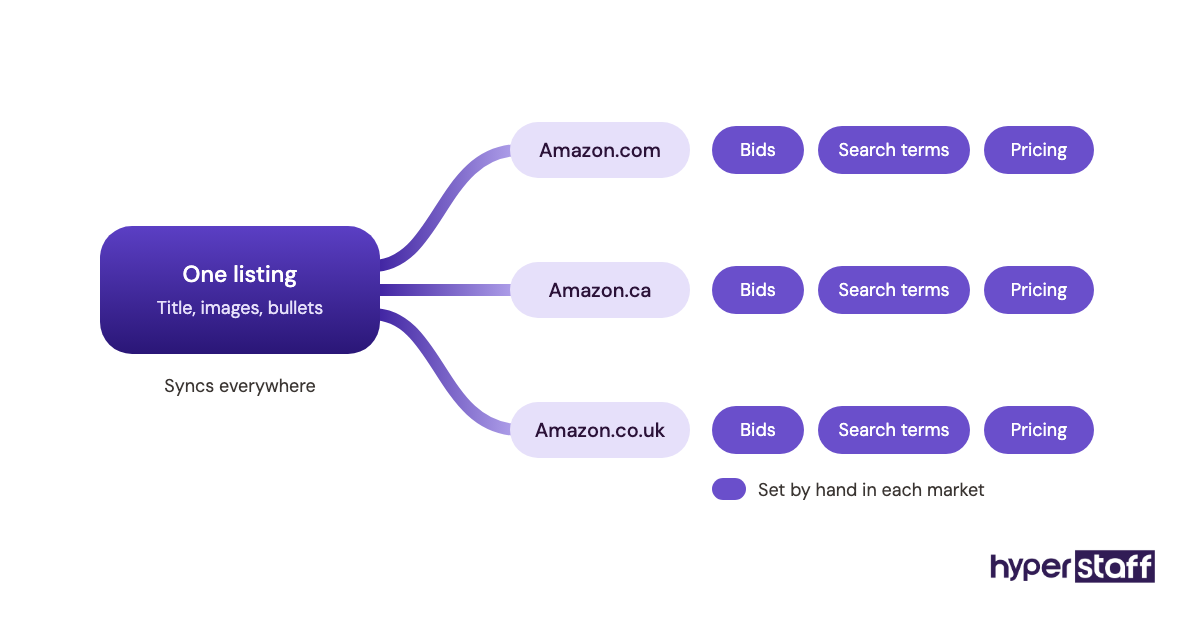
Every extra marketplace adds work that doesn't scale cleanly. Selling on Amazon.com, .ca and .co.uk means separate ad campaigns, pricing strategies and compliance paperwork for each, even when the products are identical.
Sellers often budget for one marketplace and then expand through Amazon's Build International Listings tool. The listings sync, but the search terms and bids don't, and someone has to manage them by hand.
#2 Cost Driver: Ad Spend Under Management
Ad spend changes who you need to hire. At a few hundred dollars a month, a Professional-tier generalist can run auto campaigns and harvest search terms.
Past roughly $5,000 a month in spend, mistakes get expensive fast, and a single bad bid rule can burn a week's budget overnight. At that level, an Expert-tier PPC specialist usually costs less than the waste a junior one leaves behind.
#3 Cost Driver: Variation and Flat-File Complexity
Catalog structure drives hours more than SKU count does. Fifty simple, standalone products take less time than ten products with size and color variations spread across parent-child families.
Flat files are where junior assistants lose time. Category templates change, required attributes shift, and an upload that "succeeded" can still leave listings suppressed for a missing field nobody checked.
#4 Cost Driver: How Much of Seller Central They Control
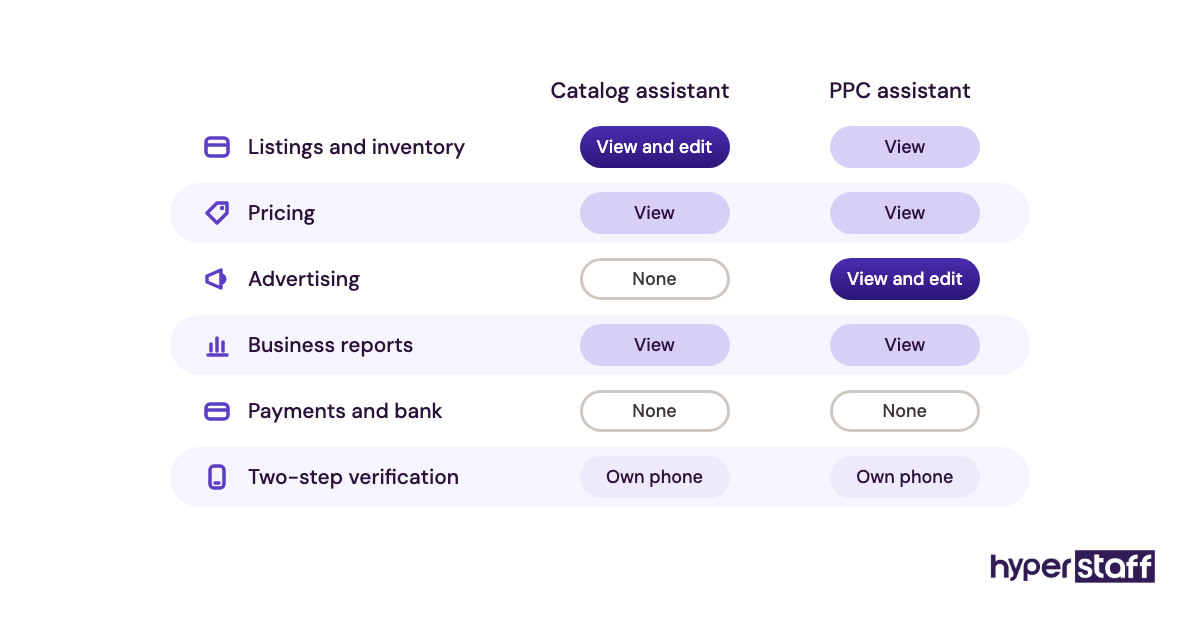
Access level is a hidden price lever. An assistant with read-only access to reports needs far less experience than one who can file appeals, change prices or create shipments.
Seller Central's User Permissions let you add the assistant as their own user with their own two-step verification. Sharing the main login instead creates a security risk, and every OTP code turns into a wait on the owner's phone, which adds billable hours.
Amazon Virtual Assistant Cost and AI
AI lowers the cost of drafting Amazon listings and reports, but a person still has to check them. Amazon offers generative AI listing tools inside Seller Central, and most sellers' assistants use ChatGPT or similar tools for first drafts.
The saving shows up on the deliverable side. A listing that once took three hours to write can now take one, so the cost per listing falls even if the hourly rate doesn't.
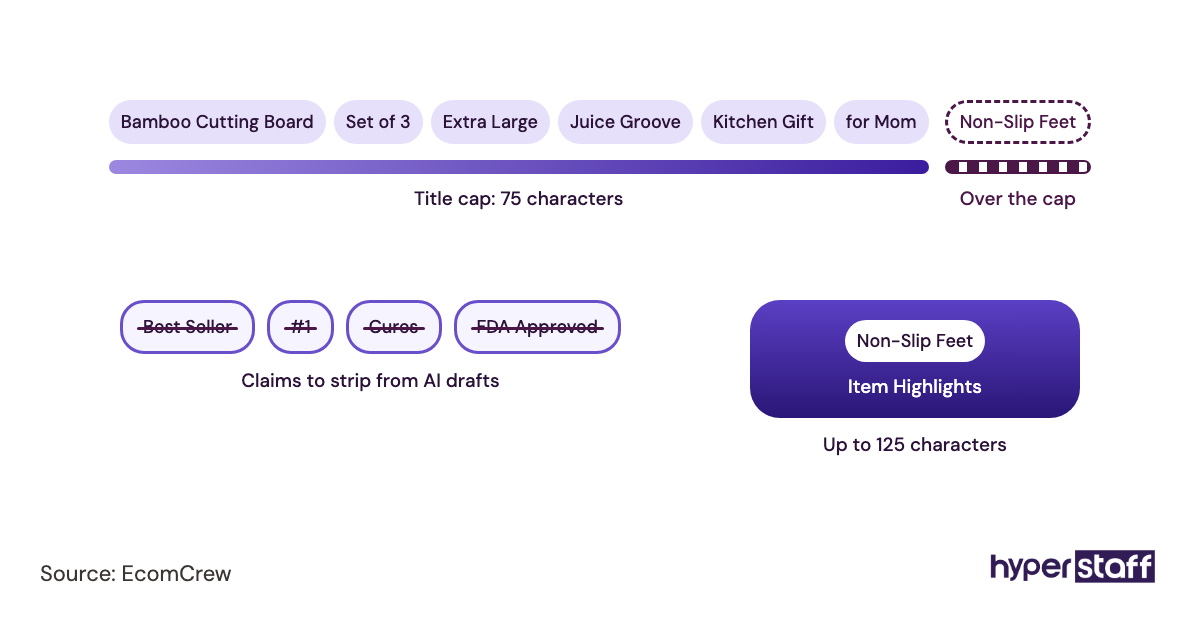
The work that's left is the part AI handles worst. AI-drafted bullets often slip in medical claims, superlatives or restricted keywords that get a listing suppressed, and an assistant who knows the category style guide catches those before they go live.
The Hidden Costs of Hiring an Amazon Virtual Assistant
- Owner time during Amazon VA onboarding, usually 5 to 15 hours over the first month.
- Software seats. Helium 10's Platinum plan alone is $129/month, or $99/month billed yearly, and the right Amazon VA tool stack often adds more.
- Rework on broken flat files or suppressed listings.
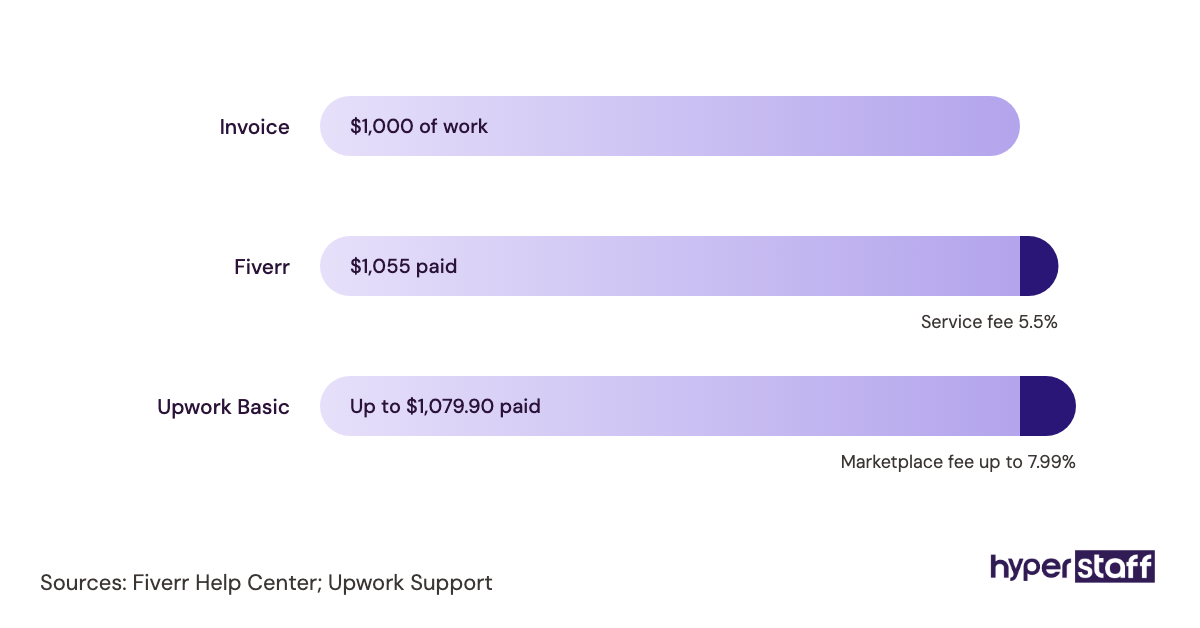
- Platform fees on freelance marketplaces.
- Re-hiring and retraining when a freelancer leaves.
- Account health damage from a careless edit.
How Much Should You Budget for an Amazon Virtual Assistant?
Most sellers should budget about $300 to $1,000 a month for a part-time offshore Amazon assistant and $1,000 to $3,000 for full-time or specialist cover. Add 15% to 30% on top for tools and onboarding in the first quarter.
The right amount depends on stage. A brand still validating its first few products rarely needs more than 40 hours a month, because the work is listings, messages and weekly reports.
Brands selling across several marketplaces with steady ad spend usually need 160 hours, often split between a generalist and part-time PPC help. An enterprise-size catalog may justify two full-time offshore assistants before it justifies one US hire.
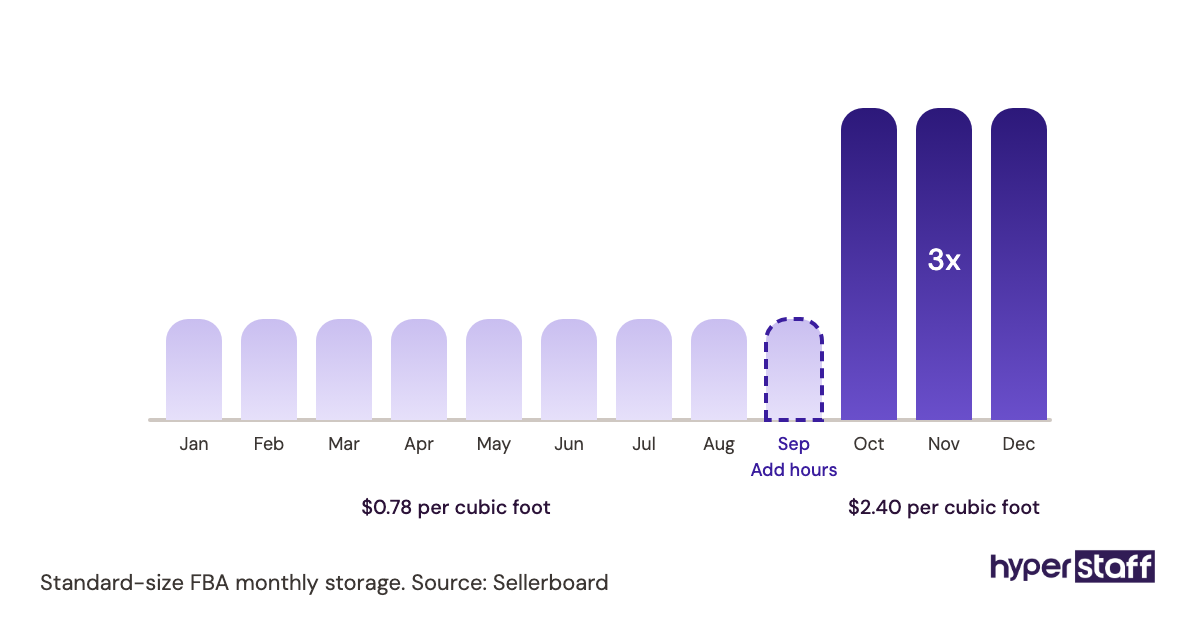
Q4 deserves its own line in the budget. Restock limits, fall sale events and holiday ad bids all pile up from October onward, and adding hours in September costs less than scrambling in November.
Calculating Amazon Virtual Assistant ROI
Amazon virtual assistant ROI equals the value of hours freed plus revenue the assistant recovers or adds, minus what the assistant costs, divided by that cost. Both sides of the equation need real numbers from your account.
Take an 80-hour Professional bundle, which starts at $480 a month. If those 80 hours replace work the owner values at $40 an hour, the time alone is worth $3,200, before counting a single extra sale.
The revenue side is harder to pin down, so measure it directly. Track stranded inventory fixed, suppressed listings restored, FBA reimbursements filed and ACoS changes month over month, and credit the assistant only with what moved after they started.
Be honest about the ramp. Month one usually shows weak ROI because you're still training, and judging the hire on those first four weeks is one of the most common reasons sellers churn through assistants.
How to Compare Amazon Virtual Assistant Agency Pricing
To compare Amazon VA agency pricing fairly, convert every quote to an effective hourly rate, then check what that rate includes. Replacement terms, minimum contract length, account management and who keeps your SOPs matter as much as the number.
Ask each agency how fast they can place someone, what happens if the fit breaks and who briefs the replacement. Our guide on hiring an Amazon virtual assistant lists what else to ask before signing anything.
Red Flags in Agency Pricing
- No written rate per tier, only "custom quotes."
- Setup or placement fees that aren't refundable.
- Long lock-in contracts before you've met the assistant.
- One person shared across several clients but billed as dedicated.
- No replacement promise in writing.
When to Walk Away
Walk away when an agency can't tell you who will work on your account before you pay. Walk away just as fast if they ask for your primary Seller Central login instead of a user invite.
Repeated errors are a reason too. Two suppressed listings in a month from the same kind of mistake usually point to a training gap the agency isn't fixing, and our list of common Amazon VA mistakes helps you tell a slip from a pattern.
How to Reduce Amazon Virtual Assistant Costs Without Sacrificing Quality
Step 1: Write the Scope Before You Hire
A clear Amazon VA job description stops you paying Expert rates for Essential work. List every recurring task, its frequency and the access it needs, then price the bundle from that list.
Step 2: Match Each Task to the Lowest Tier That Can Do It
Buyer messages and data entry rarely need five years of experience. Keep senior hours for PPC, appeals and launches, and put routine catalog work on a junior assistant or a smaller bundle.
Step 3: Batch Listing Work Into Sprints
Uploading products one at a time wastes setup time on every flat file. Group new SKUs into monthly sprints so the assistant opens each category template once and checks every result in one pass.
Step 4: Test With a Real Task First
A short paid task on your own catalog shows more than a résumé. Pair it with sharp Amazon VA interview questions and you'll catch weak flat-file or Seller Central skills before they cost you rework.
Step 5: Prepay Once the Fit Is Proven
After two or three months with the same assistant, switch to quarterly billing. At Hyperstaff that saves 10%, and you only lock it in once you know the person and the hours fit.
Is an Amazon Virtual Assistant Worth the Investment?
Yes, for most sellers an Amazon virtual assistant is one of the highest-ROI hires available. At offshore rates, a few recovered reimbursements or one fixed suppressed listing can cover a month's cost.
The return depends on scope, the right tier and a few months of patience. Our breakdown of whether an Amazon VA is worth it walks through the cases where it isn't.
Disclaimer: This article is for general information only and isn't financial, tax or legal advice. Prices and rates are estimates that change over time and vary by provider and scope. Hyperstaff's actual pricing is confirmed in writing for each client.
Common questions
Do Amazon VAs charge more during Q4?
Freelancers often raise rates or stop taking new clients from October to December. A retainer agreed before peak season usually keeps your rate fixed, but you may need a bigger hour bundle for the extra work.
Can I hire an Amazon virtual assistant for a one-time project?
You can, and catalog cleanups, launches and reimbursement audits are common one-off projects. Expect a higher hourly rate than ongoing work, since the assistant has to learn your account from scratch.
How much more does an Amazon PPC virtual assistant cost?
A PPC specialist usually costs about 1.5 to 2 times a general Amazon VA at the same region and experience level. Some charge a percentage of ad spend instead, so compare both models against your monthly spend.
Is an Amazon VA more expensive for Vendor Central?
Usually yes, because Vendor Central experience is rarer than Seller Central experience. Purchase order management, chargebacks and retail analytics need someone who has worked a vendor account before, and that narrower pool prices higher.
Is the cost of an Amazon virtual assistant tax-deductible?
In many countries, what you pay a contractor or agency for business work counts as a deductible business expense. Rules vary by country and business structure, so confirm with your accountant before you file.
Book a free 15 min call
We place a pre-vetted specialist in 5 business days, fully managed, from $3/hour.