What Is an Amazon Virtual Assistant? Roles, Tasks and Costs
An Amazon virtual assistant is a remote specialist who runs the daily Seller Central work that keeps a store selling.
On this page
- What Is an Amazon Virtual Assistant?
- Key Amazon VA Terms You Should Know
- Why Is an Amazon Virtual Assistant Important?
- How Does an Amazon Virtual Assistant Work?
- Types and Forms of Amazon Virtual Assistants
- How an Amazon VA Differs From Related Roles
- The Benefits of an Amazon Virtual Assistant
- The Drawbacks of an Amazon Virtual Assistant
- Who Needs an Amazon Virtual Assistant?
- Amazon Virtual Assistant Examples
- Creating an Amazon VA Plan, Step-by-Step
- What Does an Effective Amazon VA Strategy Look Like?
- Amazon Virtual Assistant Tools and Software
- 9 Proven Amazon Virtual Assistant Tips and Best Practices
- Overcoming Common Amazon VA Challenges
- How to Measure Amazon VA Success
- How Long Does an Amazon VA Take to Work?
- How Much Does an Amazon Virtual Assistant Cost?
- Is an Amazon Virtual Assistant Worth It?
- How to Choose an Amazon VA Agency
- Amazon VA Statistics, Trends and Future Predictions
- Amazon Virtual Assistants and AI
- FAQs
💡 Key Takeaways:
1) An Amazon virtual assistant is a remote specialist who handles the daily work inside Seller Central, such as listing updates, PPC bid changes, inventory restock planning and seller support cases.
2) The role works best when the seller writes down the store's rules first, gives the assistant a secondary user login with limited permissions, and reviews a short weekly report.
3) Offshore Amazon VAs usually cost a fraction of an in-house e-commerce hire, but the savings only hold when the tasks are documented and the assistant stays with one store long enough to learn it.
More Hours Selling, Fewer Hours in Seller Central
Every hour spent fixing a suppressed listing is an hour taken away from sourcing the next product. Hyperstaff places pre-vetted Amazon virtual assistant services with sellers in 5 business days, with rates from $3/hour, and has placed 70+ virtual assistants across 30+ clients. Each one learns your store, your SOPs and your numbers, then sticks with you.
What Is an Amazon Virtual Assistant?
An Amazon virtual assistant is a remote worker who runs the routine operations of an Amazon seller account on the owner's behalf. The work covers listings, advertising, inventory, customer messages and account health, all done through Seller Central or Vendor Central.
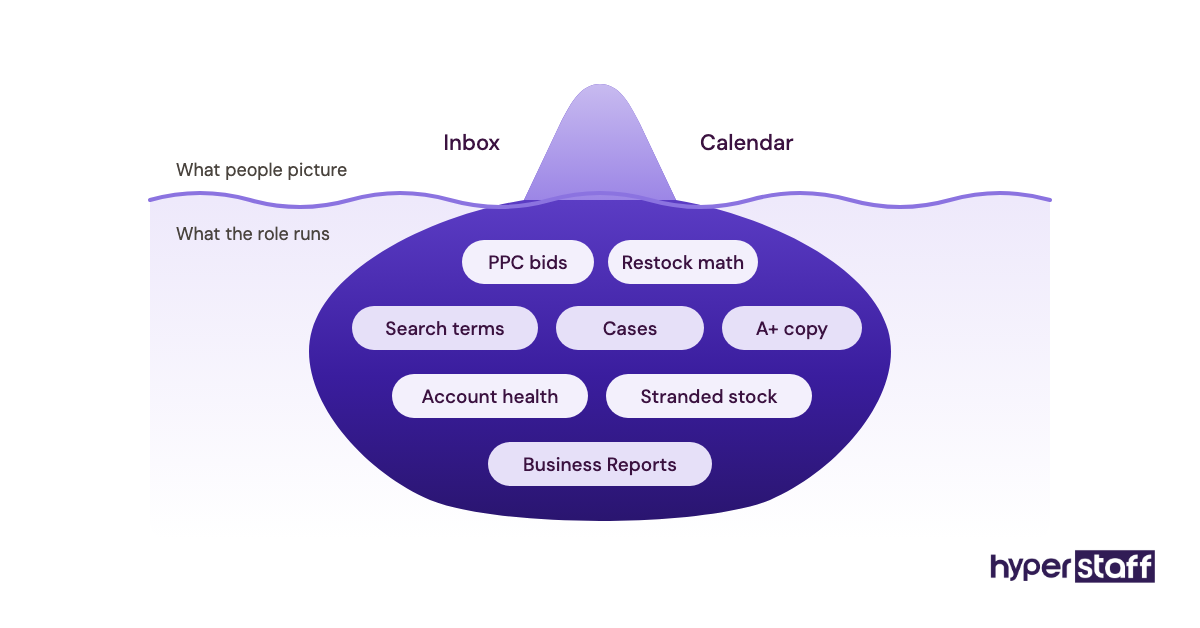
Most people picture inbox cleanup. The real job sits much closer to an e-commerce operator, and a good one reads a Business Report the way a bookkeeper reads a P&L. Our breakdown of daily Amazon VA tasks lists the full spread.
Key Amazon VA Terms You Should Know
- Seller Central = Amazon's dashboard for third-party sellers, where listings, orders, ads and reports live.
- ASIN = the 10-character ID Amazon gives every product detail page.
- FBA = Fulfillment by Amazon, where Amazon stores, packs and ships your inventory.
- FBM = Fulfilled by Merchant, where you or your 3PL ship each order.
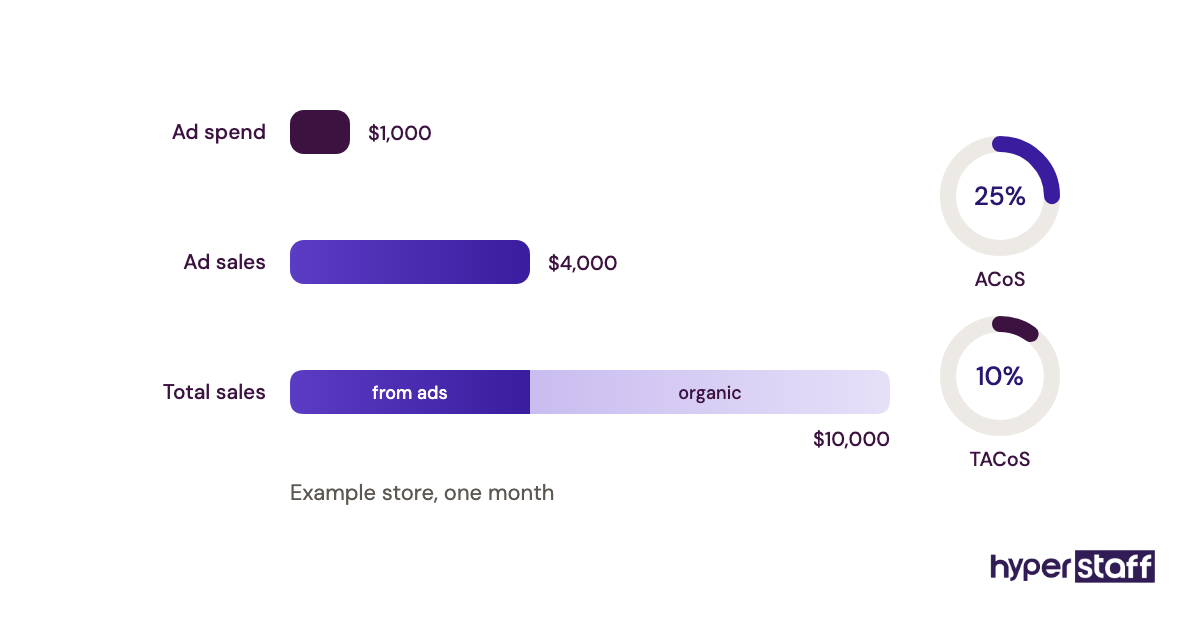
- ACoS = advertising cost of sales, ad spend divided by ad-attributed revenue.
- TACoS = total ad spend divided by total revenue, including organic sales.
- Buy Box = the "Add to Cart" slot on a listing that one seller wins at a time.
- Brand Registry = Amazon's program that gives brand owners control over listings and access to A+ Content.
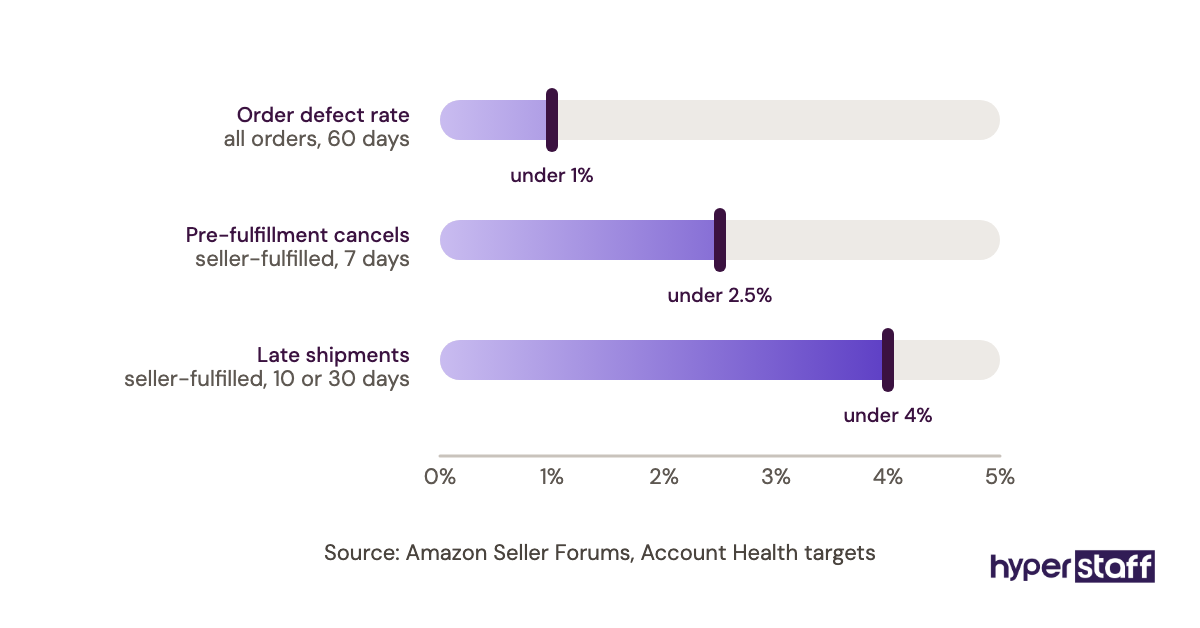
- Account Health Rating = Amazon's score for policy compliance, which can lead to suspension if it drops.
- Stranded inventory = FBA stock sitting in a warehouse with no active listing attached.
- IPI score = Inventory Performance Index, which affects how much FBA storage you get.
Why Is an Amazon Virtual Assistant Important?
An Amazon VA matters because a store loses money without anyone noticing when nobody checks it daily. Listings get suppressed, ad campaigns overspend on dead search terms, and FBA stock runs out before the reorder lands.
Third-party sellers made up about 60% of paid units sold on Amazon in a recent quarter, according to Marketplace Pulse. That share means heavy competition on every page, and a stockout of even a week can cost you organic rank that takes longer than a week to win back.
The owner usually knows what needs doing. Doing it every single day is the hard part, and that daily rhythm is what an assistant supplies.
How Does an Amazon Virtual Assistant Work?
An Amazon virtual assistant works from a secondary Seller Central login, a written task list and a fixed daily routine. The owner sets the rules and limits, and the VA executes inside them, then reports back.
A typical day runs in a set order. The VA checks Account Health and the performance notifications first, then works new customer messages, which Amazon expects answered within 24 hours.
Ads come next: search-term reports, negative keywords and bid changes within the limits you've set. The afternoon goes to inventory, listings and any open support cases.
Reporting closes the loop. A one-page weekly summary with sales, ad spend, ACoS, stock cover and open cases tends to beat daily check-in calls, which eat the hours you hired help to save.
Types and Forms of Amazon Virtual Assistants
Amazon VAs split by specialty, and most sellers start with a generalist before adding a specialist. The table shows the common types, what each one owns and when it fits.
| Type | Main work | Core tools | Best fit | Typical experience tier |
|---|---|---|---|---|
| Generalist store VA | Messages, listing edits, cases, reports | Seller Central, Google Sheets | Stores with 1 to 30 SKUs | Essential |
| PPC specialist | Campaign builds, bids, negatives, search terms | Amazon Ads console, Helium 10 Adtomic | Brands spending on ads monthly | Professional or Expert |
| Listing and SEO VA | Titles, bullets, backend keywords, A+ Content | Helium 10, Jungle Scout, Canva | New launches and relaunches | Professional |
| Inventory and FBA VA | Restock planning, shipments, stranded stock | Seller Central, Sheets, 3PL portals | FBA sellers with many SKUs | Professional |
| Product research VA | Niche screening, supplier lists, sales estimates | Jungle Scout, Keepa, Alibaba | Sellers adding new products | Essential or Professional |
| Account health and case VA | Appeals, reinstatements, policy warnings | Seller Central, Seller Support | Accounts with flags or suspensions | Expert |
| Wholesale and arbitrage sourcing VA | Lead lists, ungating checks, price history | Keepa, SellerAmp, Sheets | Resellers buying from brands or retail | Essential |
How an Amazon VA Differs From Related Roles
An Amazon VA is a dedicated person inside one store's operations. The three roles below get confused with it most often, and each solves a different problem.
Amazon VA vs. a General Virtual Assistant
A general VA manages calendars, email and admin across a business. An Amazon VA knows Seller Central's quirks, like why a listing goes "inactive" after a category change, and that knowledge takes months to build.
Amazon VA vs. an Amazon Agency
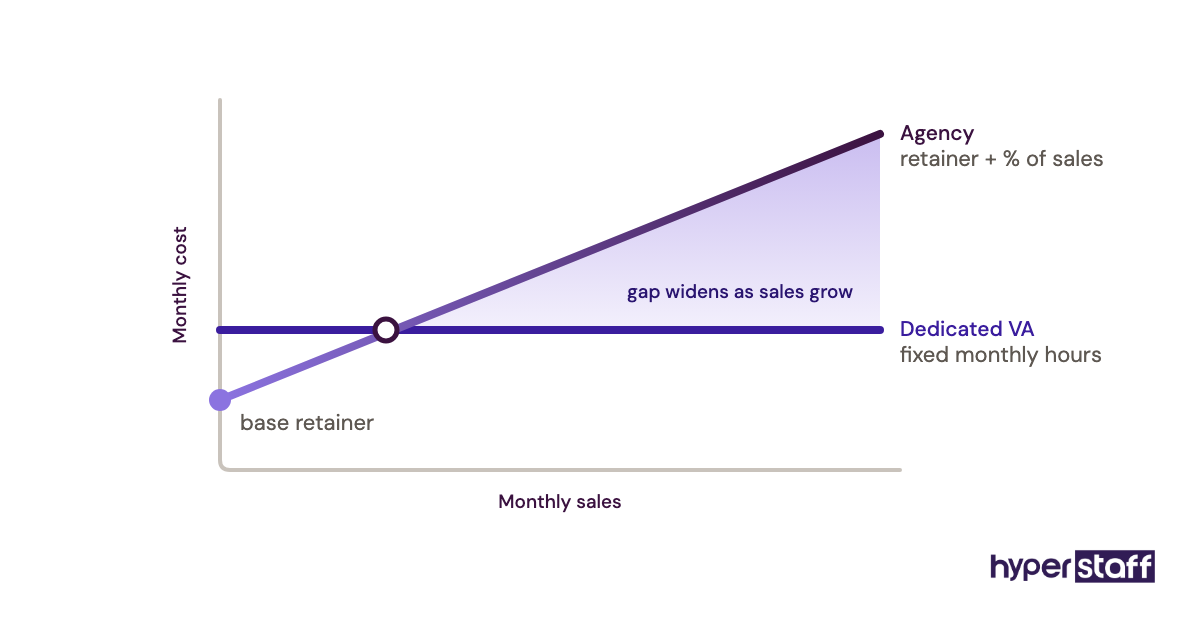
An Amazon agency runs strategy and usually charges a retainer or a percentage of sales. Its account manager often splits time across many brands, while a VA puts in hours on yours alone and follows your direction.
Amazon VA vs. an In-House E-commerce Hire
An in-house hire sits on your payroll with taxes, benefits and local salary rates. A remote VA does much of the same daily execution for less, a trade-off we cover in Amazon VA versus in-house staff.
The Benefits of an Amazon Virtual Assistant
- Daily account checks catch suppressed listings and policy warnings early.
- Labor cost drops well below a local e-commerce salary.
- Customer messages get answered inside Amazon's 24-hour window, which keeps response-time metrics clean.
- Time zone gaps can work for you, with ads and messages handled overnight.
- The owner gets hours back for sourcing, supplier talks and new launches.
The Drawbacks of an Amazon Virtual Assistant
- Setup takes real work, since the SOPs have to be written before anyone can follow them.
- Account access carries risk if permissions are too broad.
- A new VA needs a few weeks before they make good calls on ads on their own.
- Time zones can slow urgent replies during a suspension or a stockout.
Who Needs an Amazon Virtual Assistant?
Sellers who spend more than about 10 hours a week on repeat Seller Central tasks get the clearest payoff. The right hours and tier depend mostly on store size and how much of the work is judgment versus routine.
| Seller stage | Monthly bundle | Tier | First tasks to hand over |
|---|---|---|---|
| Under 10 SKUs, early sales | 40 hours | Essential | Messages, reviews requests, reports |
| 10 to 50 SKUs, steady FBA | 80 hours | Professional | Restock, listings, basic PPC |
| 50+ SKUs or several marketplaces | 160 hours | Professional or Expert | Full PPC, cases, launches |
| Brand with account health issues | 40 to 80 hours | Expert | Appeals, compliance, cleanup |
Brand-new sellers with no sales yet are the exception. Until you've run the store yourself for a while, you don't know which tasks repeat, so you have nothing to document.
Amazon Virtual Assistant Examples
The examples below show the work at task level. Good ones share a pattern: clear limits, a written process and a check by the owner.
Amazon VA Good Examples
Weekly Search-Term Harvesting
The VA pulls the search-term report every week and moves converting terms into exact-match campaigns. Terms that spent past a set limit with zero sales get added as negatives, and the owner sets that limit in writing.
Stranded Inventory Cleanup
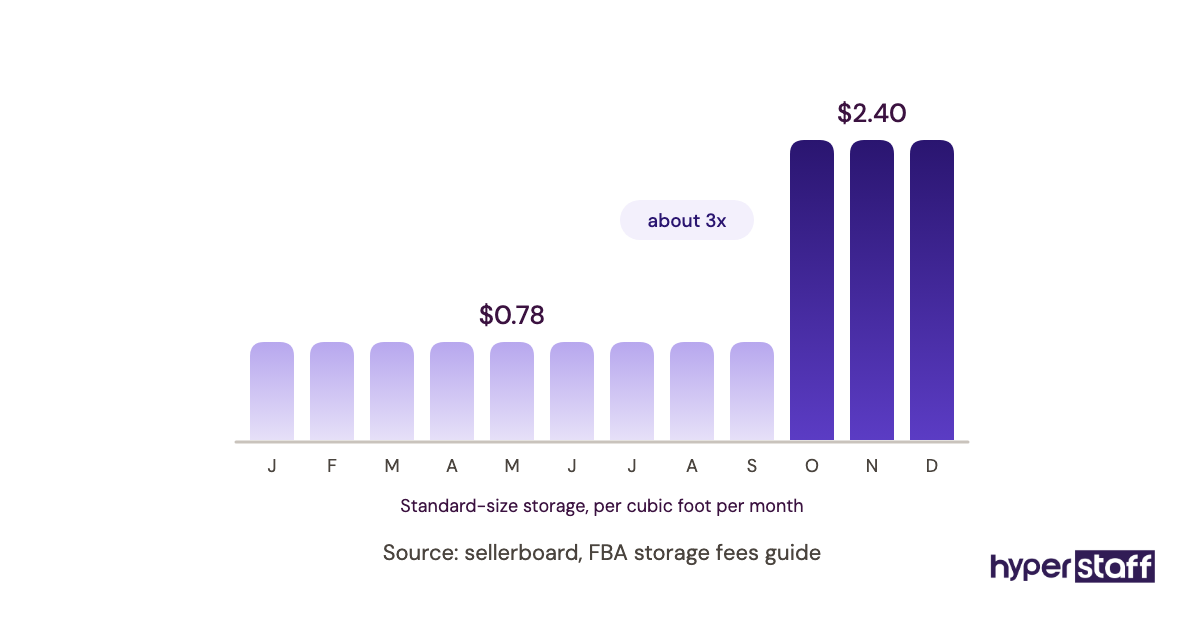
Stranded stock still costs FBA storage fees. A VA who checks the Fix Stranded Inventory page each week and relists or files removal orders stops that small leak before it grows.
Listing Change Monitoring
Amazon sometimes accepts catalog edits from other contributors, so a title or image can change without warning. A VA who compares live listings against a saved master copy each week catches those changes fast.
Amazon VA Bad Examples
Sharing the Owner's Main Login
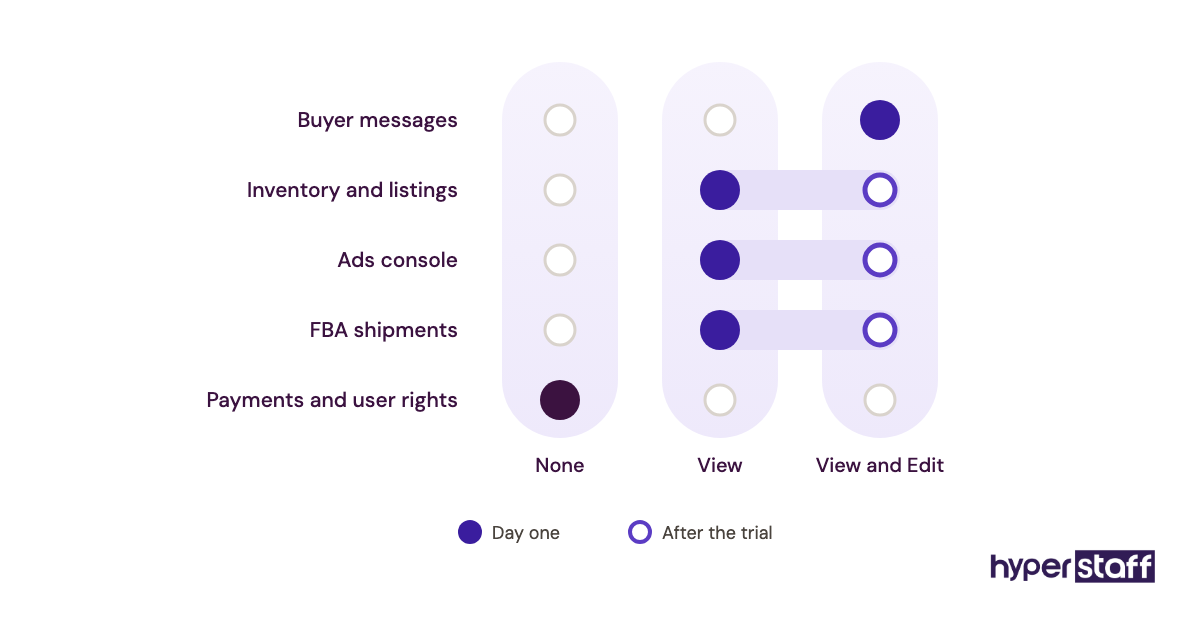
Handing over the primary email and password breaks the audit trail and puts the whole account at risk. Use User Permissions instead, every time.
Unlimited Bid Authority
A VA told to "grow sales" with no ACoS ceiling can double ad spend in a week. The fault sits with the brief. Our list of common Amazon VA hiring mistakes covers more of these.
Review Requests Outside Amazon's Rules
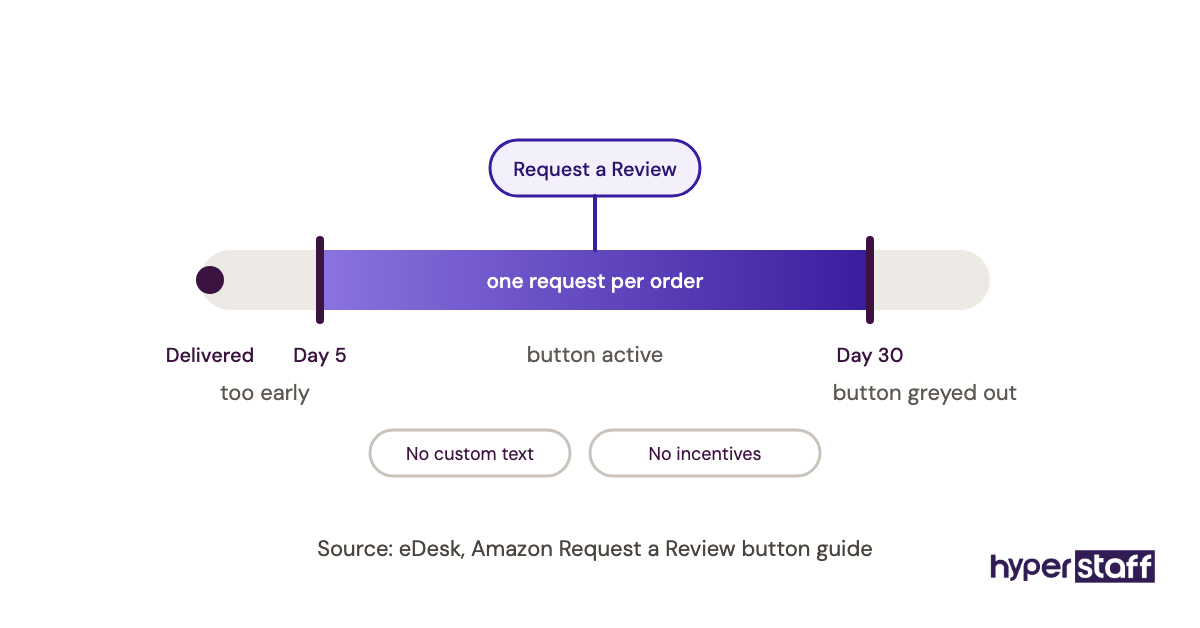
Messaging buyers to ask for a five-star review, or offering anything in return, breaks Amazon's review policies. Stick to the Request a Review button in Seller Central and nothing else.
Creating an Amazon VA Plan, Step-by-Step
A working Amazon VA plan has five parts, done in order: scope, hiring, onboarding, a trial period and then a handover of judgment work. Skipping the first step causes most of the problems that show up later.
Step #1: List the Tasks and Write the Role
Track your own Seller Central time for two weeks and note every task. Turn that list into a clear Amazon VA job description with hours, tools and limits.
Step #2: Hire for Proven Seller Central Work
Ask candidates to walk through a real task, such as reading a search-term report, during the interview. Our guide on hiring an Amazon VA covers sourcing and screening in full.
Step #3: Onboard With SOPs and Limited Access
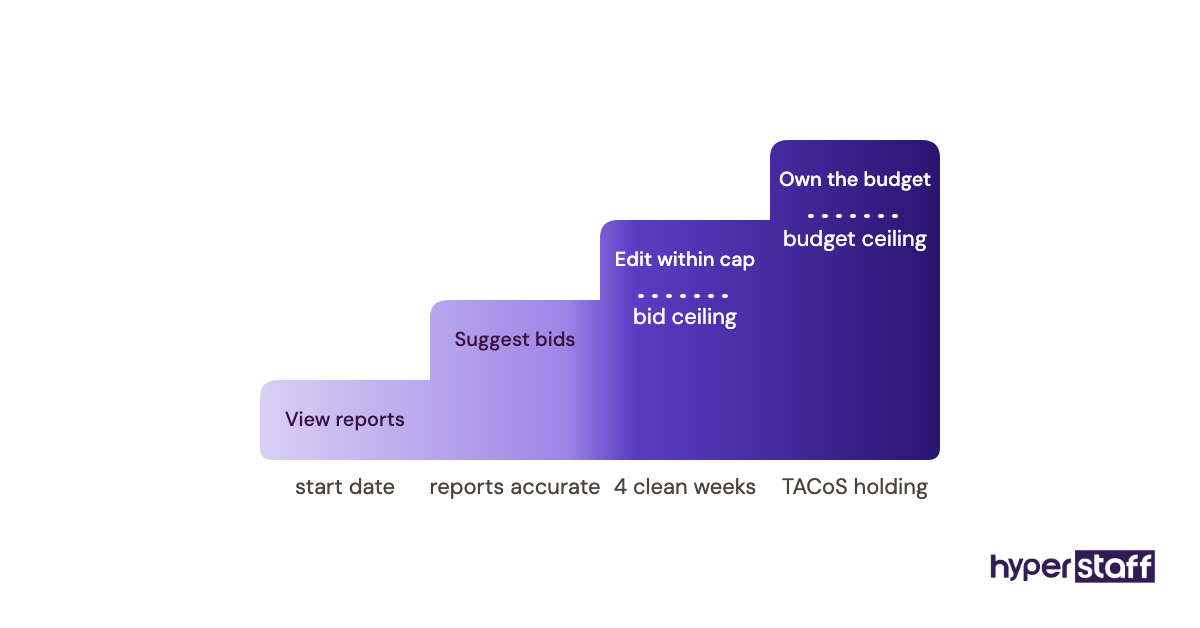
Set up a secondary user, share recorded walkthroughs, and start with view-only access on the ads console. A full checklist sits in our guide to onboarding an Amazon VA.
Step #4: Run a 30-Day Trial on Low-Risk Tasks
Start with messages, reports and listing audits. These tasks show attention to detail without risking ad budget.
Step #5: Hand Over Judgment Work in Stages
Move PPC and restock decisions over once the weekly reports are accurate for a month. Raise bid limits in small steps after that.
What Does an Effective Amazon VA Strategy Look Like?
An effective Amazon VA strategy gives the assistant ownership of outcomes, with clear limits on spend and access. The VA owns a set of numbers, like response time or stock cover, rather than a loose list of chores.
Ownership changes behavior. A VA who "does ads" waits for instructions, while one who owns a TACoS target starts flagging the campaigns that drag it up.
Practitioners disagree on one point: some sellers keep PPC strategy with the owner forever and give the VA only execution. That works for brands with thin margins, where one bad week hurts. Brands with healthy margins usually do better letting a trained VA test and adjust within a budget.
Amazon Virtual Assistant Tools and Software
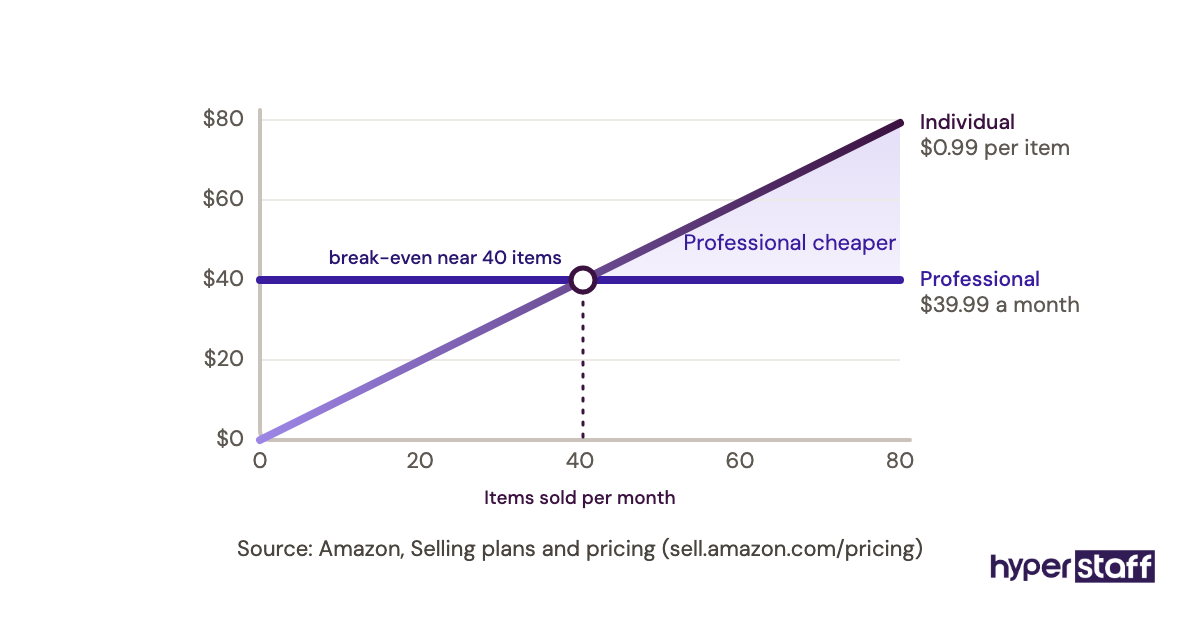
Seller Central is the core tool, and it comes with Amazon's Professional selling plan at $39.99 a month plus referral fees. Most VAs pair it with one research suite and a spreadsheet.
Helium 10 covers keyword research, listing tools and PPC management. Its paid plans run from about $99 to $359 a month, depending on tier and annual or monthly billing.
Jungle Scout leans toward product research and sales estimates, with entry plans in the $29 to $79 a month range depending on billing. Keepa tracks price and sales rank history, and its paid tier is a small monthly fee in euros.
Google Sheets still does a lot of the real work, from restock models to weekly reports. A full comparison sits in our list of Amazon VA tools.
9 Proven Amazon Virtual Assistant Tips and Best Practices
These practices cover the setup choices that decide whether a VA saves time or creates more of it.
- Give every VA their own secondary user login.
- Write an ACoS or TACoS ceiling before handing over any ad work.
- Keep a master copy of each listing in a shared sheet.
- Ask for one weekly report in a fixed format.
- Record screen videos of each task the last time you do it.
- Hand over low-risk tasks first, then ads, then cases.
- Set a response window for urgent alerts like suppressions.
- Store every SOP in one shared folder, not in chat threads.
- Review the account health page together once a month.
Overcoming Common Amazon VA Challenges
Most Amazon VA problems trace back to missing documentation. A VA without written rules guesses, and guesses on an Amazon account cost money.
Time zone gaps cause the second biggest friction. Agree on a short overlap window each day, even 30 minutes, for anything that needs a decision.
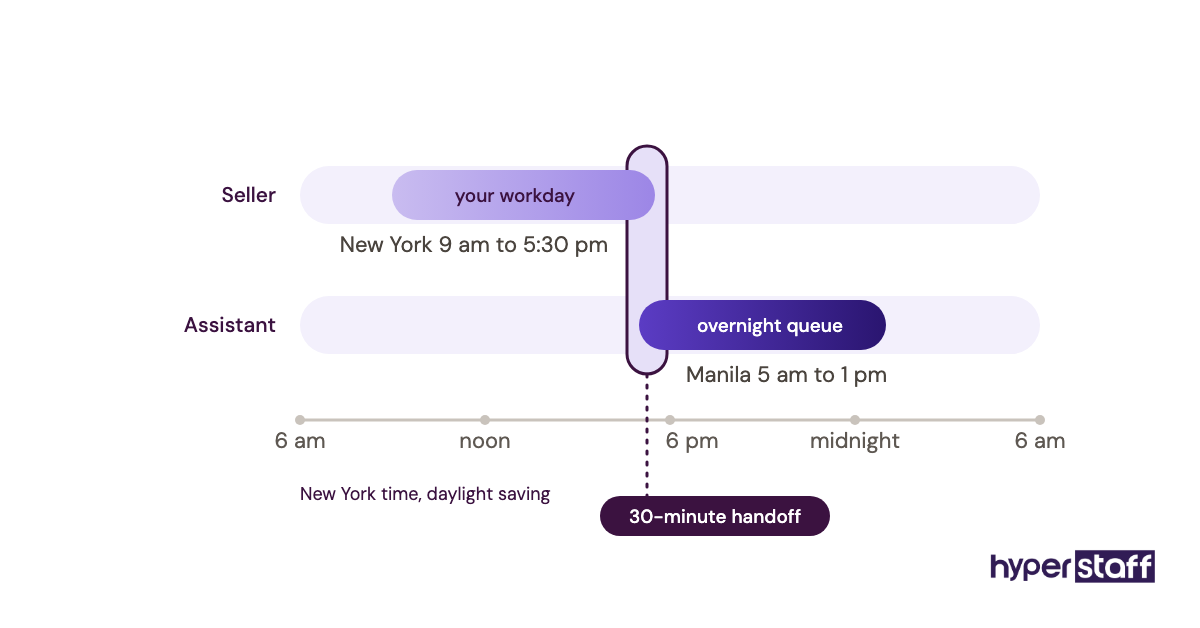
Turnover is the third risk, because a departing VA takes store knowledge with them. Keep SOPs current so a replacement can pick up within a week.
How to Measure Amazon VA Success
Measure an Amazon VA against the numbers they own. For ad work that's ACoS and TACoS, and for inventory it's weeks of stock cover and stockout days.
Customer service shows up in response time and the Account Health Rating. Listings show in suppressed listing count and conversion rate in the Business Report.
Track hours saved for yourself too. If you're still in Seller Central daily after two months, the handoff hasn't happened yet.
How Long Does an Amazon VA Take to Work?
Most Amazon VAs handle routine tasks well within 2 to 3 weeks. Judgment work like PPC changes usually takes 6 to 10 weeks to trust.
The gap comes from context. Reports are the same in every store, but knowing which of your campaigns are on purpose takes time.
Expect a dip in week one, when you spend more time explaining than you save. That dead zone usually ends by week three.
How Much Does an Amazon Virtual Assistant Cost?
An Amazon virtual assistant usually costs about $3 to $15 an hour offshore, depending on experience and region. A US in-house e-commerce hire costs several times that once taxes and benefits are added. Our full guide to Amazon VA cost breaks down each model.
| Option | Hourly rate | Monthly cost (160 hours) | Notes |
|---|---|---|---|
| Hyperstaff Essential (0 to 2 years) | From $3 | From about $480 | Routine tasks, messages, reports |
| Hyperstaff Professional (2 to 5 years) | From $6 | From about $960 | Listings, restock, PPC execution |
| Hyperstaff Expert (5+ years) | From $12 | From about $1,920 | PPC strategy, appeals, launches |
| Freelance marketplace VA | About $5 to $25 | About $800 to $4,000 | Vetting and replacement on you |
| US in-house e-commerce hire | About $25 to $40 plus benefits | About $4,500 to $8,000 | Payroll, taxes, local hiring |
Important: Hyperstaff prices shown are starting averages, not fixed quotes. Your final cost depends on the hours, tier and type of Amazon work your store needs.
Is an Amazon Virtual Assistant Worth It?
Yes, an Amazon virtual assistant is worth it for most established sellers, and it can be one of the best returns in the business when the tasks are documented and the VA stays long enough to learn your store.
Here's a simple calculation. An 80-hour Professional bundle from $6/hour costs about $480 a month, while the same 80 hours of your own time, valued at $50 an hour, is worth $4,000.
The math only holds if those hours go somewhere useful, like sourcing or a new launch. If they disappear into other admin, the payoff shrinks. We weigh this in more depth in whether an Amazon VA pays off.
How to Choose an Amazon VA Agency
Choose an Amazon VA agency on vetting depth, replacement terms and how it handles store knowledge. Price matters less than those, because a cheap VA who leaves in month two costs you the whole onboarding again.
Ask how candidates were tested on Seller Central, and run your own skills check too. Our list of Amazon VA interview questions gives you a ready set.
At Hyperstaff, a free replacement arrives in 5 to 7 business days, briefed from your Operations Vault, where your SOPs, tools and context are written down and kept current. Every client also gets a dedicated account manager.
Amazon VA Statistics, Trends and Future Predictions
Third-party sellers accounted for about 60% of paid units on Amazon in a recent quarter, per Marketplace Pulse, down slightly from a 62% peak. Amazon's own first-party retail has been gaining back some share, partly through grocery.
The trend for VAs is toward specialists. Sellers increasingly hire a PPC-focused VA and a separate operations VA instead of one person doing everything.
Our prediction, held loosely: as Amazon automates more of the basic listing and ad tasks, VA demand will shift to people who can audit what the automation does. How fast that happens is hard to call.
Amazon Virtual Assistants and AI
AI now writes listing drafts and suggests bids inside Seller Central and the Amazon Ads console. Amazon's shopping assistant, Rufus, also answers buyer questions using listing content, which raises the stakes on accurate bullets and A+ Content.
A VA's job moves from typing to checking. AI-drafted titles often break category style guides or add claims you can't back up, and someone has to catch that before it goes live.
We're confident AI will cut the hours routine listing work needs. We're less sure it'll touch case work and appeals soon, since those depend on reading Amazon's replies closely and pushing back with the right evidence.
Disclaimer : This article is for general information only and isn't legal, financial or tax advice. Pricing, fees and Amazon policies change, so check current terms with Amazon and each tool provider before acting. Hyperstaff isn't affiliated with or endorsed by Amazon or any tool named here.
Common questions
Can an Amazon virtual assistant get my account suspended?
Yes, if they break Amazon policy, such as asking buyers for positive reviews. Give clear rules in writing and use a secondary login so every action is traceable.
Does an Amazon VA need my Seller Central password?
No. Add them as a user through User Permissions, which gives them their own login and only the access you choose.
Can one Amazon virtual assistant handle PPC and customer service?
Yes, on smaller stores with fewer than 30 SKUs. Larger catalogs usually need a separate PPC specialist, since ad work grows fast with each new product.
Is an Amazon VA the same as an Amazon FBA VA?
Mostly. An FBA VA focuses on inventory, shipments and warehouse issues, while a general Amazon VA may also cover ads, listings and messages.
How many hours a week does an Amazon virtual assistant need?
Most small stores start with 10 to 20 hours a week. Stores with 50+ SKUs or several marketplaces often need a full-time VA at 40 hours.
Book a free 15 min call
We place a pre-vetted specialist in 5 business days, fully managed, from $3/hour.