Ecommerce Virtual Assistant Cost: Rates, Retainers and Real Budgets
Hourly rates, monthly retainers, per-task costs and the hidden extras that decide what an ecommerce virtual assistant really costs.
On this page
- Ecommerce Virtual Assistant Retainer Costs
- Ecommerce Virtual Assistant Cost by Deliverable
- Hyperstaff Cost vs. Other Ecommerce VA Agencies
- Retainer Costs
- Cost by Deliverable
- Ecommerce Virtual Assistant Pricing Models
- Agency vs. Freelancer vs. In-House for Ecommerce Support
- How Much Does an Ecommerce Virtual Assistant Cost by Country?
- What Drives Ecommerce Virtual Assistant Costs?
- #1 Cost Driver
- #2 Cost Driver
- #3 Cost Driver
- #4 Cost Driver
- Ecommerce Virtual Assistant Cost and AI
- The Hidden Costs of an Ecommerce Virtual Assistant
- How Much Should You Budget for an Ecommerce Virtual Assistant?
- Calculating Ecommerce Virtual Assistant ROI
- How to Compare Ecommerce Virtual Assistant Agency Pricing
- Red Flags in Agency Pricing
- When to Walk Away
- How to Reduce Ecommerce Virtual Assistant Costs Without Sacrificing Quality
- Step 1
- Step 2
- Step 3
- Step 4
- Step 5
- Is an Ecommerce Virtual Assistant Worth the Investment?
- FAQs
Spend Less Per Order, Keep More Margin
Hyperstaff places pre-vetted dedicated ecommerce virtual assistants from $3 an hour, with 70+ assistants placed for 30+ clients across five regions. Your specialist is matched in 5 business days, backed by a dedicated account manager, and replaced free in 5 to 7 business days if the fit is wrong.
Ecommerce Virtual Assistant Retainer Costs
An ecommerce virtual assistant retainer usually costs $200 to $2,400 a month offshore and $1,000 to $7,200 through a US-based agency, depending on hours. The figures below are market averages for prepaid monthly blocks.
| Hours per month | Offshore freelancer | Offshore agency | US-based agency | Typical scope |
|---|---|---|---|---|
| 40 | $200–480 | $320–600 | $1,000–1,800 | Listings, support inbox |
| 80 | $400–960 | $640–1,200 | $2,000–3,600 | Support plus orders |
| 120 | $600–1,440 | $960–1,800 | $3,000–5,400 | Multi-channel ops |
| 160 | $800–1,920 | $1,280–2,400 | $4,000–7,200 | Full store operations |
Most stores start at 40 or 80 hours. A block that size fits listing uploads, a support inbox and order exceptions, the core of what an ecommerce virtual assistant does in month one.
Unused hours are the catch buyers miss. Many agencies let them expire at month end, so a 160-hour block bought for peak season can turn into paid idle time by February.
Ecommerce Virtual Assistant Cost by Deliverable
Per-deliverable pricing for an ecommerce virtual assistant ranges from under $1 for a processed order to about $150 for a built email campaign. The numbers are averages, worked out from typical hourly rates and the time each task takes.
| Deliverable | Freelancer | Agency | In-House | Turnaround |
|---|---|---|---|---|
| Product listing upload (per SKU) | $1–3 | $1.50–4 | $4–8 | 10–20 min |
| Product description (per SKU) | $5–15 | $8–20 | $15–30 | 20–40 min |
| Image edit or background removal | $0.50–2 | $1–3 | $3–6 | 5–10 min |
| Customer support ticket | $0.75–2 | $1–3 | $3–6 | Under 24 hours |
| Order processing (per order) | $0.30–1 | $0.50–1.50 | $1.50–3 | Same day |
| Return or refund case | $1–3 | $1.50–4 | $4–8 | 1–2 days |
| Weekly inventory reconciliation (500 SKUs) | $40–100 | $60–150 | $150–300 | 4–8 hours |
| Amazon listing optimization (per ASIN) | $10–30 | $15–40 | $30–60 | 1–2 hours |
| Social post scheduled | $2–6 | $3–8 | $8–15 | 15–30 min |
| Email campaign build | $25–75 | $40–100 | $80–150 | 2–4 hours |
| Supplier purchase order and follow-up | $3–8 | $5–10 | $10–20 | 1–3 days |
| Monthly sales report | $30–80 | $50–120 | $100–200 | 3–6 hours |
Unit pricing is best used as a sanity check. Few assistants bill this way, since most store work is a stream of small, mixed ecommerce virtual assistant tasks that resist tidy units.
Product descriptions show the widest spread. A template-filled description and a researched, keyword-led one can carry the same price on a quote, and only one of them sells.
Hyperstaff Cost vs. Other Ecommerce VA Agencies
Hyperstaff rates start at $3, $6 and $12 an hour across three experience tiers. Typical offshore agencies charge roughly $6 to $24 for the same experience levels, and US-based agencies run $25 to $50.
| Experience tier | Hyperstaff (from) | Typical offshore agency | US-based agency | You save (vs. offshore midpoint) |
|---|---|---|---|---|
| Essential (0–2 yrs) | $3/hr | $6–10/hr | $25–35/hr | ~62% |
| Professional (2–5 yrs) | $6/hr | $10–14/hr | $30–40/hr | ~50% |
| Expert (5+ yrs) | $12/hr | $16–24/hr | $38–50/hr | ~40% |
Retainer Costs
Hyperstaff sells monthly bundles of 40, 80 or 160 hours. Here's how the Professional tier lines up against a typical offshore agency retainer.
| Monthly bundle | Hyperstaff Professional (from) | Typical offshore agency |
|---|---|---|
| 40 hours | $240 | $320–600 |
| 80 hours | $480 | $640–1,200 |
| 160 hours | $960 | $1,280–2,400 |
Paying quarterly takes 10% off Hyperstaff bundles. At that rate, 160 Professional hours come to about $864 a month.
Cost by Deliverable
Hyperstaff bills hours, so per-item cost depends on which tier does the work. At the Professional rate, a 15-minute listing upload works out to about $1.50, and a three-hour Klaviyo campaign build to about $18.
Expert hours earn their price on judgment work like Amazon account health cases or ad spend checks. Essential hours suit repetitive data entry, order tagging and image resizing.
Important: Hyperstaff prices shown here are starting averages. Your actual rate depends on the tier, hours and scope your store needs, which we confirm on a free discovery call.
Ecommerce Virtual Assistant Pricing Models
Ecommerce virtual assistants are priced in five common ways:
- Hourly: pay for logged time. Good for uneven workloads.
- Monthly bundle: prepaid hours (40, 80 or 160) at a lower rate.
- Full-time dedicated: one person, about 160 hours, your store only.
- Per task: fixed price per listing or ticket. Common with freelancers.
- Hybrid: a base retainer plus per-unit fees in peak months.
Agency vs. Freelancer vs. In-House for Ecommerce Support
Freelancers win on hourly price, and an in-house hire gives the most control at roughly $3,000 to $4,500 a month in US wages before benefits. A good agency lands in between on cost and removes two growth killers: one person vanishing mid-season and slow rehiring.
For teams that want to scale fast, that trade usually pays off. Our ecommerce VA vs in-house comparison shows where an employee still makes more sense.
How Much Does an Ecommerce Virtual Assistant Cost by Country?
An ecommerce virtual assistant costs $4 to $10 an hour freelance in the Philippines or India, $7 to $15 in Latin America, and $15 to $40 in the US, UK, EU or Australia. Agency rates add a margin for vetting, management and replacement.
| Region | Freelance hourly | Agency hourly | Full-time month (agency) | Known for |
|---|---|---|---|---|
| United States | $15–35 | $25–45 | $4,000–7,200 | Native market context |
| United Kingdom | $18–35 | $28–45 | $4,500–7,200 | UK marketplaces, VAT |
| Western EU | $18–35 | $28–45 | $4,500–7,200 | Multilingual stores |
| Australia | $20–40 | $30–50 | $4,800–8,000 | AU business hours |
| Philippines | $4–10 | $6–15 | $960–2,400 | Support, Shopify ops |
| Latin America | $7–15 | $10–22 | $1,600–3,500 | US time-zone overlap |
| India | $4–10 | $6–15 | $960–2,400 | Catalog and data work |
| Eastern Europe | $10–20 | $15–28 | $2,400–4,500 | Analytics, technical setups |
UK, EU and Australian figures are converted to US dollars, so they drift a little with exchange rates. Local in-house wages in those markets sit close to US levels once employer costs are added.
The time-zone gap often costs more than the rate gap. A Manila-based assistant staffing live chat for a US store works night shifts, and night-shift talent prices higher and is harder to keep.
What Drives Ecommerce Virtual Assistant Costs?
Experience tier, hours and region set the base price of an ecommerce virtual assistant. The four drivers below surprise buyers most, because they rarely appear on a quote.
#1 Cost Driver: How Many Sales Channels You Run
Each extra sales channel adds more hours than its order volume suggests. A store on Shopify, Amazon and Etsy needs inventory synced three ways, three sets of listing rules and three support inboxes.
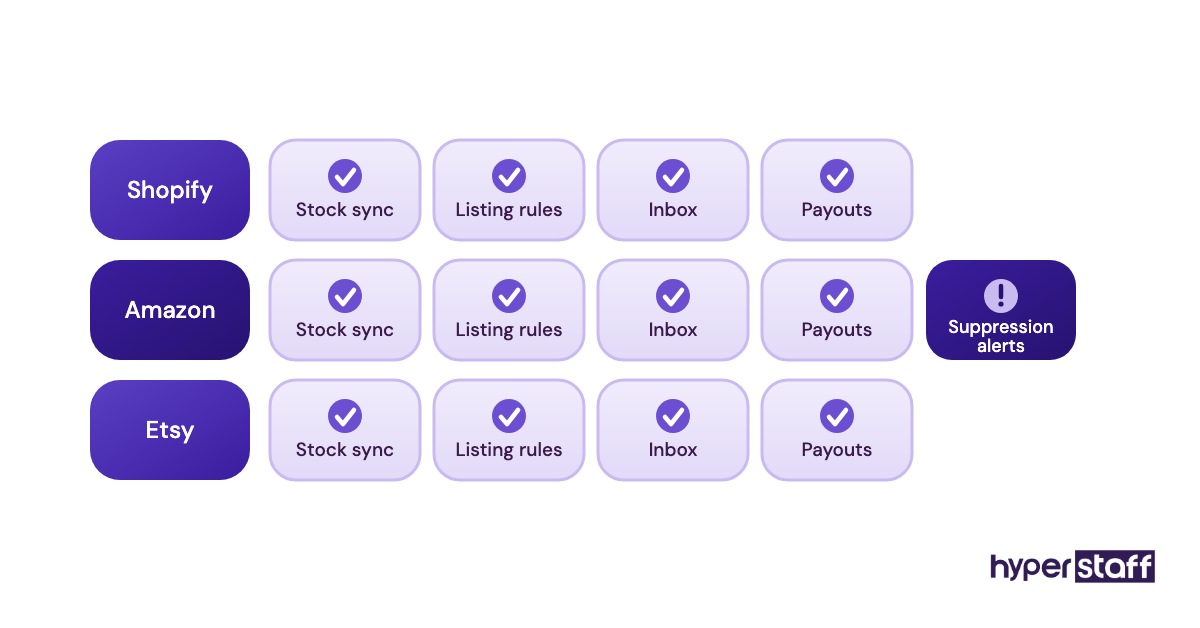
Amazon is the expensive one. Seller Central's listing policies, suppression alerts and case logs take weeks to learn, so expect Professional or Expert rates there even when the Shopify side could run at an entry tier.
#2 Cost Driver: SKU Churn
SKU churn, how often products are added, changed or retired, drives listing hours harder than catalog size. A stable 2,000-SKU hardware store can need fewer hours than a 300-SKU fashion brand dropping new colorways every week.
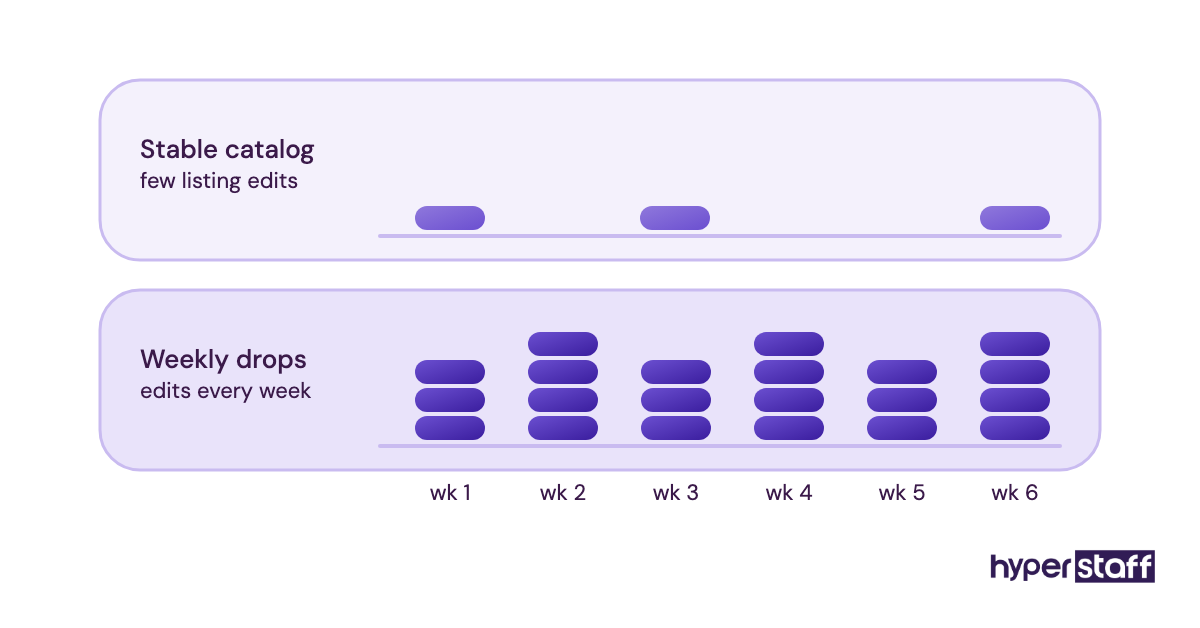
Ask yourself how many listings change per month. Price from that number.
#3 Cost Driver: Live-Chat Coverage Hours
Live chat is priced by the clock, so it costs more per useful hour than email support. An assistant covering chat from 9 to 5 Eastern sits idle between conversations, and you pay for the waiting time.
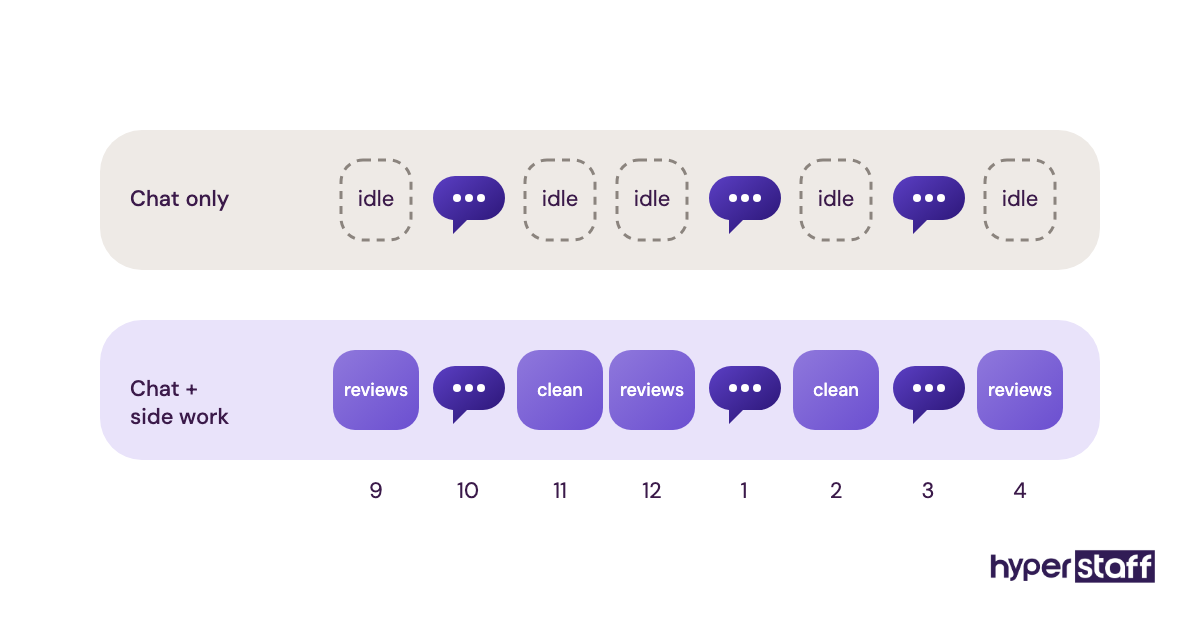
Many stores pair chat with low-urgency work like review replies or listing cleanup in the same shift. It works only if the assistant drops that work the second a chat lands.
#4 Cost Driver: Undocumented Processes
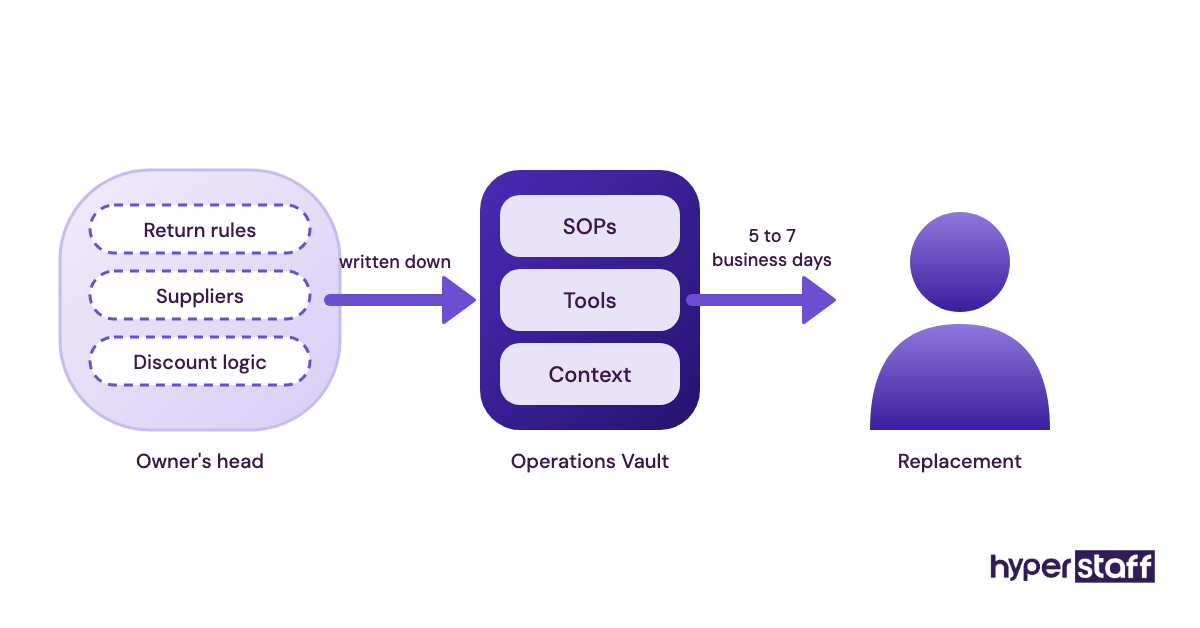
Missing documentation is the cost driver nobody quotes. When return rules, supplier contacts and discount logic live in the owner's head, every new assistant pays a learning tax in billed hours.
Hyperstaff keeps an Operations Vault for each client, with SOPs, tools and context written down and maintained. A replacement assistant is briefed from it in 5 to 7 business days, so the learning tax gets paid once.
Ecommerce Virtual Assistant Cost and AI
AI tools cut the cost of some ecommerce virtual assistant work, mostly first drafts of product descriptions, ticket replies and data cleanup. A person still has to check that output against your store's policies and stock levels.
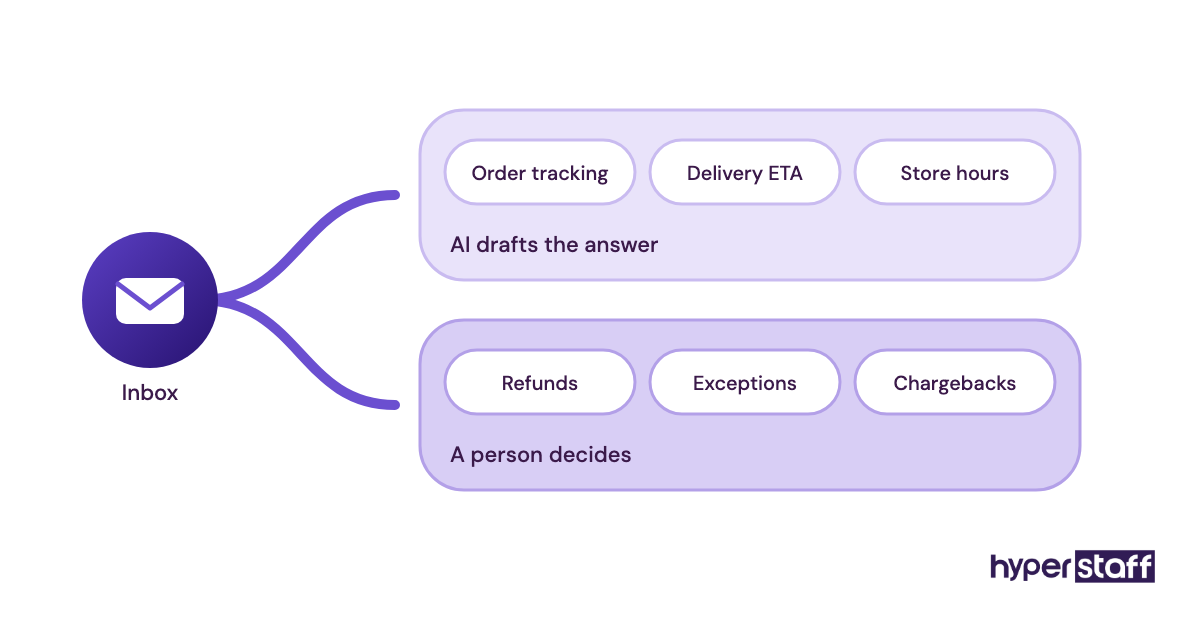
Shopify Magic, Gorgias AI Agent and Klaviyo's built-in AI features draft in seconds what used to take 20 minutes. The catch is error cost: a wrong refund promise or an invented product spec creates returns and chargebacks.
Practitioners still argue about where the line sits. Some owners let AI answer "where is my order" tickets unreviewed, while others block any AI reply that touches money.
Our view is simple. Automate tracking questions, and keep refunds and exceptions with a person.
On cost, AI changes the mix more than the total. You may need fewer Essential hours for repetitive drafting and more Professional hours for review, which can keep the bill flat while output rises.
Most of these features already sit inside the tools an ecommerce VA uses. Check what your current plans include before paying for a separate AI subscription.
The Hidden Costs of an Ecommerce Virtual Assistant
The hidden costs of an ecommerce virtual assistant come from setup, software and your own time:
- Ramp-up: two to four weeks at reduced output.
- Software seats: often $10 to $50 per paid app a month.
- Your review time: three to five hours a week early on.
- Replacement gaps when a freelancer quits mid-season.
- Transfer fees: 1% to 4% on international payments.
- Live mistakes on listings, prices or refunds.
A tight ecommerce VA onboarding plan shrinks the first and third items most.
How Much Should You Budget for an Ecommerce Virtual Assistant?
Budget $500 to $2,500 a month for a full-time offshore ecommerce virtual assistant, or $250 to $1,200 for part-time hours, plus 10% to 15% for software and setup. US-based agency support starts near $1,000 a month part-time.
Start sizing from the work itself. Count weekly orders, tickets and listing changes, multiply by the minutes each takes, then add 20% for exceptions.
Writing an ecommerce VA job description before you price anything forces that count. It also stops scope from creeping after the contract is signed.
Expect a dead zone between signing and full output. Week one goes mostly to access requests and tool logins, and steady output usually arrives in week three or four.
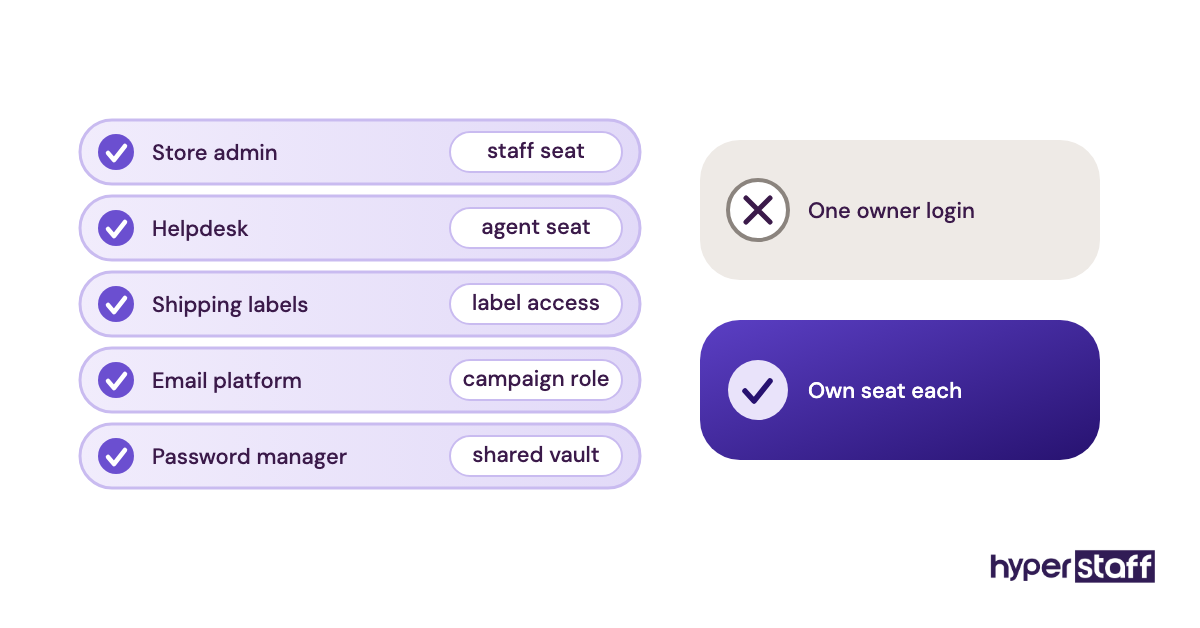
With Hyperstaff, work starts the day of the 30-minute kickoff call or the next morning. Speed after that still depends on how fast your logins arrive.
Calculating Ecommerce Virtual Assistant ROI
Ecommerce virtual assistant ROI is the value created minus total cost, divided by total cost. Value created means owner hours recovered at your hourly worth, plus any revenue the assistant adds.
Run the math with simple inputs. Say your time is worth $60 an hour and an 80-hour bundle costs $480.
If 50 of those hours replace work you used to do, that's $3,000 of time back for $480. The ROI comes to about 525%.
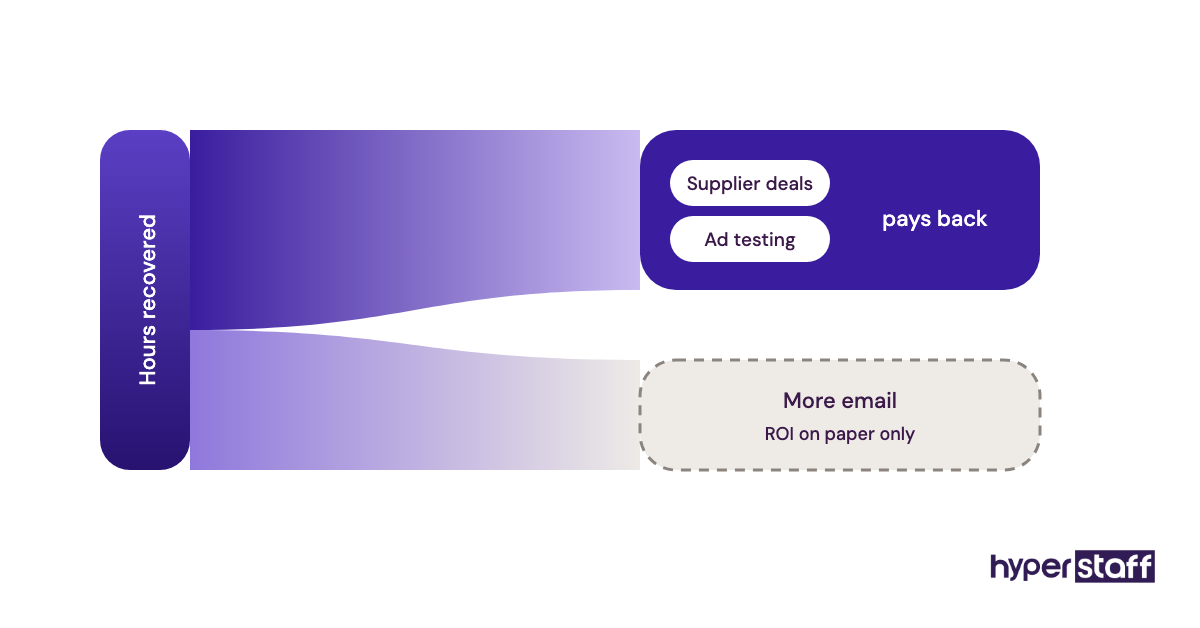
The hard part is honesty about freed hours. If recovered time fills up with more email instead of supplier deals or ad testing, the ROI is real on paper and zero in the bank account.
Track four numbers monthly: cost per order handled, support first-response time, listing errors caught and owner hours recovered. The trend matters more than any single month.
How to Compare Ecommerce Virtual Assistant Agency Pricing
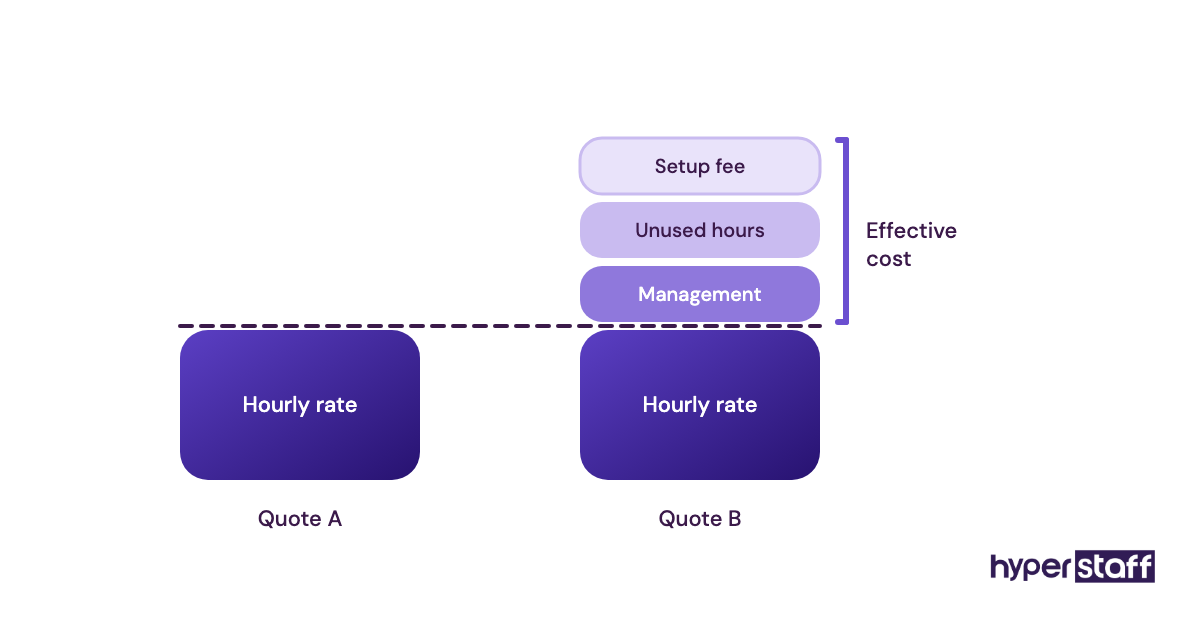
Compare ecommerce virtual assistant agency pricing on effective cost per productive hour, after replacement terms, minimum commitments and management are counted. Two quotes with the same hourly rate can differ by hundreds a month once those land.
Put the same questions to every agency. Who manages the assistant day to day, what happens if they leave, do unused hours roll over, is there a setup fee, and can you interview candidates?
For that last step, our list of ecommerce VA interview questions gives you a ready script.
Red Flags in Agency Pricing
- A rate far below every regional range, with no tier explained
- Setup or "recruitment" fees on top of monthly billing
- Long lock-in contracts before any trial period
- No written replacement timeline
- Hours billed with no time log or task report
- A shared assistant sold as dedicated
When to Walk Away
Walk away when an agency won't put replacement terms, hour rollover or notice periods in writing. Verbal promises on those points are where most pricing disputes start.
Leave as well if nobody can tell you who your assistant reports to. Stores that skip that check tend to repeat the usual ecommerce VA mistakes, starting with paying for hours nobody reviews.
How to Reduce Ecommerce Virtual Assistant Costs Without Sacrificing Quality
Step 1: Split Work by Skill Tier
Put repetitive tasks like order entry and image resizing on Essential hours, and keep Amazon cases or ad checks on Professional or Expert time. Paying one blended senior rate for everything is the most common overspend.
Step 2: Record SOPs Before Day One
Record a short screen video for each recurring task, then turn it into a checklist. Fewer questions in week one means fewer billed hours spent on explanation.
Step 3: Hire for Your Biggest Channel
An assistant who already knows Shopify admin or Seller Central skips weeks of paid learning. Our guide on hiring an ecommerce VA lists the skills worth screening for.
Step 4: Batch Low-Urgency Tasks
Group review replies, listing fixes and supplier follow-ups into fixed daily blocks. Constant interruptions burn billed minutes on every switch between tasks.
Step 5: Prepay Once the Fit Is Proven
Run one month on a smaller bundle, then move to quarterly billing once output is steady. At Hyperstaff, paying quarterly cuts the rate by 10%.
Is an Ecommerce Virtual Assistant Worth the Investment?
Yes, for stores with steady order volume, an ecommerce virtual assistant is one of the highest-ROI hires available. At offshore rates, one recovered owner hour often pays for five to ten assistant hours.
The return depends on handing over real work: support, listings, order exceptions and reporting. Our take on whether an ecommerce VA is worth it walks through the cases where it isn't yet.
Disclaimer: This article is for general information only. Rates and figures are estimates that vary by provider, region and scope, and they do not form a quote or professional financial, tax or legal advice. Confirm current pricing and terms directly before making hiring decisions.
Common questions
Do ecommerce virtual assistants charge more during Black Friday?
Some do. Freelancers often add 25% to 50% for holiday overtime, while agencies usually bill extra hours at the normal rate. Book peak-season hours a month or two early, because good assistants fill up fast.
Can I hire an ecommerce VA for just 10 hours a week?
You can. A 40-hour monthly bundle works out to about 10 hours a week, which suits a store that needs listing updates and a daily support check. Below that, response times tend to slip.
Do I pay taxes or benefits for an offshore ecommerce virtual assistant?
Usually no, when you hire through an agency, since the assistant isn't your employee. The agency handles their pay and local obligations. Confirm your own reporting rules with an accountant.
Is a Shopify virtual assistant cheaper than an Amazon one?
Often, yes. Shopify admin work is easier to learn, so entry-tier assistants manage it well. Amazon Seller Central needs policy knowledge and case handling, which pushes most stores toward mid or senior rates.
Are ecommerce virtual assistant rates negotiable?
It depends on the provider. Freelancers often trade a lower rate for guaranteed monthly hours, and agencies tend to discount through longer billing terms, such as quarterly prepayment, instead of cutting the hourly price.
Book a free 15 min call
We place a pre-vetted specialist in 5 business days, fully managed, from $3/hour.