How Much Does an Executive Virtual Assistant Cost?
Hourly rates, monthly retainers, regional pricing and the hidden costs that decide what an executive virtual assistant really costs.

On this page
- What Do Executive Virtual Assistant Retainers Cost?
- Executive Virtual Assistant Cost by Deliverable
- Hyperstaff Cost vs. Other Executive Virtual Assistant Agencies
- How Are Executive Virtual Assistants Priced?
- Agency vs. Freelancer vs. In-House for Executive Virtual Assistance
- How Much Does an Executive Virtual Assistant Cost by Country?
- What Drives Executive Virtual Assistant Costs?
- How Is AI Changing Executive Virtual Assistant Cost?
- The Hidden Costs of an Executive Virtual Assistant
- How Much Should You Budget for an Executive Virtual Assistant?
- How Do You Calculate Executive Virtual Assistant ROI?
- How Do You Compare Executive Virtual Assistant Agency Pricing?
- How to Reduce Executive Virtual Assistant Costs Without Sacrificing Quality
- Is an Executive Virtual Assistant Worth the Investment?
- FAQs
💡 Key Takeaways:
1) An executive virtual assistant costs about $8 to $25 per hour through an offshore agency and $40 to $75 per hour through a US-based provider, so a full-time month runs roughly $1,300 to $11,000 depending on region and seniority.
2) The biggest price swings come from decision rights over the calendar, live time zone overlap, the number of executives supported and access to confidential material, more than from the task list itself.
3) Onboarding hours, replacement gaps and unused retainer hours often decide the true monthly cost, so compare providers on total spend for the same hours and on written replacement terms.
Buy Back Executive Hours That Earn Revenue
Hyperstaff's executive virtual assistant services have placed 70+ pre-vetted assistants with 30+ clients, with Professional-tier specialists from $6 per hour and Expert-tier specialists from $12 per hour. You get one dedicated person who learns your business, a named account manager and placement in 5 business days, and the pricing below shows exactly where that sits against the market.
What Do Executive Virtual Assistant Retainers Cost?
Executive virtual assistant retainers cost roughly $240 to $3,000 a month through an offshore agency and $1,000 to $9,500 a month through a US-based agency, depending on the hour block. The figures below are market averages for monthly retainers, which is how most providers sell executive support.
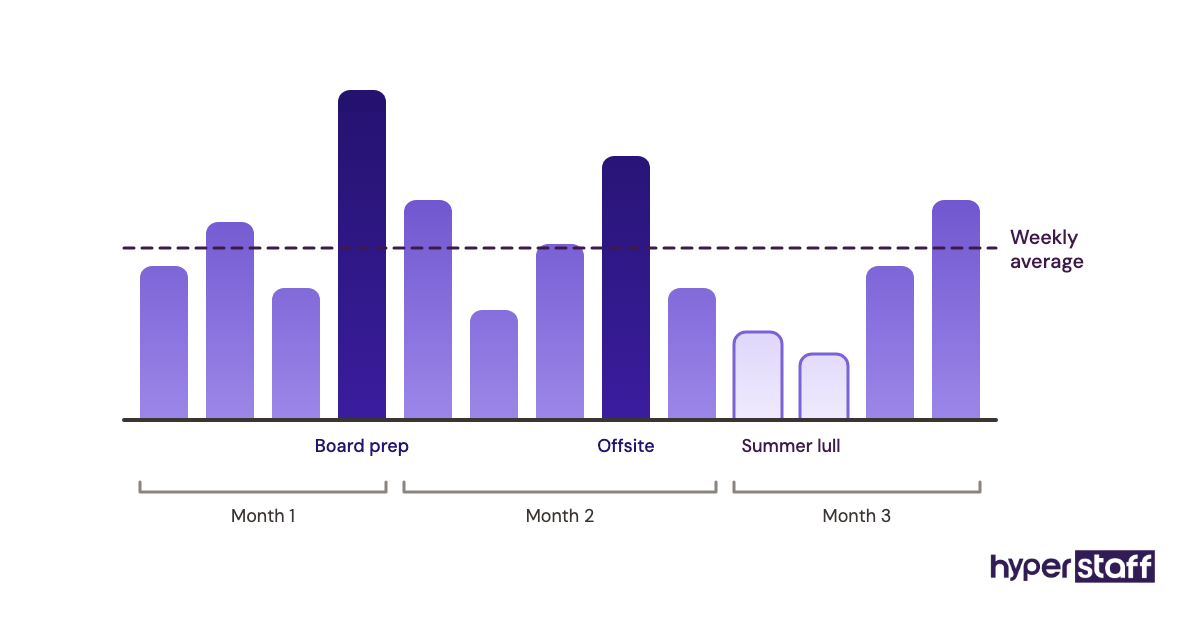
Retainers are priced by hours because executive work is uneven. A board week can eat 30 hours, and a slow stretch in late summer might use 12.
| Retainer size | Hours/month | Offshore agency | US-based agency | Freelancer (US) | Best for |
|---|---|---|---|---|---|
| Light | 20 | $240–$400 | $1,000–$1,600 | $600–$1,500 | Inbox and calendar |
| Part-time | 40 | $400–$800 | $1,800–$2,800 | $1,200–$3,000 | One founder |
| Half-time | 80 | $800–$1,500 | $3,400–$5,200 | $2,400–$6,000 | Exec plus projects |
| Full-time | 160 | $1,500–$3,000 | $6,000–$9,500 | $4,800–$12,000 | C-suite, board duties |
A full-time retainer gives you something a part-time one can't: an assistant who's online when a flight gets cancelled at 6 p.m. If you're still working out what an executive virtual assistant does, start at 40 hours and watch how fast the block fills.
Executive Virtual Assistant Cost by Deliverable
Per-deliverable pricing for an executive virtual assistant ranges from about $15 for one set of meeting notes to $1,800 for a fully coordinated offsite. These are averages drawn from common freelancer, agency and in-house rates, and the In-House column reflects loaded salary cost spread across the hours each job takes.
| Deliverable | Freelancer | Agency | In-House | Turnaround |
|---|---|---|---|---|
| Daily inbox triage (per month) | $400–$1,200 | $300–$1,800 | $1,500–$2,500 | Daily |
| Calendar management (per month) | $300–$900 | $250–$1,400 | $1,200–$2,000 | Same day |
| Domestic travel itinerary | $40–$120 | $30–$150 | $90–$180 | 1–2 days |
| International multi-city trip | $150–$400 | $100–$450 | $250–$500 | 2–4 days |
| Board meeting prep pack | $250–$700 | $200–$900 | $500–$1,000 | 3–5 days |
| Meeting notes and action items | $15–$60 | $15–$80 | $45–$90 | Same day |
| Monthly expense reconciliation | $100–$300 | $80–$350 | $200–$400 | 2–3 days |
| Investor update draft | $150–$450 | $120–$500 | $300–$600 | 2–3 days |
| Market or vendor research brief | $120–$400 | $100–$450 | $250–$550 | 2–5 days |
| CRM or contact list cleanup | $200–$800 | $150–$900 | $450–$1,200 | 1–2 weeks |
| Offsite or event coordination | $500–$1,500 | $400–$1,800 | $1,000–$2,500 | 3–6 weeks |
| SOP documentation (per process) | $60–$200 | $50–$250 | $150–$300 | 2–4 days |
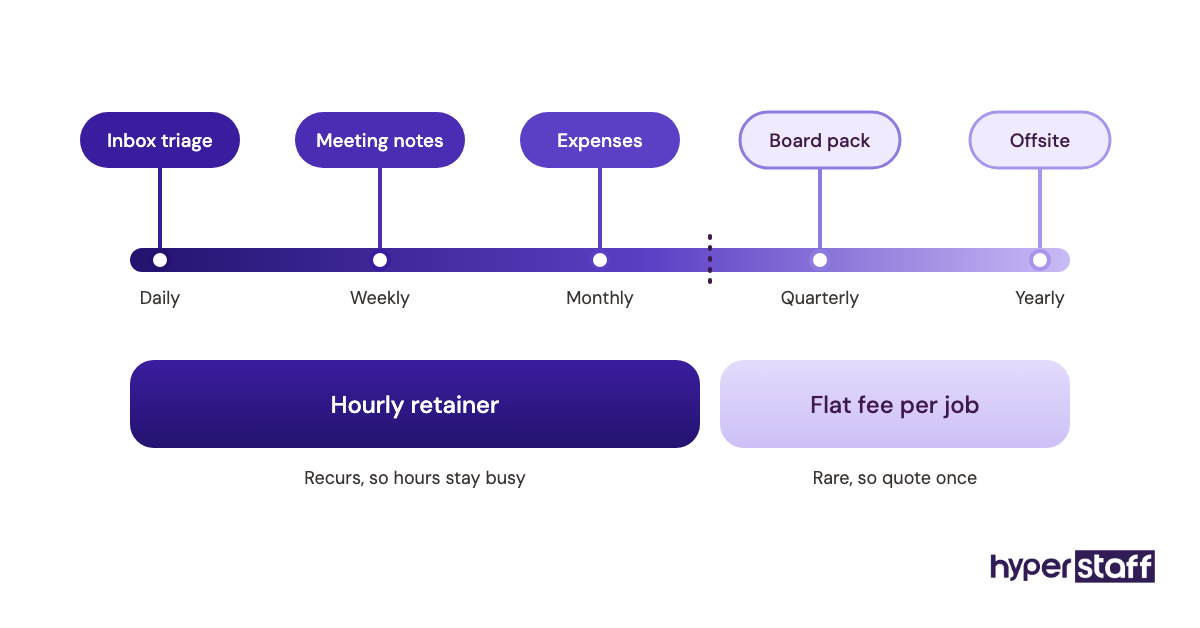
Few providers quote like this, but pricing your executive virtual assistant tasks one by one shows which ones justify a retainer. Inbox and calendar work recur daily, so they almost always belong in an hourly block.
Hyperstaff Cost vs. Other Executive Virtual Assistant Agencies
Hyperstaff's executive virtual assistants cost from $6 per hour at the Professional tier and from $12 per hour at the Expert tier, sold in monthly bundles of 40, 80 or 160 hours. The table compares those published starting rates with typical market ranges, and the You Save column is calculated against our Expert tier at 160 hours ($1,920 a month).
| Provider type | Hourly rate | 80 hrs/month | 160 hrs/month | Replacement | You Save |
|---|---|---|---|---|---|
| Hyperstaff Professional | From $6 | From $480 | From $960 | Free, 5–7 days | Baseline |
| Hyperstaff Expert | From $12 | From $960 | From $1,920 | Free, 5–7 days | Baseline |
| Typical offshore agency | $10–$19 | $800–$1,520 | $1,600–$3,040 | Varies | Up to 37% |
| US-based EVA agency | $45–$70 | $3,600–$5,600 | $7,200–$11,200 | Often included | 73%–83% |
| In-house EA (loaded cost) | $45–$60 | n/a | $7,200–$9,600 | New search, 6–10 weeks | 73%–80% |
Retainer Costs
Hyperstaff retainers are fixed monthly bundles, and paying quarterly takes 10% off the total.
| Bundle | Professional (from $6/hr) | Expert (from $12/hr) |
|---|---|---|
| 40 hours | From $240 | From $480 |
| 80 hours | From $480 | From $960 |
| 160 hours | From $960 | From $1,920 |
| 160 hours, paid quarterly | From $864/month | From $1,728/month |
Most executive roles land in Professional or Expert. The Essential tier (0 to 2 years, from $3 per hour) suits a narrow scope like inbox sorting under someone else's direction.
Cost by Deliverable
Hyperstaff bills hours, so a deliverable costs whatever time it takes at your tier's rate. A domestic itinerary that takes 1.5 hours comes to about $18 at Expert rates, and a board prep pack at 12 to 20 hours lands around $144 to $240.
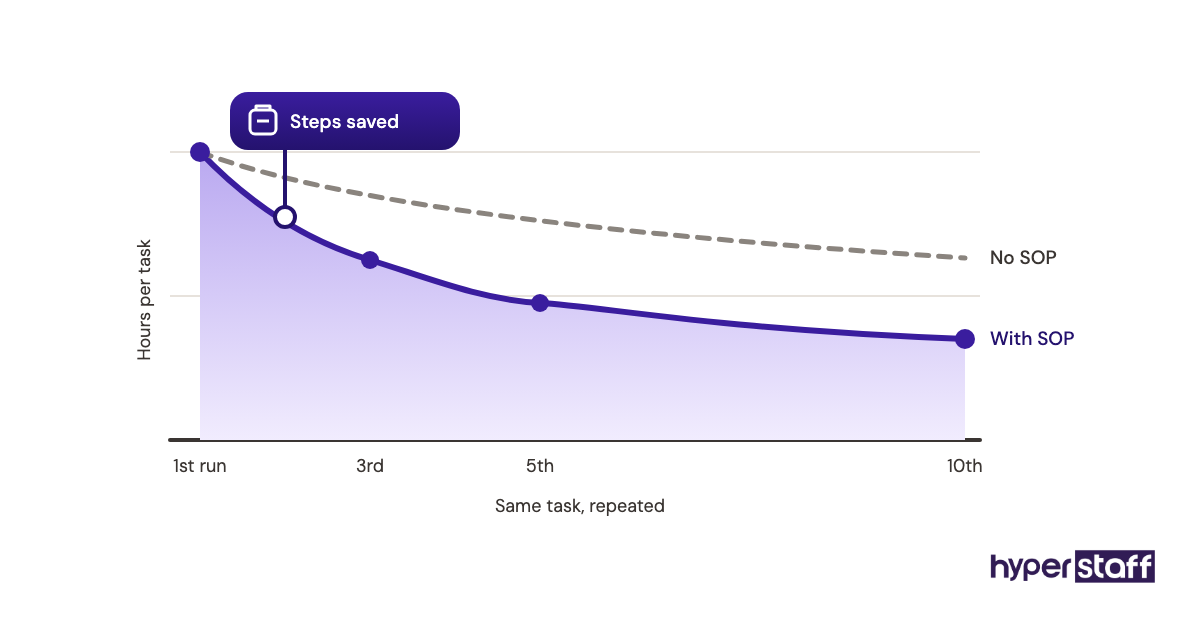
Those hour counts are typical task times, and yours will shift once the assistant learns your preferences. Repeat work gets faster because the steps live in your Operations Vault, the written record of your SOPs, tools and context that we maintain for you.
Important: These Hyperstaff prices are starting averages. Your actual cost depends on the tier, hours and scope your executive work needs, which we confirm with you on a free discovery call.
How Are Executive Virtual Assistants Priced?
Executive virtual assistant pricing follows six common models:
- Hourly: pay per tracked hour. Flexible, harder to budget.
- Monthly retainer: a fixed hour block. The most common model.
- Full-time dedicated: 160 hours, one person, one executive.
- Per-project: flat fee for an offsite or research job.
- Experience tiers: the rate rises with years in role.
- Shared pool: cheaper, but a different person may answer each request.
Agency vs. Freelancer vs. In-House for Executive Virtual Assistance
A good agency is usually the fastest way to add executive support as a company grows. Freelancers can be cheaper per hour, but one sick week on their side leaves your calendar unwatched, and in-house hiring adds salary, benefits and a search that can run for months.
Agencies absorb vetting, replacement and day-to-day management, which matters more once a second or third executive needs support. The full trade-off sits in our executive VA vs in-house comparison.
How Much Does an Executive Virtual Assistant Cost by Country?
An executive virtual assistant costs about $7 to $15 an hour in India and the Philippines, $12 to $30 in Latin America and Eastern Europe, and $35 to $75 in the United States when hired through an agency.
| Region | Agency hourly | Full-time/month | US overlap | Common strength |
|---|---|---|---|---|
| Philippines | $8–$15 | $1,300–$2,400 | Night shift | US-style English |
| India | $7–$15 | $1,100–$2,400 | Split shifts | Finance, research |
| Latin America | $12–$25 | $1,900–$4,000 | Same day | Real-time calls |
| Eastern Europe | $15–$30 | $2,400–$4,800 | US mornings | EU clients |
| United States | $35–$75 | $5,600–$12,000 | Full | Local context |
In-house salaries set the comparison point in each market. A full-time executive assistant in the US usually earns roughly $60,000 to $85,000 in base pay, UK roles sit around £32,000 to £50,000 with London at the top, and Australian roles run about AU$75,000 to AU$100,000 before superannuation.
Western European roles in markets like Germany or the Netherlands tend to fall between €40,000 and €60,000. Add employer taxes and benefits, and an offshore executive VA often costs a fifth of a local hire.
What Drives Executive Virtual Assistant Costs?
Executive virtual assistant costs are driven mostly by how much the assistant decides alone and when they need to be online. Task lists look alike across price points, so two quotes for the "same" job can differ fourfold.
#1 Cost Driver: Decision Rights Over the Calendar
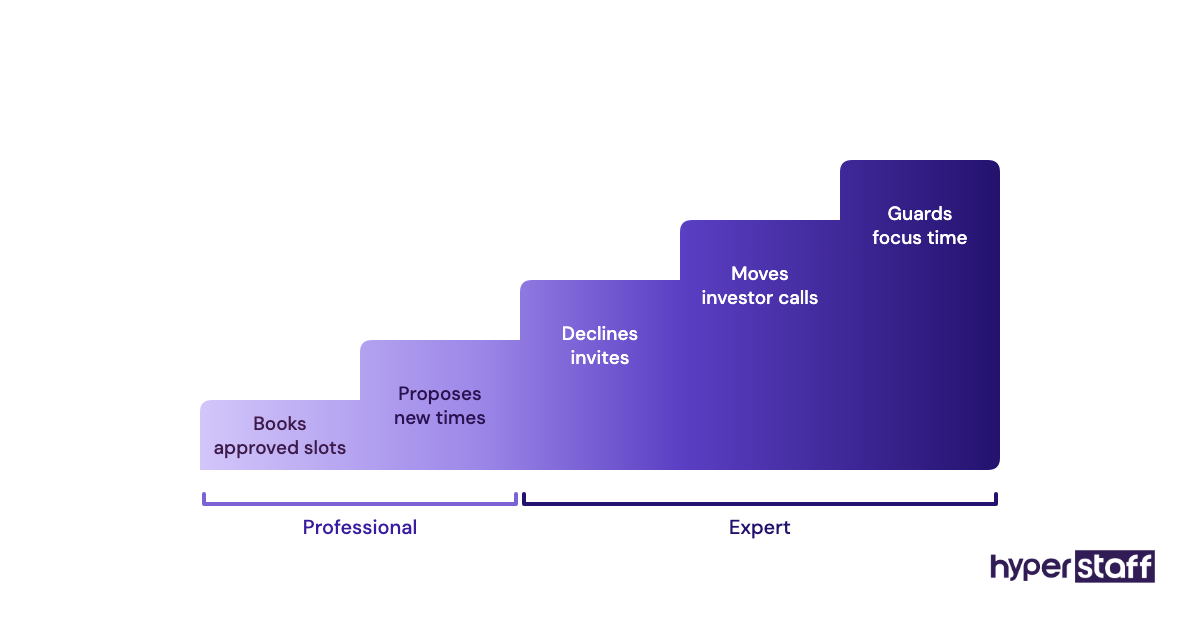
Decision rights are the biggest single price lever. An assistant who books meetings you've already approved can sit at the Professional tier, while one who declines invites, moves investors and guards focus time on your behalf needs Expert-level judgment, which roughly doubles the rate.
Job posts say "calendar management" when the actual job is gatekeeping, and the mismatch surfaces in month two as an assistant who keeps asking permission. Spelling out decision rights in the executive virtual assistant job description sets the right tier before anyone is hired.
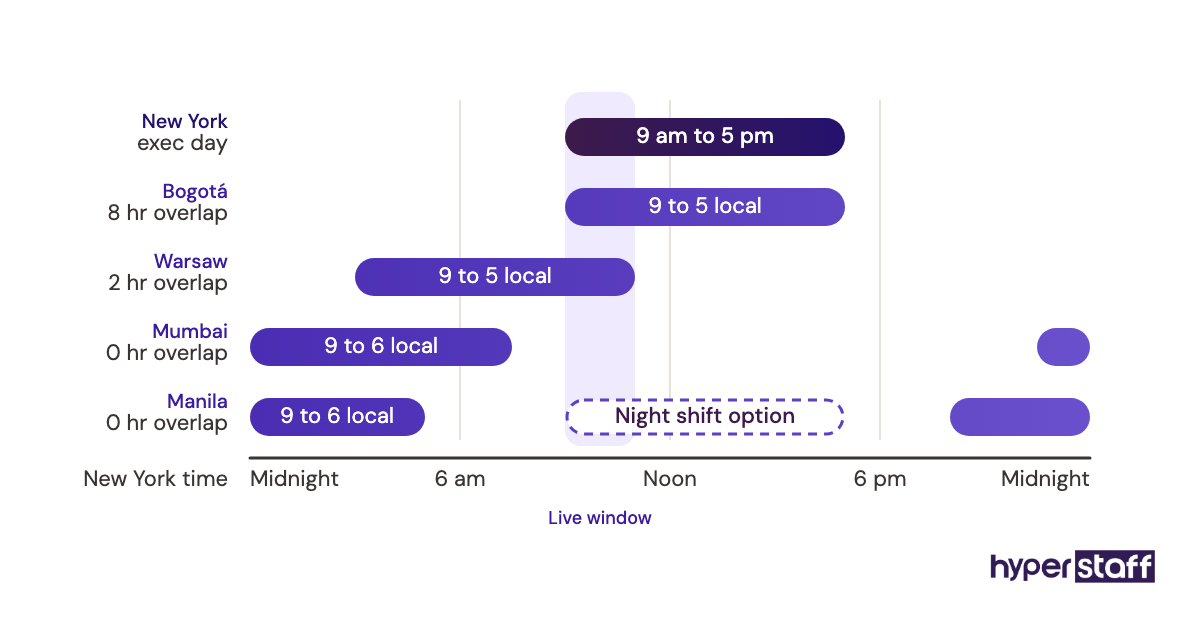
#2 Cost Driver: Hours of Live Time Zone Overlap
Overlap hours cost more than offline hours. A Philippines-based assistant working a US night shift often commands a premium, and Latin American talent prices higher partly because their normal working day already matches yours.
Much executive work runs async, such as travel research, inbox prep and expense reports. Paying for 2 to 3 hours of live overlap a day and leaving the rest flexible can widen your talent pool without raising the rate.
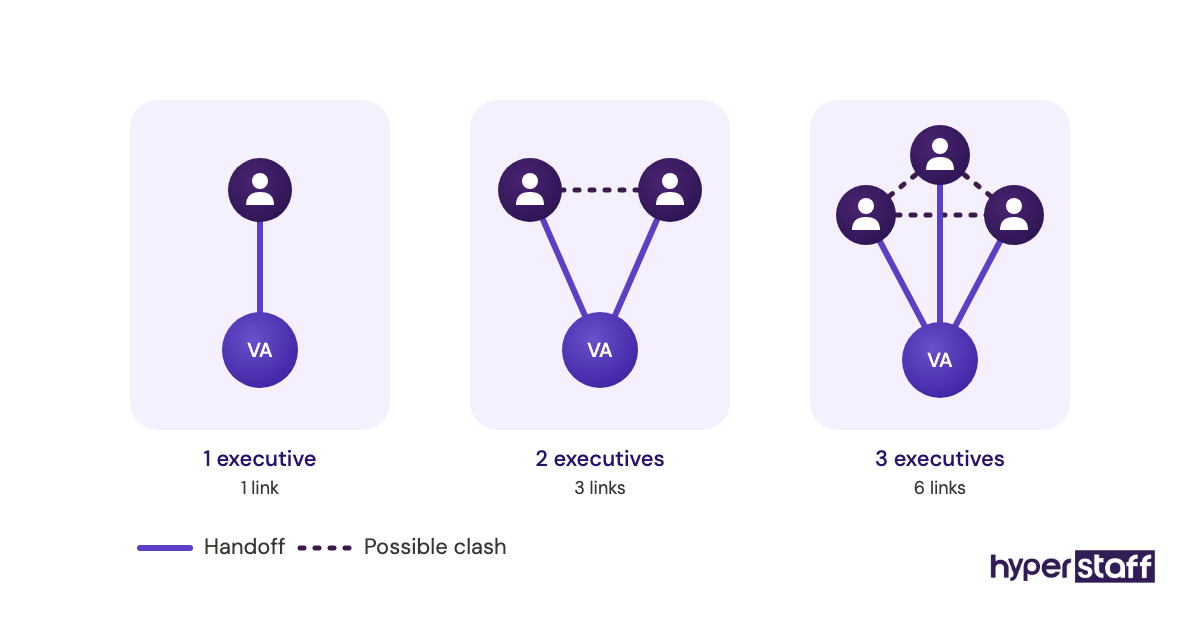
#3 Cost Driver: Number of Principals Sharing One Assistant
Supporting two executives costs more than double the coordination of one. Calendar conflicts between two leaders need an arbiter, and assistants negotiating between people senior to them usually need a higher tier.
Some teams insist on one assistant per executive; others pool a senior assistant across a founding team. The pooled model only holds when the principals agree in advance whose meeting wins a conflict.
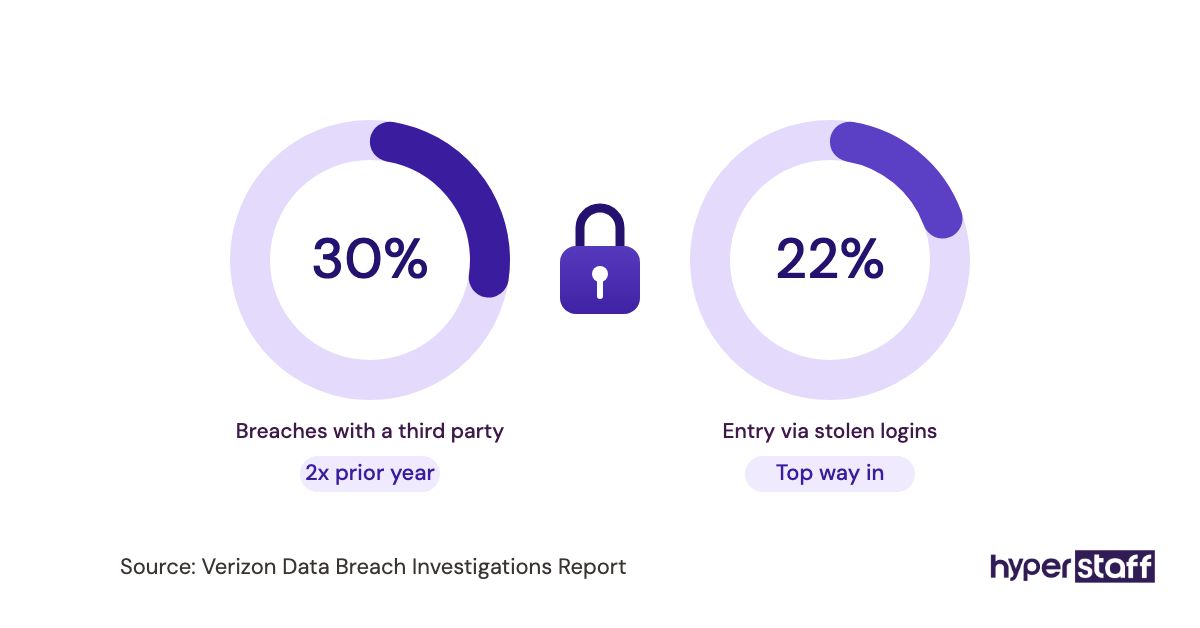
#4 Cost Driver: Confidentiality and System Access
Access to board decks, payroll or deal email raises cost because it narrows who you can hire. Expect stricter vetting, more senior talent and a slower handover when the assistant sees material that could move a negotiation.
How Is AI Changing Executive Virtual Assistant Cost?
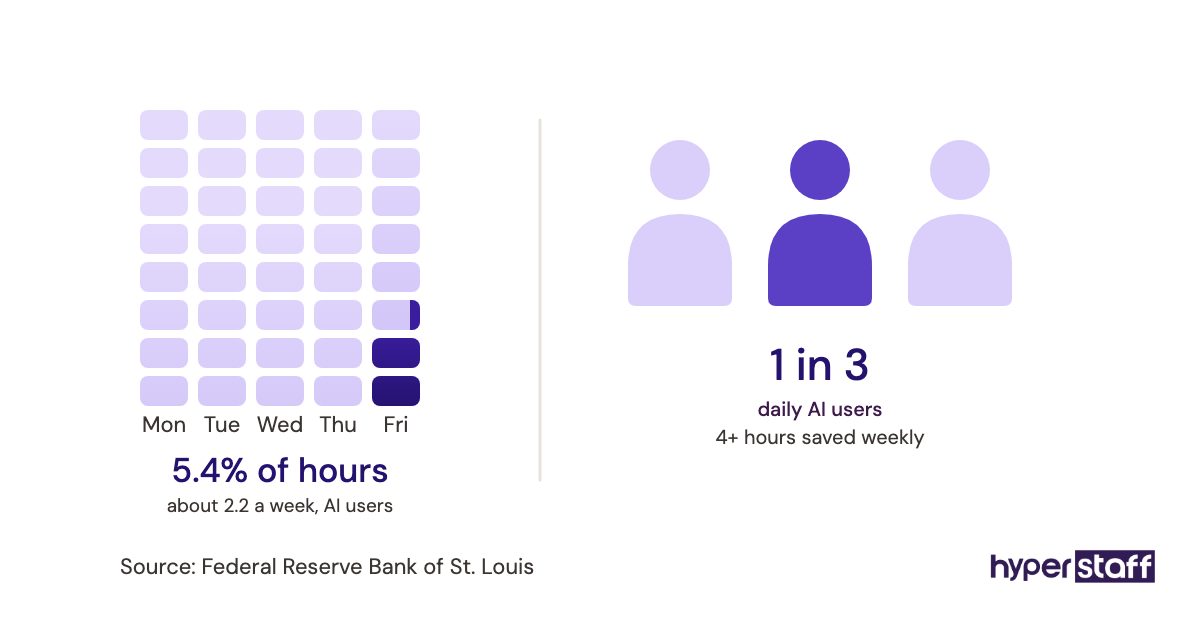
AI is cutting the cost of executive virtual assistant work at the task level, while the rate for good judgment has barely moved. Drafting replies, summarizing call transcripts and first-pass scheduling now take minutes where they once took half an hour.
An assistant running AI note-takers and scheduling software can often cover the same executive in fewer hours, so a 160-hour need may fit in 80 to 120. The software adds its own monthly line, and our guide to executive virtual assistant tools covers which ones earn a seat.
AI still handles the expensive part badly: knowing that a "quick call" with one board member always runs long, or that a key investor hates Monday mornings. How far that gap closes is an open argument, and our bet is that AI shrinks hours long before it replaces the role.
The Hidden Costs of an Executive Virtual Assistant
Most hidden costs show up in the first 90 days, and the largest is your own time spent onboarding an executive virtual assistant.
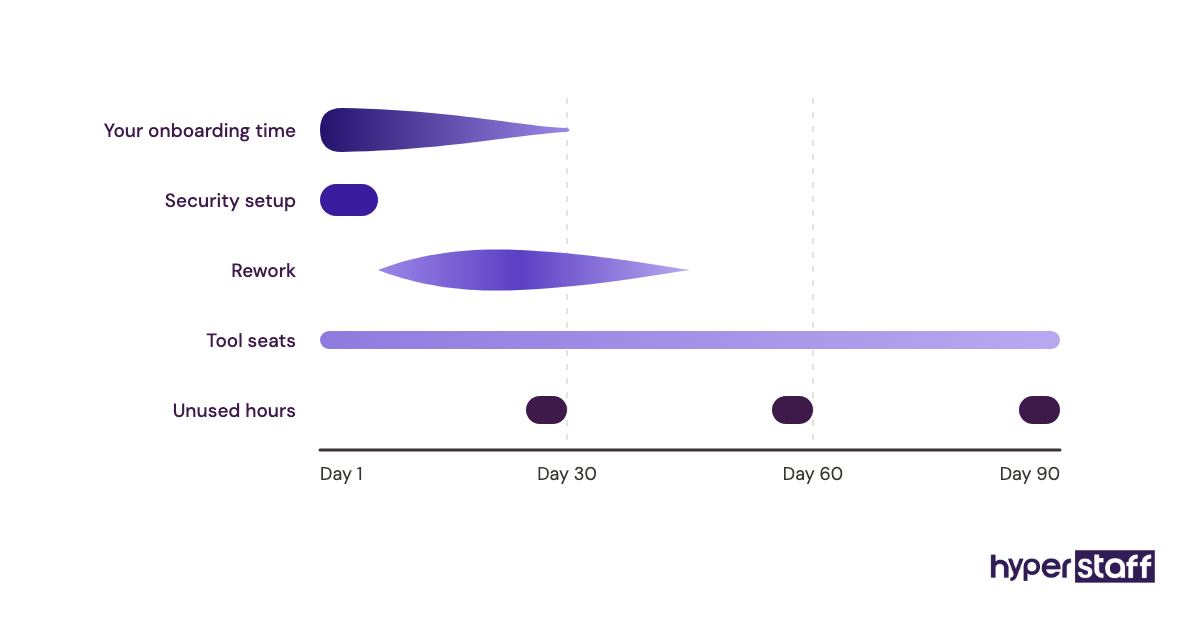
- Onboarding: 5 to 15 executive hours in month one.
- Replacement gaps: days or weeks with no coverage.
- Unused retainer hours that expire.
- Software seats and AI tool subscriptions.
- Rework from unclear instructions.
- Fees on international payments.
- Security setup: password manager, delegated access.
How Much Should You Budget for an Executive Virtual Assistant?
Budget about $500 to $2,000 a month for an offshore executive virtual assistant and $3,000 to $9,000 a month for a US-based one, plus 10% to 15% extra for tools and onboarding in the first quarter. Founders and solo executives usually start at 40 to 80 hours, and a C-suite leader with board duties typically needs 160.
Small companies and large ones budget from different starting points. A 10-person company tends to measure the cost against the founder's hourly value, while an enterprise compares it with the in-house headcount it would otherwise add, which makes even a US agency look cheap.
Start smaller than feels comfortable. Executives often underestimate what they'll delegate in month one and want more hours by month three, once the assistant has learned their patterns.
How Do You Calculate Executive Virtual Assistant ROI?
Executive virtual assistant ROI is the value of the hours you get back, minus the monthly cost, divided by that cost. Written out: ROI = (hours reclaimed × your hourly value − monthly cost) ÷ monthly cost.
Take an executive whose time is worth $150 an hour and who reclaims 10 hours a week, about 43 a month. That's $6,450 of time value against a $960 retainer, an ROI of roughly 570%.
Reclaimed hours only count if they go somewhere useful. If the freed time disappears into more email, the real return is close to zero, and that's the honest test of whether an executive VA is worth it for you.
How Do You Compare Executive Virtual Assistant Agency Pricing?
Compare executive virtual assistant agencies on total monthly cost for the same hours, the experience tier you'll actually get and what happens when the assistant leaves. Headline hourly rates hide most of the difference.
Ask each agency for a written quote at the same bundle size, then put the shortlisted candidates through the same executive VA interview questions. Our guide on how to hire an executive virtual assistant lays out the full process from brief to start date.
Red Flags in Agency Pricing
- Placement fees with no replacement guarantee
- A rate quoted without the assistant's years of experience
- Annual lock-in with no exit before month 12
- "Shared" plans sold as dedicated support
- Unused hours that expire without notice
When to Walk Away
Walk away when an agency can't name your assistant before you sign or won't put the replacement timeline in writing. Those gaps predict most of the problems in our rundown of common executive VA mistakes.
A low price paired with vague answers usually costs more by month four. By then you've paid for one failed placement and a second onboarding.
How to Reduce Executive Virtual Assistant Costs Without Sacrificing Quality
Step 1: Split Judgment Work From Routine Work
Route inbox sorting and approved bookings to a Professional-tier assistant, and save Expert time for gatekeeping and stakeholder calls. Plenty of executives pay Expert rates for 160 hours when 40 Expert hours would cover the judgment-heavy part.
Step 2: Write the SOP Before You Delegate
A one-page SOP for travel preferences or meeting rules saves hours of back-and-forth every month. Documented processes also cut replacement cost, since a new assistant can be briefed from the written record in days.
Step 3: Buy the Bundle You Use, Then Review Quarterly
Track how many retainer hours you actually burn for three months before changing the bundle. Moving from 160 to 80 hours after a slow quarter, or up after a busy one, keeps spend tied to real workload.
Step 4: Switch to Quarterly Billing Once the Fit Is Proven
Prepaying usually earns a discount, and at Hyperstaff quarterly payment saves 10%. Wait until the assistant has handled at least one heavy month, such as a board cycle, before you commit.
Step 5: Batch Live Overlap Into One Daily Window
Scheduling all real-time work into a single 2 to 3 hour block lets you hire from lower-cost regions without paying a night-shift premium for the full day. Async tasks fill the remaining hours.
Is an Executive Virtual Assistant Worth the Investment?
Yes, for most executives an executive virtual assistant is one of the highest-ROI hires available, because the monthly cost is a small fraction of the executive's own hourly value. At $1,920 a month for full-time Expert support, an executive valued at $150 an hour breaks even after about 13 reclaimed hours.
Payback is slowest when the executive won't delegate decisions. In that case, start with 40 hours of routine work and expand once trust is built.
Disclaimer: This article is for general information only and does not constitute financial, legal or employment advice. Prices and ranges are estimates that vary by provider, region and scope, and Hyperstaff rates are starting prices subject to change. Confirm current terms directly before making hiring decisions.
Common questions
Do executive virtual assistants charge by the hour or by the month?
Most charge by the month through a retainer that covers a set block of hours, such as 40, 80 or 160. Freelancers more often bill hourly, which is flexible but harder to budget.
Why does a US-based executive VA cost so much more?
US-based assistants carry US living costs, taxes and agency overhead, so rates of $45 to $70 an hour are common. You're paying for full time zone overlap and local context, which matters most for roles heavy on live phone work.
Can I hire an executive virtual assistant part-time?
You can. Part-time bundles of 40 or 80 hours a month suit founders and solo executives, and at Hyperstaff a 40-hour Professional bundle starts from $240 a month.
Are there setup fees for an executive virtual assistant?
It depends on the provider. Some agencies charge a placement or onboarding fee, while others fold vetting into the hourly rate, so ask for every one-time cost in writing before you sign.
How much does it cost to replace an executive virtual assistant?
Replacing an in-house executive assistant can mean recruiting fees and 6 to 10 weeks without coverage. Through an agency with a free replacement policy, the direct cost is close to zero, and Hyperstaff replaces assistants in 5 to 7 business days, briefed from your Operations Vault.
Book a free 15 min call
We place a pre-vetted specialist in 5 business days, fully managed, from $3/hour.