Medical Virtual Assistant Cost: Rates, Retainers and Real Budgets
Hourly rates, monthly retainers, country ranges and the hidden costs that decide what a medical virtual assistant really costs a practice.
On this page
- What do medical virtual assistant retainers cost per month?
- Medical virtual assistant cost by deliverable
- How does Hyperstaff cost compare with other medical VA agencies?
- Medical virtual assistant pricing models
- Agency vs. freelancer vs. in-house for medical virtual assistance
- How much does a medical virtual assistant cost by country?
- What drives medical virtual assistant costs?
- How is AI changing medical virtual assistant cost?
- The hidden costs of a medical virtual assistant
- How much should you budget for a medical virtual assistant?
- How do you calculate medical virtual assistant ROI?
- How do you compare medical virtual assistant agency pricing?
- How to reduce medical virtual assistant costs without sacrificing quality
- Is a medical virtual assistant worth the investment?
- FAQs
💡 Key Takeaways:
1) A medical virtual assistant usually costs $6 to $15 per hour offshore and $25 to $45 per hour for US-based staff, which puts a full-time offshore assistant at roughly $1,000 to $2,400 a month.
2) Region, experience level, EHR and billing skills, and HIPAA safeguards move the price more than the task list does.
3) The real cost includes onboarding time, software seats, compliance paperwork and the price of replacing someone who leaves, so compare total monthly cost instead of the hourly rate alone.
Turn front-desk hours into billable patient time
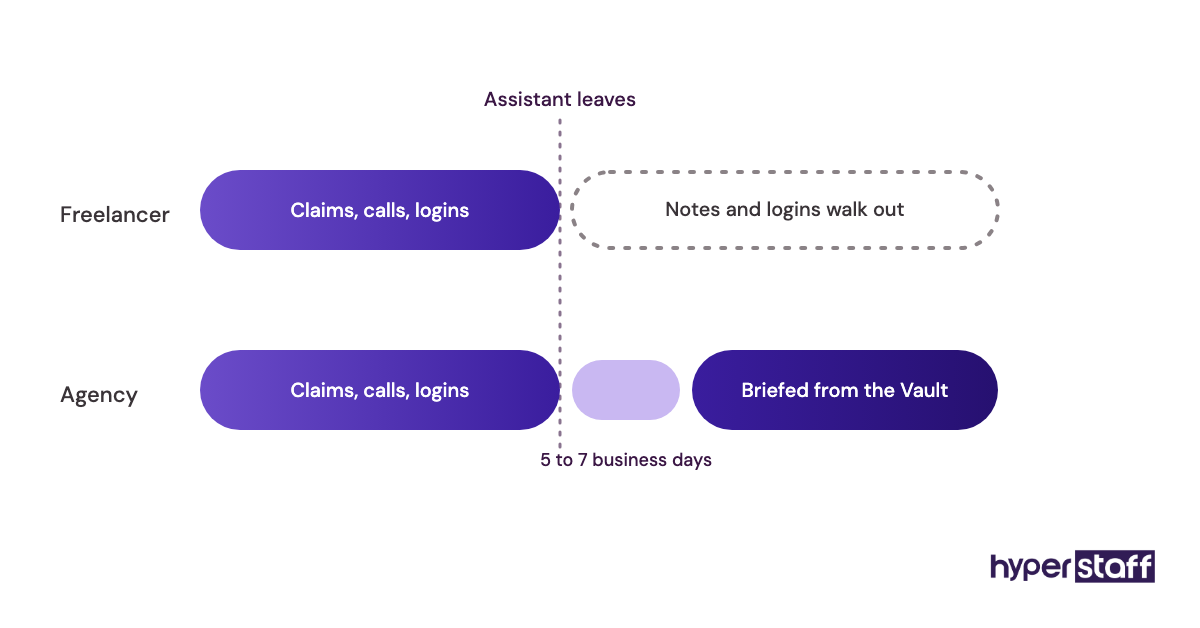
Hyperstaff places pre-vetted medical virtual assistant services from five regions at rates from $3 an hour, with placement in 5 business days and a dedicated account manager for every practice. We've placed 70+ virtual assistants across 30+ clients, and if someone isn't the right fit, a free replacement arrives in 5 to 7 business days, already briefed from your Operations Vault.
What do medical virtual assistant retainers cost per month?
A medical virtual assistant retainer runs about $320 to $600 a month for 40 offshore agency hours and $1,280 to $2,400 for a full 160-hour month. The figures below are market averages, and US-based retainers cost roughly three times as much for the same hours.
| Monthly hours | Offshore agency | US-based agency | Offshore freelancer | Typical scope |
|---|---|---|---|---|
| 40 | $320–$600 | $1,000–$1,800 | $240–$560 | Reminders, refills |
| 80 | $640–$1,200 | $2,000–$3,600 | $480–$1,120 | Scheduling, eligibility |
| 120 | $960–$1,800 | $3,000–$5,400 | $720–$1,680 | Front desk plus billing |
| 160 | $1,280–$2,400 | $4,000–$7,200 | $960–$2,240 | Full admin seat |
Small practices tend to start at 40 or 80 hours and then outgrow them. Phone coverage is the usual reason, because a phone line needs someone there for set hours, while back-office work can be batched.
Medical virtual assistant cost by deliverable
Per-task cost is the clearest way to see where a medical virtual assistant pays for itself. These are averages, worked out from typical hourly rates and handling times, so your numbers will shift with payer mix and EHR speed.
| Deliverable | Freelancer | Agency | In-House | Turnaround |
|---|---|---|---|---|
| Insurance eligibility check (per patient) | $1–$3 | $2–$4 | $4–$7 | Same day |
| Prior authorization request | $5–$12 | $8–$15 | $15–$30 | 1–3 business days |
| Appointment booked or rescheduled | $0.75–$2 | $1–$3 | $3–$5 | Real time |
| New patient intake packet | $3–$6 | $4–$8 | $8–$14 | 24 hours |
| Claim submission (per claim) | $1–$3 | $2–$4 | $4–$8 | 24–48 hours |
| Denied claim follow-up | $6–$15 | $10–$20 | $20–$40 | 3–10 business days |
| Reminder batch (100 patients) | $15–$35 | $25–$50 | $60–$100 | Same day |
| Refill request routed to provider | $0.50–$1.50 | $1–$2 | $2–$4 | Same day |
| Chart prep (per visit) | $1–$3 | $2–$4 | $4–$7 | Day before visit |
| Monthly AR aging report | $40–$90 | $60–$120 | $120–$250 | 2–3 business days |
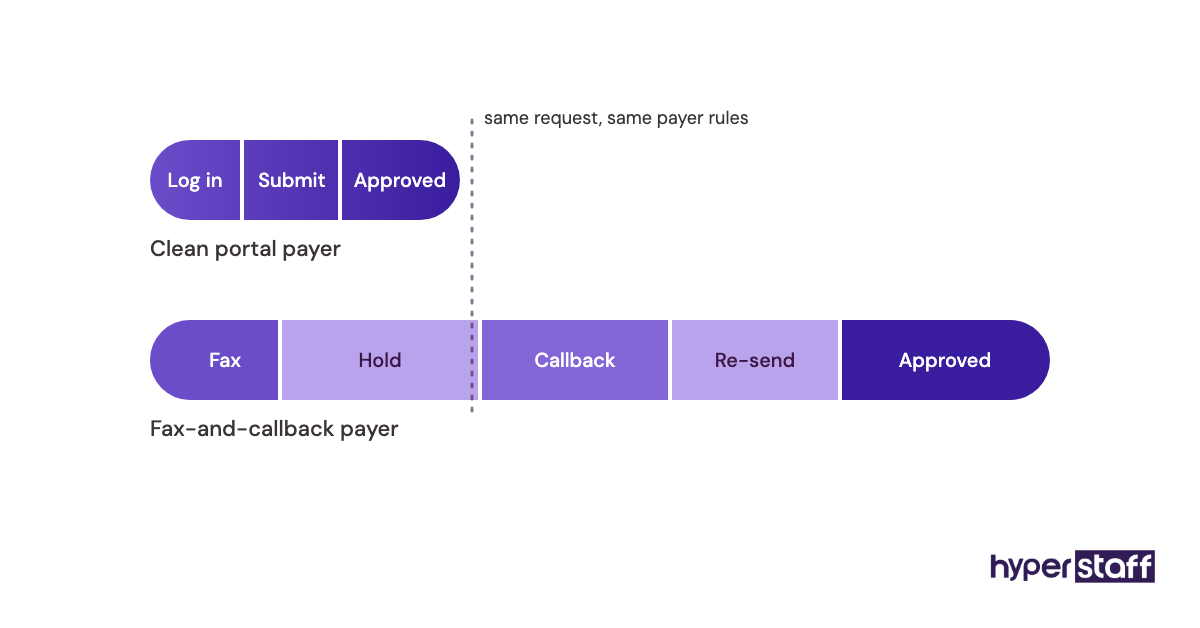
Prior authorizations carry the widest spread. A clean commercial payer portal takes minutes, while a fax-and-callback payer can eat most of an hour, and that variance shows up directly in the per-request cost.
How does Hyperstaff cost compare with other medical VA agencies?
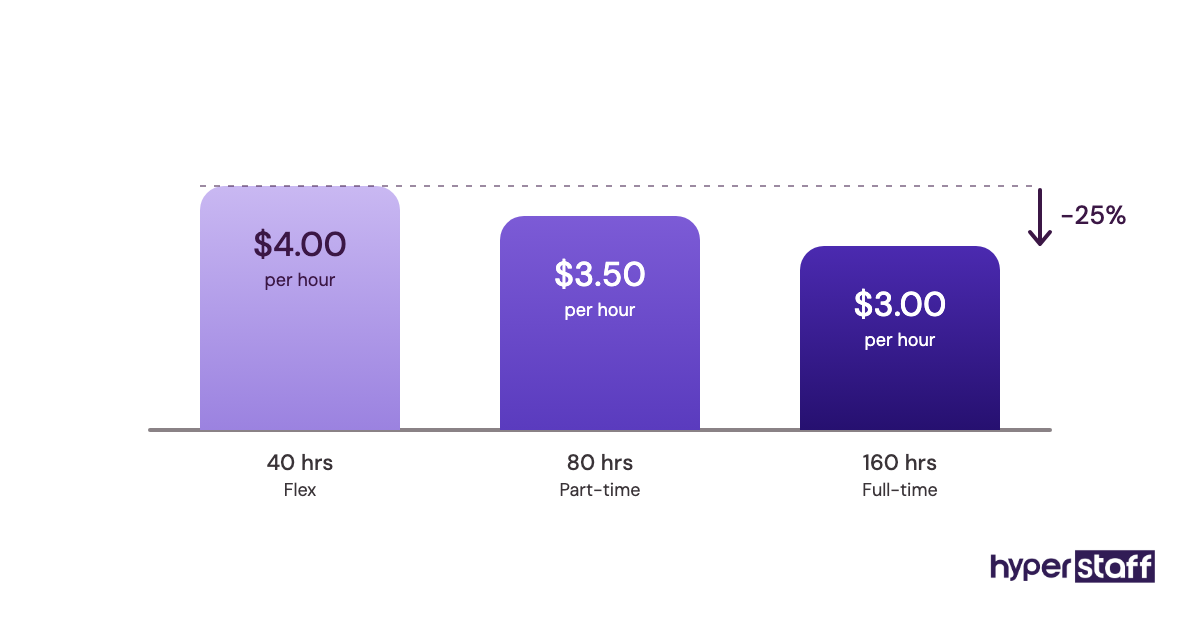
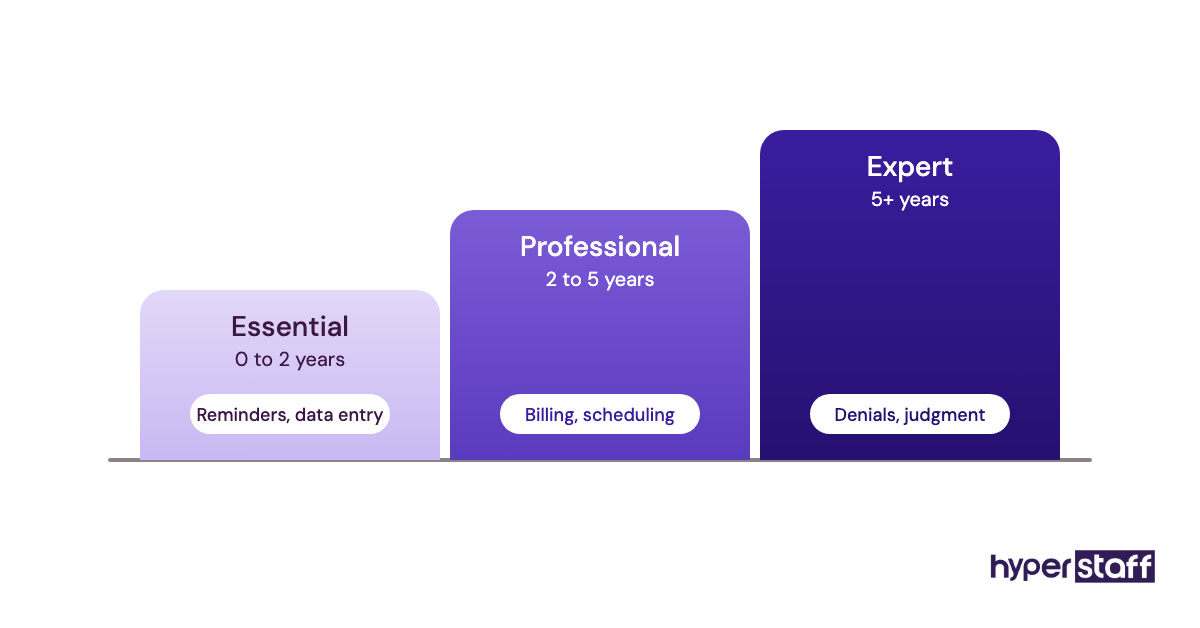
Hyperstaff rates start at $3 an hour for Essential, $6 for Professional and $12 for Expert, against a typical $8 to $15 at offshore medical VA agencies. The savings column compares our Professional tier at 160 hours ($960) with each row's full-time range.
| Provider | Hourly rate | 160 hours/month | Replacement | You Save |
|---|---|---|---|---|
| Hyperstaff (Essential to Expert) | From $3–$12 | From $480–$1,920 | Free, 5–7 business days | Baseline |
| Offshore medical VA agency | $8–$15 | $1,280–$2,400 | Varies by contract | 25–60% |
| US-based medical VA agency | $25–$45 | $4,000–$7,200 | Varies by contract | 76–87% |
| In-house US medical admin (loaded) | $24–$32 | $3,800–$5,100 | You rehire | 75–81% |
Retainer costs
Our retainers come as monthly bundles of 40, 80 or 160 hours, and paying quarterly takes 10% off. The table uses the Professional tier, which fits most billing and scheduling roles.
| Bundle | Monthly, from | Quarter prepaid, from |
|---|---|---|
| 40 hours | $240 | $648 |
| 80 hours | $480 | $1,296 |
| 160 hours | $960 | $2,592 |
Essential halves those figures and suits reminder calls and data entry. Expert doubles them, and it's the tier we'd point you to for denial management or a role that needs judgment without supervision.
Cost by deliverable
We bill hours, so the cost of a single deliverable depends on how fast your assistant clears it. At $6 an hour, an eligibility check that takes 10 minutes costs about $1, and a 40-minute prior authorization costs about $4.
Speed climbs after the first few weeks. Your Operations Vault holds the payer quirks and SOPs, so a replacement starts close to that pace instead of relearning it.
Important: Our prices above are averages, so treat them as a starting point. Your final rate depends on the role, the experience tier and the hours your practice needs each month.
Worth knowing: every figure in this section is an average, and Hyperstaff pricing is always set per client from the scope of work, so a free discovery call is the fastest way to get a number for your practice.
Medical virtual assistant pricing models
Five pricing models cover almost every medical VA quote:
- Hourly: pay per logged hour, good for testing.
- Monthly bundle: fixed hours at a set price.
- Full-time dedicated: one person, 160 hours, lowest hourly rate.
- Per task: priced per claim or authorization.
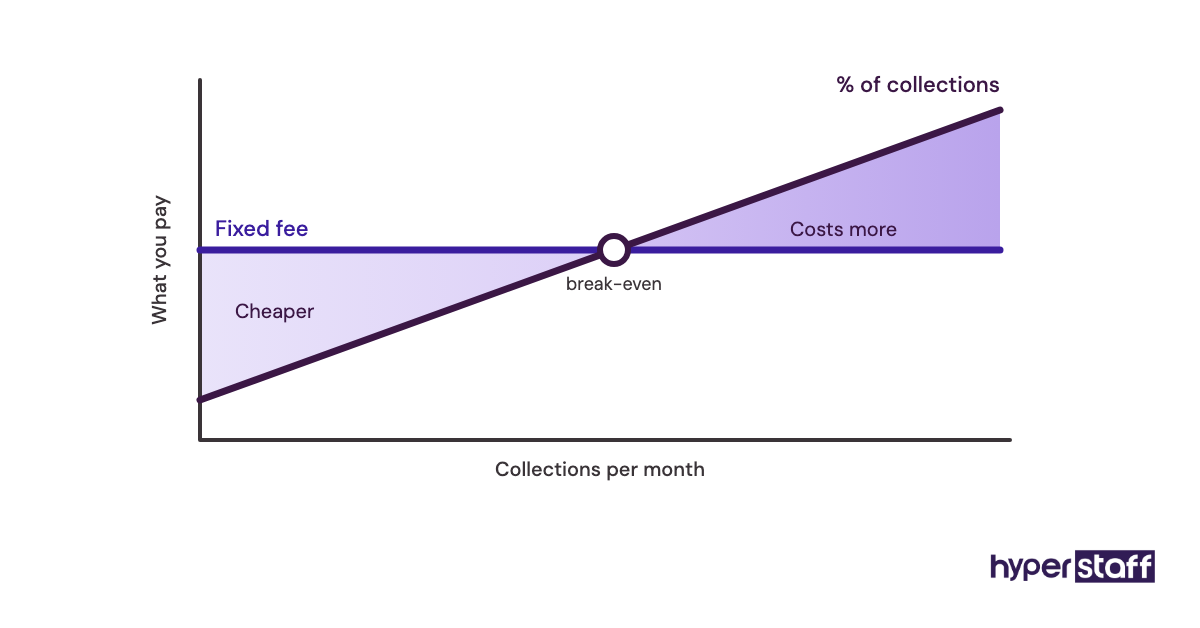
- Percentage of collections: billing firms take a cut, usually mid single digits.
Percentage deals look cheap at low volume and get expensive fast as collections grow.
Agency vs. freelancer vs. in-house for medical virtual assistance
A good agency gives most practices the fastest route to scale. You get vetted people, a manager who handles performance problems, and a replacement when someone leaves.
Freelancers cost slightly less until they disappear mid-month with your payer logins. In-house staff know the clinic best but carry benefits, payroll tax and a hiring cycle measured in weeks, which our in-house comparison breaks down line by line.
How much does a medical virtual assistant cost by country?
Medical virtual assistant cost by country ranges from about $5 an hour in India to $45 in the US. UK, EU and Australian figures below are local in-house medical admin wages, the benchmark practices there compare against.
| Region | Typical hourly | Full-time month | US time-zone fit |
|---|---|---|---|
| Philippines | $6–$14 | $960–$2,240 | Night shift, common |
| Latin America | $9–$18 | $1,440–$2,880 | Same or close |
| India | $5–$12 | $800–$1,920 | Night shift |
| Eastern Europe | $12–$25 | $1,920–$4,000 | Morning overlap |
| United States | $25–$45 | $4,000–$7,200 | Native |
| United Kingdom (in-house) | £12–£16 | £1,900–£2,600 | N/A |
| Western EU (in-house) | €15–€25 | €2,400–€4,000 | N/A |
| Australia (in-house) | AU$32–AU$42 | AU$5,100–AU$6,700 | N/A |
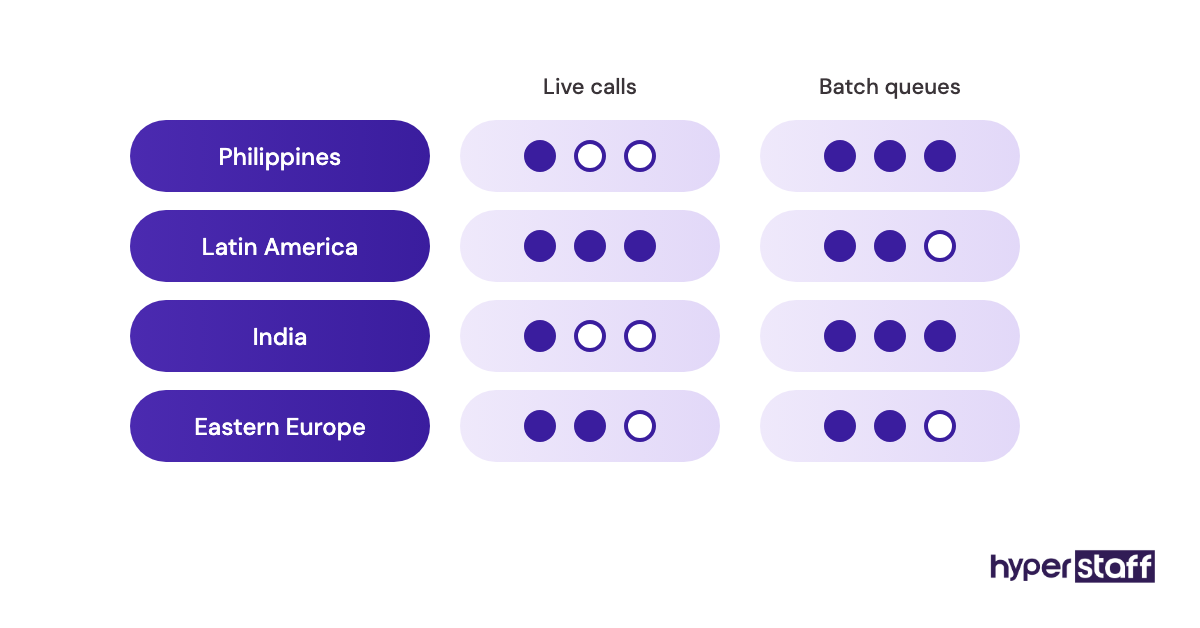
Latin America tends to win for patient-facing phone work in the US because hours line up without a night shift. Philippine assistants are the default for billing queues, where accent and live overlap matter less.
What drives medical virtual assistant costs?
Region and experience set the base rate, and four less obvious factors push it up or down from there. Those four are below, because they're the ones practices tend to miss when comparing quotes.
Keep in mind: two quotes with the same hourly rate can differ by hundreds of dollars a month once minimum hours, part-time premiums and software seats are added, so ask each provider for a full monthly total in writing.
#1 Cost driver: your EHR
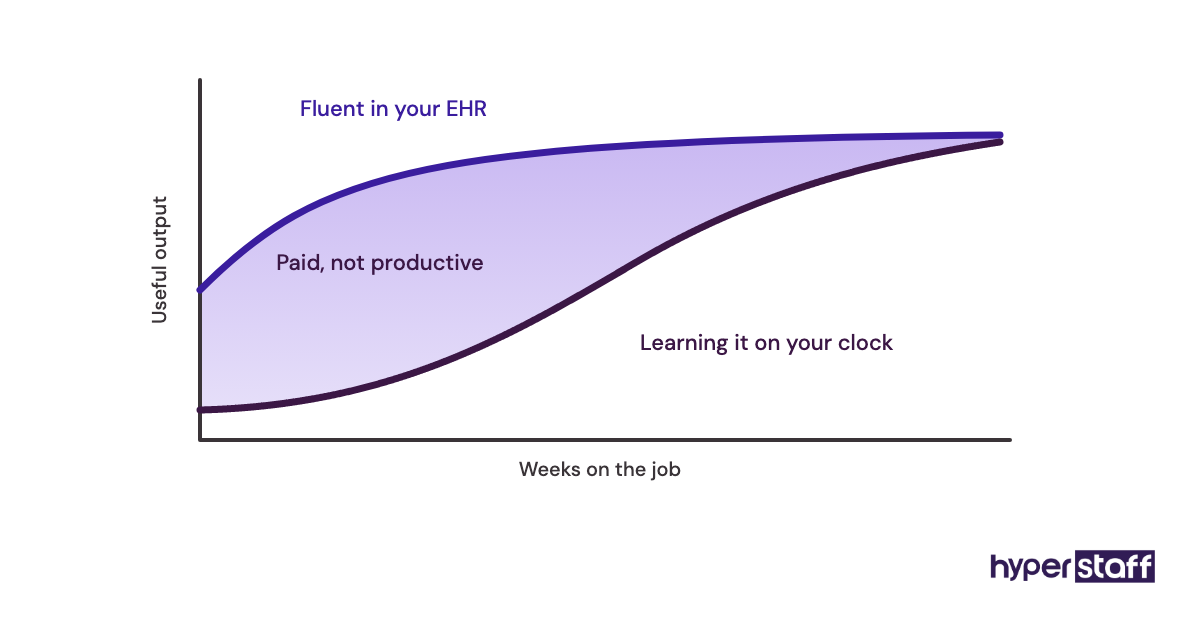
An assistant fluent in your EHR system commands a higher rate, and it's worth paying. Athenahealth, eClinicalWorks and Epic each have their own workflows, and someone learning on your clock costs more in slow weeks than the rate premium does.
#2 Cost driver: payer mix
Heavy Medicaid and Medicare Advantage volume means more prior authorizations and more denials to chase. That pushes you toward the Professional or Expert tier, even if the job title says "front desk."
#3 Cost driver: live phone coverage
Live phone coverage locks hours to your clinic schedule. You pay for idle minutes between calls, whereas billing work can be queued and cleared at any hour.
#4 Cost driver: HIPAA controls
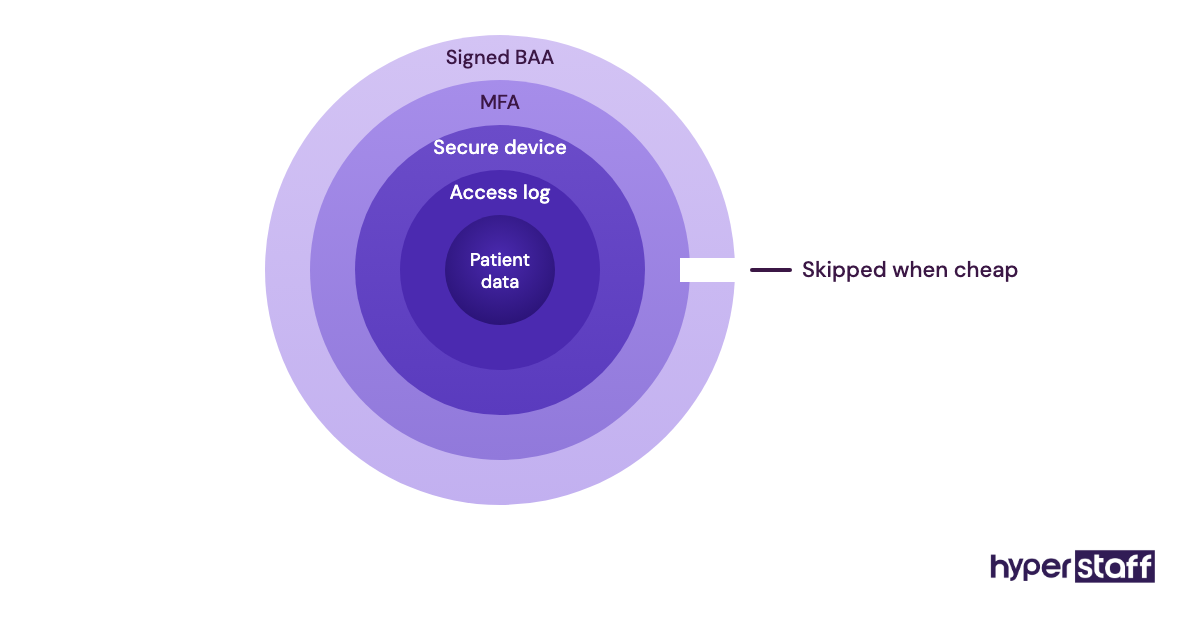
A HIPAA compliant virtual assistant needs a signed Business Associate Agreement, secure devices, MFA and access logging. Providers that handle this properly price it in, and cheap ones skip it, which moves the cost onto your risk register.
How is AI changing medical virtual assistant cost?
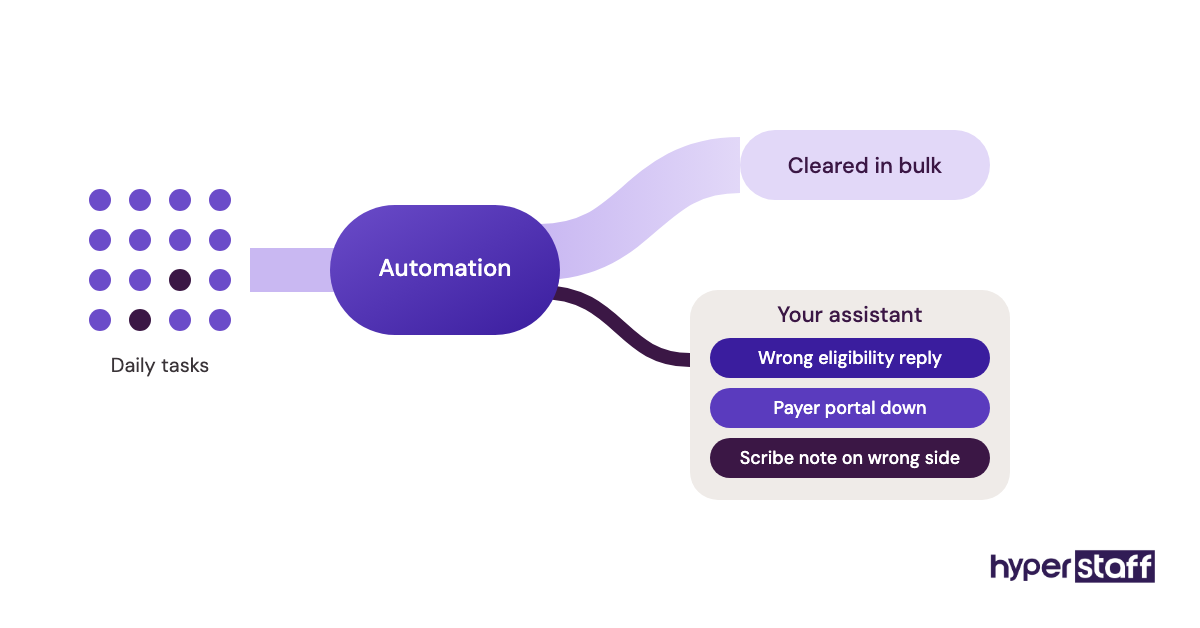
AI is lowering the cost per task more than the cost per hour. Ambient scribes, automated eligibility checks and AI phone agents now handle work a medical VA used to do by hand, so the same hours stretch further.
The rate itself hasn't dropped much. Someone still has to fix the eligibility response that came back wrong, call the payer whose portal is down and catch the scribe note that put a symptom on the wrong side.
Practitioners disagree on where that ends. One camp sees AI phone agents replacing scheduling roles outright, while others point to older patients hanging up on bots and want a human on the line. We side with the second camp for patient calls and the first for back-office batch work.
Tip: before adding hours, check which repetitive tasks your EHR or clearinghouse can already automate, then give the assistant the exceptions and follow-ups those tools leave behind.
The hidden costs of a medical virtual assistant
These hidden costs rarely appear on the quote:
- Software seats for EHR, VoIP and password manager.
- Your staff's training time in weeks one to three.
- BAA review by your compliance lead or lawyer.
- Rehiring after a freelancer quits.
- Minimum hours you don't use.
- Rework from rushed claims.
Plan for seats to add roughly $30 to $150 per month.
How much should you budget for a medical virtual assistant?
Budget roughly $500 to $2,500 a month for one offshore medical virtual assistant, plus 10% to 15% for software and onboarding in the first quarter. A solo practice can start lower, and a multi-provider clinic usually lands at the top end.
Build the budget from tasks, not a headcount guess. List what's eating staff time, estimate weekly hours for each, then round up to the nearest bundle, using our medical VA task checklist as the starting list.
The first month runs heavier than the rest. Your team spends time on logins, shadowing and SOP fixes, which is why a written onboarding plan pays for itself before week four.
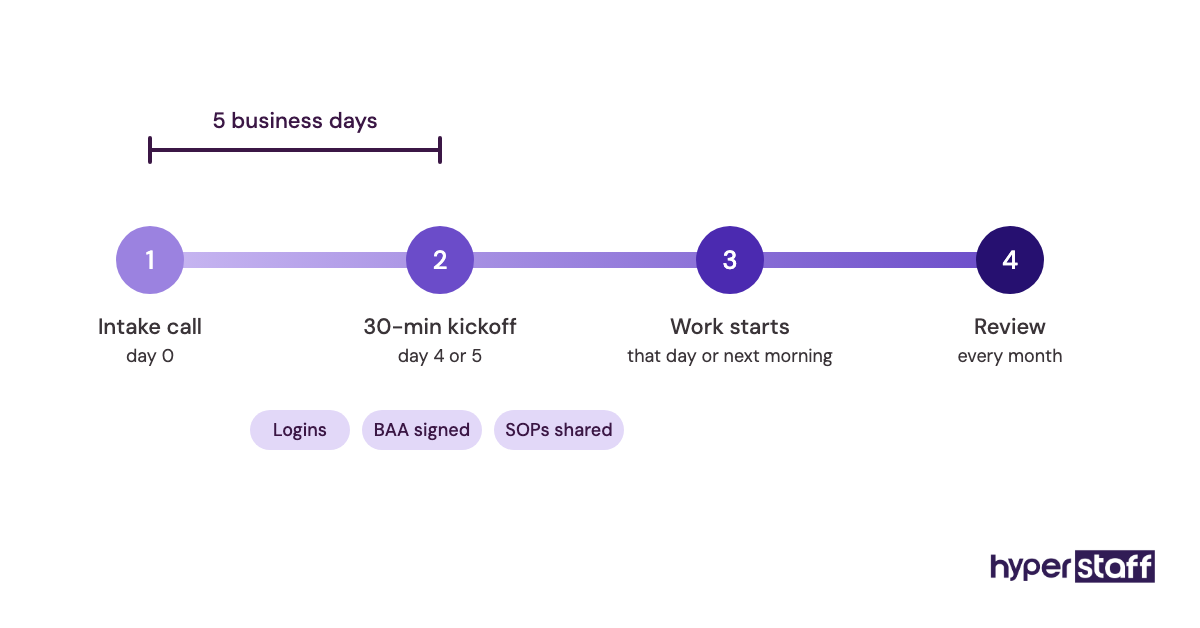
Budget rule: hold back one month of the assistant's cost as a buffer for the ramp-up period, because output in weeks one and two rarely matches the hours you pay for.
How do you calculate medical virtual assistant ROI?
Medical virtual assistant ROI equals the staff time recovered plus revenue recovered, minus the assistant's total monthly cost. Revenue recovered usually comes from fewer no-shows, faster claim submission and denials that get worked instead of written off.
Here's a worked example with round inputs you'd swap for your own. A Professional-tier assistant costs $960 for 160 hours, and if 100 of those hours replace in-house time at a loaded $28, that's $2,800 saved before counting any revenue.
Add ten denied claims a month recovered at $150 each and the monthly return passes $4,300. The ratio looks great on paper, but it only holds if the in-house hours you freed actually go to patients or get cut from overtime.
How do you compare medical virtual assistant agency pricing?
Compare medical VA agency pricing on total monthly cost for the same hours, then on what happens when someone leaves. Ask every agency the same questions about minimums, replacement timing, BAA terms and who manages performance, and put the answers side by side.
The hiring process also tells you a lot. An agency that lets you interview candidates with real medical VA interview questions is usually more confident in its vetting.
Red flags in agency pricing
- No written BAA, or a refusal to sign one.
- A rate quoted without the minimum hours attached.
- Shared assistants sold as "dedicated."
- Replacement fees, or no replacement timeline at all.
- Long lock-in before a single trial month.
When to walk away
Walk away when an agency can't tell you who will see patient data and from what device. That answer should take one sentence.
Also leave if the quote changes after you sign, or the candidate in the interview isn't the person who shows up. Both are among the medical VA mistakes that cost practices months.
How to reduce medical virtual assistant costs without sacrificing quality
The cheapest hour is one your assistant never has to spend. These five steps cut cost by removing waste first and lowering the rate last.
Step 1: Write the job before you price it
A precise medical VA job description stops you paying Expert rates for Essential work. Split clinical-adjacent tasks from pure admin, and price each group at its own tier.
Step 2: Batch the back-office work
Group eligibility checks, claim submissions and refill routing into fixed blocks. Batched work clears faster than work done between phone calls, and it can run off-hours.
Step 3: Match the tools to the tasks
Give the assistant the right medical VA tools from day one: clearinghouse access, a shared inbox and a password manager. Missing access is the most common reason paid hours sit idle.
Step 4: Document every payer quirk
Write down each payer's portal steps, fax numbers and authorization rules as they come up. Documented quirks protect you when the assistant changes, and our Operations Vault does exactly this for clients.
Step 5: Prepay once the fit is proven
Run one or two months monthly, then switch to quarterly billing. With Hyperstaff, quarterly payment saves 10%, which on a 160-hour Professional bundle is close to $290 a quarter.
Is a medical virtual assistant worth the investment?
Yes, for most practices a medical virtual assistant ranks among the highest-ROI hires available. A full-time offshore assistant costs less than a part-time local hire, and billing follow-up alone can recover more than the monthly fee.
The return depends on clear tasks and proper access, so the setup matters as much as the rate. For a full breakdown of when it pays and when it doesn't, read whether a medical VA is worth it.
Disclaimer: This article is for general information only and does not constitute legal, financial, compliance or medical advice. Prices, wages and ranges are estimates that change over time and vary by provider and location. Confirm costs and HIPAA obligations with qualified advisors before making hiring decisions.
Common questions
Is a medical virtual assistant cheaper than a medical receptionist?
Yes, usually by 60% to 80% for the same hours. A US receptionist carries wages, benefits and payroll tax, while an offshore assistant is billed at a flat hourly or monthly rate.
Can I hire a medical VA for just 10 hours a week?
You can, and a 40-hour monthly bundle covers roughly that. Expect a slightly higher effective rate on small part-time engagements, and keep the tasks to batchable work like reminders and refills.
Do medical virtual assistants charge extra for HIPAA compliance?
Most build it into the rate rather than listing it separately. If a provider is noticeably cheaper than the market, ask whether it signs a BAA and how it secures devices before assuming the saving is real.
How much does a medical billing virtual assistant cost compared with a billing company?
A billing-focused VA costs a fixed hourly or monthly fee, while billing companies usually take a percentage of collections. At higher collection volumes, the fixed fee tends to come out cheaper. If you're new to the role, start with what a medical virtual assistant does.
Why do medical VA rates vary so much between agencies?
Rates vary because of region, experience tier, shared versus dedicated staffing and how much management the agency includes. Compare the full monthly total for identical hours to see the real gap.
Book a free 15 min call
We place a pre-vetted specialist in 5 business days, fully managed, from $3/hour.