Medical Virtual Assistant Job Description: A Template You Can Copy
A complete medical virtual assistant job description template, with notes on adapting each part to your practice.

On this page
- What is a medical virtual assistant job description?
- Key medical VA job description terms you should know
- The medical virtual assistant job description template
- How do you adapt the template, step by step?
- Types of medical virtual assistant roles
- How does a medical VA job description differ from related roles?
- The benefits of a detailed job description
- The drawbacks of a detailed job description
- Who needs a medical virtual assistant job description?
- Medical virtual assistant job description examples
- Which tools and software should the job description name?
- 8 proven tips for writing a medical VA job description
- Overcoming common job description challenges
- How to measure job description success
- How long does a medical VA job description take to work?
- How much does a medical virtual assistant cost?
- Is writing a detailed medical VA job description worth it?
- How to choose a medical virtual assistant agency
- Medical VA statistics, trends and future predictions
- Medical virtual assistants and AI
- FAQs
💡 Key Takeaways:
1) A medical virtual assistant job description should list duties with real volumes, name the exact systems the assistant will log into, and state which patient data they can and cannot access.
2) The clinical boundary belongs in writing: a remote assistant schedules, verifies and routes, but never triages symptoms or gives medical advice.
3) Success measures for the first 30 days, written into the job description, give you and the assistant the same yardstick from day one.
Better Job Descriptions Keep More Visits Billed
Hyperstaff has placed 70+ virtual assistants with 30+ clients, and our pre-vetted medical virtual assistant services start from $3/hour, with placement in 5 business days. Bring the template below to a free discovery call and we'll match it to a dedicated specialist who learns your practice and stays with it.
What is a medical virtual assistant job description?
A medical virtual assistant job description is the written brief that defines what a remote healthcare admin will do, which systems they'll use, how much patient data they can see and how their work gets judged. It doubles as your hiring filter and as the first page of their training.
Most practices that ask about the role already know what a medical virtual assistant is. The gap is usually the document itself. A vague one attracts generalists, and generalists stall the first time they meet a payer portal.
Key medical VA job description terms you should know
- PHI = protected health information, any data that ties a patient to their health, care or payment.
- Covered entity = a provider, health plan or clearinghouse that must follow HIPAA.
- BAA = business associate agreement, the contract a covered entity signs with any outside party that touches PHI.
- Minimum necessary = the HIPAA principle that a person gets access only to the PHI their task requires.
- EHR / PM system = electronic health record and practice management software, where charts, schedules and claims live.
- Eligibility verification = checking a patient's active coverage and benefits before the visit.
- Prior authorization = payer approval needed before certain procedures, imaging or drugs.
- RCM = revenue cycle management, the steps from scheduling to final payment.
- CPT / ICD-10 = procedure and diagnosis code sets used on claims.
- Role-based access = user permissions set by job function inside the EHR.
- Clinical boundary = the line past which a question goes to licensed staff.
The medical virtual assistant job description template
The template below is built for a front desk and insurance remote assistant, the most common first hire for a small practice. Copy it, replace every bracket, and delete any duty you won't actually hand over.
Job title: Medical Virtual Assistant (Front Desk and Insurance)
Practice: [Practice name], [specialty], [number] providers, [number] locations. Patients are in [time zone].
Reports to: [Practice manager name and title]
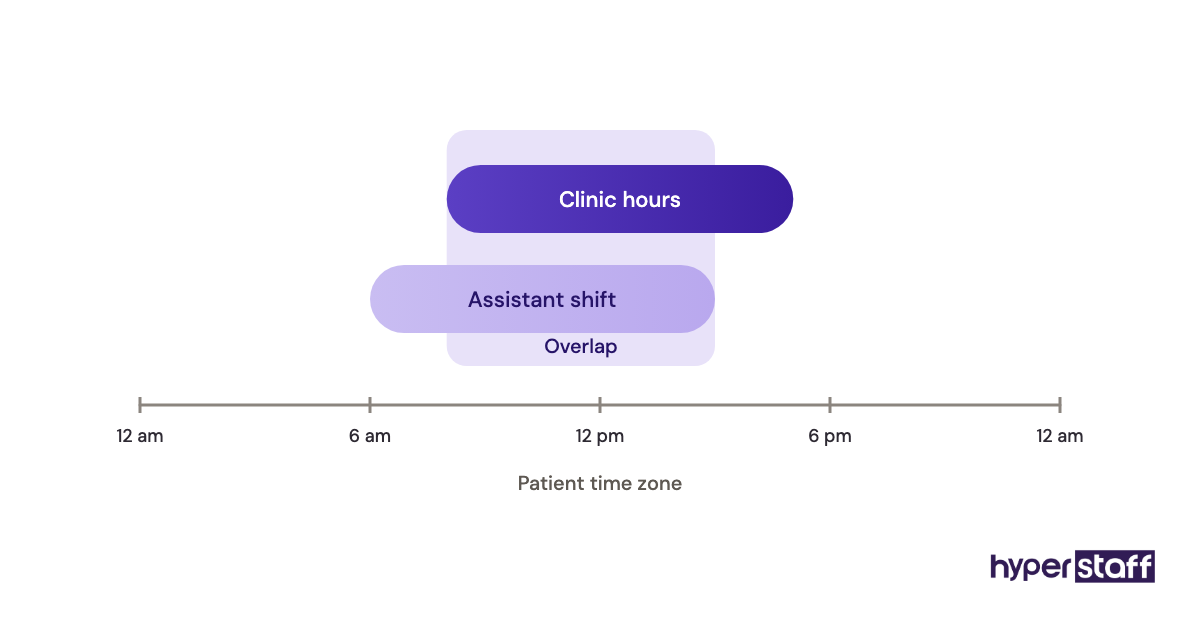
Schedule: [Full-time, 160 hours a month / Part-time, 80 hours / 40 hours], [start and end time] [time zone], Monday to [day]. Must overlap with clinic hours from [time] to [time].
About the role: You'll be the first voice our patients hear and the person who makes sure their visit is booked, confirmed and covered before they arrive. You'll work inside our systems as part of the front office team, with a set login and a clear list of what you own.
What you'll own:
- Answer and return patient calls and voicemails through [phone system], about [number] calls a day.
- Book, reschedule and cancel appointments in [EHR / PM system] following our scheduling rules for each provider.
- Confirm appointments by call or text [number] days ahead and fill cancellations from the waitlist.
- Verify insurance eligibility and benefits for every scheduled visit through [payer portals / clearinghouse] at least [number] business days before the appointment.
- Submit prior authorization requests for [procedure types / medications] and track each one until a decision comes back.
- Register new patients, enter demographics and insurance, and chase missing intake forms.
- Work the shared inbox and patient portal messages, routing anything clinical to [nurse / MA name] using our routing sheet.
- [Optional] Post patient payments and send statements in [billing system].
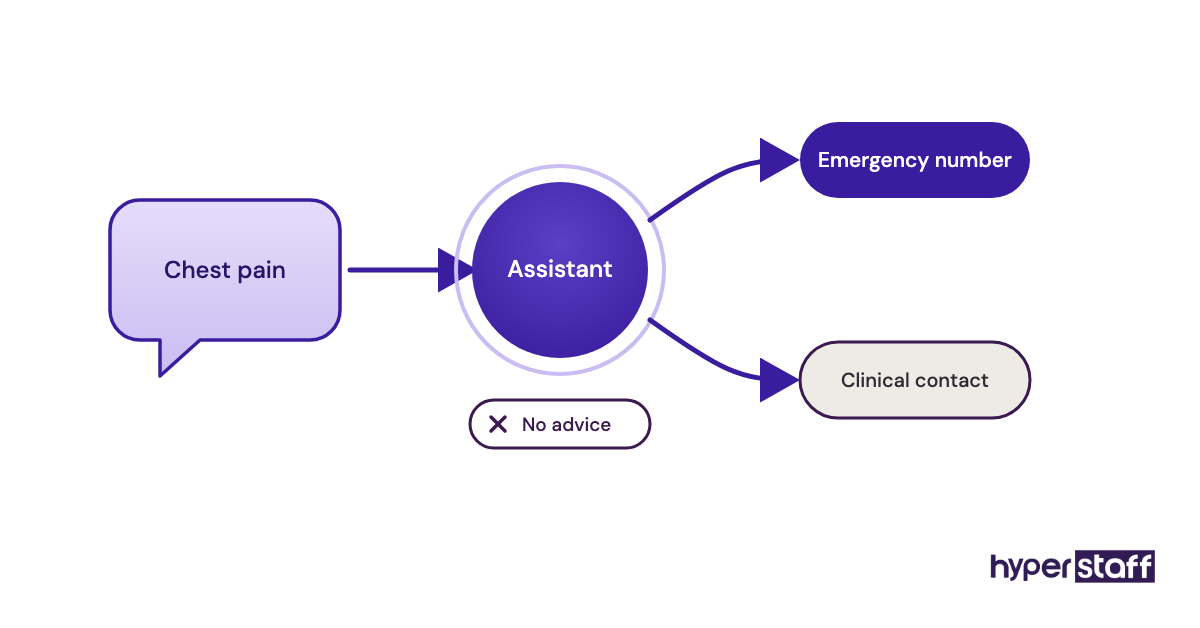
What this role does not do: Give medical advice, interpret results, triage symptoms, change clinical notes or approve refills. Any patient describing an urgent symptom is told to call [emergency instruction] and the call is flagged to [clinical contact] at once.
Systems you'll use: [EHR / PM system], [phone system], [secure messaging tool], [payer portals], [password manager]. Training on our setup is provided.
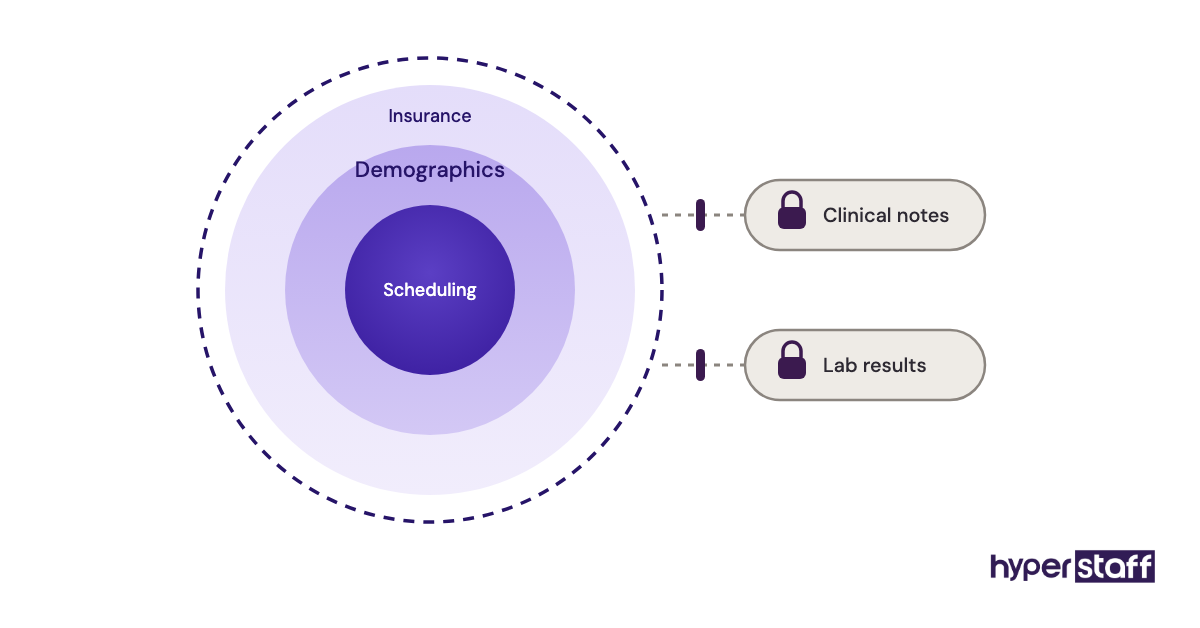
Data access: Role-based login limited to scheduling, demographics, insurance and [other screens]. No access to [clinical notes / lab results] unless approved. Work only on a private screen in a private room, with no shared or public computers.
Must have:
- [Number]+ years in a US medical front office, scheduling or insurance verification role.
- Working knowledge of HIPAA and how to handle PHI on calls and in messages.
- Clear spoken and written English, comfortable with frustrated callers.
- Stable internet of at least [number] Mbps, a backup connection and backup power.
Nice to have: Experience in [specialty], hands-on use of [EHR name], familiarity with CPT and ICD-10 codes, a second language such as [language].
How we'll measure the first 30 days: By week 2, you're booking and confirming independently. By day 30, every next-day visit has verified insurance by [time] and prior authorizations have no item older than [number] days without a follow-up.
Engagement: [Hourly rate or monthly bundle], [contract type], start date [date].
To apply: Send a short note on the EHR systems you've used and how you'd answer a patient asking why their claim was denied.
How do you adapt the template, step by step?
Adapting the template takes five passes, and each one removes guesswork a candidate would otherwise bring to the interview. Do them in order, because the access level in step 3 depends on the duties you settle in step 2.
Step #1: Pull a week of real volume
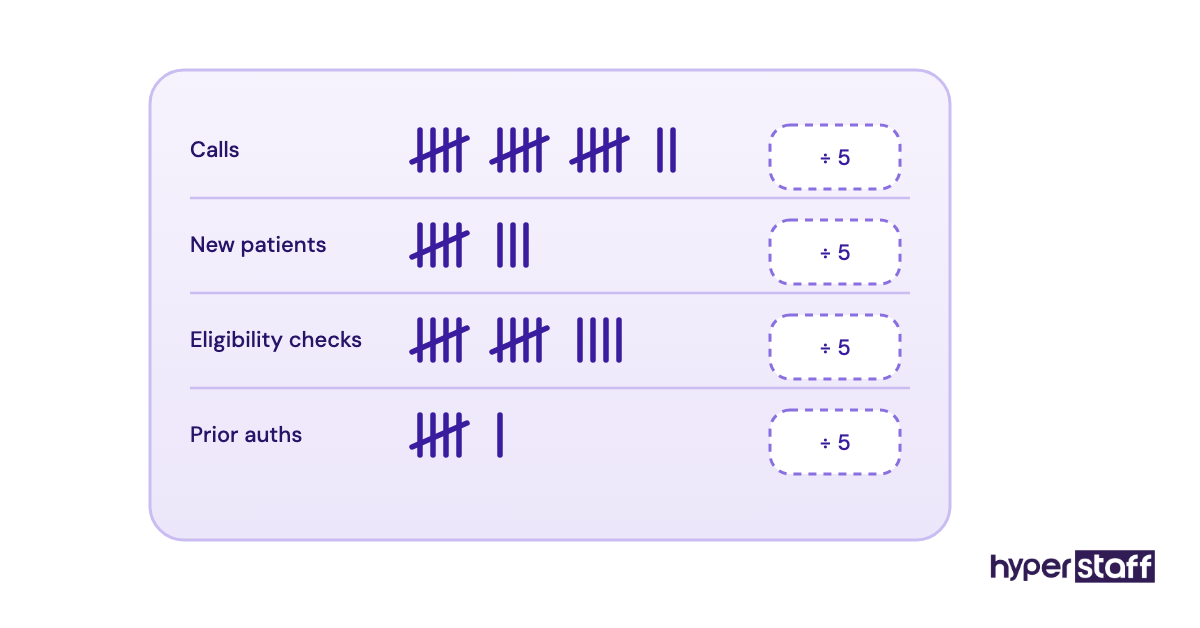
Count calls, new patient registrations, eligibility checks and prior authorizations for one normal week. Put those numbers into the duties, since "about 60 calls a day" screens candidates far better than "high call volume."
Step #2: Cut the duties you won't hand over
The template lists more than one person usually starts with. If billing stays in-house for now, delete that line instead of leaving it as "optional," because candidates read every line as a promise. The full spread of medical virtual assistant tasks is wider than one hire's week, so pick a lane.
Step #3: Set the access level before you post
Decide which EHR screens the assistant needs and write them into the data access line. Practices that skip this end up granting a full clinical login on day one because it's quicker, which breaks the minimum necessary principle and is hard to walk back.
The access line also ties into your vendor paperwork. Our guide to a HIPAA compliant virtual assistant walks through the agreement and device rules in more depth.
Step #4: Write the clinical boundary in plain words
The "does not do" paragraph protects patients and protects the assistant. Name the person who takes clinical questions, and say exactly what the assistant tells a patient describing chest pain or a bad reaction.
Step #5: Attach measures you can check
Keep success measures to items you can see in your own system, such as verification done by a set time or an authorization queue with no stale items. These measures carry straight into onboarding a medical virtual assistant, so the first month has a shared scorecard.
Types of medical virtual assistant roles
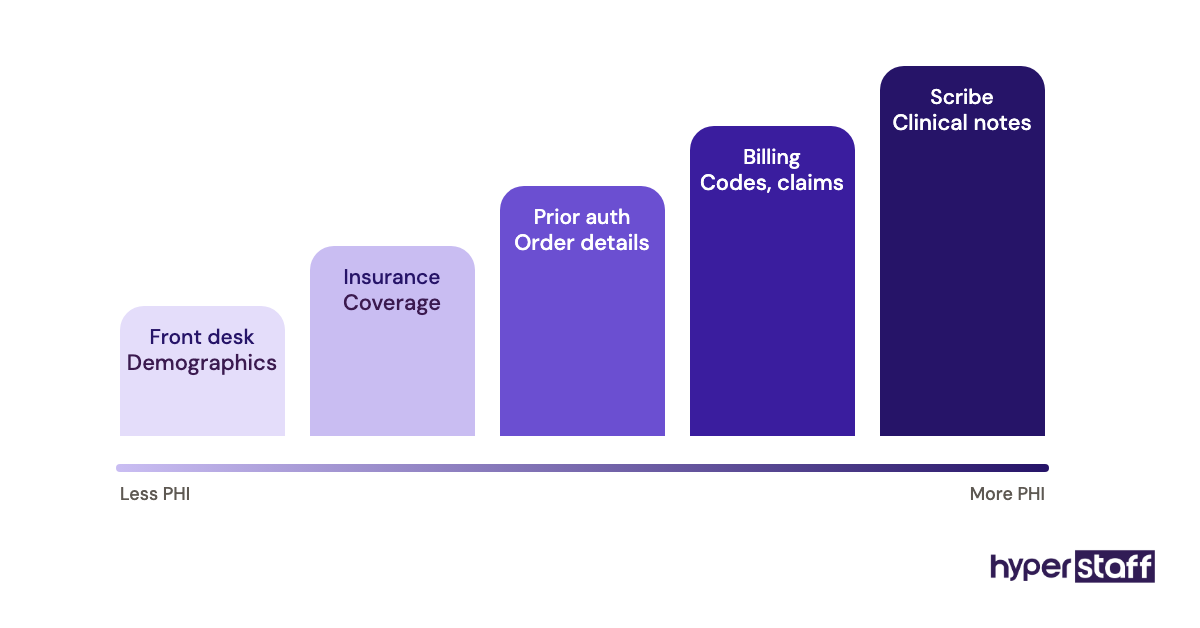
Medical virtual assistant roles split by where in the patient journey the work sits. Each type needs a different job description, because the systems and the skill test change.
| Role type | Core duties to list | Systems to name | Must-have experience |
|---|---|---|---|
| Front desk / scheduling | Calls, booking, confirmations, waitlist | EHR scheduler, phone system | Patient-facing calls |
| Insurance verification | Eligibility, benefits, copay estimates | Payer portals, clearinghouse | US payer portals |
| Prior authorization | Submit, track, appeal requests | Payer portals, fax, EHR | Specialty payer rules |
| Medical billing | Charge entry, claims, denials, posting | PM / billing system | CPT, ICD-10, denial work |
| Medical scribe (remote) | Live or recorded visit documentation | EHR notes, audio platform | Medical terminology |
| Patient intake | Registration, forms, records requests | Intake forms, EHR | Data entry accuracy |
| Practice operations | Inbox, vendor follow-up, reports, SOPs | Email, task tools, EHR reports | Office management |
How does a medical VA job description differ from related roles?
A medical VA job description differs from its neighbours mostly in access rules and location details. The duties overlap a lot, so the differences sit in the parts people tend to skip.
Medical VA vs. in-house medical receptionist
An in-house receptionist description covers check-in, copay collection at the desk and physical mail. A remote one replaces those with device, connection and privacy requirements, and it names the time zone overlap. The full trade-off is laid out in medical virtual assistant vs in-house.
Medical VA vs. medical scribe
A scribe description centres on note quality, speed and provider preferences inside the chart. It requires clinical-note access that a front desk assistant should never get, which is the biggest reason to keep the two descriptions separate.
Medical VA vs. general virtual assistant
A general VA description rarely mentions HIPAA, PHI or payer portals. Reusing one for a practice hire is a common slip, and the result is a candidate pool that's strong on inbox work and lost on eligibility checks.
The benefits of a detailed job description
- Fewer unqualified applicants, because volumes and systems filter people out before they apply.
- Interview questions write themselves from the duties list.
- Access is decided in advance, which keeps PHI exposure to what the role needs.
- The new hire knows what "good" looks like by day 30.
- A replacement can be briefed from the same document if the first hire leaves.
The drawbacks of a detailed job description
- It takes an afternoon of counting real volume before you write anything.
- Very specific EHR requirements can shrink the pool more than you expect.
- It goes stale when you add a provider or switch systems, so someone has to own updates.
Who needs a medical virtual assistant job description?
Any practice bringing in remote admin help needs one, from a solo provider adding 40 hours a month to a multi-site group hiring several specialists. The document matters most where phones ring past capacity or prior authorizations pile up.
Practices still weighing whether a medical virtual assistant is worth it gain from drafting one early. Writing the duties out often shows the role is smaller, or bigger, than it felt.
Medical virtual assistant job description examples
Single lines decide whether a job description works. Below are pairs we'd keep and lines we'd rewrite before posting.
Good job description examples
A scheduling duty with a number in it
"Book and confirm appointments for three providers in athenaOne, about 45 calls a day." A candidate reads that and knows the pace, the system and the load.
An insurance duty with a deadline
"Verify eligibility for all visits two business days ahead." It sets a check you can audit any morning.
An access line that names screens
"Access to scheduling, demographics and insurance tabs only." Clear limits make the security conversation short.
Bad job description examples
The catch-all duty
"Other duties as assigned" invites scope creep, and in a medical setting that can mean clinical tasks nobody approved. Name the extra duties or leave the line out.
The five-EHR wish list
Demanding experience in Epic, eClinicalWorks, NextGen, Tebra and athenaOne cuts the pool to almost nobody. Ask for one EHR, plus proof the candidate has learned a new system before.
The shift with no time zone
"9 to 5" means nothing to a candidate several time zones away. Write the hours in your patients' time zone and the overlap you need.
Which tools and software should the job description name?
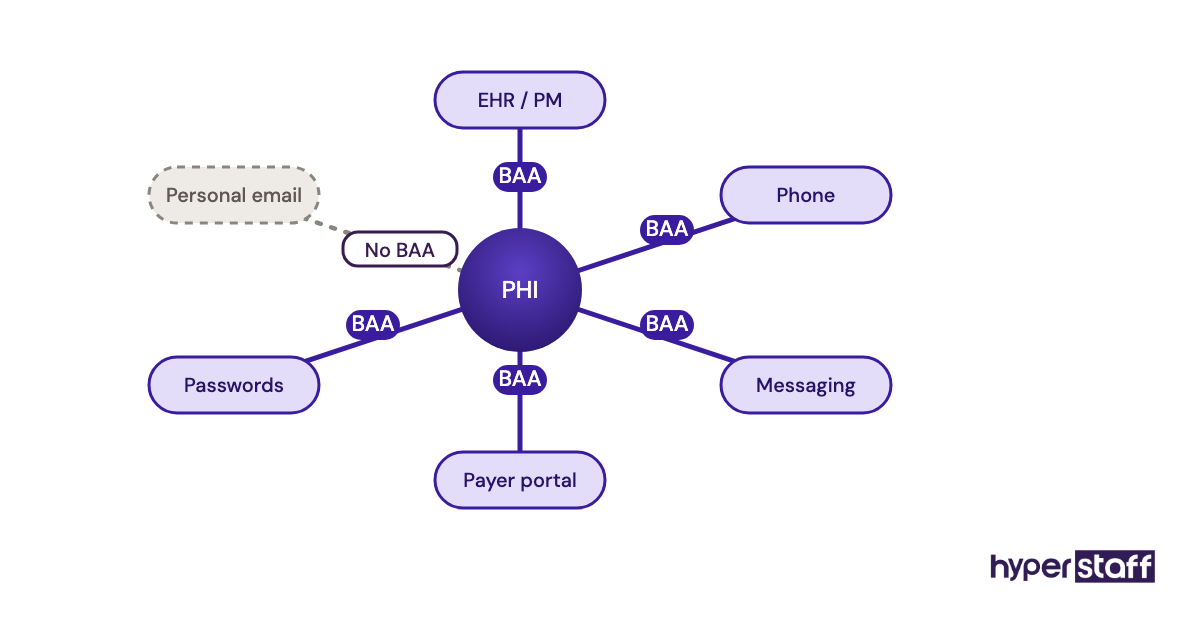
Name every system the assistant will log into on day one: the EHR or practice management platform, the phone system, secure messaging, payer portals and a password manager. Common EHR and PM platforms in small practices include Epic, athenaOne, eClinicalWorks, NextGen and Tebra.
Any outside tool that stores or transmits PHI needs a signed BAA with the vendor, so confirm that before listing it. Our breakdown of medical virtual assistant tools goes through phone, messaging and password options one by one.
8 proven tips for writing a medical VA job description
These tips come from what tends to go wrong between the posting and the first month.
- Use the title patients and candidates search, such as "Medical Virtual Assistant," and add the focus in brackets.
- Put the time zone and overlap hours in the first five lines.
- List duties in the order the assistant will spend the most time on them.
- Write volumes as rough daily or weekly counts.
- Ask for one EHR you use, plus evidence of learning new software.
- Include one practical task in the application, such as answering a denied-claim question.
- State the device and private-room rules before the interview, since some candidates can't meet them.
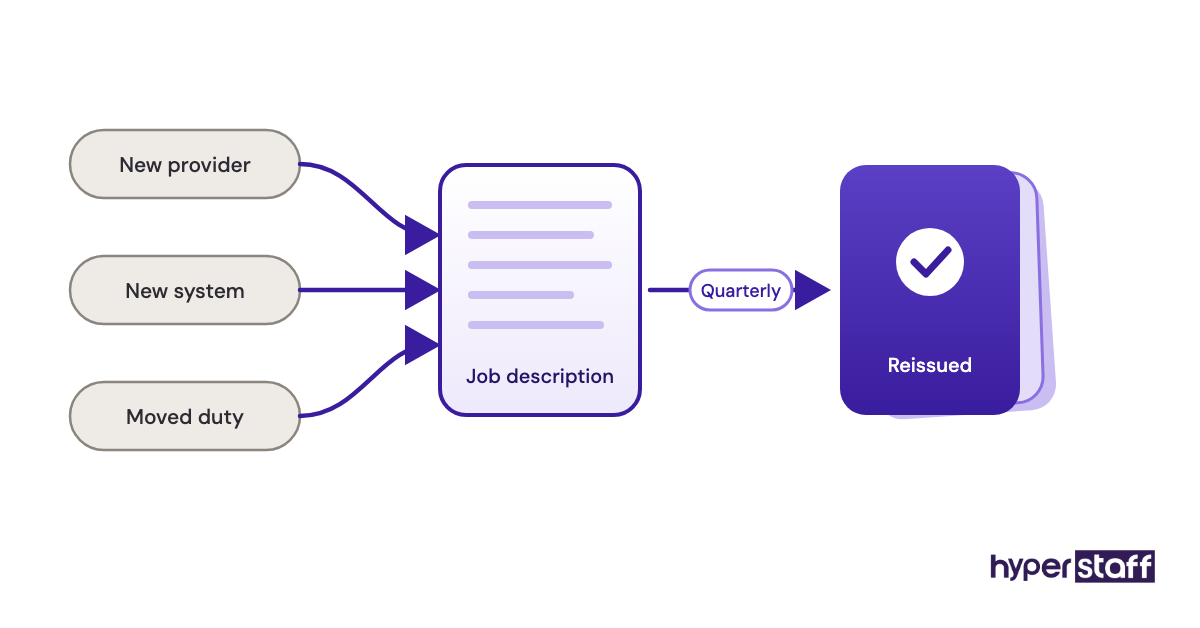
- Review the description every time you add a provider or change a system.
Once the posting is live, the next step is the screen itself. How to hire a medical virtual assistant lays out the order, and these medical virtual assistant interview questions map to the duties in the template.
Overcoming common job description challenges
The hardest part is usually not knowing the real workload. Pull one week of reports from the phone system and EHR before writing, even if the numbers look messy.
Scope drift is the second problem. Practices add billing, then records requests, then marketing, until the description no longer matches the person, so a quarterly review keeps the document honest.
Many of the hiring medical virtual assistant mistakes we see start here, with a description written once and never touched again.
How to measure job description success
A job description works when the applicant pool fits and the new hire hits the 30-day measures in it. Track how many applicants pass the first screen and how many interview answers line up with the listed duties.
After placement, compare the written duties with what the assistant actually does in week four. A big gap means either the document or the handover went wrong, and both are fixable.
How long does a medical VA job description take to work?
Writing it takes two to four hours once you have a week of volume data. Applications usually arrive within days on a job board, though screening for healthcare experience takes longer than the posting itself.
Through an agency the timeline shortens. Hyperstaff places a pre-vetted specialist in 5 business days, then a 30-minute kickoff call starts the work that day or the next morning.
How much does a medical virtual assistant cost?
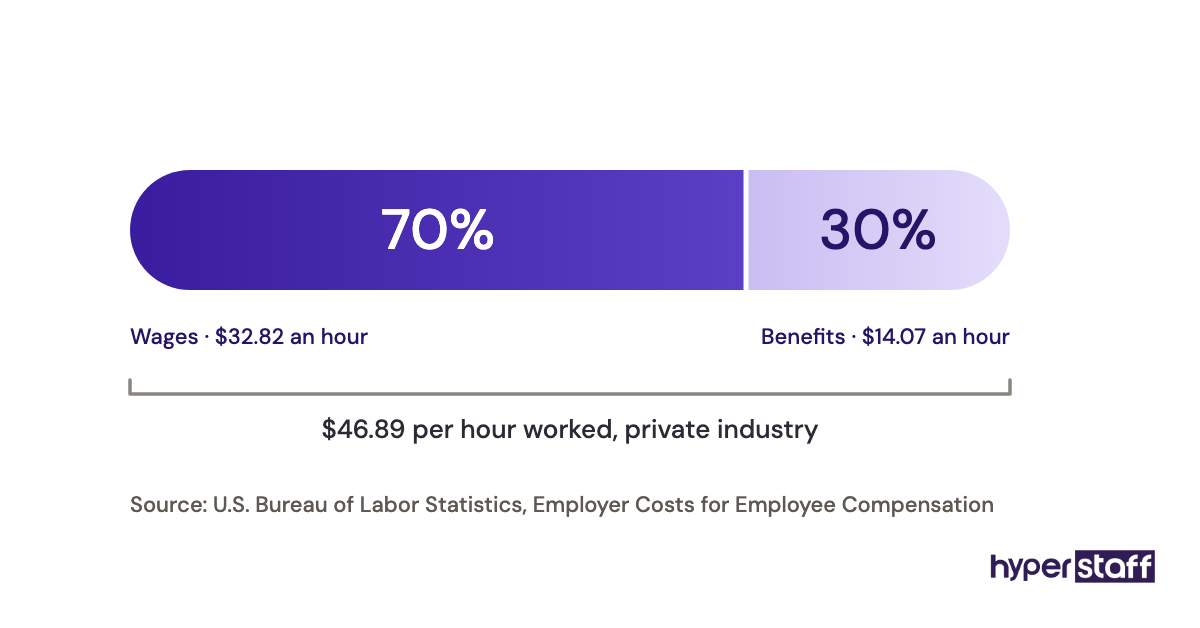
A full-time medical virtual assistant through Hyperstaff starts from about $480 a month at the Essential tier, while an in-house medical secretary earns a median of $45,930 a year in wages alone, according to the U.S. Bureau of Labor Statistics. Payroll tax, benefits and equipment add more on top of that.
| Option | Experience | Hourly rate | 160 hours a month |
|---|---|---|---|
| Hyperstaff Essential | 0 to 2 years | From $3 | From $480 |
| Hyperstaff Professional | 2 to 5 years | From $6 | From $960 |
| Hyperstaff Expert | 5+ years | From $12 | From $1,920 |
| In-house medical secretary (wage only) | Varies | About $22 | About $3,830 |
| In-house, with employer costs | Varies | About $27 to $31 | About $4,700 to $5,400 |
Hyperstaff bundles come in 40, 80 or 160 hours a month, and paying quarterly saves 10%. More detail sits in our medical virtual assistant cost breakdown.
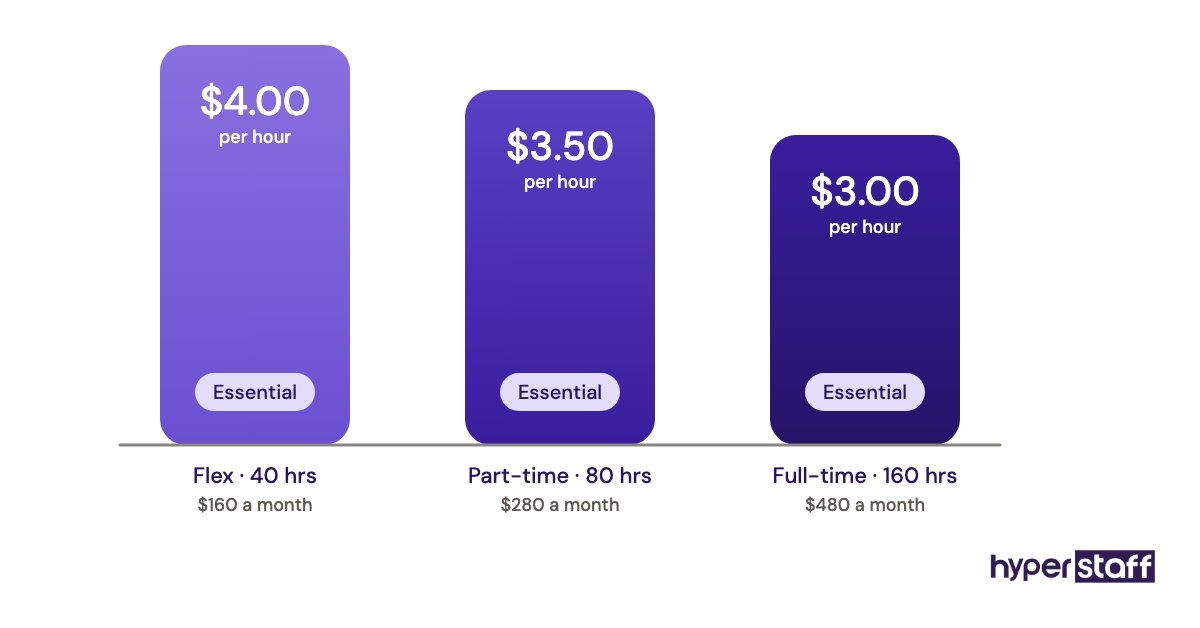
Important: Our rates above are starting averages. Your final price depends on the tier, hours and specific work your practice needs.
Is writing a detailed medical VA job description worth it?
Yes, and it's one of the highest-return afternoons a practice manager can spend. The document decides who applies, what they're allowed to touch and how you'll judge them, so every hour in it saves several in hiring and correction later.
Take a practice choosing a full-time Professional-tier assistant at $960 a month instead of an in-house hire at about $3,830 a month in wages. That gap is roughly $2,870 a month, or about $34,000 a year, before in-house benefits are counted.
The saving only holds if the hire works out. A replacement costs time even when it's free, which is why the job description is where that money gets protected.
How to choose a medical virtual assistant agency
Choose an agency that will read your job description and match one dedicated person to it, rather than rotating whoever is free. Ask whether they sign a BAA, how they vet healthcare experience and what happens when a placement doesn't fit.
Replacement terms matter more than they look on a sales call. Hyperstaff replaces a specialist free in 5 to 7 business days, briefed from your Operations Vault, which holds your SOPs, tools and context in writing.
Practitioners disagree on one point: whether to demand prior US healthcare experience or train strong generalists. For insurance and prior authorization work, we lean hard toward prior experience, while a front desk role can be trained if your SOPs are written down.
Medical VA statistics, trends and future predictions
Demand for healthcare admin staff is rising. The BLS projects 5 percent growth for medical secretaries and administrative assistants over its ten-year window, about 47,100 added jobs, driven mainly by growth in healthcare.
Remote roles are splitting into specialties. Expect more postings for verification-only or authorization-only assistants, and fewer "do everything" descriptions, as practices find narrow roles easier to measure.
Medical virtual assistants and AI
AI tools now draft visit notes, answer simple scheduling calls and pre-fill eligibility checks, which changes what the job description should say. The assistant increasingly reviews and corrects AI output rather than producing every entry by hand.
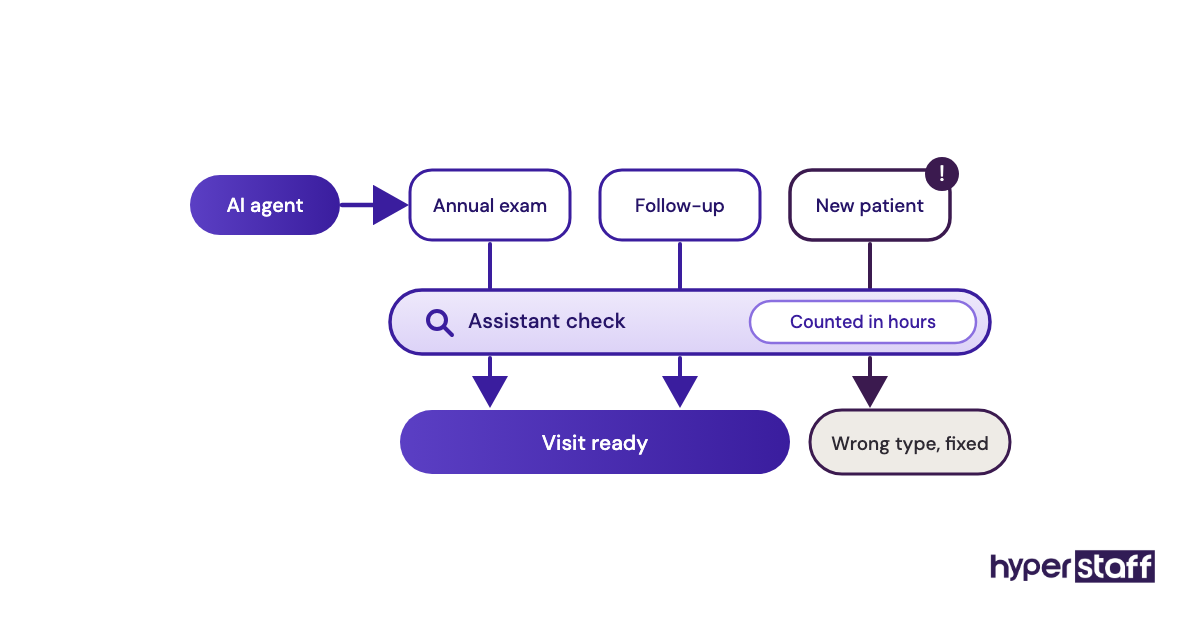
Add a line naming any AI tools in use and what the assistant checks. An AI phone agent that books the wrong visit type creates work, and someone has to catch it before the patient arrives.
Disclaimer: This article is general information, not legal, HIPAA compliance or employment advice. Figures are estimates and may change. Consult qualified professionals before making hiring or compliance decisions.
Common questions
What should a medical virtual assistant job description include?
Include the title, schedule with time zone, duties with volumes, systems, data access limits, the clinical boundary, requirements and 30-day success measures. Pay or engagement terms help too.
Should I put the pay rate in the posting?
It depends on your market and local rules, as some US states require pay ranges in job postings. Listing a range usually raises applicant quality, because people outside it don't apply.
Do medical virtual assistants need a certification?
No certification is legally required for admin work. HIPAA training and coding knowledge for billing roles are worth listing as must-haves or strong preferences.
Can one medical VA cover scheduling and billing?
You can combine them in a part-time practice with modest volume. As volume grows, split them, since billing needs focused time that phones keep interrupting.
How often should I update the job description?
Update it whenever you add a provider, change a system or move a duty. A quarterly check is enough for most small practices.
Book a free 15 min call
We place a pre-vetted specialist in 5 business days, fully managed, from $3/hour.