Real Estate Virtual Assistant Tasks: 8 Checks Before You Delegate
Eight real estate virtual assistant tasks worth checking before you delegate them, with what to look at, why each one matters and how to know it's done.
On this page
- Check 1: How fast does your VA reply to a new portal lead?
- Check 2: Is your CRM clean enough to trust?
- Check 3: Who checks listing data before it reaches the MLS?
- Check 4: Does every contract deadline have an owner?
- Check 5: Are sellers hearing showing feedback every week?
- Check 6: Fair Housing review on every ad and post
- Check 7: Who keeps past clients from forgetting the agent?
- Check 8: Where does the VA stop and the agent take over?
- FAQs
💡 Key Takeaways:
1) The real estate virtual assistant tasks that pay back fastest are lead response, CRM upkeep, listing prep, contract deadline tracking and weekly seller updates, because speed and accuracy decide whether a deal keeps moving.
2) Every delegated task needs a written standard and a clear "done" test before handoff, or quality drifts within weeks and the agent ends up redoing the work.
3) State license laws limit what an unlicensed assistant can do, such as negotiating or giving price opinions, so the task list has to mark exactly where the VA stops and the agent takes over.
Faster follow-up turns more leads into closings
Hyperstaff places dedicated real estate virtual assistants who learn one business and stay with it. We've served 30+ clients and placed 70+ assistants, with placement in 5 business days and rates from $3/hour. Every client gets a dedicated account manager, plus a free replacement in 5 to 7 business days if the fit is wrong.
Check 1: How fast does your VA reply to a new portal lead?
Lead response is the first real estate virtual assistant task worth auditing, since a portal inquiry cools within hours. The test is plain: the time from inquiry to first human reply, and where that lead lands in the CRM.
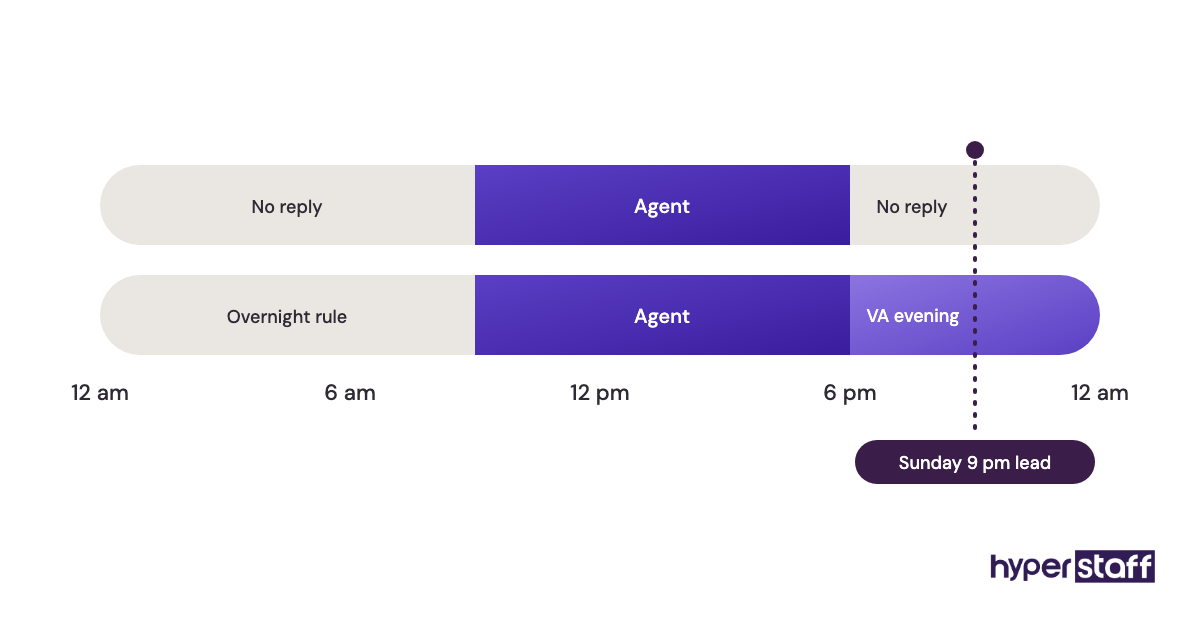
The gap almost always sits in off-hours. Leads that arrive at 9 p.m. or on a Sunday wait until Monday when nobody wrote down who covers those hours. If you're still mapping what a real estate VA does, start here, because response time is the easiest result to measure.
What to look at in the lead flow
Pull the last 20 leads from your CRM and check each one against this list:
- Minutes from inquiry to first reply
- Reply sent by text and email, plus a call attempt
- Lead source tagged (Zillow, Realtor.com, website, sign call)
- Hot leads routed to the agent's phone
- Evening and weekend coverage written down
Why the first hour decides the lead
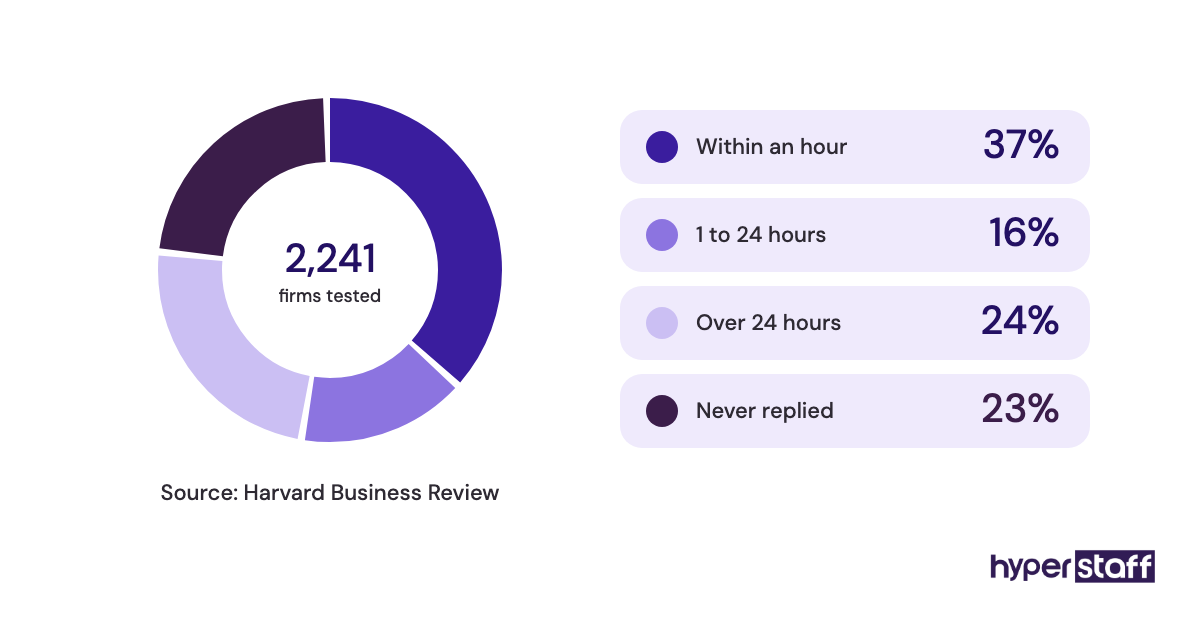
A Harvard Business Review study of online sales leads found that most companies don't respond nearly fast enough. Portal buyers also tend to message several agents about several homes, so the first useful reply often wins the conversation.
Time zones help here. A VA in the Philippines or India covers U.S. evenings during their normal working day, which is the main reason offshore lead coverage works at all.
Done when every lead has a clock on it
Every new lead gets a first reply inside the window you set. The CRM shows source, stage and next touch date for each one.
A short weekly report lists any lead that missed the window, with the reason. Two misses in a row from the same source usually point to a broken notification, so check the routing before blaming the VA.
Check 2: Is your CRM clean enough to trust?
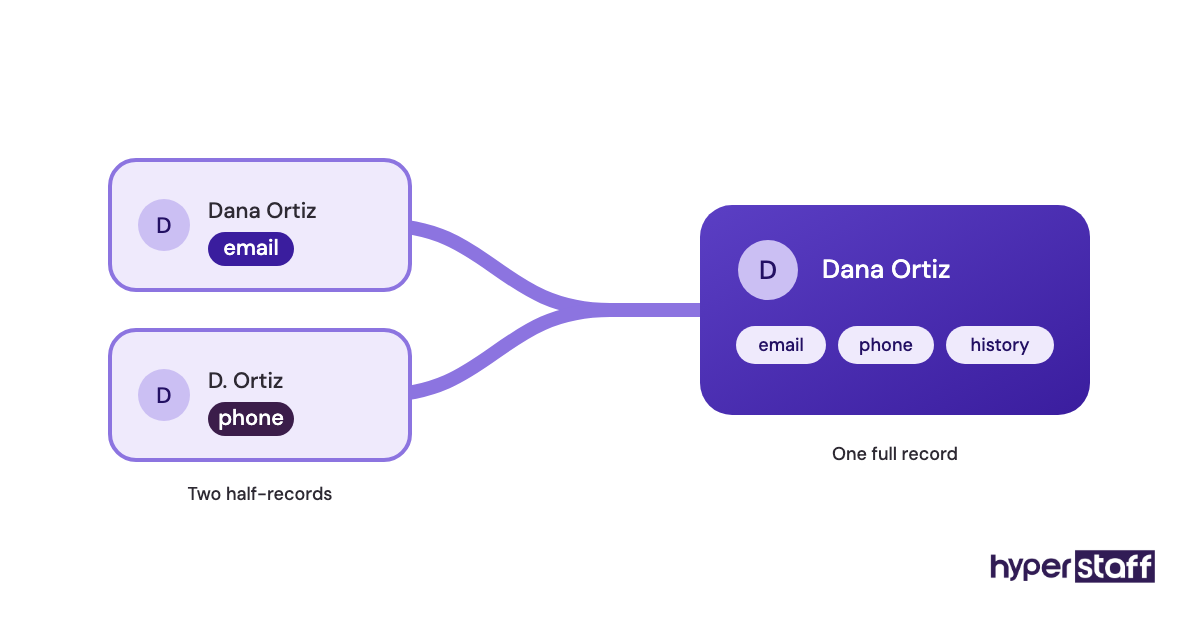
CRM hygiene is the real estate virtual assistant task nobody notices until a past client lists with another agent. The check covers duplicates, stage tags and whether every active contact has a future touch date.
Follow Up Boss and BoldTrail (formerly kvCORE) both make this easier with smart lists, and we'd set those up before anything else. The lists only work if the tags underneath are consistent, though. One person tagging "past client" and another tagging "closed buyer" splits your database in two without anyone noticing.
What to audit in the database
Sort by last activity and spot-check a mix of old and new records:
- Duplicate contacts merged
- One stage tag per contact
- Next touch date on every active lead
- Call notes logged the same day
- Dead leads archived with a reason
What a messy CRM costs
Duplicates send two emails to the same seller and none to the buyer who stopped replying. Once agents stop trusting the CRM, follow-up moves back into memory and sticky notes, and the database stops earning anything.
Spell out the tag list in your real estate VA job description so the standard exists before the first login. The same goes for the rest of your real estate VA tool stack: name the tool for each job, or the VA will pick one.
Signs the CRM job is finished
A random pull of 20 contacts shows no duplicates, one stage each and a future touch date on every active lead. The tag list lives in a shared document that the VA updates whenever a new tag is added.
At Hyperstaff, that tag list goes into the client's Operations Vault. A replacement VA then works from the same system on day one.
Check 3: Who checks listing data before it reaches the MLS?
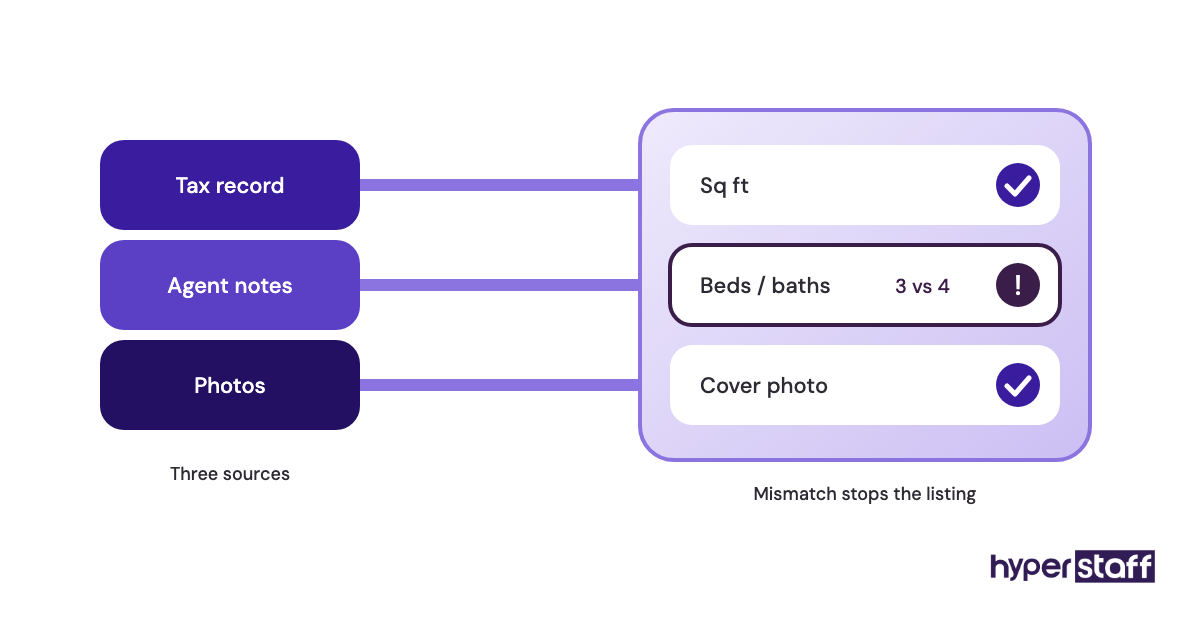
Listing prep is a real estate virtual assistant task with a hard cost for errors, since wrong square footage or bedroom counts can draw MLS fines and buyer complaints. The VA builds the listing sheet and checks every field against source documents before anything goes live.
Login access is the catch most teams miss. Many MLSs prohibit sharing an agent's credentials and offer a separate assistant or staff account instead, so check your board's rules first. Ask about MLS data entry experience when hiring a real estate VA, because accuracy is easier to hire for than to train.
Fields to verify on every listing
Compare the draft listing to the tax record, the agent's notes and the photos:
- Square footage matches the tax record or appraisal
- Bed and bath count matches the agent's notes
- Photo order opens with the strongest exterior
- Remarks pass the Fair Housing word check
- Showing instructions and lockbox notes correct
- Portal syndication confirmed a day later
Why one typo travels so far
Zillow, Realtor.com and brokerage sites pull from the MLS, so a single error shows up everywhere at once. Fixing it takes minutes, but the wrong version may already sit in buyers' saved searches and email alerts.
Listing prep is complete when
Every field on the listing sheet ties back to a document or the agent's signed-off intake form. The VA checks the live listing on two portals within a day and flags any mismatch to the agent.
Check 4: Does every contract deadline have an owner?
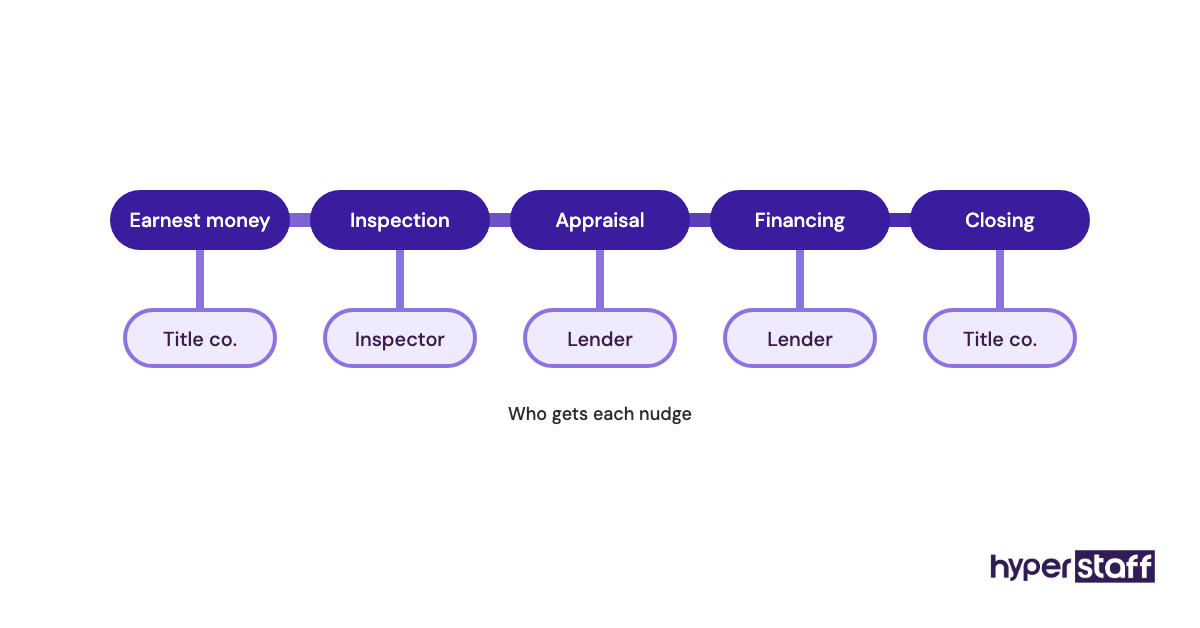
Contract deadline tracking is where a real estate virtual assistant earns the most trust, because a missed contingency date can cost a client their deposit. The VA builds a timeline from the signed contract and sends reminders well ahead of each date.
Dotloop and SkySlope both store documents well. Neither one replaces a plain deadline tracker that someone reads every morning, and that morning read is the actual job.
Items on the transaction tracker
Open any pending file and confirm these are in place:
- Inspection, appraisal and financing dates entered
- Reminders set two to three days ahead
- Lender, title and co-op agent contacts listed
- Missing signatures and initials flagged
- Earnest money receipt confirmed
What a missed date does to a deal
The contract fixes the dates, and in many states a buyer who misses a contingency deadline loses the right to cancel on that ground. Lenders and title companies also move faster when one person chases them on a schedule.
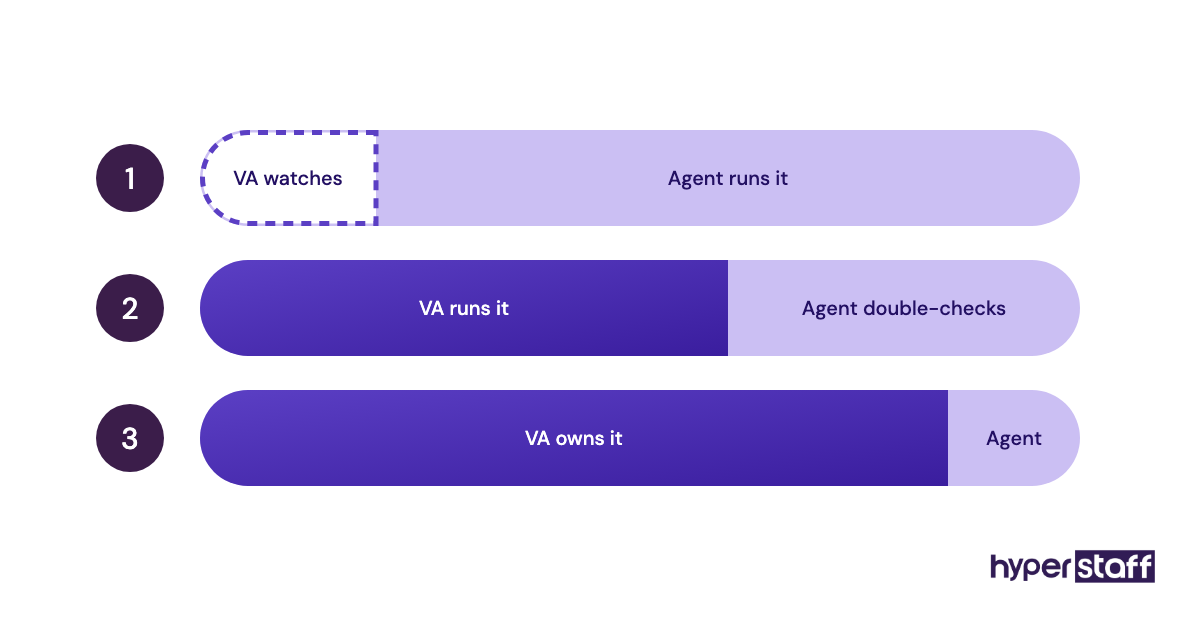
We'd hand this task over in stages. The VA shadows two or three files, then runs the tracker while the agent double-checks it, then owns the reminders. Expect dead time of a few weeks between stages, since files close on their own clock, and build that into your onboarding plan for your VA.
The deadline check passes when
Each open file has a dated timeline, and the agent gets a short morning list of everything due in the next 72 hours. No deadline is ever spotted by the agent first.
Check 5: Are sellers hearing showing feedback every week?
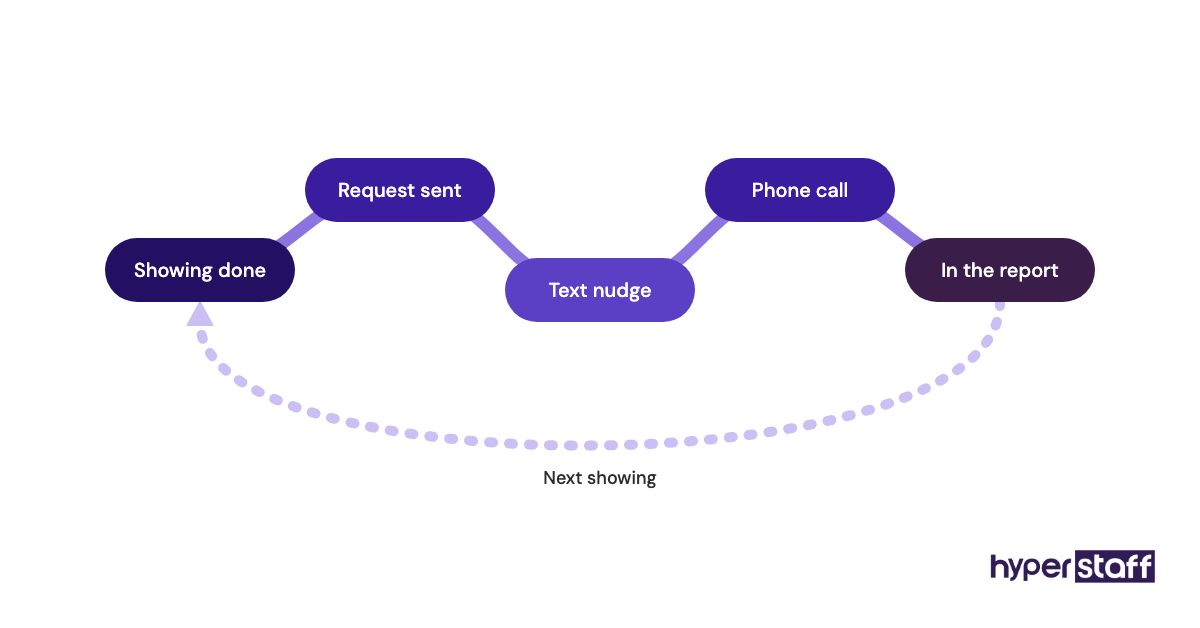
Showing feedback is a low-profile real estate virtual assistant task that shapes seller trust more than most listing marketing. The VA collects comments from buyer agents and turns them into a short weekly report for the seller.
ShowingTime sends feedback requests on its own. Buyer agents often ignore them, so the VA's real work is the follow-up text or call that gets an answer.
What to confirm in the feedback loop
Line up last week's showings with the feedback you actually received:
- A feedback request for every showing
- Silent agents chased within 48 hours
- Comments grouped by price, condition and layout
- Report sent on the same weekday each week
Why silence makes sellers nervous
Sellers who hear nothing tend to assume nothing is happening. A steady record of what buyers said gives the agent facts to point to when a price conversation comes up.
Feedback chasing also fits neatly into a part-time block, which affects what a real estate VA costs. Hyperstaff's monthly bundles come in 40, 80 or 160 hours, and a single active-listing workload rarely needs the largest one.
Feedback is handled when
The seller gets a one-page report on schedule, with every showing listed and a status next to each. The agent reads it before it goes out.
Check 6: Fair Housing review on every ad and post
Fair Housing compliance belongs on the task list wherever a real estate virtual assistant writes copy, posts listings or runs ads. The federal Fair Housing Act bars discrimination based on race, color, religion, sex, national origin, familial status and disability, and that covers advertising.
Phrases like "perfect for young families" or "ideal for a single professional" are the usual slips. Meta also requires housing ads to run under its Special Ad Category, which restricts targeting by age, gender and ZIP code.
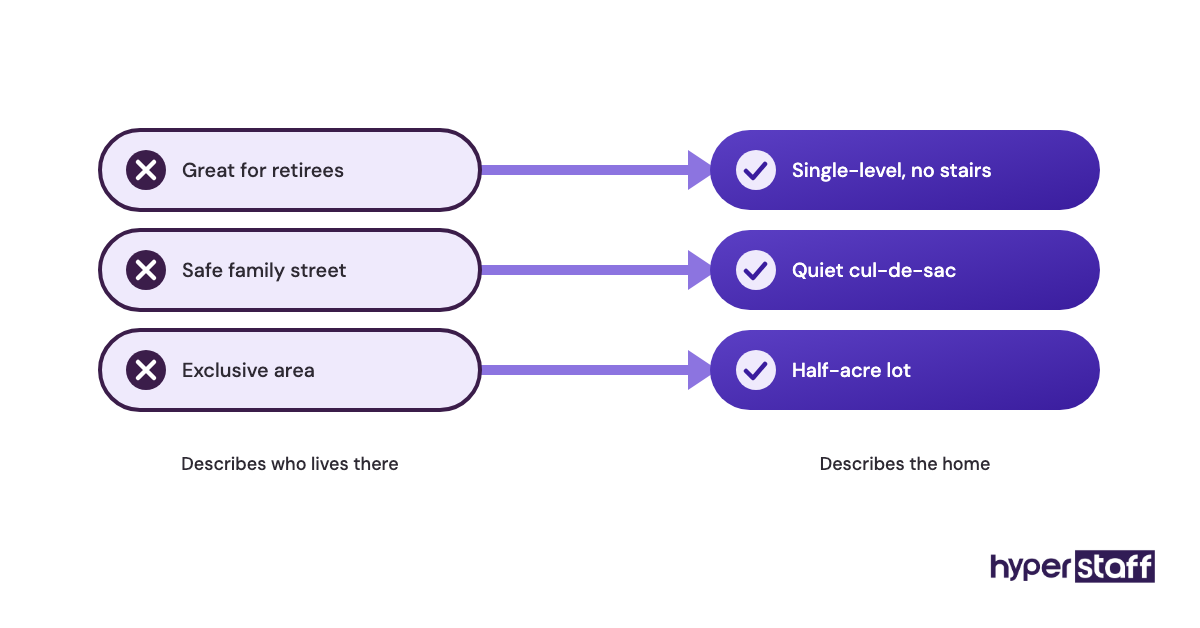
Brokers genuinely disagree on borderline words like "walking distance." Older HUD guidance treated phrases like that as acceptable, yet plenty of brokerages ban them anyway to keep reviews quick, and both positions are defensible.
Copy checks before anything posts
Run each caption, listing remark and ad through these points:
- Copy describes the home and its features only
- No words about who should live there
- Housing ads set to the Special Ad Category
- Equal Housing Opportunity logo where required
- Brokerage name shown per state rules
Who carries the risk
Liability for an ad lands on the licensed agent and the broker. A VA writing posts every week needs a written banned-word list, because spotting bias in your own copy is hard.
Marketing compliance is in place when
Every piece of copy passes the word list before posting. The agent or broker signs off on anything that runs as a paid ad, and the ad account shows housing as the declared category.
Check 7: Who keeps past clients from forgetting the agent?
Past-client nurture is the real estate virtual assistant task with the slowest payoff and the longest tail. The VA runs home anniversary messages, market update emails and review requests from a calendar, so the sphere hears from the agent several times a year.
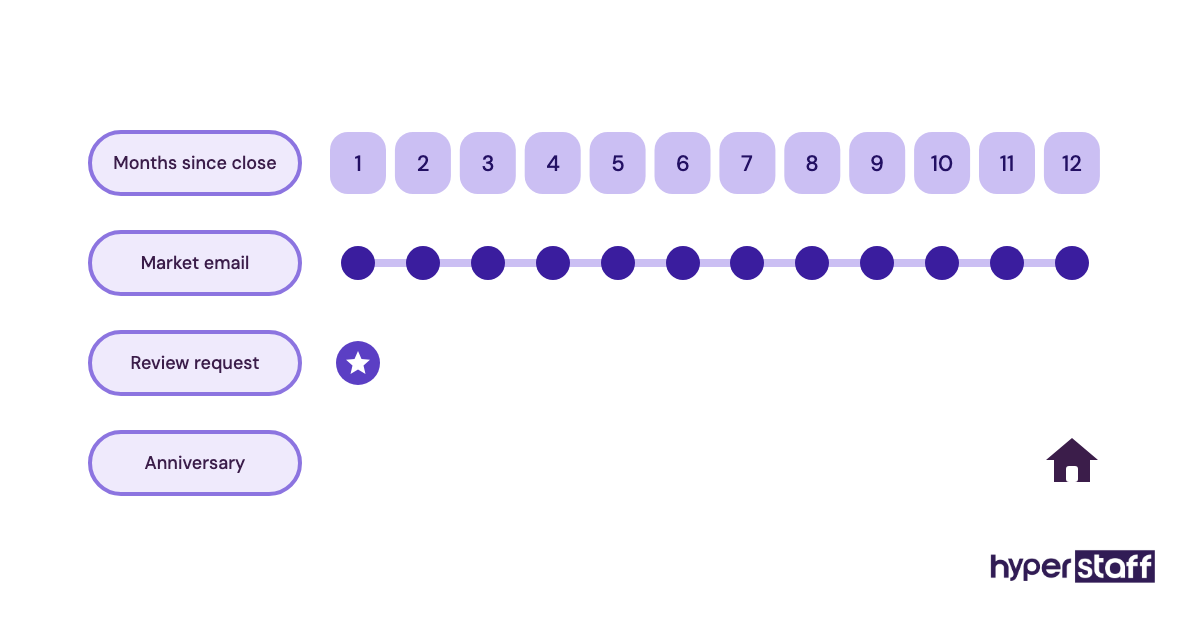
Results here compound. A database touched on schedule keeps producing referrals and repeat listings for years, and a skipped quarter is easy to miss and hard to make up.
What belongs in the nurture calendar
Check that the CRM holds what the calendar depends on:
- Closing dates loaded for anniversary touches
- Review request sent within a week of closing
- Monthly market email scheduled
- Birthdays and move dates logged where known
Why the sphere outlasts paid leads
Referrals and repeat clients come without a portal lead fee, and they depend almost entirely on staying in touch. Timing review requests matters too: a few days after closing, once the stress has faded, beats the closing day itself.
Nurture is also the task that best answers whether a real estate VA pays off. The return arrives late, often a year or more after setup, so judge it on touches sent until the referrals start showing up.
The sphere is covered when
Every closed client has a dated touch plan for the next 12 months in the CRM. The VA reports monthly on touches sent and reviews received.
Check 8: Where does the VA stop and the agent take over?
License limits decide which real estate virtual assistant tasks stay with the agent. State license laws generally bar unlicensed assistants from negotiating, giving opinions on price or value and interpreting contract terms, and some states restrict cold calling beyond a set script.
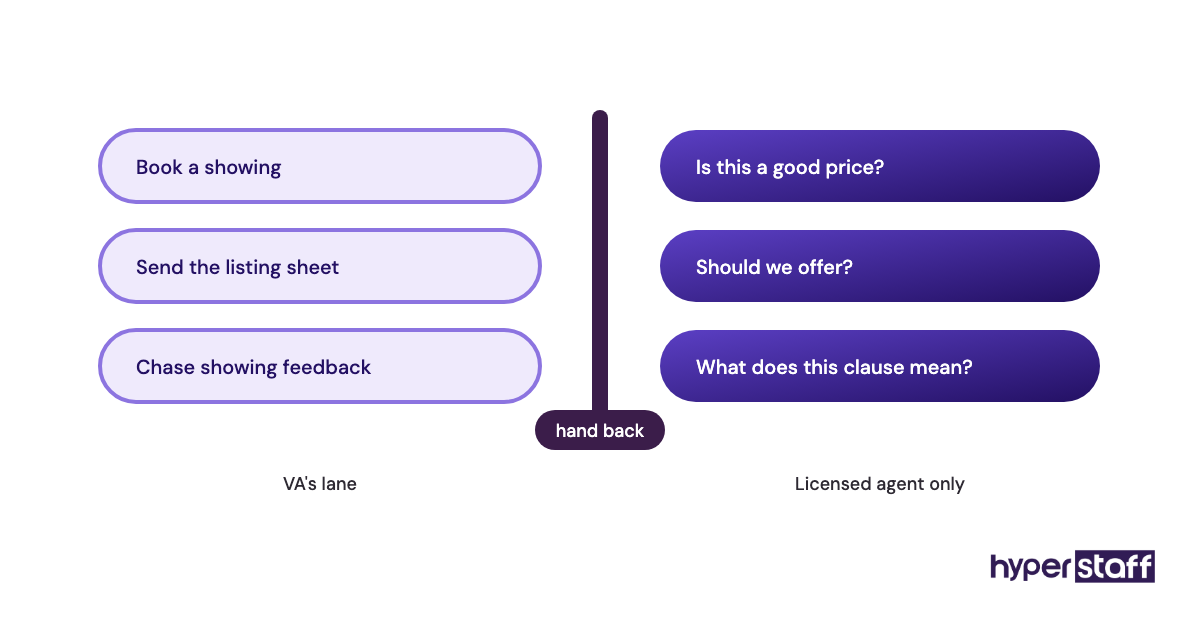
The rules vary by state, and a few states license assistants separately. Check with your broker or state real estate commission before you finalize the task list. Crossing this line by accident is one of the common real estate VA mistakes we'd flag first.
Boundaries to write down
Put these in writing and keep them next to the task list:
- Tasks the VA never does
- Scripts for price and contract questions
- A hand-back rule for "Should we offer?" questions
- Broker approval of the VA's role
- A licensed VA option if the plan needs one
Why one friendly answer can hurt
A buyer asking the VA "Is this a good price?" wants an opinion only a licensee can give. A helpful answer from the VA can put the agent's license at risk.
Test for this during hiring with interview questions for real estate VAs that include a price question, and see whether the candidate hands it back. The same limits apply to an unlicensed in-house hire, so they don't change when you weigh a VA versus an in-house assistant.
The boundary is clear when
The VA can state the hand-back rule without notes, and a script covers the price and contract questions clients ask most. The broker has read the task list and signed off.
Disclaimer: This article is for general information only and isn't legal, compliance or real estate licensing advice. Rules for unlicensed assistants, advertising and contracts vary by state and local jurisdiction. Confirm requirements with your broker, state real estate commission or a qualified attorney before acting on any of it.
Common questions
How many hours a week do real estate VA tasks take?
It depends on deal volume and which tasks you hand over. Lead response and CRM upkeep alone fit in a part-time block, while adding transaction coordination for several open files usually needs full-time hours. Hyperstaff offers monthly bundles of 40, 80 or 160 hours.
Which real estate VA tasks should I delegate first?
Start with lead response and CRM cleanup. Both have clear standards and quick, measurable results, and both feed every task that comes after. Leave contract deadlines until the VA knows your files.
Can a real estate virtual assistant track commissions and expenses?
Yes. A VA can log commission splits, track referral fees owed and sort receipts into your bookkeeping tool. Final tax decisions still belong with your accountant.
Can one VA handle tasks for a whole real estate team?
You can share one VA across a small team if every agent follows the same CRM tags and request process. Once agents start sending tasks through different channels, priorities clash and response times slip, so most growing teams add a second VA by role.
Do real estate VAs work with property management tasks too?
Yes, a VA can handle tenant inquiries, maintenance request logging, rent reminders and listing vacancies. Screening decisions and anything covered by landlord-tenant law should stay with the licensed manager or owner.
Book a free 15 min call
We place a pre-vetted specialist in 5 business days, fully managed, from $3/hour.