How to Hire a Small Business Virtual Assistant Without Wasting a Month
Hiring a small business virtual assistant goes well when the role is scoped, the candidate is tested on real work and the handover is planned before day one.
On this page
- What Does Hiring a Small Business Virtual Assistant Involve?
- Key VA Hiring Terms You Should Know
- Why Does Hiring the Right VA Matter So Much for a Small Business?
- How Does the VA Hiring Process Work?
- Ways to Hire a Virtual Assistant: Routes and Arrangements
- How Is Hiring a VA Different From Other Ways to Get Help?
- Hiring a VA vs. Hiring a Freelancer
- Hiring a VA vs. Hiring an In-House Assistant
- Hiring a VA vs. Using an AI Assistant
- The Benefits of Hiring a Small Business VA
- The Drawbacks of Hiring a Small Business VA
- Who Should Hire a Small Business Virtual Assistant?
- Small Business VA Hiring Examples
- Good VA Hiring Examples
- Bad VA Hiring Examples
- Creating a VA Hiring Plan, Step-by-Step
- Step #1
- Step #2
- Step #3
- Step #4
- Step #5
- What Does an Effective VA Hiring Strategy Look Like?
- Tools for Hiring and Working With a VA
- 9 Proven VA Hiring Tips and Best Practices
- How Do You Handle Common VA Hiring Challenges?
- How Do You Measure Whether a VA Hire Worked?
- How Long Does Hiring a VA Take to Work?
- How Much Does It Cost to Hire a Small Business VA?
- Is Hiring a Small Business Virtual Assistant Worth It?
- How Do You Choose a VA Staffing Agency?
- VA Hiring Statistics, Trends and Future Predictions
- Hiring a Virtual Assistant and AI
- FAQs
Hire right once and get your selling hours back
Hyperstaff matches owners with pre-vetted specialists through its virtual assistant services for small businesses, with placement in 5 business days and rates from $3/hour. We've placed 70+ virtual assistants with 30+ clients, and every client gets a dedicated account manager plus a free replacement in 5 to 7 business days if the fit is wrong.
What Does Hiring a Small Business Virtual Assistant Involve?
Hiring a small business virtual assistant means finding a remote worker, vetting them on real tasks and handing over part of your workload under clear rules. The work can be admin, customer support, lead generation, bookkeeping prep, social media or operations, depending on what you scope.
If the role itself is still fuzzy, start with what a small business virtual assistant is and what the job usually covers. The hiring steps only work once you know which job you're filling.
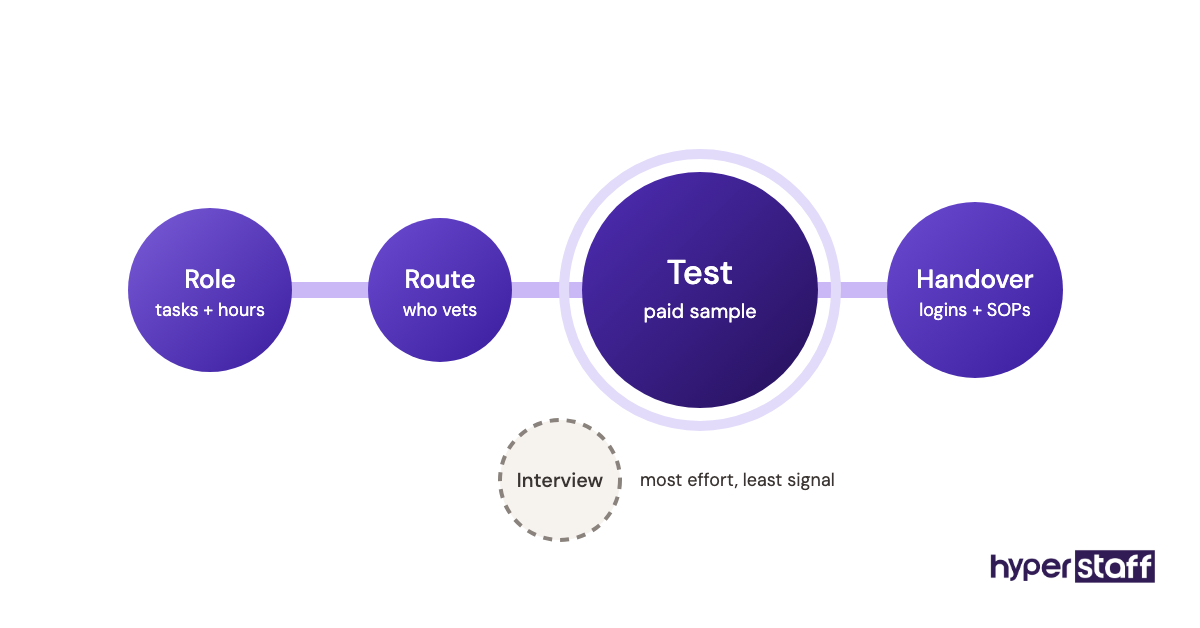
The hire has four moving parts: the role, the hiring route, the test and the handover. Owners tend to spend most of their effort on the interview, which is the part that predicts the least.
Key VA Hiring Terms You Should Know
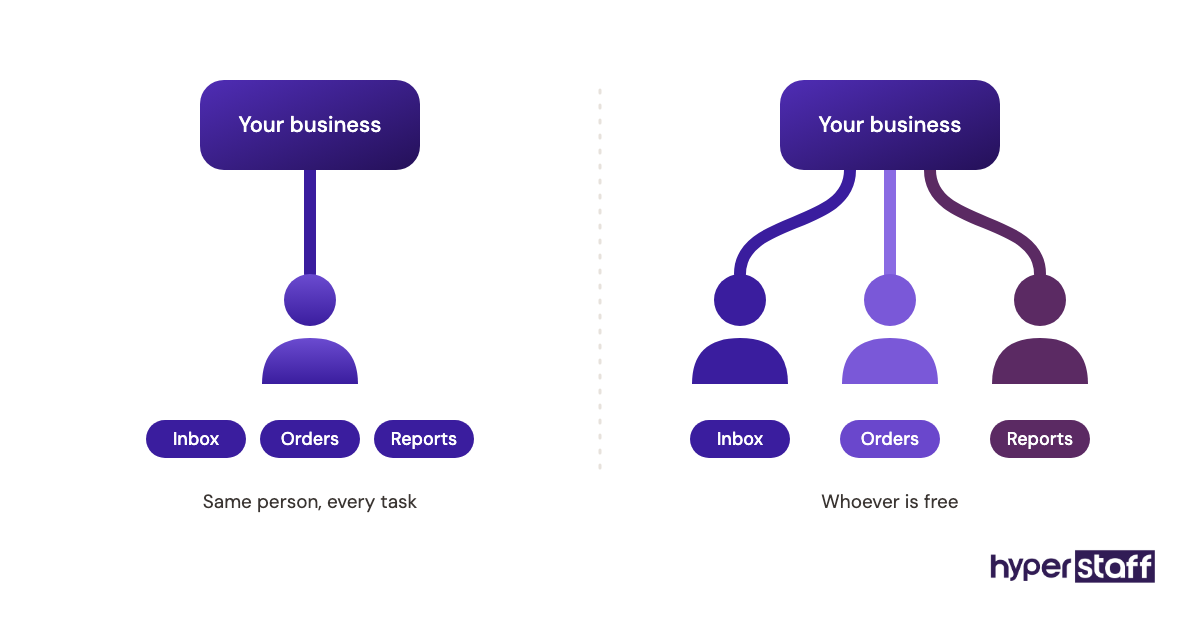
- Dedicated VA = one assistant who works only on your business for a fixed number of hours.
- Shared or pooled VA = a team that splits your tasks among several people, so the person changes from task to task.
- Hour bundle = a fixed block of monthly hours you buy in advance, such as 40, 80 or 160.
- Paid test task = a short sample of your real work that candidates complete for pay before you decide.
- SOP = standard operating procedure, a written or recorded set of steps for one recurring task.
- Overlap hours = the part of the working day when you and the assistant are both online.
- Replacement guarantee = an agency's promise to place a new assistant if the first one doesn't fit.
- Independent contractor = a worker paid per hour or project who isn't on your payroll.
- Ramp-up period = the first weeks when the assistant learns your processes and output is still slow.
Why Does Hiring the Right VA Matter So Much for a Small Business?
Hiring the right VA matters because a small business has no slack to absorb a bad hire. In a 3-person company, one assistant who misses invoices or answers customers badly is visible to every client within a week.
The cost of a wrong hire is mostly time. You lose the hours spent recruiting, the hours spent training and the weeks of work that has to be redone or checked twice.
There's a confidence cost too. Owners who have one bad VA experience often stop delegating for months, and the admin piles back onto the one person who should be selling.
How Does the VA Hiring Process Work?
The VA hiring process runs in five stages: scope the role, source candidates, screen them, test them on paid work and onboard the person you pick. The table shows how long each stage usually takes when you hire alone versus through an agency.
| Hiring stage | Hiring alone | Through a staffing agency |
|---|---|---|
| Scope the role | 1 to 3 days | 30-minute call |
| Source candidates | 3 to 10 days | Agency shortlists |
| Screen and interview | 5 to 10 days | 1 to 2 short interviews |
| Paid test task | 3 to 7 days | Often done during vetting |
| Contract and payment setup | 1 to 3 days | Agency handles it |
| Total to first workday | 2 to 5 weeks | About 1 week |
Sourcing eats the most calendar time when you hire alone. A job post on a freelance marketplace can pull dozens of applications in a day, and sorting them is the slow part.
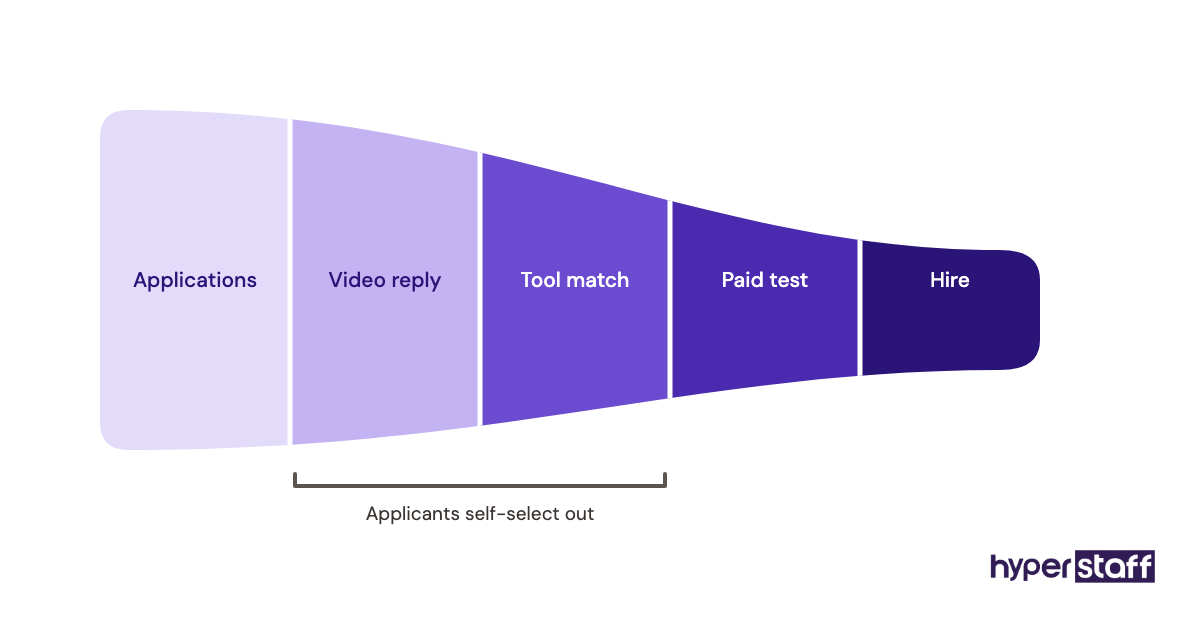
Interviews come next, and the questions you ask decide what you learn. Our list of VA interview questions sorts them by what each one reveals.
Ways to Hire a Virtual Assistant: Routes and Arrangements
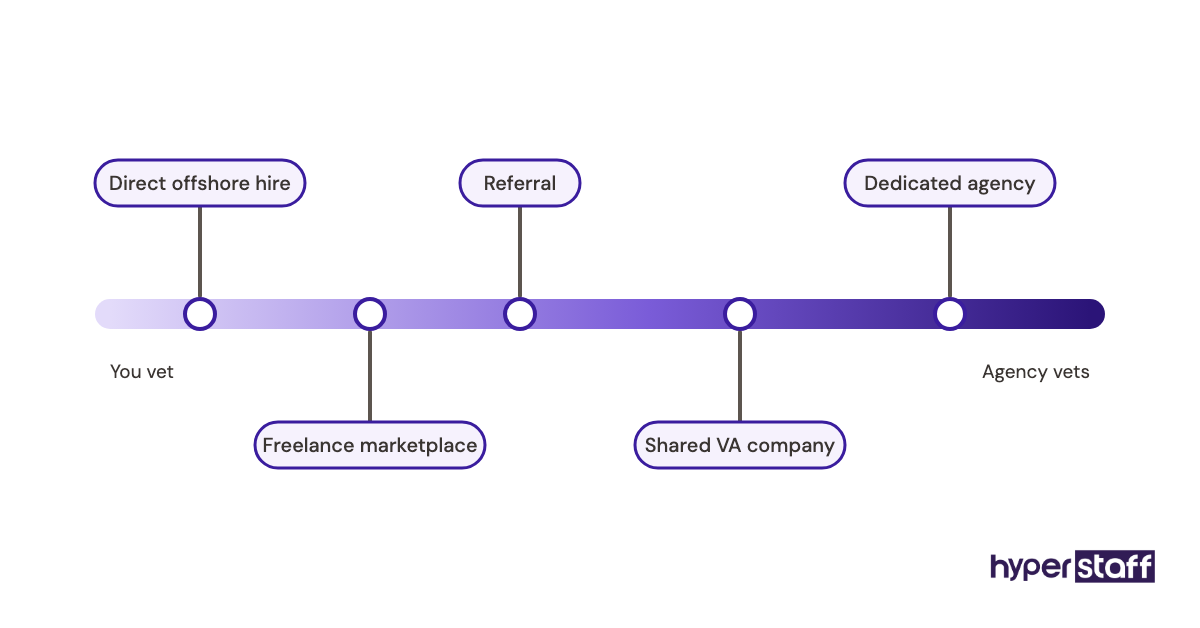
Small businesses hire virtual assistants through seven common routes, from freelance marketplaces to dedicated staffing agencies. Each one moves the vetting work and the risk to a different place.
| Hiring route | Who vets the VA | Typical time to start | Who handles a bad fit | Good fit for |
|---|---|---|---|---|
| Freelance marketplace | You | 1 to 3 weeks | You start a new search | One-off or project tasks |
| Direct offshore hire | You | 3 to 6 weeks | You | Owners with hiring experience |
| Shared VA company | The company | Days | The company reassigns tasks | Small, scattered requests |
| Dedicated staffing agency | The agency | About 1 week | The agency replaces the VA | Ongoing roles with context |
| Part-time hour bundle | Depends on route | Days to weeks | Depends on route | Testing delegation at 40 hours a month |
| Full-time dedicated VA | Depends on route | 1 to 4 weeks | Depends on route | Roles with daily customer or ops work |
| Referral from your network | Your contact, loosely | Varies | You | Owners who trust the referrer's judgment |
Route and arrangement stack together. You might hire a part-time dedicated VA through an agency, or a full-time freelancer straight from a marketplace.
How Is Hiring a VA Different From Other Ways to Get Help?
Hiring a VA differs from other options mainly in commitment and context. A VA stays with your business long enough to learn it, which a one-off freelancer or a software tool won't do.
Hiring a VA vs. Hiring a Freelancer
A freelancer is hired for a defined deliverable, like a logo or a 10-page website. A VA is hired for ongoing, recurring work, and their value grows each month they learn your customers and tools.
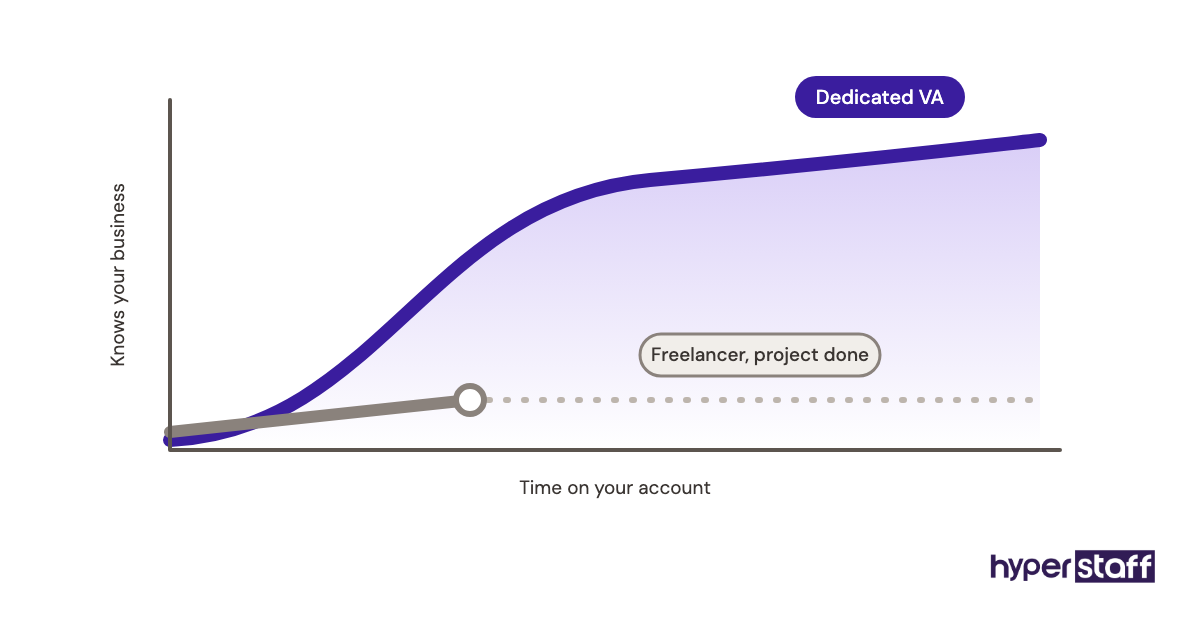
The vetting differs too. With a freelancer you judge a portfolio, while with a VA you judge reliability, communication and how they handle a task you didn't explain fully.
Hiring a VA vs. Hiring an In-House Assistant
An in-house assistant is on your payroll, works your hours and often costs several times more once taxes and benefits are added. Our breakdown of a virtual assistant vs. in-house hire walks through where each one wins.
In-house still makes sense for work that needs a physical presence, like handling mail, stocking shelves or greeting walk-in customers.
Hiring a VA vs. Using an AI Assistant
AI assistants can draft emails, summarize calls and sort data in seconds. They can't own an outcome, chase a late vendor over three days or notice that a customer's tone has changed.
Many owners now use both, with the VA running the AI tools and checking what they produce.
The Benefits of Hiring a Small Business VA
The main benefit of hiring a small business VA is getting recurring work off the owner's plate at a fraction of an in-house salary. The specific gains depend on how well the role is scoped.
- Lower cost per hour than a local hire, with no office, equipment or payroll taxes on your side.
- Flexible hours, so you can start part-time and add hours once the first tasks run well.
- Coverage in other time zones, which can mean emails answered and orders processed overnight.
- Access to specific skills, such as bookkeeping prep or ad reporting, without hiring a full specialist.
- Written processes as a side effect, since handing work over forces you to document it.
The Drawbacks of Hiring a Small Business VA
The drawbacks of hiring a VA mostly show up in the first month and shrink once processes are written down. They're real, and planning for them is cheaper than discovering them.
- Upfront owner time to explain tasks, record processes and review early work.
- Time zone gaps that slow urgent questions if overlap hours aren't set.
- Security risk when sharing logins without a password manager.
- A slow first two weeks before output catches up with the cost.
Who Should Hire a Small Business Virtual Assistant?
Owners who spend 10 or more hours a week on repeatable tasks are the clearest fit for a small business virtual assistant. The test is simple: if you can explain the task in a short recording, someone else can probably do it.
Service businesses with steady inbound email, ecommerce stores processing orders and agencies juggling client reporting tend to see the fastest payoff. Solo consultants benefit too, though their tasks are often more scattered and need tighter scoping.
A VA is a weaker fit if your work changes every day and nothing repeats. In that case, a project freelancer or a few hours of a shared service usually costs less.
Small Business VA Hiring Examples
The examples below are common hiring patterns, good and bad, that show up across small business VA hires. Each one is a composite of how these hires usually play out, not a single client story.
Good VA Hiring Examples
A Hire Scoped Around One Task Layer
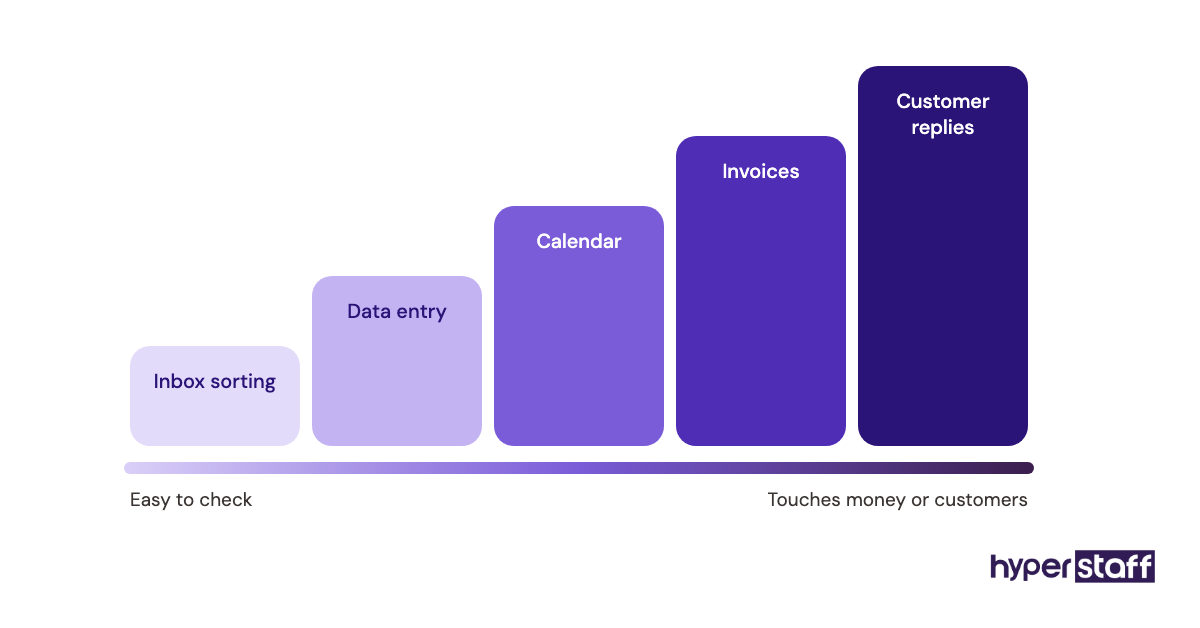
The owner starts with inbox triage and calendar booking only, at 40 hours a month. Once those run cleanly for two weeks, customer follow-ups get added, and hours grow to 80.
A Paid Test Using Real Work
Finalists each clean up the same 50-row lead list from the owner's CRM, paid for two hours. The best candidate is obvious within an hour of reviewing the results, and the interview only confirms it.
A Job Post That Names the Tools
The post lists Shopify, Gorgias and Google Sheets, plus the time zone overlap required. Applicants who don't know the tools filter themselves out, and the shortlist is half the usual size.
Bad VA Hiring Examples
Hiring the Cheapest Profile
An owner picks the lowest hourly rate on a marketplace without a test task. Three weeks later, half the work needs redoing, and the real hourly cost is higher than the next candidate's rate.
"Help With Everything" as the Job Title
The post asks for admin, design, social media and bookkeeping in one person. The hire is average at all of it, and the owner can't tell which task is the problem.
No Plan for Day One
The VA starts on Monday with no logins and no task list. They spend the first week waiting, and the owner reads it as a lack of initiative.
Our list of common VA hiring mistakes covers more patterns like this.
Creating a VA Hiring Plan, Step-by-Step
A VA hiring plan turns a vague wish for help into five concrete steps you can finish in about two weeks. Skipping step one is the most common reason the other four fail.
Step #1: List the Tasks and Estimate the Hours
Write down every task you want off your plate, with how often it happens and how long it takes. Our VA task checklist helps you spot the ones you'd forget.
Add up the weekly hours and multiply by about 4.3. That number tells you which bundle size to start with.
Step #2: Write the Job Description
Name the tasks, the tools, the overlap hours and what success looks like after 30 days. A clear VA job description filters out wrong applicants before you read a single profile.
Keep it under a page. Long descriptions attract people who are good at reading long descriptions.
Step #3: Choose Your Hiring Route
Pick a route based on how much vetting and replacement work you can take on yourself. If you've never hired remotely, an agency removes the parts that go wrong most often.
Step #4: Interview and Run a Paid Test Task
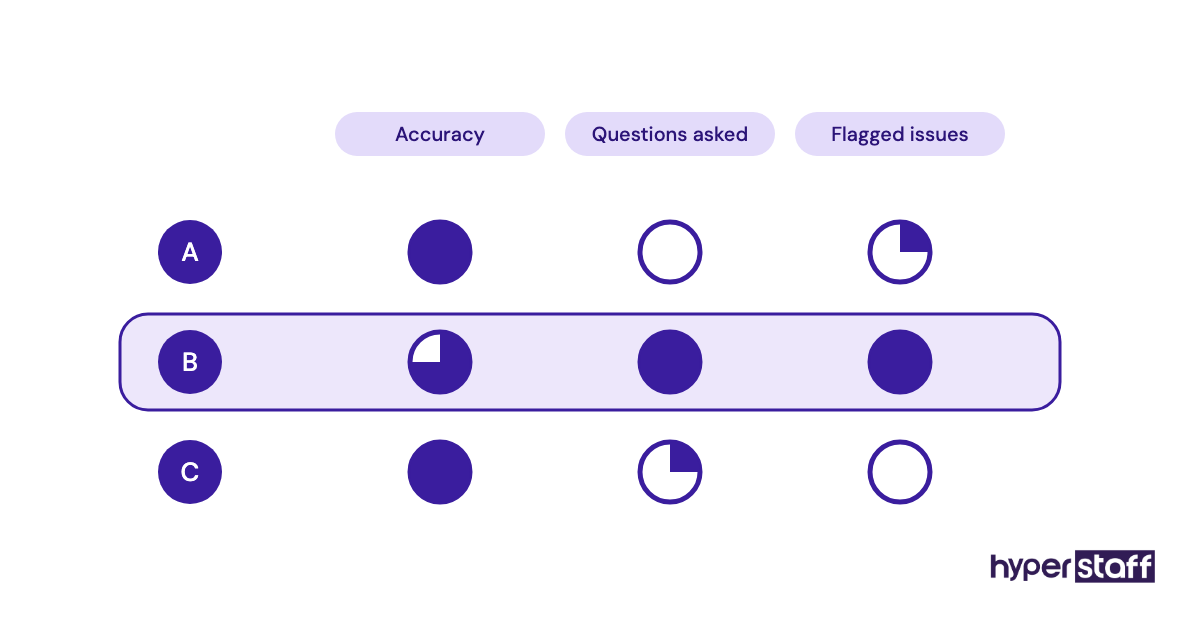
Keep interviews short, around 20 to 30 minutes, and focus on how candidates handle unclear instructions. Then give your top two or three candidates the same real task, paid at their rate.
Judge the test on accuracy, the questions they asked and whether they flagged problems you didn't mention.
Step #5: Prepare the Handover Before Day One
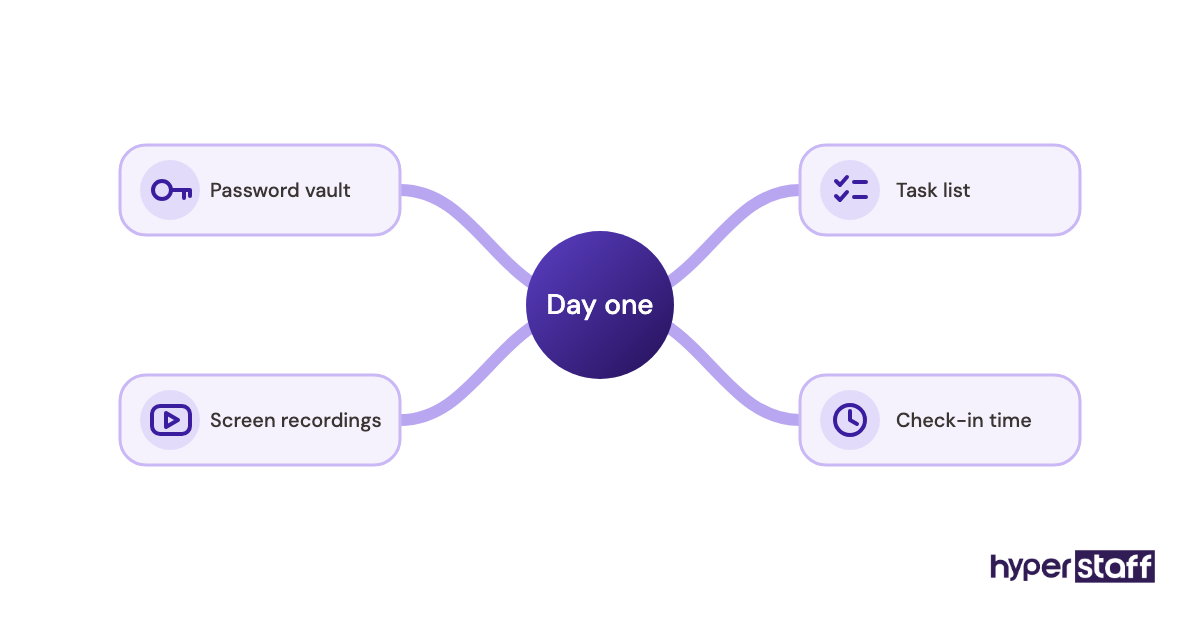
Set up logins, record the first few tasks and agree on daily check-ins before the start date. Our guide to onboarding a new VA lays out the first 30 days in detail.
What Does an Effective VA Hiring Strategy Look Like?
An effective VA hiring strategy is built around the work, so the job, the test and the first week all use the same real tasks. Candidates get judged on what they'll actually do.
It also plans for failure. Even good hiring processes miss sometimes, so the strategy should say in advance how long you'll wait before deciding a hire isn't working, and what happens next.
Practitioners disagree on one point: some insist on hiring for skills first, others on hiring for communication and teaching the tools. For small businesses, communication usually wins, because tools can be learned in a week and clear updates can't be trained in a month.
Tools for Hiring and Working With a VA
The tools for hiring a VA cover screening, scheduling, access and daily work, and most offer a free plan or trial to start. A deeper comparison is in our guide to small business VA tools.
- Calendly for interview booking across time zones, which removes the back-and-forth emails.
- Loom for screening, by asking finalists to record a two-minute video reply. It shows spoken English and clarity far better than a cover letter.
- Google Meet or Zoom for the interviews themselves.
- Google Docs or Notion for the job description, the test brief and later the SOP library.
- 1Password or Bitwarden for sharing logins without revealing passwords.
- Trello, Asana or ClickUp for assigning tasks with due dates.
- Toggl Track or Clockify for logging hours against a monthly bundle.
9 Proven VA Hiring Tips and Best Practices
These tips come from the parts of a VA hire where things most often go wrong.
- Write the task list before the job post, never the other way around.
- Name the tools in the post so unqualified applicants skip it.
- Ask for a short recorded video reply as part of the application.
- Pay for every test task, which gets you serious candidates and real effort.
- Use the same test for every finalist so you can compare results side by side.
- Check how candidates ask questions, since good VAs ask before guessing.
- Share logins through a password manager and follow the FTC's data security guidance for customer data.
- Start part-time if you're unsure, then add hours once the first tasks run well.
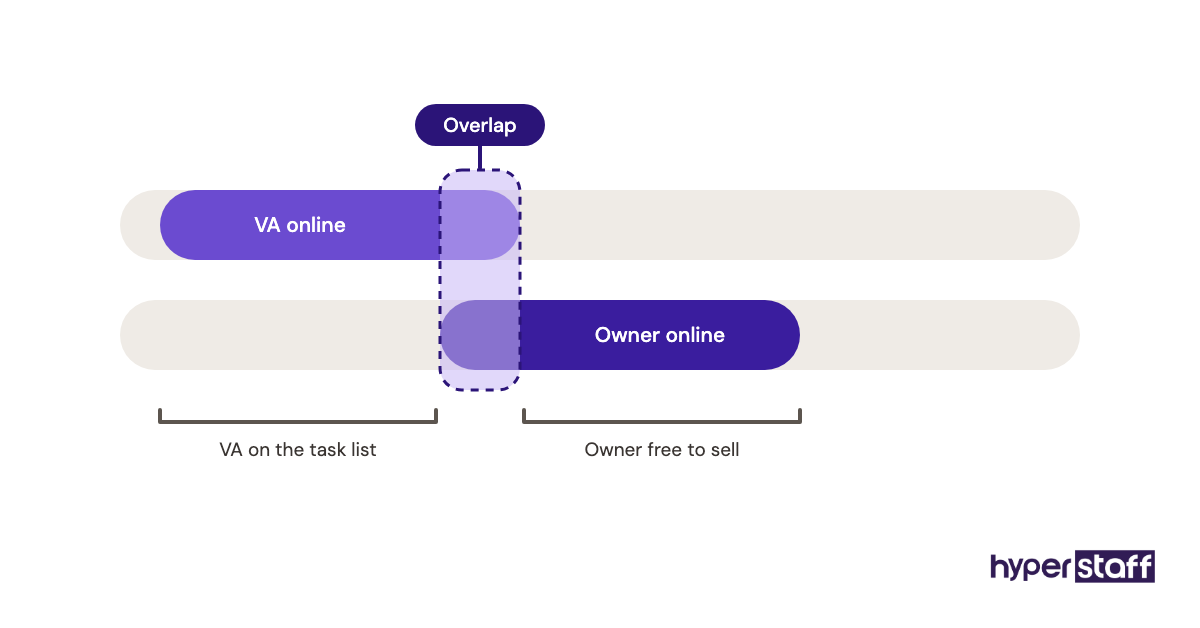
- Agree on a fixed overlap window of one to two hours a day.
How Do You Handle Common VA Hiring Challenges?
Too many applicants is the first challenge on open marketplaces. A required video reply and named tools in the post cut the pile fast.
Judging candidates you've never met in person comes next. A paid test on real work answers more than any interview, so weight it heavily.
The last challenge is owner hesitation after a bad past hire. Starting with low-risk tasks and a set review date makes the second attempt feel safer.
How Do You Measure Whether a VA Hire Worked?
A VA hire worked if the tasks you handed over run without your daily involvement by the end of the first month. Count how many tasks the assistant fully owns and how often their work needs correction.
Owner hours are the other measure. If you're getting back at least the hours you're paying for, minus a few for supervision, the hire is paying for itself.
How Long Does Hiring a VA Take to Work?
Most VA hires take 2 to 6 weeks to reach steady output after the start date. Simple admin roles settle faster, while roles mixing customer support and bookkeeping take longer.
Add the hiring time itself, which runs 2 to 5 weeks when you recruit alone and about a week through an agency. Week one of work always feels slow, and that's normal.
How Much Does It Cost to Hire a Small Business VA?
Hiring a small business VA costs from about $3 to $12 an hour through an offshore staffing agency, against roughly $23 an hour in wages for an in-house administrative assistant. The US Bureau of Labor Statistics puts the median pay for secretaries and administrative assistants at $48,310 a year.
Benefits add more on top. The BLS employer cost data shows benefits make up about 31% of total compensation, so an in-house hire lands near $33 to $34 an hour all-in.
Our full VA cost guide breaks this down by role.
| Cost item | Hyperstaff | Typical in-house assistant |
|---|---|---|
| Entry-level hourly rate | From $3/hour (Essential, 0 to 2 years) | About $23/hour in wages, before benefits |
| Mid-level hourly rate | From $6/hour (Professional, 2 to 5 years) | Higher with experience, plus benefits |
| Senior hourly rate | From $12/hour (Expert, 5+ years) | Higher again, plus benefits |
| Full-time month (160 hours) | From $480 at Essential | About $5,800 including benefits |
| Part-time options | 40 or 80 hours a month | Rare for salaried roles |
| Time to hire | 5 business days | Several weeks |
| Replacement | Free, 5 to 7 business days | New search from scratch |
| Billing discount | 10% off when paid quarterly | None |
Important: Hyperstaff prices shown are starting averages, not fixed quotes. Your final cost depends on the role, the experience tier and how many hours your work needs.
Is Hiring a Small Business Virtual Assistant Worth It?
Yes, hiring a small business virtual assistant is one of the best-paying decisions an owner can make when the role is scoped and the handover is planned, because every hour of work you hand over keeps coming back to you each week.
Here's a sample calculation. A Professional-tier VA on an 80-hour monthly bundle starts from $480 a month, or $432 when paid quarterly.
Say those 80 hours free up about 15 owner hours a week after supervision, and you put just 8 of them into sales calls or client work billed at $90 an hour. That's roughly $720 a week, or about $3,100 a month, against a $480 cost.
The math breaks when the hours you free up get filled with more admin. Our take on whether a VA is worth it looks at when the numbers don't work.
How Do You Choose a VA Staffing Agency?
Choose a VA staffing agency by asking how it vets candidates, whether your assistant is dedicated or shared and what happens if the fit is wrong. The answers to those questions matter more than the hourly rate.
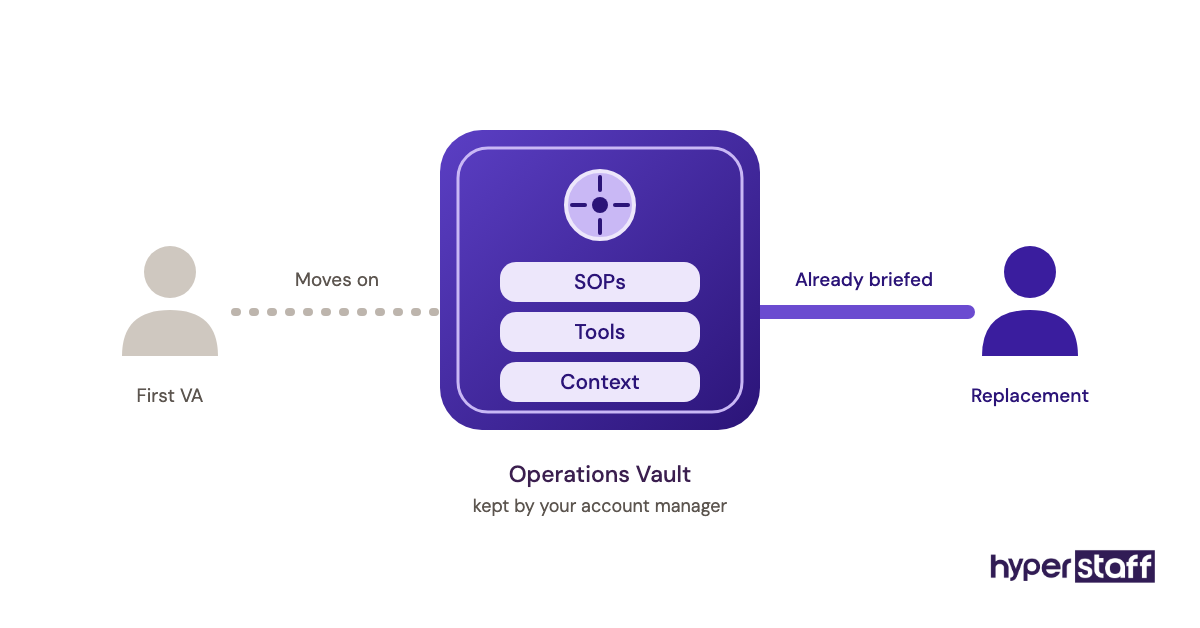
Ask who keeps your processes on record. An agency that maintains your SOPs can brief a replacement in days, while one that doesn't leaves you re-explaining every task to a stranger.
Check the hour options too. Agencies that only sell full-time seats force a big commitment before you know the role works.
VA Hiring Statistics, Trends and Future Predictions
The cost gap behind VA hiring is well documented. With administrative assistant median pay near $48,000 a year in the US and benefits adding close to a third of total compensation, the per-hour difference with offshore talent stays wide.
Two hiring trends stand out. More owners start with part-time bundles and grow hours once the first tasks stick, and paid test tasks have largely replaced long interview rounds for remote roles.
We expect VA roles to shift toward running and checking AI tools rather than typing everything by hand. How fast that happens is less certain, since many small businesses still run on processes that live in the owner's head.
Hiring a Virtual Assistant and AI
AI changes how you hire a virtual assistant in two ways: screening gets faster, and the skills worth testing for shift. Tools can now sort applications and summarize video replies, though a person still needs to watch the final few.
Add an AI task to your paid test. Ask candidates to draft replies with an AI tool and then correct them, and watch whether they catch the mistakes or paste the output as-is.
Disclaimer: This article is for general information only and is not legal, tax, financial or HR advice. Costs, tools and results vary by business, and Hyperstaff is not responsible for decisions made based on this content.
Common questions
Can I hire a virtual assistant for just 10 hours a week?
Yes. A 40-hour monthly bundle works out to about 10 hours a week, which suits owners testing delegation for the first time. You can add hours once the first tasks run without your input.
Should I hire a VA from the Philippines or Latin America?
It depends on your time zone and the work. Latin American VAs overlap well with US business hours, which helps for live customer support, while Philippine-based VAs suit overnight coverage and back-office tasks.
How do I know I'm ready to hire a small business VA?
You're ready when you can list tasks that repeat weekly and add up to at least 8 to 10 hours. If you can't name the tasks yet, track your week first.
Should I pay a VA candidate for a test task?
Yes. Paid tests attract serious candidates and give you real work to judge. Keep the test to one or two hours and use the same task for every finalist.
Do I need a contract when I hire a virtual assistant?
Yes, a written agreement should cover hours, rates, confidentiality and who owns the work. When you hire through an agency, the agency agreement usually covers this, but read it before signing.
Book a free 15 min call
We place a pre-vetted specialist in 5 business days, fully managed, from $3/hour.